

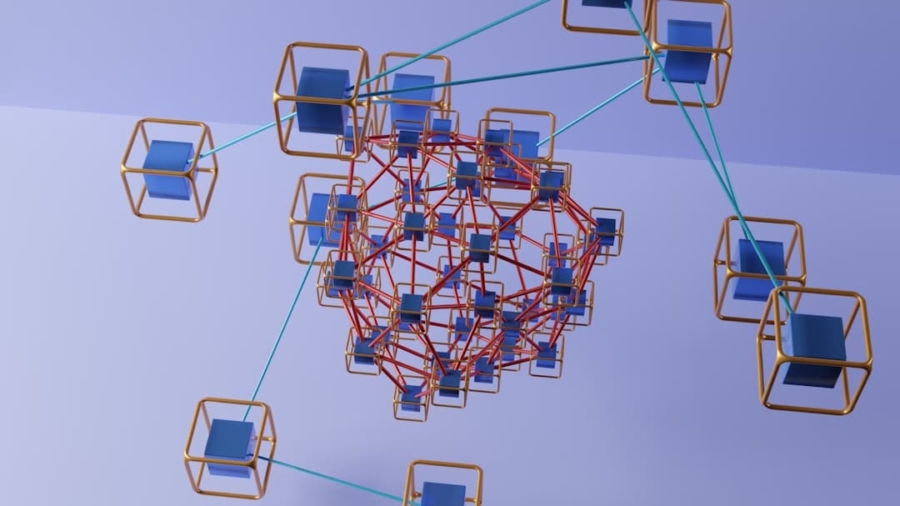
Alright, let’s dive into modular blockchain architectures and what makes them tick, especially how they’re bringing specialization into the mix. Essentially, modular blockchains are about breaking down the traditional, all-in-one blockchain into separate, specialized layers. Instead of one chain trying to do everything – processing transactions, ensuring security, and making sure everyone agrees on the order of things – these tasks are delegated to different, interconnected chains. This allows each part to do its job better and more efficiently, sort of like a well-oiled machine where each component has a specific role.
This approach isn’t just a technical tweak; it’s a fundamental shift that could unlock some serious scalability and flexibility for decentralized applications. Think of it as moving from a single Swiss Army knife trying to be a hammer, screwdriver, and can opener all at once, to a dedicated toolbox where each tool performs its function expertly.
For a long time, traditional blockchains have wrestled with what’s often called the “blockchain trilemma.” This states that a blockchain can only achieve two out of three desirable properties: decentralization, security, and scalability. Pick any two, and you usually have to compromise on the third.
The Trilemma’s Grip
Imagine a single blockchain trying to handle tons of transactions (scalability) while still having many independent participants (decentralization) and remaining extremely difficult to attack (security). It’s a tough balancing act. Usually, you end up with a chain that’s very decentralized and secure but slow, or one that’s fast but sacrifices some decentralization.
Limitations of Monolithic Chains
- Bottlenecks: In a monolithic chain, every node has to process every transaction, store all the data, and participate in consensus. This creates a bottleneck, limiting how many transactions can be processed per second.
- Lack of Flexibility: If you want to change how a specific part of the chain works – say, upgrade the execution environment – you often have to fork the entire chain, which can be a huge undertaking and disrupt the whole ecosystem.
- Resource Inefficiency: Nodes in monolithic chains need significant computing and storage resources to keep up, potentially limiting who can participate and contribute to decentralization.
- Innovation Slowness: Building new features or improving existing ones can be slow, as any change affects the entire system, requiring extensive testing and consensus.
Modular blockchain architectures are gaining traction for their ability to enhance scalability and specialization in decentralized systems. A related article that explores the intersection of technology and user experience is available at this link. This article discusses smartwatches that enable users to view pictures, highlighting the importance of specialized functionalities in wearable technology, much like how modular blockchain designs aim to optimize specific tasks within the blockchain ecosystem.
Key Takeaways
- Clear communication is essential for effective teamwork
- Active listening is crucial for understanding team members’ perspectives
- Setting clear goals and expectations helps to keep the team focused
- Encouraging open and honest feedback fosters a culture of continuous improvement
- Celebrating successes and milestones boosts team morale and motivation
The Modular Solution: Separating Concerns
Modular blockchains tackle these problems by breaking down the core functions of a blockchain into distinct layers. Each layer is then optimized for its specific task.
Execution Layer: The Doing DApp Part
This layer is where transactions actually happen. It’s like the engine of a car, executing smart contracts and changing the state of the blockchain.
- Transaction Processing: This is where your DeFi trades, NFT mints, and gaming actions are processed. It’s focused solely on executing the logic of decentralized applications.
- Virtual Machines (VMs): You’ll often find different virtual machines here, like the Ethereum Virtual Machine (EVM) or WebAssembly (WASM), which provide the environment for smart contracts to run.
- Application-Specific Rollups: Many modular designs use “rollups” here, which bundle many transactions off-chain and then submit a single proof of their validity to a settlement layer. Think Optimistic Rollups or ZK-Rollups, each with its own trade-offs regarding speed and security.
Settlement Layer: The Judge and Jury
This layer acts as a kind of arbitration court for the execution layers. It validates the transactions processed by the execution layer and ensures their finality.
- Proof Verification: When an execution layer submits a batch of transactions and a corresponding proof (like a ZK-proof or an optimistic fraud proof), the settlement layer verifies that proof.
- Dispute Resolution: In systems like Optimistic Rollups, the settlement layer provides a window for anyone to challenge the validity of a batch of transactions if they suspect fraud.
- Asset Bridges: It also often handles the bridging of assets between different execution layers or to a data availability layer.
- Shared Security: The security of the settlement layer often extends to the execution layers built on top of it, providing a strong guarantee.
Data Availability Layer: The Distributed Ledger
This layer’s primary job is to ensure that all the data necessary to reconstruct the blockchain’s state is available to everyone who needs it.
- Data Storage and Retrieval: It’s vital that all transaction data is published and easily accessible. If data isn’t available, nobody can verify the transactions or reconstruct the chain’s state, leading to potential censorship or data loss.
- Scalability for Rollups: For rollups, especially optimistic ones, the raw transaction data needs to be publicly available so that anyone can check for fraudulent activity during the challenge period.
- Data Sharding (e.g., Ethereum’s Danksharding): Future iterations of data availability layers often involve sharding, where the data is split across many different nodes, allowing for massive increases in data throughput.
Consensus Layer: The Agreement Engine
This is the layer that ensures all participants agree on the order and validity of transactions across the entire modular system. It establishes the canonical chain.
- Block Production and Ordering: This layer is responsible for selecting block producers, ordering transactions into blocks, and ensuring these blocks are added to the chain.
- Proof-of-Stake (PoS) or other Mechanisms: Most modern modular designs leverage Proof-of-Stake for consensus, where validators stake their assets to secure the network.
- Finality: It provides the ultimate assurance that transactions, once confirmed, cannot be reversed. This is distinct from the settlement layer’s ‘finality’ for rollups, which relies on the underlying consensus layer’s finality.
Specialization in Action: What it Means for Users and Developers

The real magic of modularity lies in specialization. Each module can focus on doing one thing exceptionally well.
Dedicated Resources for Specific Tasks
- Optimized Performance: Instead of one chain being a jack-of-all-trades and master of none, you have components that are hyper-optimized for their particular function. An execution layer can be built for sheer transaction throughput, while a consensus layer focuses purely on robust security and decentralization.
- Resource Efficiency: Nodes don’t need to do everything.
A node might only participate in data availability, requiring less powerful hardware than a node that has to execute every transaction and participate in consensus. This lowers the barrier to entry for participation.
Enhanced Scalability Potential
- Horizontal Scaling: By separating execution, data availability, and consensus, modular blockchains can scale horizontally. You can add more execution layers (e.g., more rollups) without bogging down the underlying data availability or consensus layers.
- Parallel Processing: Different execution layers can process transactions in parallel, significantly increasing the overall transaction capacity of the system.
- Specialized Scaling Solutions: Each layer can implement its own specialized scaling techniques, such as data sharding for data availability or highly optimized virtual machines for execution.
Flexibility and Innovation Opportunities
- Customization: Developers can choose or even build their own execution environments optimized for specific use cases.
Want a chain tailored for gaming with ultra-low latency? Go for it. Building a DeFi powerhouse?
You can optimize for high security and complex computations.
- Faster Iteration: Changes or upgrades to one layer don’t necessarily require changing the entire system. This allows for faster innovation and deployment of new features or improvements.
- Multi-VM Support: It becomes easier to incorporate different virtual machines (like the EVM, WASM, or custom VMs) into the ecosystem, catering to a wider range of developers and programming languages.
- Permissioned vs. Permissionless: While aiming for permissionless, some components can be built with a blend of permissioned elements for specific business needs, as long as the underlying layers maintain their decentralized properties.
Security Enhancements (Paradoxically)
- Attack Surface Reduction: While having more components might seem like more attack vectors, each component can be designed with a very specific, limited scope, potentially reducing the points of failure.
- Shared Security from Base Layer: The strong security guarantees of the underlying consensus and data availability layers can be inherited by the execution layers built on top, providing a robust foundation.
- Independent Audits: Each module can be independently audited and secured, making it easier to pinpoint vulnerabilities compared to a complex, intertwined monolithic system.
The Ecosystem: Key Players and Emerging Architectures

The modular blockchain space is bustling with innovation, with various projects taking different approaches to achieve separation of concerns.
Celestia: Data Availability as a Service
Celestia is a prime example of a project focused exclusively on providing a highly scalable data availability layer. It doesn’t handle execution or consensus for your dApp directly.
- Light Clients with Data Availability Sampling (DAS): Celestia allows light clients to verify data availability without downloading the entire chain, making it very efficient. They do this by randomly sampling small chunks of data to probabilistically confirm its availability.
- Blobspace for Rollups: Rollups and other execution layers can publish their transaction data (blobs) to Celestia, offloading the expensive task of data storage and ensuring public verifiability.
- Lazy Ledger Concept: This project pioneered the “lazy ledger” idea – a blockchain that only orders transactions and ensures their availability, leaving execution to other layers.
Ethereum’s Modular Roadmap (Ethereum 2.0/Serenity)
Ethereum itself is transitioning towards a modular architecture, with its multi-year upgrade path.
- Beacon Chain (Consensus Layer): This is the core of Ethereum’s PoS consensus, coordinating validators and providing finality.
- Execution Shards / Execution Layer: Ethereum plans to eventually have multiple execution “shards” (or more likely, “rollup-centric” execution layers), each capable of processing transactions independently.
- Data Sharding (Danksharding): To support the massive data needs of rollups, Ethereum is implementing data sharding (Danksharding), which dramatically increases data availability throughput by distributing data across many nodes.
- Rollup-Centric Future: Ethereum’s long-term vision positions rollups as the primary scaling solution, with Ethereum’s mainnet acting as the secure settlement and data availability layer.
Cosmos and Polkadot: Interoperable Hubs
While not strictly modular in the same “layer-by-layer” sense as Celestia or Ethereum’s future, Cosmos and Polkadot achieve a similar separation of concerns through their interoperability frameworks.
- Cosmos SDK and Zones: Cosmos provides a framework (Cosmos SDK) for developers to build application-specific blockchains (“Zones”). These Zones can then connect to the Cosmos Hub or other Zones via the Inter-Blockchain Communication Protocol (IBC). Each Zone can specialize in its own execution, consensus, and data availability.
- Polkadot Parachains and Relay Chain: Polkadot’s architecture consists of a central Relay Chain (providing shared security and consensus) and many independent Parachains. Each Parachain can have its own execution environment and logic, benefiting from the Relay Chain’s security.
Sovereign Rollups
This is an interesting concept within the modular space. Unlike traditional rollups that rely on a base chain for settlement and data availability, sovereign rollups only use the base chain for data availability.
- Self-Sovereign Settlement: The settlement and validation of transactions happen entirely within the rollup’s own node network. If there’s a dispute, users rely on the rollup’s own community mechanisms rather than the underlying chain’s dispute resolution.
- Flexibility and Independence: This offers maximum flexibility at the cost of giving up some of the security guarantees of the underlying chain’s settlement layer. It allows for highly customized governance and upgrades.
In exploring the innovative landscape of modular blockchain architectures and their specialization, it is fascinating to consider how these frameworks can enhance the efficiency and scalability of decentralized applications. A related article discusses the best tablet for drawing, which highlights the importance of specialized tools in creative processes, much like how modular components can optimize blockchain functionality. For more insights on this topic, you can read the article here.
Challenges and Considerations
| Aspect | Metric |
|---|---|
| Scalability | Transactions per second (TPS) |
| Security | Double spending prevention |
| Interoperability | Compatibility with other blockchains |
| Specialization | Specific use case support |
| Flexibility | Ability to adapt to different consensus mechanisms |
While modularity offers immense promise, it’s not without its own set of challenges.
Interoperability Complexities
- Communication Overhead: When you have many specialized layers, ensuring seamless and secure communication between them becomes crucial. This can introduce overhead and complexity.
- Bridging Assets and Data: Moving assets and data securely between different execution layers, settlement layers, and data availability layers requires robust bridging solutions, which are themselves potential points of failure.
- Standardization: As more modular components emerge, there will be a need for greater standardization to ensure they can effectively communicate and integrate.
Security Model Considerations
- Shared Security vs. Independent Security: Understanding what level of security each module inherits versus what it needs to provide itself is critical. A secure base layer is paramount, but vulnerabilities in higher layers can still lead to problems.
- Complexity Increases Attack Surface: While individual components may be simpler, the overall system becomes more complex. This increased complexity can make it harder to reason about the overall security of the entire modular stack.
- Decentralization Trade-offs: Some modular designs might inadvertently centralize certain functions, impacting the overall decentralization of the system if not carefully designed. For example, if data availability nodes become too resource-intensive, it could limit participation.
Developer Experience
- Fragmented Ecosystem: While modularity offers flexibility, it can also lead to a fragmented developer experience, with different tools, SDKs, and paradigms for interacting with various layers.
- Learning Curve: Developers will need to understand how these different layers interact and how to build applications that leverage their strengths, which can be a steeper learning curve than monolithic chains.
- Debugging Across Layers: Debugging issues that span multiple layers of a modular blockchain stack can be significantly more challenging.
Economic Model Challenges
- Fee Market Fragmentation: With multiple execution layers, the fee market can become fragmented, potentially making it harder for users to predict costs or for validators to earn consistent rewards.
- Value Accrual to Base Layer: Ensuring the underlying consensus and data availability layers accrue sufficient value to incentivize their security and decentralization is an ongoing design challenge.
- Economic Security of Rollups: For rollups, ensuring sufficient economic incentives for validators to participate, particularly in challenging fraudulent transactions, is critical.
The Future is Modular
Despite these challenges, the shift towards modular blockchain architectures is largely seen as the inevitable path for blockchain technology to achieve mainstream adoption. It’s about designing systems that are fit for purpose, scalable, and adaptable to future demands. As the ecosystem matures, we’ll likely see more specialized components emerge, clearer development pathways, and more robust solutions for interoperability and security. It’s a complex but exciting journey, and one that promises to unlock a new era of decentralized applications and innovation.
FAQs
What is a modular blockchain architecture?
A modular blockchain architecture is a design approach that breaks down the blockchain system into separate, interchangeable modules, allowing for greater flexibility and customization. This approach enables developers to build and modify blockchain systems by combining different modules to suit specific use cases.
What are the benefits of using a modular blockchain architecture?
Using a modular blockchain architecture offers several benefits, including increased flexibility, scalability, and reusability of components. It also allows for easier maintenance and upgrades, as well as the ability to specialize modules for specific functions or industries.
How does specialization work in a modular blockchain architecture?
Specialization in a modular blockchain architecture involves customizing or tailoring specific modules to meet the unique requirements of a particular use case or industry. This can include optimizing modules for performance, security, or compliance with specific regulations.
What are some examples of specialized modules in a modular blockchain architecture?
Examples of specialized modules in a modular blockchain architecture include modules designed for supply chain management, identity verification, decentralized finance (DeFi), and non-fungible tokens (NFTs). These specialized modules are tailored to meet the specific needs of their respective use cases.
How does a modular blockchain architecture contribute to the evolution of blockchain technology?
A modular blockchain architecture contributes to the evolution of blockchain technology by enabling greater innovation, interoperability, and adaptability. It allows for the development of specialized solutions for various industries and use cases, ultimately driving the widespread adoption and integration of blockchain technology.
Enjoying our content? Make us a preferred source on Google:
Add us as a Preferred Source on Google