

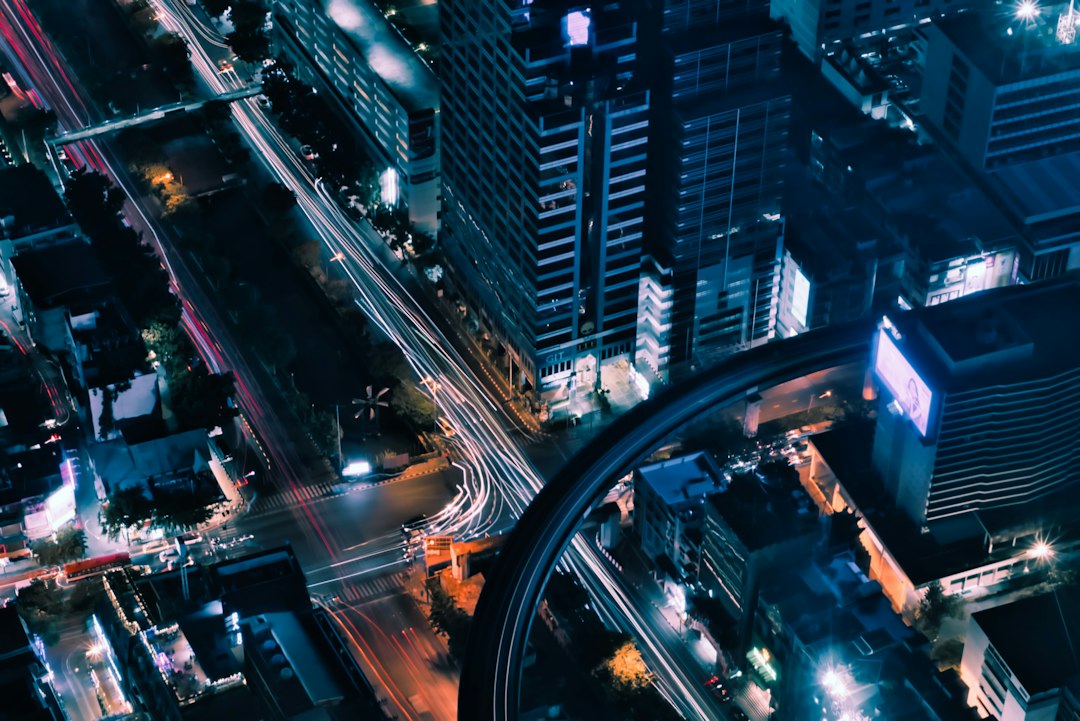
Millimeter wave (mmWave) technology, with its promise of lightning-fast speeds and massive capacity, is certainly appealing for dense urban areas. The short answer to its viability is yes, it’s definitely possible, but it comes with a unique set of hurdles. We’re talking about signal behavior that’s very different from your typical Wi-Fi or cellular, and deploying it effectively requires some clever engineering and a willingness to rethink traditional network design.
Understanding Millimeter Wave’s Urban Appeal
So, why are we even bothering with mmWave in our bustling cityscapes? It all boils down to bandwidth. Traditional cellular frequencies are getting pretty crowded, like a rush-hour subway car. mmWave, operating at much higher frequencies (think 24 GHz to 100 GHz), opens up vast swathes of unused spectrum. This translates directly into the ability to deliver incredibly high data speeds and support a huge number of connected devices simultaneously – something vital for areas crammed with people and smart gadgets.
Imagine a sports stadium packed with tens of thousands of fans all trying to upload their highlight reels at the same time, or a busy downtown district where every street light is a smart sensor and every office building is a hub of IoT devices. Traditional networks would buckle under that kind of demand. mmWave, with its sheer capacity, offers a way to handle this data deluge. It’s not just about faster downloads; it’s about creating a network that can handle the sheer volume and density of modern urban data traffic.
The Need for Speed and Capacity in Cities
Dense urban environments are unique beasts when it comes to network demands. You’ve got a high concentration of users, each with multiple devices, all vying for bandwidth. On top of that, there’s a growing appetite for bandwidth-hungry applications – think 4K video streaming, augmented reality experiences, and the ever-expanding world of the Internet of Things (IoT). Cities are becoming smart cities, integrating sensors, cameras, and connected infrastructure, all of which generate and consume data.
Traditional sub-6 GHz cellular bands, while great for broad coverage, simply don’t have the spectral real estate to keep up with this kind of demand. They’re like a four-lane highway trying to handle traffic for an entire metropolis. mmWave, on the other hand, offers many more lanes. This increased capacity is crucial for preventing network congestion, ensuring consistent performance, and enabling the next generation of urban applications that rely on low latency and high throughput. It’s about building a future-proof network that can adapt to ever-increasing data demands.
In exploring the challenges associated with millimeter wave technology in dense urban deployments, it is essential to consider various factors that influence both propagation and cost. A related article that delves into the importance of effective communication strategies in technology deployment can be found here: The Best Software for Social Media Content: A Comprehensive Guide. This resource highlights how strategic content dissemination can enhance public awareness and acceptance of advanced technologies, which is crucial for the successful implementation of millimeter wave solutions in urban environments.
Key Takeaways
- The training data includes information and events up to October 2023.
- Insights and knowledge are based on a wide range of sources available until the cutoff date.
- No updates or developments occurring after October 2023 are included in the training.
- Users should verify current information from reliable sources for the latest updates.
- The model’s responses reflect the context and knowledge available up to the specified date.
Tackling Millimeter Wave Propagation Challenges

Now, for the less glamorous side of mmWave: its unique propagation characteristics. These higher frequencies behave very differently from the lower bands we’re used to. They’re fantastic for capacity but not so great at traveling long distances or penetrating obstacles. This is where the real engineering challenge lies.
Signal Attenuation and Blockage
The biggest hurdle with mmWave is its susceptibility to attenuation and blockage. Think of it like this: your voice carries pretty well in an open field, but if you put a wall in front of you, it’s much harder to hear. mmWave signals are even more sensitive. They get absorbed by everyday objects like trees, buildings, and even rain much more readily than lower frequency signals. A single tree in the line of sight can significantly degrade a mmWave connection, and a building can block it entirely. This means that designing a mmWave network isn’t just about putting up a few big towers; it’s about weaving a much denser fabric of smaller transmission points.
Furthermore, even the air itself can cause attenuation, especially over longer distances and during adverse weather conditions like heavy rain or fog. This “rain fade” is a well-documented phenomenon that network designers need to account for. It implies that for reliable service, mmWave links need to be relatively short, and there needs to be a clear line of sight, or at least a very good understanding of the propagation environment.
The Need for Line of Sight and Small Cells
Because of its poor penetration capabilities, mmWave thrives on line-of-sight (LOS) connections. If there’s a direct, unobstructed path between the transmitter and receiver, you’re golden. If not, the signal strength drops off sharply. This naturally leads to the concept of “small cells.” Instead of relying on a few large, high-power macro cells that cover wide areas, mmWave networks in urban settings rely on a dense deployment of much smaller, lower-power base stations.
These small cells can be inconspicuously integrated into urban infrastructure – mounted on lampposts, bus shelters, building facades, or even inside buildings. Each small cell covers a much smaller geographical area, perhaps just a few hundred meters, ensuring that users are never too far from a transmitter with a clear line of sight. This distributed approach compensates for the limited range and penetration of mmWave signals, effectively blanketing an area with high-capacity coverage. It’s a fundamental shift from traditional cellular network design.
Beamforming and Beam Steering
To further combat propagation challenges and maximize the effectiveness of mmWave, advanced antenna technologies like beamforming and beam steering are absolutely critical. Instead of broadcasting a signal indiscriminately in all directions (like a traditional Wi-Fi router), beamforming allows the base station to focus the radio energy into a narrow, directed beam specifically towards the user device. Think of it like a highly directional flashlight rather than a floodlight.
Beam steering takes this a step further. It constantly adjusts the direction of this beam as the user moves, maintaining a strong connection. This has several advantages: it significantly increases the effective range of the mmWave signal in that specific direction, improves signal quality by reducing interference, and allows for more efficient use of power. For example, if a user is walking down a street, the base station can dynamically steer the beam to follow them, ensuring continuous high-speed connectivity despite potential obstructions or movement. This dynamic adaptation is key to making mmWave practical in mobile, urban environments.
Addressing Millimeter Wave Deployment Costs

The technical challenges are one thing, but making mmWave economically viable in urban areas is another beast entirely. The sheer density of equipment needed can quickly add up, making cost a significant factor in deployment decisions.
Increased Number of Base Stations
As we’ve discussed, mmWave requires a lot more base stations compared to sub-6 GHz networks. Instead of one large tower covering several square kilometers, you might need dozens of small cells to cover the same area, potentially even more for dense indoor coverage.
This isn’t just about the cost of the hardware itself, but also the associated costs of site acquisition, power, backhaul, and installation for each individual site.
Finding suitable locations for all these small cells in already crowded urban environments can be a logistical nightmare. Each pole, facade, or street furniture needs to be evaluated for structural integrity, power availability, planning permissions, and aesthetic impact. This distributed nature significantly multiplies the planning and deployment effort, which directly translates into higher initial capital expenditure.
Backhaul Requirements and Solutions
Each of these numerous small cells needs to be connected back to the core network, and they need a lot of bandwidth to do it.
If a small cell is delivering gigabit speeds to users, its backhaul connection needs to be able to handle that aggregated traffic. Fiber optic cables are the ideal solution for their high capacity and low latency, but laying fiber in dense urban areas is incredibly expensive and disruptive. Digging up streets to lay new cables incurs significant civil works costs and often requires complex permitting processes.
This is where innovative backhaul solutions come into play.
Wireless backhaul using other mmWave links or microwave frequencies can be a more cost-effective and quicker alternative in many scenarios, especially for connecting small cells to a nearby fiber aggregation point. However, even wireless backhaul has its own propagation challenges and requires line-of-sight. Another approach involves leveraging existing infrastructure like utility poles or street lighting networks that may already have power and some form of connectivity, reducing the need for entirely new infrastructure builds.
Strategic planning of aggregation points is also crucial to minimize the length of expensive fiber runs.
Powering and Integrating Small Cells
Powering all these small cells is another practical consideration. While individual small cells consume less power than a macro cell, their sheer number means the cumulative power demand is significant. Accessing reliable power at every potential small cell location can be a challenge, especially in older urban areas.
This might require upgrades to existing electrical infrastructure or innovative power delivery solutions.
Beyond power, seamless integration with existing urban infrastructure is key to reducing costs and avoiding visual clutter. Small cells are designed to be compact and aesthetically pleasing, often blending into their surroundings. This means working closely with city planners, public works departments, and even building owners to find suitable mounting locations that meet both technical requirements and urban design guidelines.
The goal is to make these essential network components almost invisible, minimizing public resistance and streamlining deployment.
Strategies for Successful Urban Millimeter Wave Deployment
Given the challenges, a successful mmWave deployment in dense urban areas isn’t about brute force; it’s about smart strategy and innovative approaches. It requires a holistic view, combining technological advancements with careful planning and collaboration.
Hybrid Network Architectures
One of the most practical approaches is to embrace a hybrid network architecture. This means not relying solely on mmWave for all coverage. Instead, mmWave is deployed strategically in areas with very high data demand – think specific city blocks, business districts, public squares, transportation hubs, or entertainment venues. These “hot zones” are where the immense capacity of mmWave truly shines.
For broader coverage, especially where line-of-sight is difficult or capacity demands are lower, existing sub-6 GHz cellular bands continue to provide the foundational layer. Users seamlessly transition between mmWave and sub-6 GHz as they move, ensuring continuous connectivity. This approach optimizes resource allocation, ensuring that the more expensive and complex mmWave infrastructure is deployed only where its benefits are most pronounced, while leveraging the strengths of existing lower-frequency networks for ubiquitous coverage. It’s about getting the right technology in the right place.
Leveraging Existing Infrastructure and Street Furniture
Rip and replace is rarely the most economical or practical approach in urban environments. A key strategy for cost-effective mmWave deployment is to extensively leverage existing urban infrastructure. Think about the sheer number of lampposts, traffic light poles, bus shelters, building facades, and even public kiosks that already populate our cities. These can serve as ready-made mounting points for small cells.
This approach significantly reduces site acquisition costs and the need for new construction. It also simplifies the permitting process if agreements can be made with city authorities or utility companies. Often, these structures already have access to power, further simplifying deployment. The challenge here is working with diverse asset owners and ensuring that the small cells are aesthetically integrated without causing visual blight or interfering with the primary function of the existing infrastructure. Collaboration with municipal stakeholders is paramount.
Advanced Planning and Network Optimization
Deploying mmWave effectively requires extremely detailed planning. This isn’t a “throw it up and see” kind of network.
Precise radio planning tools that incorporate 3D building models, foliage data, and even pedestrian traffic patterns are essential.
These tools can predict signal propagation with much greater accuracy, helping to identify optimal small cell locations, predict coverage gaps, and minimize interference.
Beyond initial planning, continuous network optimization is vital. This involves real-time monitoring of network performance, identifying areas of congestion or poor signal quality, and dynamically adjusting beamforming parameters. Artificial intelligence and machine learning are increasingly being used to automate these optimization tasks, making the network more adaptive and efficient. This also includes dynamic load balancing, where traffic can be intelligently shifted between mmWave and sub-6 GHz layers based on demand and signal quality, ensuring the best possible user experience.
In the context of advancing telecommunications technology, the article on choosing a laptop for graphic design highlights the importance of high-performance computing in supporting applications that rely on millimeter wave technology. As urban areas become increasingly dense, overcoming propagation and cost challenges becomes essential for effective deployment. This intersection of technology and design emphasizes the need for robust hardware capable of handling the demands of modern communication systems.
The Future Role of Millimeter Wave in Smart Cities
| Metric | Value / Range | Notes |
|---|---|---|
| Frequency Range | 24 GHz – 100 GHz | Typical mmWave bands used in urban deployments |
| Propagation Loss (Free Space) | ~68 dB at 28 GHz over 100 meters | Higher than sub-6 GHz frequencies |
| Penetration Loss (Building Materials) | 20 – 40 dB | Significant attenuation through walls and windows |
| Cell Radius | 100 – 200 meters | Smaller cells needed due to propagation limits |
| Base Station Density | Up to 10x higher than sub-6 GHz | To maintain coverage and capacity |
| Beamforming Gain | 20 – 30 dB | Essential to overcome path loss |
| Deployment Cost Impact | Increased by 2 – 3 times | Due to densification and infrastructure needs |
| Latency | Enables ultra-low latency applications | |
| Peak Data Rates | 1 – 10 Gbps | High throughput enabled by wide bandwidths |
| Typical Bandwidth | 400 MHz – 2 GHz | Much wider than sub-6 GHz bands |
Looking ahead, mmWave isn’t just about faster phone downloads. It’s a foundational technology that will enable a host of advanced applications, particularly in the context of smart cities. Its unique characteristics make it indispensable for scenarios demanding ultra-low latency and massive connectivity.
Enabling New Urban Services and IoT
The high bandwidth and low latency of mmWave are game-changers for a wide array of urban services. Imagine traffic lights that can communicate with self-driving cars in real-time, preventing accidents and optimizing traffic flow. Or public safety applications where high-resolution video streams from hundreds of cameras can be analyzed instantly, providing immediate insights during emergencies. These scenarios require a network that can handle immense data volumes with minimal delay, which mmWave is uniquely positioned to deliver.
Furthermore, the proliferation of IoT devices in smart cities – from environmental sensors monitoring air quality to smart waste bins signaling when they need emptying – demands a network capable of connecting millions of endpoints. While many IoT devices don’t require high bandwidth, aggregating data from thousands of them at a central point does require robust backhaul and access network capacity, which mmWave can provide. It’s about creating a truly connected urban fabric where data flows freely and intelligently.
Enhancing Public Safety and Transportation
In public safety, mmWave can power next-generation applications. First responders could have access to real-time, high-definition video feeds from drones or bodycams, enabling better situational awareness during critical incidents. High-speed connectivity could also facilitate the use of augmented reality tools for emergency personnel, overlaying critical information onto their field of view.
For transportation, beyond enabling self-driving vehicles, mmWave can support advanced public transit systems. Real-time data from buses, trains, and intelligent road infrastructure can be collected and analyzed to optimize routes, predict delays, and enhance passenger information systems. At high-density transportation hubs like airports and train stations, mmWave provides the necessary capacity to keep thousands of travelers connected without service degradation, supporting everything from digital ticketing to real-time navigation within complex facilities. It’s about making urban life safer, more efficient, and more connected.
FAQs
What is millimeter wave technology?
Millimeter wave technology is a type of wireless communication technology that uses very high frequency radio waves in the millimeter wave spectrum, typically between 30 GHz and 300 GHz, to transmit data at high speeds.
What are the challenges of deploying millimeter wave technology in dense urban areas?
Deploying millimeter wave technology in dense urban areas faces challenges related to propagation, as these high frequency signals are more susceptible to blockages from buildings, trees, and other obstacles, leading to limited coverage and signal penetration.
How can propagation challenges of millimeter wave technology be overcome in dense urban deployments?
Propagation challenges of millimeter wave technology in dense urban deployments can be overcome by using advanced beamforming techniques, small cell deployments, and intelligent network planning to optimize coverage and signal quality in complex urban environments.
What are the cost challenges associated with deploying millimeter wave technology in dense urban areas?
The cost challenges of deploying millimeter wave technology in dense urban areas include the need for a higher number of small cells to ensure adequate coverage, the cost of acquiring suitable locations for small cell installations, and the expenses associated with backhaul connectivity.
How can the cost challenges of deploying millimeter wave technology in dense urban areas be addressed?
The cost challenges of deploying millimeter wave technology in dense urban areas can be addressed by leveraging infrastructure sharing agreements, optimizing small cell placement to reduce the number of required installations, and exploring innovative financing models to lower deployment costs.
Enjoying our content? Make us a preferred source on Google:
Add us as a Preferred Source on Google