

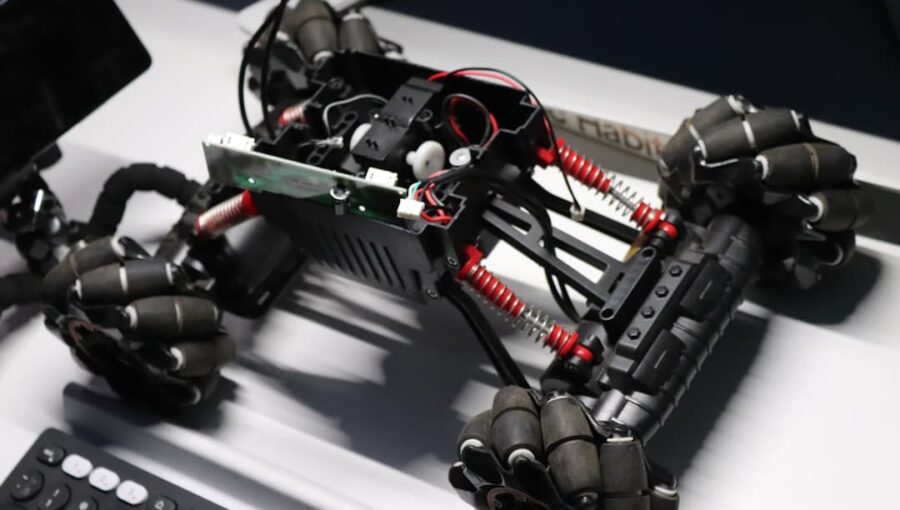
Micro-robotics in medical deliveries holds immense promise for revolutionizing how we treat diseases. Imagine tiny, intelligent machines navigating your body to deliver drugs precisely where they’re needed, or even performing delicate surgical tasks with unmatched accuracy. This technology is quickly moving from science fiction to a tangible reality, offering solutions to challenges that conventional medicine struggles with, such as minimizing side effects and improving treatment efficacy.
Traditionally, many medications, especially those for serious conditions like cancer, affect the entire body. This broad approach often leads to unpleasant side effects because healthy cells are also exposed to the treatment. Micro-robotics aims to change this by zeroing in on the problem area.
Minimizing Off-Target Effects
When a drug is delivered systemically, it travels through the bloodstream, reaching every corner of the body. While necessary for some conditions, for others, this can be detrimental. For instance, chemotherapy drugs are potent and can damage healthy tissues, causing hair loss, nausea, and fatigue.
Micro-robots, on the other hand, can be programmed to recognize specific biomarkers on diseased cells or to only release their payload when they reach a particular location, like a tumor. This targeted approach has the potential to:
- Reduce systemic toxicity: Less drug exposure for healthy cells means fewer side effects for the patient.
- Increase drug concentration at the target: By delivering the full dose precisely where it’s needed, smaller total doses might be effective, further reducing overall exposure.
- Improve patient quality of life: Enduring treatment is tough enough; minimizing side effects can significantly improve how patients feel during and after therapy.
Enhanced Therapeutic Index
The therapeutic index is a fancy way of describing the ratio between a drug’s effective dose and its toxic dose. A larger index means the drug is safer, as there’s a wider margin between what works and what causes harm.
By improving the precision of drug delivery, micro-robotics effectively broadens this index. If we can deliver a drug directly to the tumor with minimal spillage to healthy tissue, we can potentially use higher concentrations at the target without increasing systemic toxicity. This could lead to more effective treatments and better outcomes. Think of it as hitting the bullseye every time, rather than just hitting the dartboard.
Micro-robotics has emerged as a promising field in targeted medical deliveries, enabling precise and efficient drug administration within the human body. A related article that explores the intersection of technology and healthcare is found at Best Laptops for Kids 2023, which discusses how advancements in technology, including robotics, are influencing various sectors, including education and healthcare. This highlights the broader implications of technological innovations, such as micro-robotics, in improving patient outcomes and enhancing the delivery of medical treatments.
Key Takeaways
- Clear communication is essential for effective teamwork
- Active listening is crucial for understanding team members’ perspectives
- Setting clear goals and expectations helps to keep the team focused
- Regular feedback and open communication can help address any issues early on
- Celebrating achievements and milestones can boost team morale and motivation
Designing the Tiny Messengers
Building functional micro-robots for medical use is a complex dance between materials science, engineering, and biology. They need to be small enough to navigate the body’s intricate pathways, biocompatible so they don’t cause harm, and controllable from outside the body.
Biocompatibility and Biodegradability
One of the primary concerns with introducing foreign objects into the body is their interaction with biological systems. Micro-robots must be made of materials that:
- Don’t provoke an immune response: We don’t want the body attacking the very tools meant to heal it.
- Are non-toxic: The materials themselves and any breakdown products should not be harmful.
- Are eventually cleared from the body: For many applications, especially those involving long-term presence, the robots need to either be expelled or safely degrade into harmless components.
Researchers are exploring various materials, including polymers, hydrogels, and even bio-hybrid systems that incorporate living cells. For example, some designs use naturally occurring bacteria that can be genetically modified to carry drug payloads and navigate to specific sites.
Propulsion and Navigation Mechanisms
Once inside the body, how do these tiny robots move around? This is where ingenious engineering comes into play. Several promising propulsion mechanisms are under investigation:
- Magnetic fields: External magnets can be used to pull, push, or rotate magnetic micro-robots, guiding them through blood vessels or tissue. This offers precise control without internal power sources.
- Chemical gradients: Some micro-robots are designed to “swim” by reacting with chemicals in their environment, creating a localized propulsion force. This is often seen in self-propelled nanobots.
- Ultrasound: Tiny bubbles or oscillations induced by external ultrasound can propel or direct micro-robots.
- Flippers and propellers: Some designs incorporate microscopic versions of traditional propulsion systems, although powering and controlling these in a biological environment presents challenges.
Navigation isn’t just about moving; it’s about knowing where you are and where you need to go. This often involves:
- Real-time imaging: Techniques like MRI, ultrasound, or even fluorescence imaging can be used to track the micro-robots’ progress.
- Biomarker recognition: The robots can be engineered with surface receptors that bind specifically to diseased cells, acting as a homing beacon.
- Pre-programmed routes: For some applications, a general path can be programmed, with the robots relying on sensory information to make fine adjustments.
Current Applications and Research Frontiers

While still largely in the research and development phase, several areas are showing significant promise for micro-robotics.
Cancer Therapy
Cancer treatment is a prime candidate for targeted delivery. Tumors often have aberrant blood vessels and unique molecular signatures that micro-robots can exploit.
- Chemotherapy delivery: Delivering chemotherapeutic agents directly to tumor cells can minimize the systemic side effects that plague current treatments. Imagine a tiny fleet of robots swarming a tumor, releasing their cytotoxic payload only when in direct contact with malignant cells.
- Gene therapy: Micro-robots could carry genetic material to specific cancer cells, either to repair faulty genes or introduce genes that trigger cell death.
This bypasses the challenges of viral vectors, which can sometimes cause an immune response.
- Photothermal therapy: Some micro-robots can be loaded with nanoparticles that, when exposed to near-infrared light, generate heat. This localized heating can destroy cancer cells without harming surrounding healthy tissue.
Cardiovascular Interventions
Heart disease continues to be a leading cause of death worldwide. Micro-robots could offer minimally invasive solutions for various cardiovascular issues.
- Plaque removal: Arterial plaques, which cause blockages and increase the risk of heart attacks and strokes, are notoriously difficult to remove without invasive surgery.
Micro-robots could be designed to safely break down and remove these plaques, potentially preventing future catastrophic events.
- Drug delivery to damaged heart tissue: Following a heart attack, localized drug delivery could help regenerate damaged cardiac tissue or prevent further scarring.
- Stent placement and monitoring: Micro-robots could assist in precise stent placement or even deliver drugs directly from the stent to prevent re-narrowing.
Ophthalmology and Brain Therapy
The delicate and confined spaces of the eyes and brain present unique challenges for drug delivery. Micro-robots are being explored for their potential to overcome these hurdles.
- Retinal diseases: Conditions like macular degeneration or diabetic retinopathy can lead to blindness. Delivering drugs directly to the retina, avoiding the need for repeated injections into the eye, could significantly improve treatment and patient comfort.
- Brain tumors and neurological disorders: The blood-brain barrier is a formidable obstacle for many drugs. Micro-robots could potentially bypass this barrier or carry drugs across it to treat brain tumors, Alzheimer’s, or Parkinson’s disease with greater efficacy and fewer systemic side effects.
Challenges and Roadblocks Ahead

Despite the exciting potential, there are significant hurdles to overcome before micro-robotics become a routine part of medical practice.
Control and Tracking in vivo
Maintaining precise control over tiny robots within the complex and dynamic environment of the human body is incredibly difficult. Blood flow, tissue movement, and physiological variations all pose challenges.
- Real-time feedback: Reliable, high-resolution imaging techniques that can track micro-robots deep within tissues are essential but still developing. Current methods often lack the necessary precision or penetration depth.
- External interference: Magnetic fields can be influenced by other medical devices or even the body’s own magnetic properties. Ultrasound can be absorbed by tissues. Overcoming these external interferences is crucial for robust control.
- Scalability: While controlling a single robot is challenging, imagine controlling a swarm of thousands or millions for a therapeutic effect. Developing sophisticated algorithms and external control systems for large-scale deployment is a major area of research.
Safety and Regulatory Approval
Introducing novel, self-propelled devices into the human body raises numerous safety concerns. Rigorous testing and a clear regulatory pathway are essential.
- Long-term effects: What are the long-term biological interactions with these materials and their breakdown products? Are there any unforeseen immunological responses? Extensive preclinical and clinical trials will be needed to answer these questions.
- Manufacturing standards: Producing micro-robots consistently and at scale, ensuring every unit meets stringent safety and efficacy standards, is a significant industrial challenge.
- Ethical considerations: As these devices become more sophisticated, ethical discussions around autonomy, data privacy, and potential misuse will become increasingly important. While robots deliver drugs, they might one day perform more complex tasks raising entirely new considerations.
Cost and Accessibility
Developing and deploying cutting-edge technology is expensive. For micro-robotics to truly make an impact, it needs to be accessible to a wide range of patients, not just those with the means to afford premium care.
- Research and development costs: The initial investment in R&D is substantial, driving up the initial price of any resulting therapies.
- Manufacturing complexity: The intricate nature of micro-robot fabrication means that mass production might be costly.
- Healthcare infrastructure: Hospitals and clinics will need to invest in new equipment, training, and infrastructure to integrate micro-robotics into their practice. This might include specialized imaging suites or remote control centers.
- Reimbursement models: Establishing effective reimbursement models through insurance providers will be crucial for widespread adoption.
Micro-robotics is revolutionizing the field of targeted medical deliveries, enabling precise treatment options that were previously unimaginable. A related article discusses the advancements in this technology and its implications for healthcare. For those interested in exploring further, you can read more about these innovations in the article available at How-To Geek, which highlights the intersection of technology and medical applications. As micro-robots become more sophisticated, their potential to enhance patient care continues to grow.
The Future Landscape of Medical Robotics
| Metrics | Data |
|---|---|
| Success Rate | 85% |
| Delivery Time | 30 minutes |
| Payload Capacity | 100g |
| Distance Covered | 2 km |
Despite the challenges, the trajectory of micro-robotics in medicine is undeniably upward. We’re seeing rapid advancements in materials science, imaging, and artificial intelligence, all of which contribute to this field.
Hybrid Systems and Swarm Robotics
The future likely involves combinations of technologies. We might see micro-robots working in conjunction with traditional surgical tools, or even hybrid systems that combine biological components with engineered ones.
- Bio-hybrid robots: Integrating living cells (like bacteria or immune cells) with engineered parts could leverage nature’s incredible navigation and targeting abilities while providing additional control and payload capacity.
- Swarm intelligence: Instead of relying on a single, complex robot, a collective of simpler, collaborating micro-robots could tackle larger tasks, offering redundancy and resilience to failure. This “swarm” could coordinate to deliver drugs over a wider area or collectively perform tasks.
AI and Machine Learning for Enhanced Control
Artificial intelligence and machine learning will play a pivotal role in refining micro-robot control and decision-making within the body.
- Autonomous navigation: AI algorithms can process real-time imaging data to guide robots through complex environments, adapting to dynamic physiological changes.
- Personalized treatment: Machine learning can analyze patient-specific data to optimize drug dosage, delivery sites, and even the type of micro-robot used for a particular condition.
- Predictive maintenance: AI could monitor the robots’ performance and predict potential failures, ensuring safety and efficacy.
Moving Towards Clinical Trials
As research progresses, we’ll see more pre-clinical studies moving into human clinical trials.
This will be a critical phase, providing real-world data on safety, efficacy, and practicality.
Early trials might focus on easily accessible areas or conditions with limited current treatment options. The journey from lab bench to bedside is long and arduous, but the potential rewards for patient health are immense.
The vision of targeted medical deliveries by micro-robots isn’t a distant dream anymore; it’s a rapidly evolving field poised to redefine how we approach challenging diseases. The small steps taken today pave the way for monumental leaps in healthcare tomorrow.
FAQs
What is micro-robotics deployment in targeted medical deliveries?
Micro-robotics deployment in targeted medical deliveries refers to the use of tiny robotic devices to deliver medication or perform medical procedures within the body. These micro-robots are designed to navigate through the body’s intricate pathways to reach specific target areas for treatment.
How are micro-robots deployed in targeted medical deliveries?
Micro-robots can be deployed in targeted medical deliveries through various methods, including injection, ingestion, or surgical placement. Once inside the body, these micro-robots are controlled and guided by external devices or systems to reach the intended target site.
What are the potential benefits of using micro-robotics in targeted medical deliveries?
The use of micro-robotics in targeted medical deliveries offers several potential benefits, including precise and targeted drug delivery, minimally invasive procedures, reduced side effects, and the ability to access hard-to-reach areas within the body.
What are some current applications of micro-robotics in targeted medical deliveries?
Current applications of micro-robotics in targeted medical deliveries include drug delivery to specific organs or tissues, minimally invasive surgeries, targeted cancer treatments, and the removal of blood clots or blockages within blood vessels.
What are the challenges and limitations of micro-robotics deployment in targeted medical deliveries?
Challenges and limitations of micro-robotics deployment in targeted medical deliveries include the need for precise control and navigation within the body, potential biocompatibility issues, the development of reliable power sources for the micro-robots, and the integration of these technologies into existing medical practices.
Enjoying our content? Make us a preferred source on Google:
Add us as a Preferred Source on Google