

When it comes to home automation and privacy, the big question often boils down to this: should your smart home devices process information locally, right there in your house, or should they send it up to the cloud? The short answer is that for better privacy, local AI processing is generally the way to go. Cloud processing, while convenient and powerful, inherently involves sending your data outside your home, which introduces more privacy risks. This article will dive into why that is, the trade-offs involved, and what to consider when building or choosing your smart home setup.
The Core Difference: Where Your Data Lives and Gets Processed
Understanding the fundamental distinction between local AI and cloud processing is key to grasping their privacy implications. It’s about where the actual “thinking” happens with your smart home data.
Local AI: Your Home, Your Data
With local AI processing, the computational work – analyzing camera feeds, interpreting voice commands, recognizing faces, or even just deciding when to turn on a light based on a sensor – all happens directly on the device itself or on a hub within your home network. Think of it like this: your smart speaker processes your voice command to turn off the lights entirely within the speaker’s own hardware, without ever sending a recording of your voice to an external server. The raw data (e.g., audio, video, sensor readings) never leaves your local network.
Cloud Processing: Off-Premise Intelligence
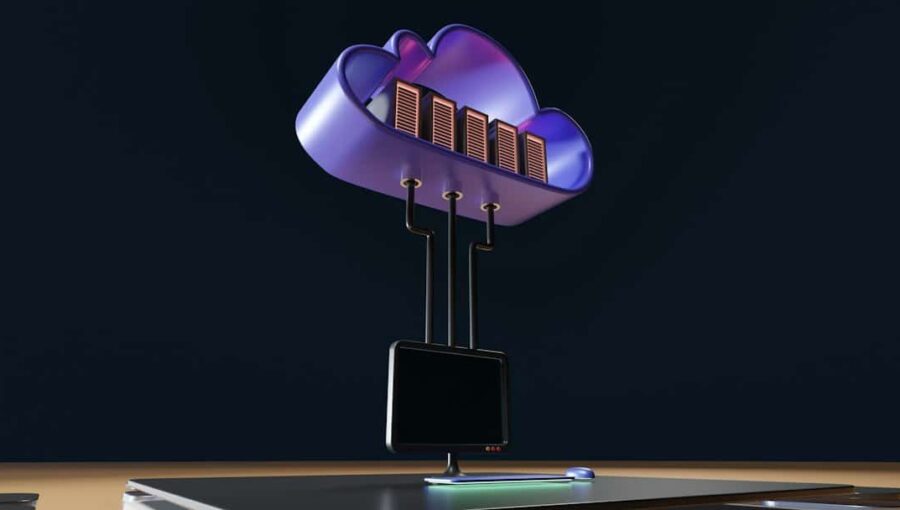
Cloud processing, on the other hand, means that your smart device collects data and then sends it over the internet to a remote server farm (the “cloud”) owned by the device manufacturer or a third-party service provider. That server then performs the heavy lifting: analyzing the video, transcribing the audio, running complex algorithms, and sending back instructions or processed information to your device. When you ask a cloud-based smart assistant a question, your voice recording travels to their servers, is analyzed there, and then a response is sent back to your device.
In the ongoing debate between Local AI and Cloud Processing for home automation privacy, it’s essential to consider the implications of data security and ownership in various technological contexts. A related article that delves into the concept of digital ownership and the evolving landscape of technology is available at What is NFT Image?. This article explores how non-fungible tokens (NFTs) are changing the way we perceive ownership in the digital realm, which can parallel discussions about privacy and data control in home automation systems.
Key Takeaways
- The training data includes information and events up to October 2023.
- Insights and knowledge are based on a wide range of sources available until the cutoff date.
- No updates or developments occurring after October 2023 are included in the training.
- Users should verify current information from reliable sources for the latest updates.
- The model’s responses reflect the context and knowledge available up to the specified date.
Privacy Implications: Why Location Matters

The location of data processing has direct and significant consequences for your privacy. It boils down to control, exposure, and potential misuse.
Reduced Exposure with Local Processing
When data stays local, it minimizes the number of “hops” it takes and the number of entities that have access to it. Your voice commands aren’t recorded and stored on external servers, your camera feeds aren’t streamed to third-party data centers for analysis, and your daily routines aren’t logged by a company you don’t directly interact with. This dramatically reduces the surface area for potential data breaches. If a hacker breaches a cloud server, they could potentially access data from millions of users. If they breach your local device, they only get your data, and even then, often only what’s stored on that specific device.
Data Retention and Deletion Policies
Cloud providers typically have their own data retention policies, which can be vague or allow them to store your data for extended periods. Even if they promise to delete it, there’s often no way to verify this. With local processing, you are in control of the data. If your device records something, it’s stored on your local storage, and you can delete it when you choose.
There’s no intermediary keeping copies.
This gives you a much stronger sense of ownership and control over your digital footprint.
Third-Party Access and Data Sharing
This is a major privacy concern with cloud processing. When your data is in the cloud, it’s susceptible to being shared with or accessed by third parties, often under broad terms of service agreements that most people don’t read thoroughly. This could include marketing companies, researchers, or even law enforcement, sometimes without your explicit knowledge or consent beyond what’s buried in a privacy policy. With local processing, the data never leaves your home network, making it much harder for external entities to access it without direct physical access to your devices or a warrant specifically targeting your local network.
The Risk of Server Breaches
Cloud servers, despite their security measures, are constant targets for cyberattacks. High-profile breaches of major tech companies are regular occurrences. If your personal home automation data – like when you leave and return, who visits, what you say – is stored on these servers, it becomes a potential target. A local system, while not entirely immune to attacks (especially if connected to the internet), presents a much smaller and less attractive target for large-scale data theft.
Government and Law Enforcement Access
In many jurisdictions, law enforcement can compel cloud service providers to turn over user data without a warrant in certain circumstances, or with a warrant that you might not even be aware of. Because the data is held by a third party, it’s easier for authorities to obtain. With local processing, law enforcement would typically need a warrant specific to your home and network to access your data, which is a higher bar to clear and offers more legal protection.
Advantages of Cloud Processing (Beyond Privacy)

While local processing shines in privacy, cloud processing isn’t without its significant advantages. These benefits often explain why so many smart home devices rely on it.
Enhanced Features and Capabilities
Cloud services often bring massive computational power and vast databases that simply aren’t feasible to put on a small, inexpensive smart home device. This enables sophisticated features like highly accurate voice recognition, advanced facial recognition, complex predictive analytics (e.g., “learning” your routines), and integration with a wide array of online services.
A local AI might struggle to understand complex commands or identify obscure objects, whereas a cloud AI, backed by immense processing power and data, can do so with ease.
Over-the-Air Updates and Feature Expansion
One of the biggest perks of cloud-connected devices is their ability to receive regular software updates and new features seamlessly. Manufacturers can push out bug fixes, security patches, and entirely new functionalities to devices around the world without requiring physical intervention. For local-only devices, updates might be less frequent, more challenging to implement, or might require more direct user interaction.
Easier Setup and Maintenance
Cloud-based systems are often designed for ease of use.
Setting up a new device typically involves a quick pairing process, and the cloud handles much of the configuration. Maintenance, like backing up data or ensuring continuous operation, is handled by the provider, removing that burden from the user. Local-only systems can sometimes be more complex to set up and manage, especially for less tech-savvy users.
Scalability and Integration
Cloud platforms are inherently scalable.
Whether you have one smart device or a hundred, the cloud can usually handle the load. They also facilitate easier integration between different devices and services, as the cloud acts as a central hub. This allows for more complex automations and cross-device communication that might be difficult to achieve purely locally, especially across different brands.
Cost-Effectiveness for Manufacturers
From a manufacturer’s perspective, relying on cloud processing can significantly reduce the per-device cost.
They don’t need to put expensive, powerful processors into every smart speaker or camera if the heavy lifting is done remotely. This allows them to offer smart devices at more affordable price points, making them accessible to a wider audience.
Advantages of Local Processing (Beyond Privacy)
Beyond the privacy benefits, local processing offers several practical advantages that can significantly improve your smart home experience.
Faster Response Times
Since data doesn’t have to travel to remote servers and back, local processing often results in significantly faster response times. When you say “turn on the light,” a locally processed command can trigger the action almost instantaneously. With cloud processing, there’s always a slight delay due to network latency – the time it takes for data to travel to the cloud and for the command to return. This difference can be particularly noticeable with time-sensitive automations.
Greater Reliability and Offline Operation
Cloud-dependent devices are, by definition, reliant on a constant internet connection. If your internet goes down, or if the cloud service experiences an outage, your smart home devices might become useless or severely limited. Local processing, however, means your devices can continue to function even without an internet connection. Your lights will still turn on, your alarm system will still arm, and your motion sensors will still trigger local events, as long as your local network (Wi-Fi) is operational. This makes your smart home much more robust and resilient.
Reduced Bandwidth Usage
Sending constant streams of video, audio, and sensor data to the cloud consumes a significant amount of internet bandwidth. If you have multiple cameras or devices that frequently upload data, this can strain your home internet connection, especially if you have data caps or slower speeds. Local processing keeps most of this data traffic within your home network, freeing up your internet bandwidth for other uses and potentially saving on data overage charges.
Enhanced Security (Beyond Privacy)
While privacy focuses on data access, security also plays a role. With local processing, there are fewer external points of failure. The fewer connections your device makes to external servers, the fewer potential vulnerabilities exist for attackers to exploit. It reduces the attack surface by keeping sensitive operations within your controlled environment.
In the ongoing debate about Local AI versus Cloud Processing for home automation privacy, it’s essential to consider the implications of device security and user control. A related article discusses the requirements for installing Windows 11 without TPM, which highlights the importance of hardware specifications in ensuring secure computing environments. For more insights on this topic, you can read the article here. Understanding these technical aspects can help homeowners make informed decisions about their automation systems and the privacy of their data.
Hybrid Approaches and What to Look For
| Metric | Local AI Processing | Cloud Processing |
|---|---|---|
| Data Privacy | High – Data stays within the home network | Moderate to Low – Data transmitted to external servers |
| Latency | Low – Real-time response with minimal delay | Higher – Dependent on internet speed and server load |
| Security Risks | Lower – Reduced exposure to external attacks | Higher – Potential for data breaches on cloud servers |
| Data Control | Full control by user | Limited control, managed by cloud provider |
| Processing Power | Limited by local hardware capabilities | Scalable and powerful cloud resources |
| Cost | One-time hardware investment | Ongoing subscription or usage fees |
| Software Updates | Manual or automatic, depending on device | Automatic and frequent updates |
| Dependence on Internet | Minimal – works offline | High – requires stable internet connection |
The reality is that many smart home systems use a blend of local and cloud processing, often referred to as a “hybrid” approach. Understanding this can help you make more informed choices.
The Hybrid Model Explained
In a hybrid model, some tasks are handled locally for speed and privacy, while others are offloaded to the cloud for advanced capabilities.
For example, a smart camera might perform motion detection and basic object recognition (e.
g., “person detected”) locally, but send only short clips or metadata to the cloud for more advanced AI analysis (e.g., “recognize specific person”) or long-term storage. Similarly, a smart speaker might process simple commands like “turn off the lights” locally, but send complex queries or information requests to the cloud.
Identifying Local vs. Cloud Processing in Products
This can be tricky because manufacturers don’t always clearly state how much processing is done locally versus in the cloud. Here’s what to look for and questions to ask:
- Offline Functionality: Does the device claim to work even without an internet connection (beyond basic Wi-Fi)? If so, it likely has some local processing capabilities.
- Privacy Policies: While often dense, privacy policies should detail what data is collected, where it’s stored, and for how long. Look for specifics about data processing location.
- Edge AI or On-Device Processing: Manufacturers might use terms like “Edge AI,” “on-device AI,” or “local intelligence” to highlight their local processing capabilities.
- Subscription Requirements: Does the device require a subscription for basic features or only for advanced ones? If basic features work without a subscription, they might be local. Cloud-based advanced features often come with a recurring fee.
- Storage Options: Does the device offer local storage options (e.g., an SD card slot for cameras, or an optional hub with local storage)? This is a strong indicator of local processing for recorded data.
- Ask the Manufacturer: If you’re serious about privacy, don’t hesitate to contact the manufacturer directly and ask specific questions about their data processing architecture.
Balancing Convenience and Privacy
Choosing between local and cloud, or a hybrid approach, is ultimately a balancing act. If your absolute top priority is privacy and resilience, then lean heavily towards devices with strong local processing capabilities. Be prepared that this might mean sacrificing some advanced features or ease of setup.
If convenience, cutting-edge features, and broad integration are more important, and you’re comfortable with the associated privacy trade-offs, then cloud-heavy systems might be a better fit. For most people, a well-chosen hybrid system often provides a good compromise, allowing for local processing of sensitive data while leveraging the cloud for less critical, but highly useful, functions. The key is to be aware of where your data is going and to make an informed decision based on your personal comfort level with privacy risks.
FAQs
1. What is the difference between local AI and cloud processing for home automation privacy?
Local AI involves processing data directly on the device or within the home network, while cloud processing sends data to remote servers for analysis and decision-making.
2. How does local AI contribute to better privacy in home automation?
Local AI keeps sensitive data within the confines of the home, reducing the risk of potential privacy breaches that may occur when data is transmitted to external servers for processing.
3. What are the potential privacy risks associated with cloud processing in home automation?
Cloud processing may expose personal data to security threats during transmission and storage on external servers, increasing the likelihood of unauthorized access or data breaches.
4. Can local AI provide real-time responses in home automation systems?
Yes, local AI can offer real-time responses as data processing occurs directly on the device or within the home network, eliminating the latency that may be experienced when relying on cloud processing.
5. How can users ensure their privacy is protected when using cloud processing for home automation?
Users can enhance privacy protection by implementing strong encryption measures, regularly updating security protocols, and carefully reviewing the privacy policies of the cloud service providers they choose to use.
Enjoying our content? Make us a preferred source on Google:
Add us as a Preferred Source on Google