

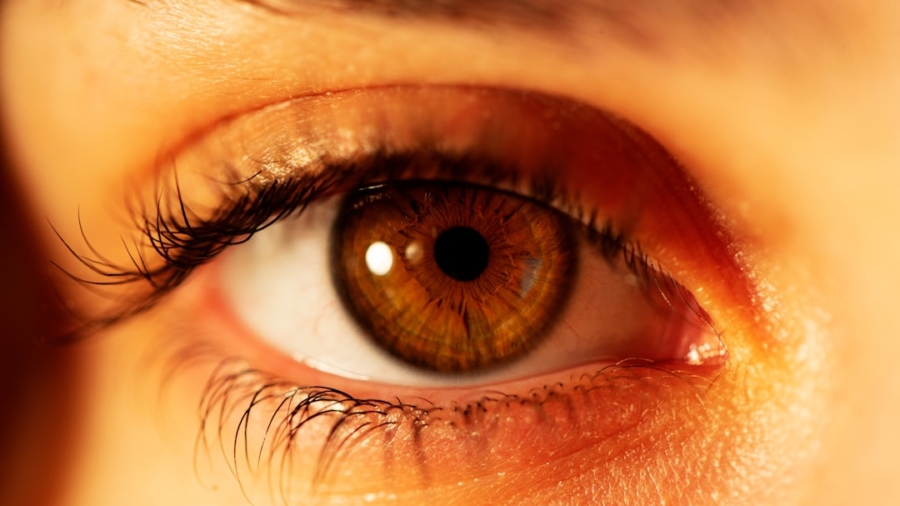
Let’s dive into how your eyes can actually boost the power and smoothness of your mixed reality experiences.
What’s the Big Idea?
Essentially, eyetracking combined with foveated rendering means your headset figures out exactly where you’re looking and then puts all its processing effort into rendering that precise spot at the highest quality. Everything else, the stuff in your peripheral vision that you’re not paying attention to, gets rendered with less detail. This smart division of labor frees up a ton of processing power, leading to smoother frame rates, sharper visuals where it counts, and allows for more complex and engaging mixed reality worlds. It’s like giving your computer glasses for your eyes, but instead of correcting vision, it’s optimizing performance.
In the realm of enhancing mixed reality experiences, the article on leveraging eye-tracking and foveated rendering highlights innovative techniques to optimize performance. For those interested in exploring the broader implications of advanced technology in everyday devices, a related article discusses the capabilities of the Samsung Galaxy Chromebook 2 360, showcasing how such devices can support immersive applications. You can read more about it here: New World of Possibilities with the Samsung Galaxy Chromebook 2 360.
The Power of Your Gaze: Eyetracking in MR
Eyetracking in mixed reality isn’t just a fancy add-on; it’s becoming a fundamental piece of the puzzle for unlocking truly immersive and performant experiences. Think of it as giving your headset a direct line of communication to your focus.
How Eyetracking Works
At its core, eyetracking involves miniaturized cameras inside the headset that monitor the movement of your pupils. They’re usually positioned to capture reflections of infrared light off your eyes. By analyzing how these reflections change as your eye moves, the system can precisely determine where you’re looking on screen.
Camera Placement and Optics
The exact placement of these cameras is crucial. They need to have a clear view of your eyes without being intrusive or causing discomfort. Specialized lenses and optics are employed to ensure accurate tracking even with slight head movements or varying eye shapes. Small, high-resolution cameras are ideal for capturing the subtle nuances of pupil dilation and movement.
Infrared Illumination
To make the tracking possible, especially in varying lighting conditions, the system uses infrared (IR) illuminators. These are typically low-power LEDs that emit light invisible to the human eye. The IR light illuminates the eye, creating reflections that the cameras can easily detect and analyze. This silent, invisible illumination is key to maintaining a natural viewing experience.
Algorithms for Interpretation
The raw data from the cameras isn’t immediately useful. Sophisticated algorithms are the brains behind the operation, interpreting the patterns of pupil movement and dilation. These algorithms translate the pixel data into precise gaze coordinates, often calculating the point of focus within milliseconds. Machine learning plays a significant role here, allowing the system to adapt to individual eye characteristics and improve accuracy over time.
Benefits Beyond Rendering
While foveated rendering is the headline act, eyetracking brings a host of other advantages to the mixed reality table.
More Natural Interaction
Imagine pointing at objects with your gaze and selecting them with a subtle blink or a button press.
Eyetracking can enable this kind of intuitive, hands-free interaction, making navigating menus or manipulating virtual objects feel much more natural and less clunky.
Your gaze becomes another input method.
Enhanced Social Presence
In multi-user mixed reality experiences, knowing where others are looking is vital for conveying social cues and understanding engagement. Eyetracking can allow virtual avatars to mirror the real-world gaze direction of their users, fostering a stronger sense of connection and shared experience. It’s the difference between just seeing a character and feeling like you’re with someone.
Accessibility Features
For individuals with limited mobility, eyetracking can be a game-changer, providing a means to interact with mixed reality environments and applications without needing physical controllers. It can open up VR and MR to a wider audience.
Personalization and Analytics
Eyetracking data can be used to personalize user experiences, adapting content or interfaces based on individual viewing habits. For developers, it offers invaluable insights into how users interact with their applications, helping to identify areas of confusion or interest for future improvements.
Foveated Rendering: The Smart Sharpening Tool
Now, let’s talk about the magic trick that makes eyetracking so impactful: foveated rendering. This is where the processing power gets strategically deployed.
The Science of Human Vision
The concept behind foveated rendering directly mirrors how our own eyes work. Our vision isn’t uniformly sharp across our entire field of view. We have a small area of extremely high detail in the center of our vision, called the fovea, where we can perceive fine details. Everything outside this central focus area is rendered with lower resolution and less detail, yet our brain generally doesn’t notice the difference because we’re not actively attending to it.
Peripheral Vision and Detail
Think about reading a book. You focus intensely on the letters directly in front of you. The words on the edges of the page are still visible, but you’re not processing them with the same level of detail. Foveated rendering replicates this biological efficiency.
Density of Photoreceptors
The human eye has a much higher density of photoreceptor cells (cones) in the fovea, which are responsible for sharp, detailed vision in good light. As you move away from the fovea, the density of cones decreases, and rods (more sensitive to low light and movement) become more prevalent, contributing to our perception of the wider scene.
Types of Foveated Rendering
There are a few ways this technique is implemented, each with its own nuances.
Static Foveated Rendering
This is the simplest form. The “fovea” is essentially fixed to the center of the screen. While it saves some rendering effort, it doesn’t account for actual gaze direction, so it’s not as effective as dynamic methods. It’s a good starting point but limited in its application.
Dynamic Foveated Rendering (DFR)
This is where the real power lies. DFR uses eyetracking data to dynamically adjust the rendering resolution based on where the user is looking. The central foveated area is rendered at full resolution, while the periphery is rendered at progressively lower resolutions.
Gaze-Contingent Rendering
This is the most common form of DFR. The rendering pipeline is updated in real-time with the user’s gaze point. As the eyes move, the rendering focus shifts instantly to maintain the high-resolution detail only where it’s needed. This requires very low latency between eye tracking and rendering updates.
Render Buffers and Downscaling
To achieve DFR, developers typically render the scene multiple times at different resolutions. A full-resolution buffer captures the foveated area, while lower-resolution buffers are generated for the peripheral regions. These lower-resolution buffers are then upscaled (often using smart interpolation techniques) to match the display resolution, but the lost detail isn’t perceivable because the user isn’t looking there intently.
Multi-Resolving Rendering
This is an advanced technique that can involve rendering different parts of the scene at varying resolutions within a single pass. It’s more complex to implement but can offer even greater efficiency by avoiding the need for multiple render targets and complex compositing.
The Performance Gains: What Does This Actually Mean?
The combination of precise eyetracking and intelligent foveated rendering leads to tangible improvements that make mixed reality experiences better for everyone.
Smoother Frame Rates
This is perhaps the most significant and immediate benefit. By offloading rendering tasks from the peripheral vision, the GPU has more processing power available. This translates directly into higher and more stable frame rates, which are crucial for a comfortable and immersive VR/MR experience. Dropped frames or stuttering can quickly lead to motion sickness.
Reduced GPU Load
The core idea is to reduce the number of pixels the GPU needs to render at full detail. Instead of rendering millions of pixels at high fidelity, the GPU can focus its resources on the much smaller area of the fovea. This can dramatically cut down on the computational load.
Consistent High-Quality Visuals Where It Matters
While blurry in the periphery, the area you’re actively looking at remains incredibly sharp and detailed. This creates a perception of higher overall visual fidelity, even if the total pixel count rendered at full quality is reduced. It’s a clever trick of perception.
More Complex and Detailed Worlds
With more processing power freed up, developers can afford to build more detailed and visually rich environments. They can add more complex geometry, higher-resolution textures, and more sophisticated lighting effects without pushing the hardware to its limits. This allows for more ambitious and believable mixed reality applications.
Increased Object Density
Developers can render more objects in the scene without impacting performance. This means more intricate virtual spaces, more interactive elements, and a generally more populated and vibrant mixed reality environment.
Advanced Visual Effects
The saved performance can be reinvested into more demanding visual effects, such as realistic lighting simulations, volumetric fog, intricate particle systems, and advanced shader effects. These elements contribute significantly to the overall immersion and realism of the MR experience.
Extended Battery Life
For standalone MR headsets, reducing the processing load can also lead to longer battery life. Less work for the GPU and CPU means less power consumption.
Efficient Processing Cycles
When the system isn’t tasked with rendering every single pixel to its maximum potential, the processors operate more efficiently. This efficiency translates directly into less power draw.
Reduced Heat Generation
Less demanding processing also means less heat generated by the components. This can contribute to a more comfortable user experience, as headsets can be designed to be lighter and more passively cooled.
In the quest to enhance mixed reality experiences, the integration of eye-tracking and foveated rendering has shown promising results in optimizing performance. A related article discusses the latest advancements in technology, highlighting some of the best tech products of 2023 that could further influence the development of immersive environments. For more insights on cutting-edge innovations, you can read about these products here. This exploration into the intersection of hardware and software is crucial for developers aiming to create more efficient and engaging mixed reality applications.
Challenges and Future Directions
While the potential is huge, there are still hurdles to overcome and exciting avenues for future development.
Latency: The Enemy of Immersion
The biggest challenge is ensuring that the eyetracking data is processed and the rendering is adjusted with virtually no perceptible latency. Any delay between your eye movement and the visual update can break immersion and even cause motion sickness.
Real-time Gaze Prediction
Developing algorithms that can accurately predict where your gaze will move next can help pre-render certain areas or prepare the rendering pipeline in advance, further reducing perceived latency.
Hardware Integration
The tight integration of eyetracking sensors, processors, and the display pipeline is critical. This requires close collaboration between hardware manufacturers and software developers.
Accuracy and Calibration
Eyetracking systems need to be accurate and reliably calibrated to each individual user. Without proper calibration, the foveated rendering might be misaligned with the user’s actual gaze, leading to visual artifacts and a degraded experience.
User Calibration Routines
Developing quick and intuitive calibration routines that users can perform when they first put on the headset is essential. These routines often involve looking at specific points on the screen.
Adaptive Calibration
The system should ideally adapt to minor shifts in headset position or eye characteristics over time without requiring constant re-calibration.
Developer Adoption and Tools
For foveated rendering to become widespread, developers need easy-to-use tools and robust SDKs (Software Development Kits) that make implementing this technique straightforward.
Robust SDKs and APIs
Clear and comprehensive SDKs that abstract away the complexities of eyetracking and DFR will be crucial. These should provide simple interfaces for developers to define foveated regions and control rendering quality.
Performance Profiling Tools
Tools that allow developers to easily visualize and analyze the performance gains and potential issues related to foveated rendering will be invaluable for optimization.
The “Blurry Periphery” Problem
While the goal is to make the blurry periphery unnoticeable, sometimes it can still be apparent, especially if the transition between high and low resolution is too abrupt or if the user’s attention is inadvertently drawn to the periphery.
Smart Upscaling Algorithms
Research into more intelligent upscaling techniques that can introduce subtle detail or perceptual cues into the periphery without adding significant computational cost is ongoing.
Gradual Resolution Blending
Instead of sharp transitions, employing gradual blending of resolutions can create a smoother perceptual experience, making the lower-resolution areas less jarring.
The Future of Gaze-Driven MR
As eyetracking technology matures and becomes more affordable, its integration into mixed reality devices will become increasingly common. This will pave the way for a new generation of MR experiences that are not only more visually stunning but also more intuitive and performant.
Seamless Integration with Other Technologies
Imagine eyetracking working in tandem with hand tracking, haptic feedback, and even brain-computer interfaces to create unparalleled levels of immersion and interaction.
Contextual Awareness
Eyetracking can provide contextual awareness for other input methods. For instance, if you’re looking intently at a virtual button, a hand gesture near that button could be interpreted as a press, whereas the same gesture elsewhere might have a different function.
Enhanced Avatars
Beyond basic gaze mirroring, future avatars could leverage eyetracking for more nuanced emotional expression, subtle head tilts, and micro-expressions that convey personality and engagement.
Wider Applications Beyond Gaming
The benefits of eyetracking and foveated rendering extend far beyond entertainment. Think about training simulations, remote collaboration tools, architectural walkthroughs, and even medical applications where precise visualization is critical.
Training and Simulation
For complex technical training, the ability to focus on specific details of a virtual machine or a surgical procedure with pinpoint accuracy can significantly improve learning outcomes.
Design and Prototyping
Designers could use MR to review intricate product models or architectural designs, with their gaze direction informing the system about areas of interest and potential design flaws.
A More Natural and Intuitive Interface
Ultimately, the goal is to make mixed reality feel less like a technological interface and more like an extension of our own senses. Eyetracking is a key component in making that vision a reality, blurring the lines between the digital and physical worlds. It’s about making technology disappear into the experience.
FAQs
What is eyetracking?
Eyetracking is the process of measuring the point of gaze or the motion of an eye relative to the head. It is commonly used in research and technology to understand visual attention, behavior, and performance.
What is foveated rendering?
Foveated rendering is a technique that takes advantage of the human eye’s limited resolution to reduce the rendering workload in virtual reality and mixed reality applications. It focuses high-quality graphics on the area where the user is looking, while reducing the quality in the peripheral areas.
How does eyetracking and foveated rendering optimize mixed reality performance?
By using eyetracking to determine where the user is looking, foveated rendering can allocate more processing power to the user’s focal point, resulting in higher visual quality and performance. This optimization allows for more realistic and immersive mixed reality experiences.
What are the benefits of leveraging eyetracking and foveated rendering in mixed reality?
The benefits of leveraging eyetracking and foveated rendering in mixed reality include improved visual quality, reduced computational workload, increased performance, and a more immersive user experience. This can lead to more realistic and engaging mixed reality applications.
How is eyetracking and foveated rendering being used in mixed reality applications?
Eyetracking and foveated rendering are being integrated into various mixed reality applications, including gaming, training simulations, medical visualization, and industrial design. These technologies are helping to push the boundaries of what is possible in mixed reality experiences.
Enjoying our content? Make us a preferred source on Google:
Add us as a Preferred Source on Google