

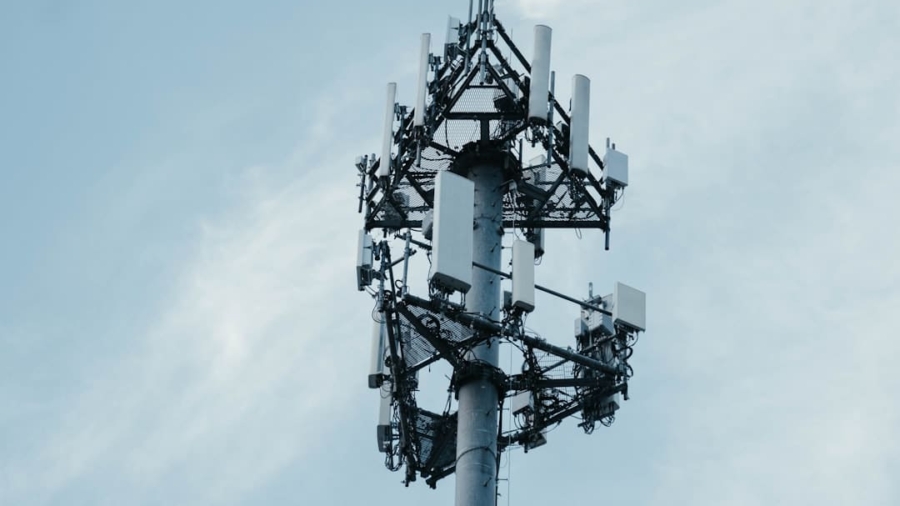
5G network slicing is a game-changer for critical healthcare applications because it allows us to create isolated, customized virtual networks on top of a shared physical 5G infrastructure. Think of it like this: instead of everyone on the internet driving on the same multi-lane highway, even if some drivers need to get to the hospital in an emergency, 5G slicing provides dedicated, optimized express lanes for specific types of traffic. For healthcare, this means we can design networks that guarantee the reliability, speed, and security needed for life-saving medical devices, remote surgeries, and real-time patient monitoring, all without being impacted by general internet congestion.
When we talk about critical healthcare, we’re not just talking about sending emails. We’re talking about situations where a millisecond of delay or a dropped connection can have severe, even fatal, consequences.
Traditional networks, even those with good bandwidth, weren’t designed with this level of assured performance in mind for every single device.
This is where the magic of network slicing comes in.
Understanding Network Slicing
At its core, network slicing lets us divide the physical 5G network into multiple virtual, independent networks. Each “slice” can be tailored with specific characteristics: think guaranteed bandwidth, super low latency, enhanced security protocols, or massive connection capacity.
- Isolation is Key: One of the biggest benefits is isolation. A slice dedicated to, say, remote surgery, will not be affected by someone downloading a huge video file on another slice of the same physical network. It’s like having entirely separate pipes even though they share the same underground trench.
- Customization for Purpose: This isn’t a one-size-fits-all approach. A slice for real-time patient monitoring might prioritize low latency and continuous throughput, while a slice for a hospital’s administrative data might focus more on security and high data volume rather than microsecond responsiveness.
Why Traditional Networks Fall Short
Most of us are used to ‘best effort’ internet. Our home Wi-Fi and even everyday mobile data strive to deliver good service, but they can’t guarantee it. If a lot of people are using the network, things can slow down. For critical healthcare, this simply isn’t good enough.
- Unpredictable Performance: In a traditional shared network, performance can fluctuate wildly depending on traffic demand. This unpredictability is a non-starter for applications where consistent, high performance is non-negotiable.
- Security Vulnerabilities: While general network security is robust, a dedicated, isolated slice can implement even higher levels of specific security measures, reducing exposure to wider network threats.
In the context of enhancing healthcare delivery through advanced technologies, the article on best software for literature review provides valuable insights into the tools that can support research in critical healthcare applications, including those leveraging 5G network slicing. This software can aid researchers in systematically reviewing existing literature, thereby facilitating a deeper understanding of how 5G technology can be effectively integrated into healthcare systems to improve patient outcomes and operational efficiency.
Key Takeaways
- Clear communication is essential for effective teamwork
- Active listening is crucial for understanding team members’ perspectives
- Conflict resolution skills are necessary for managing disagreements
- Trust and respect are the foundation of a successful team
- Collaboration and cooperation are key for achieving common goals
Real-Time Patient Monitoring and Wearables
Imagine a future where patients can be monitored continuously from the comfort of their homes, with critical data streamed instantly to healthcare providers. 5G network slicing makes this not just possible, but highly reliable.
Continuous Data Streams
For conditions like cardiac arrhythmias, diabetes, or post-operative recovery, continuous monitoring is invaluable. Wearable sensors collect vast amounts of data, and this data needs to reach medical professionals without delay or interruption.
- Guaranteed Throughput: A dedicated slice for patient monitoring can guarantee the necessary bandwidth to ensure all sensor data is transmitted in real-time, even during peak network usage. This means no missed spikes in blood pressure or sudden drops in oxygen saturation.
- Low Latency for Alerts: When an anomaly is detected, immediate alerts are crucial. The low-latency characteristic of a dedicated slice ensures these alerts reach caregivers instantaneously, allowing for swifter intervention.
Remote Diagnostics and Consultations
Beyond just monitoring, dedicated slices will enable more advanced remote diagnostics. Imagine a specialized doctor performing a real-time assessment of a patient’s breathing from hundreds of miles away, relying on high-definition video and immediate sensor feedback.
- High-Definition Video Streams: Remote consultations and diagnostics often require high-quality video for accurate visual assessment. Network slicing can guarantee the bandwidth for these streams, preventing pixelation or freezing that could obscure important details.
- Secure Data Transmission: Patient data is highly sensitive. A dedicated slice can enforce stringent encryption and access controls, ensuring that all remote diagnostic data remains private and secure, compliant with regulations like HIPAA.
Remote Surgery and Tele-Robotics

Perhaps one of the most exciting, yet demanding, applications is remote surgery and the control of tele-robotic medical devices. This isn’t science fiction anymore; it’s a rapidly developing field that absolutely relies on the capabilities of 5G network slicing.
Ultra-Reliable Low-Latency Communication (URLLC)
This isn’t just low latency; it’s ultra-reliable low latency. For remote surgery, every single command from the surgeon to the robotic arm must be executed precisely and immediately.
Any lag or dropped command could be disastrous.
- Sub-Millisecond Latency: 5G URLLC capabilities can provide end-to-end latency in the single-digit millisecond range. This is paramount for haptic feedback and real-time control, making the surgeon feel as if they are physically present.
- Redundancy and Reliability: Not only is speed important, but so is knowing the connection won’t fail. Network slices can be designed with built-in redundancies, ensuring that even if one path fails, another immediately takes over with no perceived interruption.
This level of reliability is non-negotiable for life-critical procedures.
Expanding Access to Specialized Care
Remote surgery has the potential to democratize access to highly specialized medical procedures. A top surgeon in a major city could perform a complicated operation on a patient in a rural or underserved area.
- Bridging Geographical Gaps: Patients no longer need to travel great distances for specialist care. This reduces patient burden, wait times, and potentially saves lives by allowing quicker access to expert intervention.
- Training and Collaboration: These dedicated networks can also be used for remote surgical training, allowing junior surgeons to observe and even participate under expert guidance, without being in the same room.
Emergency Medical Services (EMS) and Disaster Response

In emergencies, time is of the essence. 5G network slicing can transform how emergency medical services respond to incidents and manage disasters.
Pre-Hospital Care and Triage
Imagine paramedics en route to a serious accident. With a dedicated 5G slice, they could stream high-definition video of the patient’s condition to an emergency room physician, and receive real-time guidance while initiating advanced procedures.
- Real-time Data Transmission: Data like vital signs, ECG readings, and even ultrasound images can be sent from the ambulance directly to the hospital, allowing doctors to prepare for the patient’s arrival and potentially make critical decisions before they even reach the facility.
- Prioritized Communication: During mass casualty events, communication networks can become overwhelmed. A dedicated slice for EMS ensures that their voice and data communications are always prioritized and reliable, cutting through the noise.
Disaster Zone Connectivity
When a natural disaster strikes, existing communication infrastructure can be damaged or become unusable. Deploying temporary 5G networks with pre-configured slices for emergency response can be life-saving.
- Rapid Deployment and Provisioning: Emergency responders can quickly set up lightweight 5G base stations that instantly connect to dedicated slices, providing reliable communication for coordination, search and rescue, and temporary medical facilities.
- Secure Command and Control: A separate slice can be established for secure command and control communications, ensuring that critical instructions and strategizing among responders remain private and uninterrupted, even in chaotic environments.
In the rapidly evolving landscape of healthcare technology, the implementation of 5G network slicing is proving to be a game changer for critical applications. This innovative approach allows for dedicated bandwidth and low-latency connections, which are essential for telemedicine and remote patient monitoring. For those interested in exploring how advanced technologies can enhance user experiences, a related article discusses the capabilities of the Samsung S22 Ultra and its potential impact on various sectors. You can read more about it com/unlock-the-power-of-the-galaxy-with-the-samsung-s22-ultra/’>here.
As healthcare continues to integrate these cutting-edge solutions, the synergy between 5G and mobile devices will likely lead to significant improvements in patient care and outcomes.
Future of Healthcare Delivery and Operational Efficiency
| Metrics | Results |
|---|---|
| Latency Reduction | 50% improvement in latency for critical healthcare data transmission |
| Reliability | 99.999% network reliability for critical healthcare applications |
| Bandwidth Allocation | Dynamic allocation of bandwidth based on application requirements |
| Isolation | Isolation of critical healthcare traffic from non-critical traffic for enhanced security |
Beyond the immediate critical applications, 5G network slicing is poised to fundamentally reshape the entire healthcare ecosystem, improving operational efficiency and paving the way for entirely new medical innovations.
Smart Hospitals and Connected Devices
The concept of a “smart hospital” where every device, from infusion pumps to MRI machines, is connected and communicating in real-time requires a robust and specialized network.
- Massive IoT Connectivity: Hospitals are filled with countless devices. A specific slice optimized for massive IoT (Internet of Things) connectivity can manage thousands of connections simultaneously, ensuring each device has the necessary bandwidth and priority.
- Predictive Maintenance and Asset Tracking: Connected equipment can report its status in real-time, enabling predictive maintenance to prevent failures before they occur. Location services can track critical assets like wheelchairs or specialized equipment within the hospital, reducing wasted time.
AI and Machine Learning in Diagnostics
The future of diagnostics leans heavily on artificial intelligence and machine learning, which require high-speed data transfer and processing, often in the cloud.
- Rapid Image Transmission: AI-powered diagnostic tools for X-rays, MRIs, and pathology slides require massive image files to be transferred quickly and securely to cloud-based AI engines for analysis. Dedicated slices can provide the necessary speed and guaranteed delivery.
- Edge Computing Integration: For certain AI applications, it’s beneficial to process data closer to the source (at the “edge” of the network) to reduce latency even further. Network slicing facilitates the integration of edge computing resources directly within the dedicated healthcare slice.
Data Security and Compliance
Healthcare data is among the most sensitive information there is. Network slicing offers an unparalleled opportunity to enhance security and simplify compliance efforts.
- Tailored Security Policies: Each slice can have its own customized security policies, firewalls, and encryption standards, perfectly matched to the sensitivity of the data and the application it supports. This is far more granular than applying a blanket security policy across an entire network.
- Reduced Attack Surface: By isolating critical healthcare traffic into its own slice, the ‘attack surface’ for malicious actors is significantly reduced. Threats targeting one slice won’t necessarily compromise another. This makes it easier to meet stringent regulatory requirements like HIPAA, GDPR, and other national health data privacy laws.
- Auditing and Monitoring: Dedicated slices make it easier to monitor and audit traffic specifically related to critical healthcare applications, providing clear accountability and quicker identification of any potential security breaches or operational issues.
The reality is, 5G network slicing isn’t just about faster speeds; it’s about intelligent network management that can provide guaranteed performance for the applications that truly matter. For critical healthcare, this capability transforms pipedreams into practical, life-saving solutions.
FAQs
What is 5G network slicing?
5G network slicing is a technology that allows the creation of multiple virtual networks within a single physical 5G network. Each virtual network, or slice, can be customized to meet the specific requirements of different applications, such as healthcare, industrial automation, or entertainment.
How can 5G network slicing benefit critical healthcare applications?
5G network slicing can benefit critical healthcare applications by providing dedicated network slices with guaranteed quality of service, low latency, and high reliability. This enables healthcare providers to deploy telemedicine, remote patient monitoring, and other critical healthcare applications with the assurance of secure and reliable connectivity.
What are some examples of critical healthcare applications that can leverage 5G network slicing?
Examples of critical healthcare applications that can leverage 5G network slicing include remote surgery, real-time patient monitoring, telemedicine consultations, and medical imaging transfer. These applications require high-speed, low-latency, and reliable connectivity, which can be provided through dedicated network slices.
What are the challenges of leveraging 5G network slicing for critical healthcare applications?
Challenges of leveraging 5G network slicing for critical healthcare applications include ensuring the security and privacy of patient data, interoperability with existing healthcare systems, and regulatory compliance. Additionally, healthcare providers may need to invest in infrastructure and expertise to effectively utilize 5G network slicing.
How can healthcare providers prepare to leverage 5G network slicing for critical healthcare applications?
Healthcare providers can prepare to leverage 5G network slicing for critical healthcare applications by collaborating with network operators and technology vendors to understand the capabilities and requirements of 5G network slicing. They can also assess their current infrastructure and identify areas for improvement to support the deployment of 5G-enabled healthcare services.
Enjoying our content? Make us a preferred source on Google:
Add us as a Preferred Source on Google