

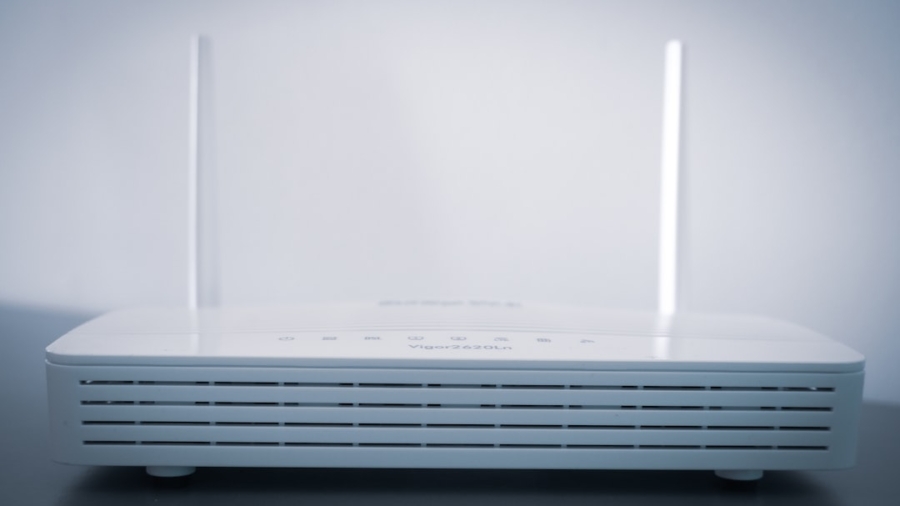
Smart homes are great when they work, but nothing’s more frustrating than a smart device that just won’t connect. Often, these “dead zones” pop up because your devices are too far from your main hub, or there are too many obstacles in the way. The good news is, you can tackle these connectivity issues head-on by strategically integrating Thread Border Routers into your smart home setup. They essentially extend the reach of your Thread network, allowing your devices to communicate reliably, even in those tricky spots.
Understanding Smart Home Dead Zones
We’ve all been there. You install a new smart light bulb in the furthest corner of your house, and it just blinks ominously, never quite joining your network. These “dead zones” aren’t always about Wi-Fi signal strength, especially when you’re dealing with lower-power smart home protocols.
What Causes These Dead Zones?
- Distance: The further a device is from its gateway or hub, the weaker its signal will be. This is a fundamental limitation of all wireless technologies.
- Physical Obstacles: Walls, especially those made of brick, concrete, or with metal studs, are notorious signal blockers. Appliances, large pieces of furniture, and even water pipes can also degrade signal quality.
- Interference: Other wireless devices operating on similar frequencies (like your neighbor’s Wi-Fi or even a microwave oven) can cause interference, leading to dropped connections or slow response times.
- Protocol Limitations: Different smart home protocols have varying ranges and mesh capabilities. While Wi-Fi has a decent range, many low-power devices use protocols like Zigbee or Thread, which are designed for mesh networking but still have individual node range limits.
Why Traditional Solutions Fall Short
You might think “just get a Wi-Fi extender!” but that often misses the point for smart home devices. Many smart devices don’t use Wi-Fi directly. They use protocols like Zigbee, Z-Wave, or Thread. While these protocols do create mesh networks, meaning devices can relay signals to each other, a dead zone often means there are simply no other mesh devices close enough to act as a repeater. This is where dedicated solutions like Thread Border Routers come in. They’re built specifically to bridge these low-power networks to your home’s main internet connection and extend their reach.
In the quest to enhance smart home connectivity, the article “Integrating Thread Border Routers to Eliminate Smart Home Dead Zones” explores innovative solutions for improving network coverage. For further insights into technology that can optimize home environments, you might find the article on the best free software for translation particularly interesting, as it discusses tools that can facilitate communication and integration in smart home systems. You can read it here: com/discover-the-best-free-software-for-translation-today-2/’>Discover the Best Free Software for Translation Today.
What is a Thread Border Router?
Think of a Thread Border Router as a special kind of bridge for your smart home. It connects your Thread network, which is a low-power, mesh-based network for smart devices, to your home’s regular Wi-Fi or Ethernet network. Without a Border Router, your Thread-enabled smart devices wouldn’t be able to talk to your phone (which is on Wi-Fi) or the internet.
How Thread Works
Thread is an IP-based, wireless mesh networking protocol. “IP-based” means every device on the Thread network gets its own unique IP address, just like your computer or phone. This makes it very flexible and easy to integrate with other IP-based systems. “Mesh networking” means that every Thread device that’s always powered (like a smart plug or light switch, not a battery-powered sensor) can act as a repeater, extending the range of the network. The more always-on Thread devices you have, the more robust and far-reaching your network becomes.
The Role of the Border Router
A Thread Border Router plays a crucial role:
- Connects to the Internet: It’s the gateway for your Thread network to access the wider internet. This is how you control your Thread devices remotely through an app, or how they can receive firmware updates.
- Translates Protocols: It translates communication between your Wi-Fi/Ethernet network and your Thread network. Your phone speaks Wi-Fi, your smart light speaks Thread; the Border Router makes sure they understand each other.
- Extends Network Reach: While every always-on Thread device can repeat signals, the Border Router itself often has a stronger antenna and is strategically placed to bridge larger gaps. More importantly, it ensures that your entire Thread network is connected to your home’s backbone.
- Security: It helps manage the security keys and encryption for your Thread network, ensuring only authorized devices can join and communicate.
Key Differences from Wi-Fi Extenders
It’s important not to confuse a Thread Border Router with a Wi-Fi extender.
- Protocol: Wi-Fi extenders boost Wi-Fi signals. Thread Border Routers boost and bridge Thread signals.
- Purpose: Wi-Fi extenders primarily aim to increase Wi-Fi coverage for devices like laptops and phones. Thread Border Routers aim to connect low-power Thread devices to your home network and the internet.
- Functionality: While a Wi-Fi extender simply repeats Wi-Fi signals, a Thread Border Router acts as a full-fledged gateway and protocol translator.
Many modern smart home hubs, like certain Apple HomePods, Google Nest Hubs, Amazon Echos, and even some smart plugs, now include Thread Border Router functionality. This is a game-changer for simplifying smart home setups.
Identifying Smart Home Dead Zones for Thread
Before you start adding hardware, it’s helpful to know where your dead zones actually are. Guessing can lead to frustration and wasted effort.
Common Indicators of a Dead Zone
- Unresponsive Devices: The most obvious sign. You try to turn on a light, and nothing happens. Or there’s a significant delay.
- Frequent Disconnections: Devices constantly drop offline and then reappear, or need to be reset frequently.
- Slow Response Times: While a device might eventually respond, it takes an unacceptably long time after you issue a command.
- Setup Failures: New devices refuse to join your network, especially when you try to set them up in a particular location.
- Inconsistent Behavior: A device might work perfectly one day and then fail to respond the next, without any apparent change in your setup.
Tools and Techniques for Detection
While there aren’t many consumer-grade “Thread signal strength meters” readily available, you can use a few practical approaches:
- Trial and Error with New Devices: If a new Thread device struggles to connect in a specific room, that’s a strong indicator. Try pairing it closer to your existing Thread Border Router or another powered Thread device, and then move it to the desired location. If it drops connection, you’ve found a spot.
- Manufacturer Apps: Some smart home ecosystems (like Apple HomeKit or Google Home) might offer rudimentary network diagnostic tools within their apps, or at least give you a visual indication of a device’s connection status. While not a precise signal strength, “offline” or “unresponsive” is a clear sign.
- Observation of Existing Devices: Pay attention to how your current Thread devices perform. If certain devices are consistently problematic, note their locations.
- Physical Layout Assessment: Look at your home’s floor plan. Where are the thickest walls? Major appliances? Large pieces of metal? These are prime suspects for signal degradation. Consider your Border Router’s location and mentally “draw lines” to your devices. Are there many obstructions?
It’s a bit more art than science at this stage for Thread, but by combining these observations, you can usually pinpoint the general areas that need attention. The goal isn’t necessarily to get precise dBm readings, but to identify which rooms or areas are most impacted.
Integrating Thread Border Routers: Practical Steps
Once you’ve identified your problem areas, it’s time to strategically deploy Border Routers. The beauty of Thread is its mesh nature, but Border Routers are the anchors that ensure global connectivity.
Choosing Your Border Routers
Many popular smart home hubs and devices now include Thread Border Router functionality. You might already own one without realizing it!
- Apple HomePod Mini/HomePod (2nd Gen): Excellent choice if you’re heavily invested in Apple HomeKit.
- Google Nest Hub (2nd Gen), Nest Wifi Pro: If you’re a Google Home user, these are your primary options.
- Amazon Echo (4th Gen and newer), Eero mesh routers (certain models): For Amazon Alexa users, these can serve as Border Routers.
- SmartThings Station: Another option if you use Samsung SmartThings.
- Dedicated Devices: Some manufacturers might offer dedicated Thread Border Routers, but often, the most cost-effective solution is to use a device you’d likely want for other smart home functions anyway.
Prioritize devices you already use or plan to use for other smart home tasks, as this reduces clutter and cost. Also, check which smart home ecosystems they support; for example, an Apple HomePod Mini will primarily act as a Border Router for HomeKit.
Strategic Placement
Placement is key. Think of your Border Router as a central nervous system component for your Thread network.
- Central Location: Ideally, place your primary Border Router as centrally as possible within your home, minimizing the distance to the majority of your Thread devices.
- Line of Sight: While Thread can penetrate walls, aim for as few obstructions as possible between your Border Router and your furthest devices. Avoid placing them behind large TVs, inside metal cabinets, or near large appliances.
- Elevated Position: Placing a Border Router higher up (e.g., on a shelf, not on the floor) can often improve signal propagation by reducing interference from floor-level objects.
- Consider Wired Backhaul: If your Border Router supports it (like many mesh Wi-Fi systems with Thread), connect it via Ethernet. This provides the most stable and fastest connection to your home network, freeing up its wireless capabilities for Thread communication.
- Near Dead Zones: If you have a persistent dead zone in a specific area (e.g., a detached garage, a far-off bedroom), consider adding another Border Router to that vicinity if your ecosystem supports multiple active Border Routers, or place one within effective range of the dead zone and rely on the mesh capabilities of other always-on Thread devices to bridge the final gap.
- Avoid Overlapping Too Closely: While you can have multiple Border Routers, don’t place them right next to each other. Spread them out to maximize coverage. The Thread network will intelligently choose the best Border Router to connect to.
Building Your Thread Mesh Network
Remember, Border Routers are crucial, but the mesh network itself is what truly extends range.
- Always-On Devices: Every powered (non-battery) Thread device acts as a repeater. This is critical. Smart plugs, light switches, certain smart bulbs (if they have internal repeaters), and wall-powered sensors all help strengthen and extend your Thread mesh.
- Start Close, Expand Out: When adding new Thread devices, especially in a dead zone, try to pair them initially closer to an existing Border Router or a known good, powered Thread device. Once paired, move them to their final location. The network should then re-establish its connection through the mesh.
- Incremental Expansion: Don’t try to fix everything at once. Address the most critical dead zones first. Add a Border Router, then add a few powered Thread devices in that area. Observe the network’s stability for a few days before making more changes.
- Consider Line of Sight for Mesh Devices: Just like with Border Routers, always-on Thread devices placed with minimal obstructions will perform better as repeaters. A smart plug behind a couch might not be as effective as one openly visible on a kitchen counter.
By strategically placing Border Routers and leveraging the mesh capabilities of your always-on Thread devices, you can effectively eliminate smart home dead zones and achieve reliable, responsive device control throughout your home.
In the quest to enhance smart home connectivity, the integration of Thread Border Routers plays a crucial role in eliminating dead zones that often hinder device communication.
A deeper understanding of how advanced technology impacts our daily lives can be found in a related article that discusses the innovative features of the iPhone 14 Pro.
This exploration of modern advancements highlights the importance of seamless connectivity in smart devices, which is essential for creating a fully integrated home environment. For more insights, you can read the article here.
Troubleshooting and Optimization Tips
Even with the best planning, sometimes things don’t go perfectly. Here are some practical tips for troubleshooting and optimizing your Thread network.
Common Issues and Quick Fixes
- Device Not Connecting:
- Proximity: Move the device closer to a Border Router or another powered Thread device. Once connected, try moving it back to its desired location.
- Power Cycle: Unplug the device (or turn off the breaker for hardwired devices) for 10-15 seconds, then plug it back in. This often resolves minor glitches.
- Re-pair: If it’s still stubborn, try removing the device from your smart home app and re-pairing it.
- Slow Responses/Lag:
- Check Router Placement: Is your Border Router in an optimal location? Are there new obstructions?
- Add More Repeaters: If you have battery-powered Thread devices in the area, consider adding an always-on Thread device (like a smart plug) nearby to strengthen the mesh.
- Interference: Check for new Wi-Fi networks in the area or new appliances that might be causing interference. While Thread operates on 2.4 GHz, which can get crowded, its channel hopping capabilities usually mitigate this.
- Multiple Border Routers Conflicting:
- Verify Support: Ensure your smart home ecosystem properly handles multiple Thread Border Routers (most modern ones do, but it’s worth checking).
- Consolidate if Possible: If you’re having issues, try temporarily disabling all but one Border Router to see if that resolves the problem, then reintroduce them one by one.
- Update Firmware: Ensure all your Border Routers and Thread devices have the latest firmware. Manufacturers often release updates to improve network stability and compatibility.
Monitoring Your Thread Network
Unfortunately, unlike Wi-Fi, there aren’t many readily available, easy-to-use consumer tools to visualize your Thread network’s health or signal strength. However, you can infer a lot:
- Smart Home App Status: Your smart home app (e.g., Apple Home, Google Home, Alexa app) will usually show if a device is “online” or “offline.” Consistent “offline” status for a device indicates a network issue in that area.
- Response Time: The most direct indicator. If devices respond instantly, your network is healthy. If there’s a noticeable delay, there might be a weak link in the chain.
- Device Behavior: Does a device sometimes fail to execute a command, only to work perfectly moments later? This sporadic behavior often points to intermittent connectivity.
General Optimization Tips
- Keep Firmware Updated: This can’t be stressed enough. Manufacturers constantly push updates that improve performance, stability, and compatibility for Thread devices and Border Routers.
- Minimize Interference: While you can’t control your neighbors’ Wi-Fi, you can ensure your own Wi-Fi router is set to an optimal channel (use a Wi-Fi analyzer app to find less congested channels). Keep your Thread Border Routers away from microwaves, cordless phones, and other 2.4 GHz devices.
- Strategically Add Powered Devices: Every always-on Thread device is a potential repeater. If you have a weak spot, adding a smart plug in the vicinity can often create a stronger path back to the Border Router.
- Reboot Periodically: Just like your main router, occasionally power cycling your Thread Border Routers and other smart home hubs can help clear out any lingering software glitches and refresh connections.
- One Primary Ecosystem: While Thread is open, sticking primarily to one smart home ecosystem for your Border Routers (e.g., all Apple HomePods, or all Google Nest devices) can sometimes simplify troubleshooting and ensure better interoperability. You can still use Thread devices from different manufacturers, but your Border Router setup should ideally be cohesive.
By being observant, methodical, and leveraging the mesh capabilities of Thread, you can fine-tune your network for optimal performance and banish those annoying dead zones for good.
The Future of Smart Homes and Thread
Thread isn’t just another wireless protocol; it’s a foundational technology that’s poised to transform how we build and experience smart homes. Its inherent strengths address many of the long-standing frustrations users have faced.
Why Thread is a Game-Changer
- Reliability: As an IP-based, self-healing mesh network, Thread is designed for robustness. If one device or path goes down, the network automatically re-routes traffic through other available nodes, ensuring commands still get through. This is a massive improvement over older hub-and-spoke models where a single point of failure could cripple your system.
- Responsiveness: Low-latency communication is a hallmark of Thread. Commands typically execute almost instantly, making your smart home feel genuinely responsive rather than sluggish.
- Scalability: You can add hundreds of Thread devices to a single network without bogging it down. The mesh architecture means that adding more powered devices actually strengthens and extends the network, rather than creating more congestion.
- Security: Thread was built with robust, bank-grade encryption and authentication from the ground up, providing a secure foundation for your smart devices.
- Open Standard (Matter): This is perhaps the most significant aspect. Thread is a core networking protocol behind Matter, the new smart home interoperability standard. Matter allows devices from different manufacturers to speak the same language, regardless of their underlying networking technology (Wi-Fi, Thread, Ethernet). This means a Matter-over-Thread light bulb from Brand A will work seamlessly with a Matter-over-Thread Border Router from Brand B, controlled by a Matter-enabled app from Brand C. This eliminates vendor lock-in and simplifies the user experience dramatically.
What to Expect Moving Forward
- More Integrated Border Routers: Expect more smart speakers, displays, Wi-Fi routers, and even smart plugs to incorporate Thread Border Router functionality. This will make it easier than ever to get a Thread network up and running without needing a dedicated hub.
- Wider Device Adoption: As Matter gains traction, we’ll see an explosion of Thread-enabled devices across all categories: lighting, sensors, locks, thermostats, and more.
- Simplified Setup: With Matter, the pairing process for new devices is becoming much simpler, often involving just scanning a QR code. This ease of use, combined with Thread’s robust networking, will make smart homes more accessible to the average consumer.
- Enhanced Diagnostics (Eventually): While current consumer tools are limited, as Thread and Matter mature, we can hope for more advanced, user-friendly diagnostic features within smart home apps to help visualize network health and troubleshoot issues.
- True Local Control: Because Thread is IP-based, many Matter-over-Thread devices will be able to operate entirely locally on your home network, reducing reliance on cloud services and improving privacy and reliability.
The integration of Thread Border Routers is not just about fixing dead zones; it’s about laying the groundwork for a more robust, responsive, and truly interoperable smart home experience. As more devices adopt Thread and Matter, smart homes will become less about fiddling with settings and more about seamless, reliable automation that just works.
Final Thoughts on a Seamless Smart Home
Tackling smart home dead zones, especially with Thread, boils down to a blend of understanding the technology, strategic planning, and a little bit of practical troubleshooting. It’s not about throwing more money at the problem, but about intelligently deploying the right tools.
By understanding how Thread mesh networks work, recognizing the pivotal role of Border Routers, and being thoughtful about where you place your always-on Thread devices, you can create a resilient and far-reaching smart home network. The days of frustratingly unresponsive devices are slowly but surely becoming a thing of the past, thanks to robust standards like Thread.
Embrace the mesh, leverage those Border Routers, and enjoy a smart home that truly lives up to its name – responsive, reliable, and free from those annoying connectivity gaps.
FAQs
What are Thread Border Routers (TBRs) in the context of smart home technology?
Thread Border Routers (TBRs) are devices that serve as the connection point between a Thread network and other IP networks, such as Wi-Fi or Ethernet. They play a crucial role in enabling communication between Thread devices and the wider internet.
How do Thread Border Routers help eliminate dead zones in smart homes?
By integrating Thread Border Routers into a smart home network, it becomes possible to extend the coverage and reliability of the Thread network. This helps eliminate dead zones by ensuring that Thread devices can communicate effectively with each other and with the wider internet, regardless of their location within the home.
What are the benefits of integrating Thread Border Routers into a smart home setup?
Integrating Thread Border Routers can lead to improved connectivity, increased reliability, and enhanced security within a smart home network. It can also enable seamless communication between different types of smart devices, leading to a more cohesive and efficient smart home ecosystem.
Are there any specific considerations to keep in mind when integrating Thread Border Routers into a smart home network?
When integrating Thread Border Routers, it’s important to ensure compatibility with existing smart home devices and networks. Additionally, proper configuration and placement of the routers can significantly impact their effectiveness in eliminating dead zones and improving overall network performance.
What are some popular Thread Border Router options available in the market?
Several companies offer Thread Border Router solutions, including major players in the smart home and networking industries. Some popular options include routers from companies like Google, Apple, and Amazon, as well as specialized networking companies that focus on smart home technology.
Enjoying our content? Make us a preferred source on Google:
Add us as a Preferred Source on Google