

We’re heading towards a significant shift in network security, and that’s the move to post-quantum cryptography (PQC). Basically, current encryption methods, which keep our wireless transport and core telecom networks secure, are vulnerable to attacks from future, powerful quantum computers. Implementing PQC is about upgrading these networks with new cryptographic algorithms that can resist these quantum threats, ensuring our communications remain private and secure even when quantum computers become a reality. This isn’t some distant future problem; it’s a “start planning now” situation, given the long deployment cycles of telecom infrastructure.
Why Post-Quantum Cryptography Matters for Telecom
The concern surrounding quantum computers isn’t just theoretical; it’s a concrete threat to the foundational security of our digital lives. Telecom networks, being the backbone of nearly all modern communication, are particularly exposed. If these networks are compromised, the implications ripple across everything from national security to individual privacy.
The Looming Quantum Threat
The current cryptographic standards, like RSA and Elliptic Curve Cryptography (ECC), rely on mathematical problems that are computationally infeasible for classical computers to solve within a reasonable timeframe.
However, quantum computers, with their ability to perform certain calculations exponentially faster, could break these algorithms.
Shor’s algorithm, for instance, can efficiently factor large numbers and solve discrete logarithms, which are the very foundations of RSA and ECC respectively. While a large-scale, fault-tolerant quantum computer capable of breaking these algorithms doesn’t exist yet, the consensus among experts is that it’s a matter of “when,” not “if.”
Long-Term Security and Data Preservation
Data transmitted across telecom networks today might need to remain confidential for decades. Think about government communications, financial transactions, or even personal medical records. If this data is intercepted now and stored (“harvest now, decrypt later”), it could be decrypted by a quantum computer in the future once the technology matures. This underscores the urgency of deploying PQC – not just for future communications, but to protect data that’s already in transit or stored.
Critical Infrastructure Protection
Telecom networks are considered critical infrastructure. Their disruption or compromise can have severe societal and economic consequences. From emergency services to financial markets, everything relies on secure and reliable communication. A successful quantum attack on these networks could lead to widespread data breaches, service outages, and a loss of trust in digital communications.
In the context of enhancing security measures in telecommunications, the article on exploring the features of the Samsung Galaxy Chromebook 2 provides insights into the importance of robust technology in everyday devices. As we move towards implementing post-quantum cryptography across wireless transport and core telecom networks, understanding the capabilities of devices like the Galaxy Chromebook 2 becomes crucial. For more information, you can read the related article here: Exploring the Features of the Samsung Galaxy Chromebook 2.
Key Takeaways
- The training data includes information and events up to October 2023.
- Insights and knowledge are based on a wide range of sources available until the cutoff date.
- No updates or developments occurring after October 2023 are included in the training.
- Users should verify current information from reliable sources for the latest updates.
- The model’s responses reflect the context and knowledge available up to the specified date.
Understanding the Telecom Network Landscape
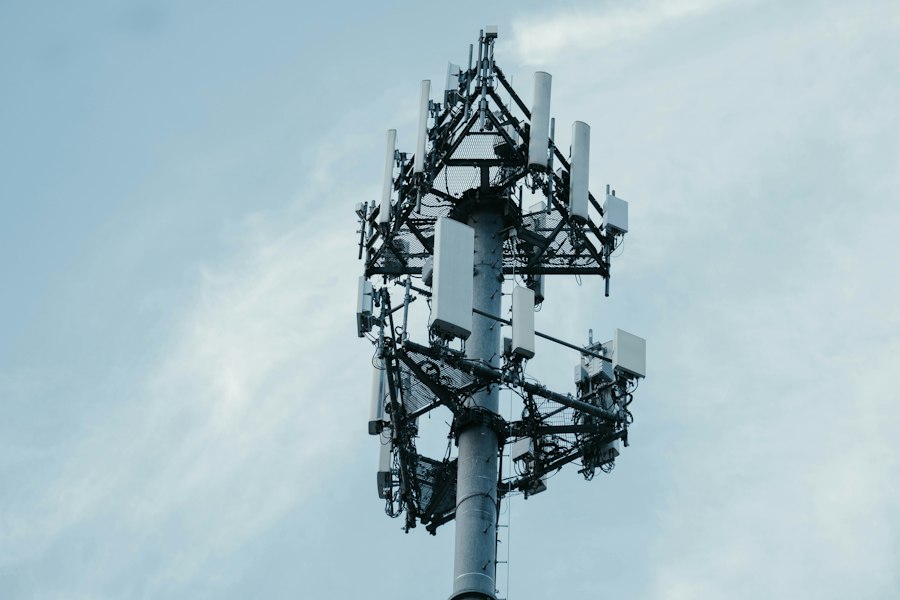
Before diving into how to implement PQC, it’s crucial to understand the vast and complex landscape of telecom networks. This isn’t a single, monolithic entity; it’s a layered architecture with diverse components, each presenting unique challenges and opportunities for PQC integration.
Wireless Transport Networks
Wireless transport networks are essentially the “roads” that carry data between cell towers and ultimately back to the core network. This includes technologies like microwave, millimeter-wave, and fiber optic links that connect base stations (gNBs in 5G) to aggregation points and then to the core.
Radio Access Network (RAN) Backhaul
The backhaul connects the individual cell sites to the core network. This is where a significant amount of data traverses, and securing these links is paramount. Current security relies heavily on IPsec (Internet Protocol Security) for data plane encryption and TLS (Transport Layer Security) for control plane signaling. Upgrading these protocols to incorporate PQC algorithms is a primary focus. The challenge here is the sheer volume of deployed equipment and the need for interoperability between different vendors.
Fronthaul and Midhaul
In 5G, with the disaggregation of the RAN into Centralized Units (CUs), Distributed Units (DUs), and Radio Units (RUs), new interfaces emerge: fronthaul (between RU and DU) and midhaul (between DU and CU). These links often have stringent latency and bandwidth requirements.
While some of these might be over dedicated fiber, others can involve shared transport.
Protecting these interfaces, especially those carrying sensitive signaling and user data, will require careful consideration of PQC algorithms that can meet these performance demands.
Core Telecom Networks
The core network is the brain of the entire telecom infrastructure. It handles authentication, authorization, subscriber management, routing, and data processing. It’s where all the traffic converges before being routed to its final destination, whether that’s another mobile device, the internet, or a fixed-line network.
Control Plane Security
The control plane is responsible for managing network resources, signaling, and subscriber sessions. Protocols like Diameter (for authentication and authorization) and SS7/Sigtran (for legacy services) rely on robust cryptographic protections. A quantum attack on the control plane could allow attackers to hijack subscriber sessions, perform denial-of-service attacks, or even impersonate legitimate network elements. Implementing PQC in signaling protocols is critical to prevent such sophisticated attacks.
User Plane Security
The user plane carries all the actual user data, whether it’s voice calls, video streaming, or web browsing. IPsec is extensively used here, along with other transport-layer security protocols. Ensuring the confidentiality and integrity of this data against quantum adversaries is a primary driver for PQC adoption. This involves upgrading gateways, routers, and other core network elements.
Network Functions Virtualization (NFV) and Cloud-Native Environments
Modern core networks are increasingly moving towards NFV and cloud-native architectures, where network functions are deployed as virtual machines or containers on commodity hardware. This introduces new security considerations, including securing communication between virtualized network functions, protecting underlying hypervisors, and securing cloud infrastructure. PQC needs to be integrated into these virtualized environments, perhaps through secure service meshes or platform-level encryption.
Key Challenges in PQC Deployment

Implementing PQC in telecom networks isn’t a simple plug-and-play operation. The sheer scale, complexity, and distributed nature of these networks present numerous practical and technical hurdles.
Standardization and Algorithm Selection
One of the foremost challenges is the ongoing standardization process. The National Institute of Standards and Technology (NIST) has been leading a multi-year effort to select and standardize PQC algorithms.
While initial algorithms like CRYSTALS-KYBER (for key encapsulation) and CRYSTALS-DILITHIUM (for digital signatures) have been selected, the final standards are still evolving, and future rounds might introduce additional algorithms. Telecom operators need to make informed decisions about which algorithms to adopt, balancing security strength, performance characteristics, and the maturity of implementation. Premature commitment to a non-finalized standard could lead to costly re-engineering down the line.
Performance and Resource Constraints
PQC algorithms often have larger key sizes, larger signature sizes, and can be more computationally intensive than their classical counterparts.
In high-throughput, low-latency environments like wireless transport and core networks, this can pose a significant challenge.
Latency Sensitivity
Many telecom applications, especially real-time services like voice and video, are highly sensitive to latency. The increased computational overhead of PQC operations could introduce unacceptable delays if not managed carefully. This might necessitate hardware acceleration or offloading PQC computations to dedicated security modules.
Bandwidth Consumption
Larger key and signature sizes mean more data transmitted over the wire during cryptographic handshakes.
While potentially a minor impact for individual connections, aggregated across millions of subscribers and thousands of network elements, this could impact network bandwidth utilization, especially in bandwidth-constrained backhaul links.
Processing Power and Memory
Existing network equipment might not have the necessary processing power or memory to handle the increased demands of PQC algorithms without performance degradation. Upgrading or replacing hardware, especially in remote cell sites, is a significant capital expenditure and logistical challenge.
Interoperability and Backward Compatibility
Telecom networks are inherently heterogeneous, involving equipment from multiple vendors deployed over many years. Ensuring interoperability between different PQC implementations from various vendors is crucial. Moreover, a “flag day” switch-over to PQC is unrealistic.
Networks will need to operate in a “hybrid” mode for an extended period, supporting both classical and PQC algorithms simultaneously, perhaps using “crypto-agility” features that allow flexible switching between algorithms. This backward compatibility is vital to avoid service disruption during the transition.
Network Planning and Deployment Logistics
The scale of telecom networks is immense. Planning and executing a PQC rollout requires meticulous strategizing.
Inventory and Assessment
Operators need to conduct a thorough inventory of all network elements, identifying cryptographic dependencies and assessing the PQC readiness of each component.
This includes everything from routers and switches to firewalls, gateways, and signaling platforms.
Phased Rollout Strategy
A big-bang deployment is not feasible. A phased approach is necessary, starting with less critical components or greenfield deployments, and gradually extending to more sensitive areas. This allows for testing, validation, and optimization at each stage.
Supply Chain Security
The entire supply chain, from hardware manufacturers to software developers, needs to be prepared for PQC.
Ensuring that new equipment and software updates come with PQC capabilities, and that these implementations are secure, is paramount.
Strategic Approaches to PQC Implementation
Given the complexities, a well-thought-out strategy is essential for a successful PQC transition. This isn’t just a technical upgrade; it’s a strategic shift in network security posture.
Crypto-Agility and Hybrid Modes
Crypto-agility is the ability of a system to easily switch between different cryptographic algorithms without requiring significant hardware or software changes. This is fundamental for PQC adoption.
Dual-Stack Cryptography
A common approach will be “dual-stack” or hybrid cryptography, where PQC algorithms are run alongside classical algorithms. For example, a TLS handshake might use both an ECC key exchange and a PQC key encapsulation mechanism. This provides a “belt and suspenders” approach, ensuring security even if one set of algorithms is broken. It also allows for a gradual transition, as classical algorithms can be deprecated once PQC is fully mature and proven.
Flexible Cryptographic Modules
Network devices should be designed with modular cryptographic capabilities, allowing for easy updates or replacement of cryptographic libraries. This minimizes the need for full hardware replacement when new algorithms or standards emerge. Software-defined networking (SDN) principles can facilitate this by enabling centralized management and orchestration of cryptographic policies.
Hardware Acceleration and Optimization
To mitigate the performance impact of PQC algorithms, hardware acceleration will play a crucial role.
Dedicated Crypto Accelerators
Integrating dedicated PQC-optimized cryptographic accelerators into network equipment can offload computational intensive tasks from the main CPU, thereby reducing latency and improving throughput. This could be in the form of FPGA-based solutions or custom ASICs.
Software Optimizations
Even with hardware acceleration, highly optimized software implementations of PQC algorithms are essential. Vendors will need to invest in efficient code that takes advantage of specific hardware features and instruction sets.
Comprehensive Network Architecture Review
A holistic review of the entire network architecture is necessary to identify all points where cryptography is used and assess their PQC readiness.
Identifying Cryptographic Boundaries
Understanding where data is encrypted, decrypted, and authenticated within the network is critical. This includes identifying control plane signaling, user plane data paths, management interfaces, and inter-network element communications.
Threat Modeling for Quantum Attacks
Developing specific threat models that consider the capabilities of quantum adversaries can help prioritize PQC deployment efforts. This involves identifying the most vulnerable assets and the highest-impact attack scenarios.
Collaboration and Ecosystem Development
No single entity can achieve PQC transition in isolation. Collaboration across the entire telecom ecosystem is paramount.
Vendor Engagement
Telecom operators need to work closely with their equipment vendors to ensure that PQC-ready solutions are developed and integrated into their product roadmaps. This includes demanding PQC capabilities in future procurements.
Standardization Bodies and Industry Forums
Active participation in standardization bodies like NIST, ETSI, and IETF, as well as industry forums like GSMA, can help shape PQC standards and ensure that the unique requirements of telecom networks are addressed. Sharing best practices and lessons learned across the industry will accelerate adoption.
Implementing post-quantum cryptography across wireless transport and core telecom networks is crucial for securing communication in a future where quantum computing poses significant threats to traditional encryption methods. A related article discusses strategies for revitalizing struggling startups by reengineering their processes, which can be analogous to how telecom networks must adapt and innovate to stay ahead of emerging security challenges. For more insights on this topic, you can read the article here.
Phased Rollout and Future Outlook
| Metric | Description | Value / Estimate | Unit | Notes |
|---|---|---|---|---|
| Latency Increase | Additional delay introduced by PQC algorithms in wireless transport | 5-15 | milliseconds | Depends on algorithm and hardware acceleration |
| Throughput Reduction | Decrease in data throughput due to PQC processing overhead | 10-25 | percent | Varies with network load and PQC scheme |
| Key Size | Typical public key size for PQC algorithms used in telecom | 1-4 | kilobytes | Much larger than classical keys (e.g., RSA 2048-bit) |
| Computational Overhead | Increase in CPU cycles for PQC encryption/decryption | 3-10x | times classical crypto | Depends on algorithm and implementation |
| Energy Consumption Increase | Additional power usage due to PQC operations in network devices | 5-20 | percent | Important for battery-powered wireless nodes |
| Deployment Timeline | Estimated time to fully implement PQC in telecom networks | 3-5 | years | Depends on standardization and hardware upgrades |
| Compatibility Impact | Percentage of legacy devices incompatible with PQC protocols | 15-30 | percent | Requires transitional hybrid cryptography approaches |
| Security Level | Estimated quantum resistance strength of implemented PQC | 128-256 | bit security | Equivalent classical security level |
The transition to PQC in telecom networks will not happen overnight. It will be a multi-year, iterative process requiring continuous adaptation and foresight.
Initial Pilot Programs
Starting with small-scale pilot programs in controlled environments is a prudent first step. This allows operators to gain practical experience with PQC deployments, test different algorithms and implementations, and identify potential issues without impacting live services. These pilots can focus on non-critical segments or new network deployments.
Prioritizing Critical Functions
As the rollout progresses, operators should prioritize the most critical network functions and data paths. This includes core network signaling, sensitive user data channels, and interfaces to critical national infrastructure. A risk-based approach will help allocate resources effectively.
Continuous Monitoring and Algorithm Agility
The PQC landscape is still evolving. While NIST has made selections, new cryptographic breakthroughs or attacks could emerge. Telecom networks must maintain a high degree of crypto-agility to adapt to these changes. This means having mechanisms in place to monitor the security landscape, update algorithms as needed, and ensure that network elements can be patched or upgraded without significant disruption.
Supply Chain Integration
Integrating PQC requirements into procurement processes and supply chain management is crucial. Operators should work with vendors to ensure that new equipment and software updates are PQC-compliant by default. This involves setting clear requirements and validating vendor claims.
The Long Game
The full transition to PQC across global telecom networks will likely take a decade or more, given the lifecycle of network equipment and the complexity of the task. However, the work needs to start now. Proactive planning, strategic investment, and collaborative efforts across the industry are essential to ensure the continued security and resilience of our communications infrastructure in the quantum era. This isn’t just about protecting data; it’s about maintaining trust in the very foundation of our interconnected world.
FAQs
What is post-quantum cryptography?
Post-quantum cryptography refers to cryptographic algorithms that are designed to be secure against the potential threats posed by quantum computers. Unlike traditional cryptographic methods, which could be easily broken by sufficiently powerful quantum machines, post-quantum algorithms aim to provide security even in a future where quantum computing is prevalent.
Why is post-quantum cryptography important for telecom networks?
Telecom networks are critical infrastructures that handle sensitive data and communications. As quantum computing technology advances, existing encryption methods may become vulnerable to attacks. Implementing post-quantum cryptography in telecom networks is essential to ensure the confidentiality, integrity, and authenticity of data transmitted over these networks, safeguarding them against future quantum threats.
What challenges are associated with implementing post-quantum cryptography in wireless transport networks?
Implementing post-quantum cryptography in wireless transport networks presents several challenges, including the need for compatibility with existing systems, increased computational overhead, and potential latency issues. Additionally, there is a need for extensive testing and validation of new algorithms to ensure they perform well in real-world conditions and meet regulatory standards.
Are there any standards for post-quantum cryptography?
Yes, the National Institute of Standards and Technology (NIST) is currently in the process of evaluating and standardizing post-quantum cryptographic algorithms. This initiative aims to identify secure and efficient algorithms that can be widely adopted across various applications, including telecommunications, to prepare for the era of quantum computing.
How can telecom companies prepare for the transition to post-quantum cryptography?
Telecom companies can prepare for the transition to post-quantum cryptography by conducting risk assessments to identify vulnerabilities in their current systems, investing in research and development of post-quantum algorithms, and collaborating with industry partners to share knowledge and best practices. Additionally, they should begin integrating post-quantum solutions into their infrastructure gradually, ensuring a smooth transition without disrupting existing services.
Enjoying our content? Make us a preferred source on Google:
Add us as a Preferred Source on Google