

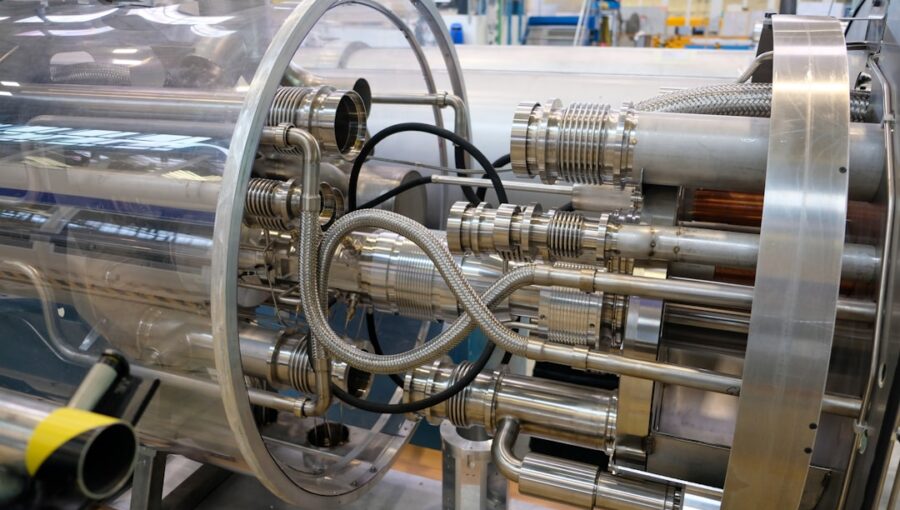
The future of artificial intelligence, with its insatiable thirst for computational power, is increasingly looking towards a surprising, yet familiar, energy source: Small Modular Nuclear Reactors (SMRs). Simply put, SMRs offer a reliable, compact, and carbon-free power solution that’s a near-perfect fit for the massive energy demands of next-generation AI data centers. This isn’t just about reducing a carbon footprint; it’s about providing the consistent, high-density power that modern AI workloads desperately need, without the intermittency of renewables or the emissions of fossil fuels.
Modern AI data centers aren’t just bigger versions of their predecessors; they’re fundamentally different in their energy requirements. We’re talking about an exponential increase in power consumption, driven by increasingly complex models and continuous training.
The Problem with Traditional Power Sources
Reliance on the traditional grid can be a bottleneck.
Data centers are often built where land is cheap, not necessarily where grid infrastructure is robust enough for multi-gigawatt demands.
This leads to costly grid upgrades, potential brownouts, and a constant struggle for sufficient, stable power.
The Intermittency of Renewables
While solar and wind are critical for decarbonization, their inherent intermittency makes them challenging as a sole power source for always-on AI operations. An AI model training for weeks can’t afford fluctuations in power delivery, leading to the need for extensive battery storage or fossil fuel backup, which adds complexity and cost.
The Sheer Scale of AI Power Demands
Consider the training of a large language model. This isn’t a few hours of computing; it can be weeks or months of continuous, high-intensity processing, consuming as much electricity as a small town. As AI advances, these demands will only skyrocket, pushing existing power infrastructures to their limits.
As the demand for energy-efficient solutions in technology continues to rise, the integration of Small Modular Nuclear Reactors (SMRs) into next-gen AI data centers is becoming increasingly relevant. These innovative reactors not only provide a sustainable power source but also support the high energy requirements of advanced computing systems. For those interested in exploring how technology is evolving in various sectors, a related article on the best tablets for business in 2023 can be found here: The Best Tablets for Business in 2023. This article highlights the latest advancements in portable technology that can enhance productivity in the modern workplace.
Key Takeaways
- Clear communication is essential for effective teamwork
- Active listening is crucial for understanding team members’ perspectives
- Conflict resolution skills are necessary for managing disagreements
- Trust and respect are the foundation of a successful team
- Collaboration and cooperation are key for achieving common goals
What Exactly Are Small Modular Nuclear Reactors (SMRs)?
SMRs are essentially scaled-down versions of traditional nuclear power plants, designed for modular construction and factory assembly. This approach offers significant advantages in cost, deployment time, and flexibility.
Breaking Down the “Small”
“Small” typically refers to an electrical output of up to 300 MWe (megawatts electrical), though some definitions extend this to 500 MWe. This is significantly less than the 1,000 MWe+ of conventional large reactors. Their smaller footprint means they can be sited in more diverse locations.
Understanding “Modular”
The “modular” aspect is key. Instead of building a custom plant on-site from scratch, SMRs are designed to be manufactured in factories, then shipped in modules to the deployment site. This is akin to how modern airplanes or large machinery are assembled – standardized parts are built in a controlled environment, then put together.
The “Nuclear Reactor” Part
At their core, SMRs still rely on nuclear fission to generate heat, which then produces steam to drive turbines for electricity generation. The physics is the same as large reactors, but SMRs often incorporate advanced safety features and passive cooling systems that enhance their inherent safety.
The Unique Advantages of SMRs for Data Centers

It’s not just about producing electricity; it’s about producing the right kind of electricity for AI’s specific needs. SMRs bring a suite of benefits that align perfectly with the future of AI infrastructure.
Consistent, Baseload Power
AI data centers need power 24/7, 365 days a year, without interruption. SMRs provide precisely this: a constant, unwavering supply of electricity, unphased by weather conditions or time of day. This baseload capability is their most significant advantage over intermittent renewables.
Carbon-Free Energy
As sustainability becomes a critical business imperative, reducing the carbon footprint of data centers is paramount.
SMRs produce electricity without greenhouse gas emissions during operation, aligning with ambitious net-zero goals and increasingly stringent environmental regulations.
Siting Flexibility and Reduced Transmission Needs
Because SMRs are smaller and have fewer cooling requirements (some use air cooling), they can be sited closer to urban areas or directly adjacent to data centers. This significantly reduces the need for extensive new transmission lines, which are costly, slow to build, and often face public opposition. Power generation right next to consumption minimizes transmission losses and grid strain.
Enhanced Grid Stability and Resilience
A dedicated SMR powering a data center offers a microgrid solution.
This enhances the data center’s resilience against grid outages or fluctuations, providing an independent, ultra-reliable power source. For critical AI applications, this level of reliability is non-negotiable.
Scalability for Growing AI Demands
The modular nature of SMRs means data centers can start with one or two units and add more as their power needs grow. This “build as you grow” approach offers flexibility and avoids over-investing in power infrastructure before it’s needed, a significant advantage in the rapidly evolving AI landscape.
Potential for Process Heat Utilization
Some advanced SMR designs can also provide high-temperature process heat. While less common for data centers directly, this opens up possibilities for co-located industrial applications or district heating, further improving overall energy efficiency and economic viability.
Overcoming Challenges and Looking Ahead

While the synergy between SMRs and AI data centers is compelling, there are still hurdles to navigate. It’s not a plug-and-play solution just yet.
Regulatory and Licensing Pathways
Nuclear power, regardless of its size, is heavily regulated for good reason. Establishing efficient and predictable licensing pathways for SMRs is crucial. Many countries are actively working on this, but it remains a time-consuming process.
Public Perception and Acceptance
Despite their enhanced safety features, nuclear technology still faces public skepticism. Education and transparent communication about SMR safety, waste management, and benefits are essential to gain public trust and acceptance, especially when sited closer to communities.
Initial Capital Costs and Financing
While SMRs are designed to be more cost-effective than large reactors, the initial capital investment can still be substantial. Innovative financing models and government incentives will be vital to accelerate their deployment. As more units are built, the benefits of factory production and economies of scale will further reduce costs.
Waste Management Solutions
Nuclear waste remains a long-term challenge.
While SMRs produce less waste than traditional reactors and some designs can even recycle spent fuel, robust, long-term waste management solutions are still needed and are a key part of the regulatory and public acceptance discussion.
Supply Chain Development
Building a robust supply chain for the mass production of SMR components will take time and investment. This is a critical factor for achieving the economic benefits of modularity.
In exploring the innovative ways that small modular nuclear reactors (SMRs) are transforming energy consumption in next-gen AI data centers, it’s interesting to consider the broader implications of emerging technologies on various sectors. For instance, a related article discusses the marketing technologies for 2023, highlighting how advancements in energy solutions can influence digital strategies and operational efficiencies. You can read more about these technologies and their impact on industries by visiting this insightful article.
Real-World Implications and Future Outlook
| Data Center Metric | Value |
|---|---|
| Energy Density of SMRs | Higher than traditional nuclear reactors |
| Footprint of SMRs | Smaller than traditional nuclear reactors |
| Power Output of SMRs | Flexible and scalable |
| Reliability of SMRs | High due to modular design |
| Environmental Impact | Lower carbon footprint compared to fossil fuels |
The conversation around SMRs and AI is moving beyond theoretical discussions into concrete planning and partnerships.
Data Center Operators Are Taking Notice
Major tech companies and data center developers are actively exploring SMR solutions. The sheer scale of future AI power demands means that traditional solutions simply won’t suffice. Partnerships between energy companies, SMR developers, and tech giants are starting to form, signaling serious intent.
A New Era of Energy Independence for AI
Imagine an AI data center operating largely independent of the main grid, powered by its own clean, reliable energy source. This vision not only secures the future of AI development but also offers countries and companies greater energy independence and resilience.
Economic and Strategic Advantages
For nations investing heavily in AI, secure and abundant power is a strategic imperative. SMRs can provide a competitive edge by enabling the development of massive AI infrastructure without straining national grids or increasing reliance on fossil fuel imports.
The Role of Microreactors
Beyond larger SMRs, even smaller “microreactors” (typically under 20 MWe) are being explored for highly specialized, remote, or very compact AI deployments. These ultra-small reactors could offer extreme flexibility for edge computing or even mobile AI infrastructure in the future.
The convergence of accelerating AI demands and maturing SMR technology is not just a coincidence; it’s a synergistic solution to one of the biggest challenges facing the next technological revolution. SMRs are poised to become the silent, powerful engines driving the AI-powered world of tomorrow, providing the reliable, carbon-free energy needed to unleash the full potential of artificial intelligence. It’s an exciting, complex, and absolutely necessary evolution in how we power our most advanced technologies.
FAQs
What are Small Modular Nuclear Reactors (SMRs)?
Small Modular Nuclear Reactors (SMRs) are compact nuclear reactors that are designed to generate electricity on a smaller scale compared to traditional nuclear power plants. They are modular in nature, meaning they can be manufactured in a factory and then transported to the site for installation.
How do Small Modular Nuclear Reactors (SMRs) power Next-Gen AI Data Centers?
SMRs can provide a reliable and constant source of power to Next-Gen AI Data Centers, which require a significant amount of energy to operate. The compact size and scalability of SMRs make them suitable for powering these data centers, especially in remote locations where traditional power sources may not be readily available.
What are the advantages of using Small Modular Nuclear Reactors (SMRs) for powering data centers?
Some advantages of using SMRs for powering data centers include their small footprint, scalability, and ability to provide continuous and reliable power. Additionally, SMRs produce minimal greenhouse gas emissions and can operate for longer periods without the need for refueling, making them a sustainable and efficient energy source for data centers.
Are there any safety concerns associated with Small Modular Nuclear Reactors (SMRs) powering data centers?
SMRs are designed with safety features that minimize the risk of accidents and ensure the protection of the surrounding environment. Additionally, the compact size of SMRs allows for easier containment and control in the event of any unforeseen incidents, making them a safe and reliable option for powering data centers.
What is the future outlook for Small Modular Nuclear Reactors (SMRs) in powering data centers?
As the demand for energy-efficient and sustainable power sources continues to grow, SMRs are expected to play a significant role in powering data centers and other critical infrastructure. The scalability and reliability of SMRs make them a promising option for meeting the energy needs of next-generation AI data centers and other high-tech facilities.
Enjoying our content? Make us a preferred source on Google:
Add us as a Preferred Source on Google