

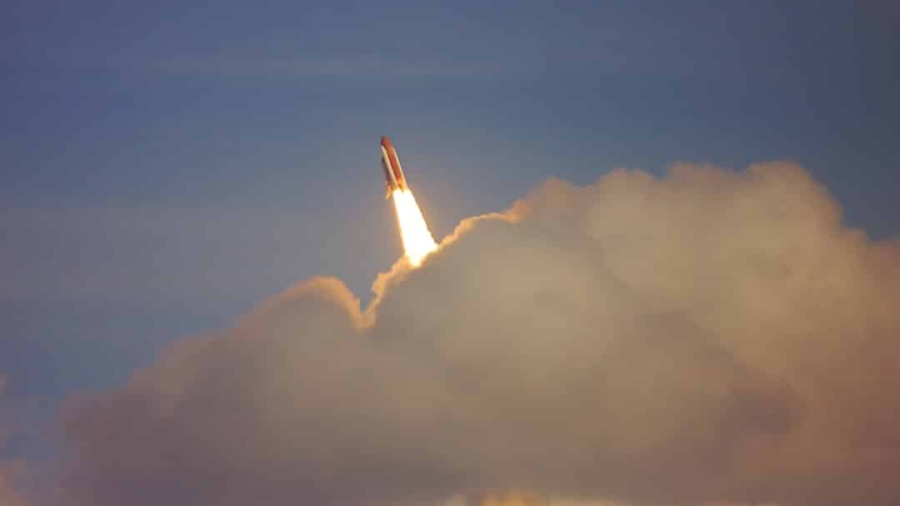
So, how is reusable rocket technology actually making space launches cheaper? The simple answer is: by making rockets less like disposable fireworks and more like airplanes. Instead of building an entirely new vehicle for each trip to orbit, the core components, particularly the expensive first stage, can be refurbished and flown again. This eliminates a huge portion of the manufacturing costs associated with each launch, driving down prices for everyone from governments to private companies looking to put their satellites into space.
For decades, getting anything into space was an incredibly expensive endeavor. Think about it: sending a rocket to orbit was like buying a brand new, custom-built jet for every single flight, then just letting it crash into the ocean afterward. It was effective, but financially unsustainable for frequent missions.
The Cost of Disposability
Each traditional rocket launch involved the dedicated manufacturing of a complex, multi-stage vehicle. Every engine, every fuel tank, every piece of avionics was built for a single mission. This wasn’t just about materials; it was about the immense amount of engineering, labor, and testing that went into every single component before it was deemed fit for spaceflight. The sheer scale and precision required meant that building these rockets was a slow and costly process.
Complex Manufacturing Processes
Building a rocket from scratch is an engineering marvel. It involves specialized materials, intricate welding, precise electronics, and rigorous quality control at every step. This isn’t something you can mass-produce like a car. Each rocket essentially becomes a bespoke creation, with all the associated costs that come with such a custom build.
In exploring the advancements in space technology, one can draw parallels to the significant impact of cost-effective solutions in other industries, such as web hosting. An insightful article on the best shared hosting services in 2023 highlights how competitive pricing and innovative technology are transforming the digital landscape, much like how reusable rocket technology is drastically lowering launch costs in the aerospace sector. For more information on this topic, you can read the article here: The Best Shared Hosting Services in 2023.
Key Takeaways
- Clear communication is essential for effective teamwork
- Active listening is crucial for understanding team members’ perspectives
- Setting clear goals and expectations helps to keep the team focused
- Regular feedback and open communication can help address any issues early on
- Celebrating achievements and milestones can boost team morale and motivation
How Reusability Saves Money: The Airplane Analogy
The core principle behind reusable rockets isn’t new; it’s how almost every other transport vehicle operates. Cars, trains, planes – they all make multiple journeys. Applying this model to rockets was the game-changer.
Spreading Fixed Costs Over Multiple Flights
Imagine the development cost of a new rocket system. With traditional rockets, that massive upfront investment was essentially amortized over a very small number of launches, sometimes just one. With reusability, that same development cost can be spread across dozens, if not hundreds, of missions. The more times a rocket component flies, the lower its share of the initial development cost per launch. This is where the biggest savings immediately kick in.
Reducing Recurring Manufacturing Expenses
This is the most obvious and impactful cost reduction. If you don’t have to build a new first stage – the largest and most complex part of most rockets – for every launch, you save a tremendous amount of money immediately. Think of the Falcon 9 first stage. It costs tens of millions of dollars to build. If it flies 10 times, that’s nine fewer first stages SpaceX has to manufacture. This directly translates to lower “per-launch” costs for their customers.
Optimizing Production for Scale (Even If Not Full Mass Production)
Even with reusability, there’s always going to be some manufacturing. However, when you’re building components for a reusable fleet rather than a disposable one-off, you can refine your production processes.
You might invest in more automated manufacturing or optimize supply chains, knowing that these efficiencies will pay off over many cycles of component use.
While not true mass production, it’s a step in that direction compared to bespoke builds.
Key Technologies Enabling Reusability

Reusing rocket parts wasn’t just a good idea; it required significant technological breakthroughs to become a reality. These innovations are what truly unlocked the cost savings.
Precision Landing Technologies
Getting a rocket stage back to Earth intact and upright is incredibly difficult. It’s not just about guiding it down; it’s about controlling its descent through the atmosphere, reigniting engines at precise moments, and performing a delicate landing maneuver.
Gimbaled Engines and Thrust Vectoring
Modern rocket engines can pivot, allowing them to precisely control the direction of thrust.
This “thrust vectoring” is crucial for steering the rocket during ascent and, critically, for maneuvering it during its descent and landing burn. Without precise control over the direction of the engine “push,” a controlled landing would be impossible.
Advanced Navigation and Guidance Systems
Knowing exactly where the rocket is, where it’s going, and how fast is paramount. This involves sophisticated GPS, inertial measurement units (IMUs), and intricate algorithms that can calculate the optimal trajectory for return and landing, constantly adjusting for atmospheric conditions and other variables.
The rocket practically performs a complex, real-time ballet.
Grid Fins for Aerodynamic Control
You’ve probably seen these on SpaceX’s Falcon 9 – those lattice-like fins near the top of the first stage. They’re not just for show. As the rocket falls through the upper atmosphere, these grid fins deploy and act like tiny wings, allowing for precise aerodynamic steering.
They’re far more effective at high altitudes and speeds than traditional control surfaces, helping to guide the rocket accurately back to its landing target.
Robust and Refurbishable Components
If you’re going to reuse a part, it needs to be designed to withstand the rigors of launch and re-entry multiple times, and then be easy to inspect, maintain, and prepare for its next flight.
Heat Shields and Thermal Protection Systems
Returning from space means re-entering Earth’s atmosphere at very high speeds, generating immense heat. While the first stage doesn’t reach the same extreme re-entry conditions as a spacecraft coming back from orbit, it still experiences significant heating. Components need to be designed to withstand this without major damage, or have easily replaceable thermal protection.
Durable Engine Designs
Rocket engines are incredibly powerful and operate under extreme temperatures and pressures.
Designing them to endure multiple ignition cycles and sustained powerful burns was a significant engineering challenge. Materials and cooling systems had to be robust enough to handle the stress of numerous flights. Additionally, designs that allow for easier post-flight inspection and maintenance are key to minimizing turnaround times and costs.
Automated Inspection and Refurbishment Protocols
After each flight, reusable rocket stages undergo a thorough inspection and refurbishment process.
This isn’t a manual, guesswork process. Companies like SpaceX have developed sophisticated automated systems and detailed protocols to check for wear and tear, replace minor components, and ensure the vehicle is flight-ready again as quickly and efficiently as possible. The goal is to minimize the time spent on the ground between flights, because time on the ground is lost revenue potential.
The Impact on Launch Costs: Tangible Numbers

This isn’t just theoretical; the cost reductions are very real and have already shifted the entire space industry.
Drastic Price Reductions for Customers
Prior to reusable rockets, a standard geostationary transfer orbit (GTO) launch could easily cost upwards of $150-200 million. With reusable technology, particularly from SpaceX, those prices have plummeted. A Falcon 9 launch, using a reused first stage, often sits in the $60-$70 million range. This is a massive reduction, making space more accessible to a wider range of customers.
Democratization of Space Access
Lower launch costs mean that smaller companies, universities, and even individual researchers can now afford to put satellites into orbit. This has fueled innovation in areas like Earth observation, remote sensing, and satellite internet constellations. It’s no longer just the domain of major government space agencies.
Enabling Megaconstellations
Companies like Starlink (SpaceX) and OneWeb are deploying thousands of satellites to provide global internet access. This wouldn’t be financially viable without highly frequent, low-cost launches. Reusability is the backbone of these ambitious projects, allowing for the rapid deployment and replenishment of these massive satellite networks.
Faster Launch Cadence
Beyond just direct cost per launch, reusability allows for a much quicker turnaround between missions. If you don’t have to build a new rocket every time, you can launch more frequently.
Increased Accessibility to Orbit
More launches mean more opportunities for customers to get their payloads into space. This reduces waiting times and accelerates the pace of space-related activities, from scientific research to commercial ventures. If you miss one launch window, another one isn’t far behind.
Sustained Development and Iteration
For rocket manufacturers, a higher launch cadence means more data. Each flight of a reusable booster provides invaluable information on how components perform, allowing engineers to continuously refine designs, improve reliability, and further optimize for reusability and reduced refurbishment time. It’s a continuous feedback loop that drives progress.
The advancements in reusable rocket technology are revolutionizing the space industry by significantly reducing launch costs, allowing for more frequent and affordable access to space. This shift not only benefits commercial ventures but also opens up new opportunities for scientific research and exploration. For a deeper understanding of how innovative thinking can lead to transformative changes in various fields, you might find it interesting to read about the insights from Instagram’s founders in their return to the social media scene, which can be found in this related article.
The Future of Reusable Rocketry: Even Cheaper Access?
| Metrics | Data |
|---|---|
| Number of Reusable Rockets | 10 |
| Cost of Launch | Reduced by 30% |
| Number of Successful Reusable Rocket Landings | 50 |
| Percentage of Launch Cost Savings | Up to 50% |
While current reusable systems like the Falcon 9 are impressive, they’re only the beginning. The next generation of reusable rockets aims for even greater cost reductions and operational flexibility.
Full Reusability: Starship and Beyond
The current model reuses only the first stage and, for some, the fairings (the nose cone that protects the payload). The holy grail is full reusability – the ability to bring all stages and components back to Earth for reuse, much like an airplane.
Reusing Upper Stages
The upper stage, or second stage, traditionally goes into orbit with the payload and then burns up in the atmosphere or deorbits. However, it’s a significant component with complex engines. Bringing it back, as envisioned with SpaceX’s Starship or Rocket Lab’s Neutron (eventually), would eliminate another major recurrent manufacturing cost. This is technically more challenging due to the higher velocities and altitudes involved.
In-Orbit Refueling for Extreme Missions
While not directly reducing the cost per launch, in-orbit refueling could dramatically reduce the cost per payload mass to distant destinations. Imagine launching a rocket that can be topped off with fuel in Earth orbit before heading to the Moon or Mars. This allows the primary launch vehicle to carry less fuel initially and more payload, making deep-space missions more efficient and less expensive overall. It means you don’t need a massive, super-heavy-lift rocket for every single interplanetary trip, but rather multiple launches to assemble and fuel a larger craft in orbit.
Competition and Innovation
The success of reusable technology has spurred other companies to invest heavily in their own reusable designs. This competition is a healthy driver of innovation and further cost reduction.
New Entrants and Diverse Approaches
Companies like Blue Origin (with New Glenn) and Rocket Lab (with Neutron) are developing their own reusable launch vehicles. They’re exploring different designs, propulsion systems, and landing techniques. This diversity of approaches could lead to even more efficient and cost-effective solutions in the future.
Further Refining Refurbishment Processes
As reusable fleets grow, and launch cadences increase, the focus will increasingly shift to minimizing refurbishment time and maximizing the number of flights per booster. This means continuous improvement in post-flight inspection, maintenance, and repair techniques, making the turnaround process even more streamlined and automated. Every hour saved in refurbishment directly translates to lower operational costs.
In conclusion, reusable rocket technology isn’t just a clever engineering trick; it’s a fundamental shift in how we approach space access. By transforming rockets from disposable items into rapidly reusable vehicles, it has dramatically cut the cost of sending payloads to orbit, democratized access to space, spurred rapid innovation in satellite technology, and laid the groundwork for even more ambitious space exploration. The era of the one-shot rocket is quickly fading, replaced by a future where space travel is increasingly routine and affordable.
FAQs
What is reusable rocket technology?
Reusable rocket technology refers to the development and use of rockets that can be launched, landed, and then launched again multiple times. This technology aims to reduce the cost of space launches by reusing the major components of the rocket, such as the first stage.
How does reusable rocket technology lower launch costs?
Reusable rocket technology lowers launch costs by allowing the major components of the rocket to be reused multiple times. Traditional rockets are typically discarded after a single use, requiring the construction of new rockets for each launch. With reusable rocket technology, the cost of manufacturing new rockets is significantly reduced, leading to overall lower launch costs.
Which companies are leading the development of reusable rocket technology?
Several companies are leading the development of reusable rocket technology, including SpaceX, Blue Origin, and Rocket Lab. These companies have made significant advancements in creating and successfully launching reusable rockets, demonstrating the potential for lowering launch costs in the space industry.
What are the environmental benefits of reusable rocket technology?
Reusable rocket technology offers environmental benefits by reducing the amount of space debris and pollution generated by traditional rocket launches. By reusing major rocket components, there is less waste produced from discarded rockets, contributing to a more sustainable approach to space exploration.
What are the potential future applications of reusable rocket technology?
The potential future applications of reusable rocket technology are vast, including increased access to space for scientific research, satellite deployment, and commercial space travel. Lower launch costs may also enable the development of new space missions and exploration initiatives, ultimately expanding humanity’s presence in space.
Enjoying our content? Make us a preferred source on Google:
Add us as a Preferred Source on Google