

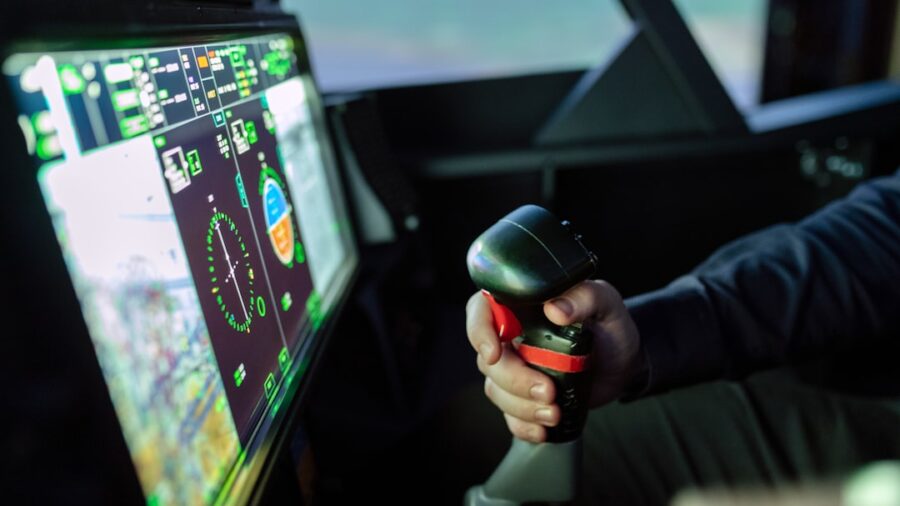
So, how exactly are aviation mechanics using augmented reality (AR) checklists to cut down on human error? In a nutshell, AR overlays digital information directly onto a mechanic’s real-world view, guiding them step-by-step through complex procedures, highlighting potential issues, and providing instant access to critical data without them ever having to look away from their work. This keeps their hands free and their eyes on the task, drastically reducing the chances of a missed step or a misread instruction.
Let’s face it, airplanes are incredibly complex machines, and maintaining them is no small feat. A tiny mistake can have massive consequences.
The Human Factor: We All Make Mistakes
Nobody’s perfect. Even the most experienced mechanic can have an off day, miss a detail, or misinterpret a manual. When you’re dealing with hundreds or thousands of intricate steps on a tight schedule, the likelihood of a slip-up, however small, increases. It’s not about incompetence; it’s about the inherent limitations of human attention and memory under pressure.
The Cost of Error: More Than Just Money
When an error happens in aviation, it’s not just about financial loss (though that can be huge, think grounding an aircraft or major repairs). More importantly, it’s about safety. Lives depend on every bolt being torqued correctly, every wire being connected, and every system being checked. That’s a heavy responsibility, and anything that can lighten that load and improve accuracy is a win.
Traditional Checklists: Good, But With Limitations
Paper checklists have been the backbone of aviation maintenance for decades, and they’re effective. They provide a structured way to ensure steps are followed. However, they have their drawbacks. Mechanics often have to constantly look down at a clipboard, then back at the component, then back at the clipboard. This back-and-forth movement breaks their focus and can lead to errors like skipping a line or checking off the wrong item. Plus, static paper can’t adapt or provide real-time feedback.
A fascinating aspect of technology in aviation is how it intersects with various fields, including software development. For instance, the article on the top astrology software for PC and Mac highlights the increasing reliance on interactive tools across different industries. Just as aviation mechanics utilize interactive AR checklists to minimize human error, software applications in astrology provide users with enhanced experiences through intuitive interfaces and real-time data analysis. To explore more about innovative software solutions, you can check out this article on the best astrology software available in 2023: