


Augmented Reality (AR) is making a real difference in how surgeons plan and train for procedures. Think of it as adding a digital layer of information directly onto the real world, giving surgeons a much clearer, more precise view of what they’re dealing with before and during an operation. This isn’t science fiction anymore; AR is becoming a practical tool that helps improve patient outcomes and allows medical professionals to hone their skills in safer, more effective ways.
Before AR, surgical planning relied heavily on 2D scans like CT and MRI, which surgeons meticulously studied to build a mental picture of the anatomy. This is a demanding cognitive task, and even experienced surgeons could encounter unexpected variations during surgery. AR changes this by transforming those static images into dynamic, interactive 3D models that can be overlaid onto a patient or a surgical simulation.
From Slices to Sight: Visualizing Complex Anatomy
AR tools can take a patient’s existing medical imaging data (CT, MRI, etc.) and reconstruct it into a detailed 3D model. This model can then be projected in real-time onto the patient’s body during pre-operative planning sessions or even, in some advanced cases, during the surgery itself.
Creating Detailed 3D Reconstructions
The process starts with acquiring high-resolution medical scans. Sophisticated software then processes these scans, segmenting different tissues and organs. This allows for the creation of a precise, digital replica of the patient’s unique anatomy. The level of detail can be so fine that individual blood vessels, nerves, and even tumors can be clearly distinguished.
Overlays for Precision Guidance
During the planning phase, surgeons can use AR headsets or specialized screens to view these 3D models superimposed over physical anatomical models or the patient’s actual body. This allows them to see underlying structures that would otherwise be hidden. For example, a surgeon planning a brain tumor resection can visualize the tumor’s exact relationship to critical blood vessels and functional brain areas. They can then map out the safest and most effective surgical approach beforehand.
Identifying Potential Pitfalls Before They Happen
One of the most significant benefits of AR in planning is its ability to highlight potential challenges. By visualizing the patient’s anatomy in 3D and seeing how it relates to instruments and surgical plans, surgeons can anticipate difficulties.
Navigating Difficult Anatomical Landscapes
For procedures involving complex areas like the spine, pelvis, or skull base, anatomical variations are common. AR can help surgeons understand these variations and plan around them. For instance, in spinal surgery, AR can show the precise trajectory of pedicle screws, accounting for variations in bone structure that might otherwise lead to malpositioning or nerve damage.
Simulating Surgical Scenarios
AR allows surgeons to “walk through” the planned procedure virtually. They can practice different surgical steps, test instrument paths, and identify any potential points of collision or obstruction. This virtual rehearsal helps refine the surgical plan and minimizes the element of surprise during the actual operation. It’s like having a highly accurate dress rehearsal for a critical performance.
In the realm of medical advancements, the integration of augmented reality (AR) into surgical planning and training has garnered significant attention. A related article that explores the impact of technology on personal relationships is available at How to Choose a Smartphone for Your Girlfriend. While this article focuses on selecting the perfect smartphone, it highlights the importance of technology in enhancing communication and connectivity, paralleling how AR is revolutionizing the surgical field by improving precision and training for healthcare professionals.
Training the Next Generation: Immersive Surgical Education
Traditional surgical training often involves observing experienced surgeons, assisting in procedures, and practicing on cadavers or animal models. While valuable, these methods can be limited in accessibility, cost, or ethical considerations. AR offers a powerful new avenue for medical education, providing engaging and repeatable learning experiences.
Hands-On Practice Without Real-World Risks
AR effectively bridges the gap between theoretical knowledge and practical application by creating realistic, interactive surgical simulations. Trainees can gain valuable hands-on experience in a safe, controlled environment, allowing them to make mistakes and learn from them without jeopardizing patient safety.
Realistic Virtual Patient Scenarios
AR platforms can simulate a wide range of surgical procedures. Trainees can interact with virtual patients, perform virtual incisions, manipulate virtual instruments, and encounter simulated complications. The tactile feedback can also be incorporated to mimic the feel of tissue and instruments, adding another layer of realism.
Graduated Complexity for Skill Development
AR training modules can be designed with graduated levels of complexity. Beginners can start with basic anatomy lessons and simple surgical tasks, gradually progressing to more complex procedures as their skills and confidence grow. This structured approach ensures that trainees build a solid foundation before moving on to more challenging scenarios.
Developing Competency Through Repetition and Feedback
The ability to repeat procedures and receive immediate feedback is crucial for skill development. AR excels in this area, offering trainees endless opportunities to practice and refine their techniques.
Objective Performance Metrics
AR systems can track a trainee’s movements, instrument usage, and procedural accuracy. This data can be analyzed to provide objective feedback on their performance, highlighting areas where they excel and areas that need improvement. This data-driven approach allows for a more personalized and effective training experience.
Immediate and Targeted Feedback
Instead of waiting for a supervisor to provide feedback, trainees can receive real-time insights within the AR environment. For example, if a trainee holds an instrument at the wrong angle, the AR system can provide an immediate visual cue or auditory alert, helping them correct their technique instantly. This rapid feedback loop is incredibly efficient for learning.
Enhancing Intraoperative Guidance: Real-Time Visual Cues

Beyond planning and training, AR is also starting to be integrated directly into the operating room to provide real-time guidance during surgery. This technology helps surgeons maintain precision and awareness amidst the complexities of an active procedure.
Visualizing Critical Structures During Surgery
During an operation, it can be challenging to identify critical anatomical landmarks, especially when there’s bleeding or swelling. AR can project pre-operative imaging data or anatomical knowledge directly onto the surgical field, helping surgeons navigate safely.
Overlaying Anatomical Data onto the Patient
Imagine a surgeon looking at the surgical field and seeing, through an AR headset or display, the precise location of a major blood vessel or nerve that needs to be avoided. This overlay can be aligned with the patient’s actual anatomy, providing an unprecedented level of visual assistance. This can be particularly useful in minimally invasive surgeries where the field of view is often limited.
Tracking Instruments and Their Trajectories
AR systems can also track surgical instruments, displaying their current position and intended trajectory. This can be invaluable for procedures requiring very precise movements, such as neurosurgery or orthopedic surgery, helping to ensure that instruments remain within the planned path.
Improving Navigation and Minimally Invasive Procedures
AR’s ability to provide spatial context and real-time information is a game-changer for minimally invasive surgery. These procedures, by their nature, involve smaller incisions and less direct visualization, making them ideal candidates for AR assistance.
Navigating Complex Surgical Pathways
In laparoscopic or endoscopic surgery, surgeons often rely on a camera feed displayed on a monitor. AR can enhance this by overlaying navigation pathways or target areas onto this feed, guiding the surgeon through the body’s internal structures with greater confidence.
Precise Instrument Placement
For complex reconstructive surgeries or the placement of implants, AR can provide visual cues to ensure exact positioning. This is especially relevant in fields like urology and gynecology where delicate anatomical structures are involved or where precise alignment of devices like stents or prosthetics is critical.
Bridging the Gap: From 2D Scans to 3D Reality
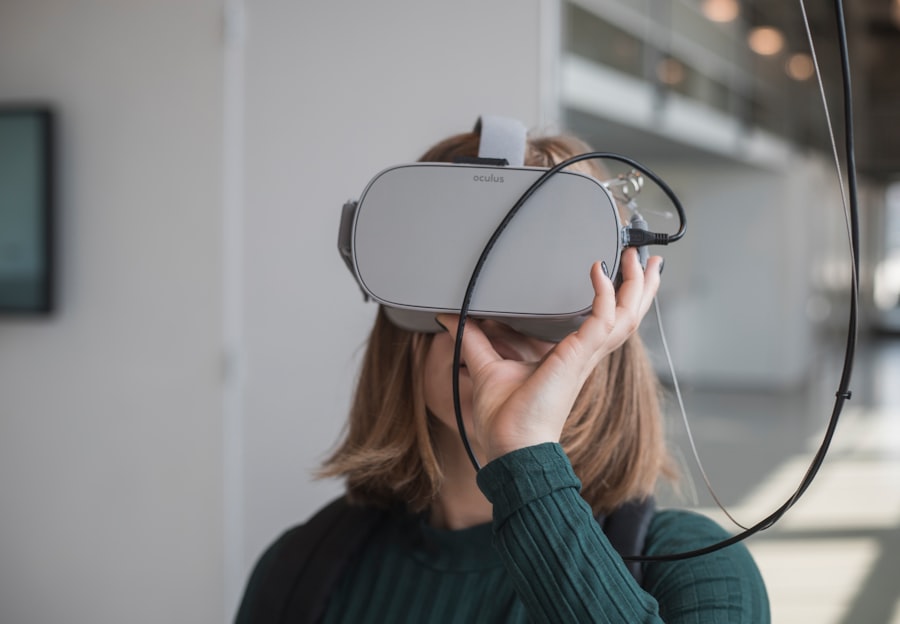
The fundamental shift AR brings is in how we interact with and interpret medical imaging. Moving from static 2D representations to dynamic, interactive 3D visualizations fundamentally changes the surgeon’s understanding of patient anatomy and procedural steps.
Overcoming the Limitations of Traditional Imaging
Two-dimensional scans, while essential, require significant cognitive effort to mentally reconstruct into a three-dimensional understanding. AR automates much of this reconstruction and makes it directly accessible, reducing the cognitive load on surgeons.
Transforming Static Data into Dynamic Visuals
The process of taking a series of axial scans and mentally building a 3D model is complex. AR software excels at this, creating a comprehensive, manipulable 3D representation that can be viewed from any angle. This allows for a far more intuitive grasp of spatial relationships.
Enhancing Spatial Awareness and Understanding
AR’s ability to project these 3D models directly onto the patient or a physical model dramatically enhances a surgeon’s spatial awareness. They can see how organs are positioned relative to each other, how a tumor is invading surrounding tissue, or how an instrument will interact with specific anatomical landmarks. This deeper understanding leads to more informed decision-making.
Integrating Information Seamlessly for Better Decisions
AR aims to bring all relevant patient information – imaging, surgical plans, real-time sensor data – into a single, unified visual interface. This seamless integration allows surgeons to access critical information at the precise moment they need it, without disrupting the flow of the procedure.
Consolidating Data into a Single View
Instead of looking at multiple screens or flipping through different reports, surgeons can have key information projected directly into their field of view. This could include tumor margins, critical nerve pathways, or planned trajectories for instrumentation.
Real-time Data Integration During Procedures
As surgical techniques become more advanced and incorporate robotics or other technologies, AR can act as a unifying interface. For example, it could display the position of robotic instruments in relation to the patient’s anatomy, or integrate data from intraoperative imaging devices.
In recent years, the integration of technology in healthcare has transformed various aspects of medical practice, including surgical planning and training. A related article discusses the best free drawing software for digital artists, which can also be beneficial for medical professionals in creating detailed illustrations and simulations. By utilizing such tools, surgeons can enhance their understanding of complex procedures, ultimately leading to improved patient outcomes. For more insights on digital tools that can aid in artistic representation, you can read the article here.
The Future of AR in Surgery: Continued Advancement and Integration
| Benefits of Augmented Reality in Surgical Planning and Training | Examples |
|---|---|
| Enhanced visualization of patient anatomy | 3D models overlaid on patient scans |
| Precise surgical navigation | Real-time guidance during procedures |
| Improved training simulations | Interactive virtual scenarios for practice |
| Reduced risk and errors | Pre-operative planning and rehearsal |
Augmented Reality in surgery is still evolving, and its potential for future development is significant. As the technology matures, we can expect even more sophisticated applications that will further revolutionize patient care.
Advancements in Hardware and Software
Ongoing advancements in AR headset technology, display resolution, tracking accuracy, and software capabilities are making AR systems more robust, user-friendly, and cost-effective.
Lighter, More Powerful Headsets
Future AR headsets will likely be more comfortable for extended use, offer higher resolution displays for greater detail, and incorporate advanced sensors for more precise tracking of both the user’s head movements and surgical instruments.
Sophisticated Image Processing and AI Integration
Software will continue to improve, with enhanced algorithms for image segmentation and registration. The integration of Artificial Intelligence (AI) will enable AR systems to provide even more intelligent guidance, potentially predicting complications or offering optimized surgical pathways.
Expanding Applications and Wider Adoption
As the benefits of AR become more widely recognized and the technology becomes more accessible, its adoption across various surgical specialties and training programs is expected to accelerate.
Growing Use Across Surgical Specialties
AR is not limited to a few specific fields. Its utility is being explored in general surgery, cardiology, ophthalmology, and many other specialties. As specialized AR applications are developed for each area, its adoption will broaden.
Democratizing Expertise for Training
AR has the potential to democratize access to high-quality surgical training. Remote training and global collaboration become more feasible, allowing surgeons in underserved areas to benefit from world-class educational resources and simulation tools, ultimately improving healthcare access worldwide.
FAQs
What is augmented reality (AR) in the context of surgical planning and training?
Augmented reality (AR) is a technology that overlays digital information, such as images, videos, or 3D models, onto the real world. In the context of surgical planning and training, AR can be used to enhance the visualization of patient anatomy, surgical procedures, and medical devices.
How is augmented reality improving surgical planning?
AR allows surgeons to visualize patient anatomy in 3D, which can improve their understanding of complex structures and aid in preoperative planning. Surgeons can use AR to overlay medical imaging, such as CT scans or MRI images, onto the patient’s body, allowing for more precise and personalized surgical plans.
How is augmented reality enhancing surgical training?
AR can be used in surgical training to create realistic simulations of surgical procedures. Trainees can practice surgical techniques in a virtual environment, allowing for repetitive practice without risk to real patients. AR can also provide real-time guidance and feedback during surgical training, helping trainees improve their skills.
What are the benefits of using augmented reality in surgical planning and training?
The use of AR in surgical planning and training can lead to improved surgical outcomes, reduced surgical errors, and enhanced patient safety. AR can also help shorten the learning curve for new surgical techniques and technologies, ultimately improving the quality of patient care.
Are there any challenges or limitations to using augmented reality in surgical planning and training?
Challenges and limitations of using AR in surgical planning and training include the need for specialized equipment and software, potential technical issues, and the requirement for proper training and integration into existing surgical workflows. Additionally, the cost of implementing AR technology may be a barrier for some healthcare institutions.