

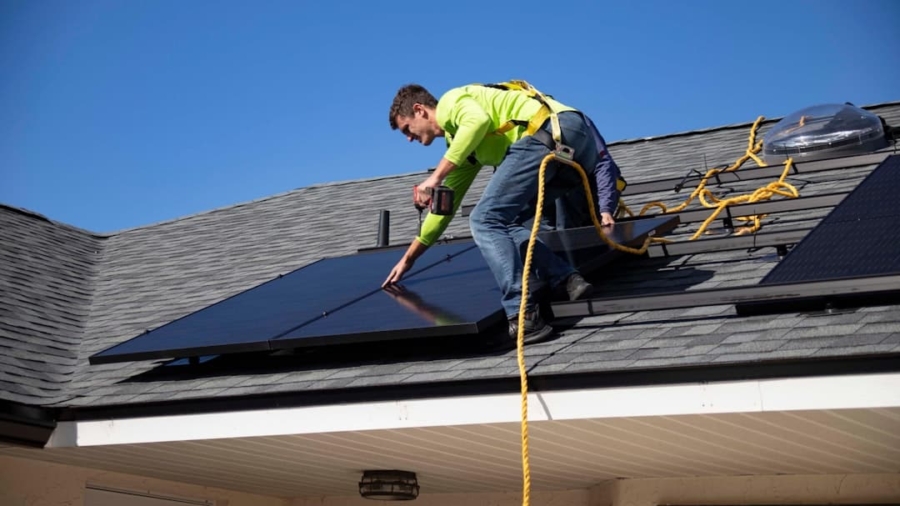
Harvesting solar power in urban environments, especially in our increasingly vertical cities, is not just a pipe dream; it’s a rapidly evolving reality. The key lies in innovative strategies that leverage the unique architecture and densely packed nature of urban landscapes. We’re talking about more than just slapping panels on rooftops – it’s about integrating solar into the very fabric of our buildings and infrastructure to meet growing energy demands sustainably.
Cities present a unique set of challenges for solar energy. Space is at a premium, and the very structures that define our urban centers often create significant shading issues.
Limited Rooftop Real Estate
Traditional solar installations primarily rely on rooftops. However, in dense urban areas, rooftops are often already utilized for HVAC systems, green spaces, communication equipment, or simply aren’t large enough to generate significant power for multi-story buildings. This scarcity of prime, unshaded horizontal space makes a purely rooftop-centric approach insufficient for substantial urban solar generation.
Shading from Adjacent Buildings
The towering structures that characterize vertical cities are a double-edged sword. While they maximize living and working space, they also cast long shadows, often for much of the day. This reduces the efficiency of any ground-level or lower-story solar panels, drastically impacting their energy output and cost-effectiveness. Sunlight angles change throughout the day and year, meaning a panel that is unshaded at noon might be completely shadowed in the morning or late afternoon.
Aesthetic Concerns and Planning Regulations
Integrating visible solar panels into historical districts or architecturally significant areas can run into resistance from urban planners and communities. There’s a balance to be struck between renewable energy goals and preserving the aesthetic character of a city. Strict building codes and zoning ordinances often dictate material choices, reflectivity, and even the appearance of building facades, which can complicate the widespread adoption of traditional PV arrays.
In exploring innovative solutions for sustainable living, the article “Harvesting Solar Power in Urban Environments: Strategies for Vertical Cities” highlights the potential of integrating solar technology into high-rise buildings. This approach not only maximizes energy efficiency but also addresses the growing need for renewable resources in densely populated areas. For those interested in enhancing their multimedia presentations on such topics, a related article on video editing tools can be found here: The Best Software for Video Editing in 2023. This resource can help create compelling visual narratives that effectively communicate the importance of sustainable urban development.
Key Takeaways
- Clear communication is essential for effective teamwork
- Active listening is crucial for understanding team members’ perspectives
- Setting clear goals and expectations helps to keep the team focused
- Regular feedback and open communication can help address any issues early on
- Celebrating achievements and milestones can boost team morale and motivation
Beyond the Roof: Embracing Vertical and Integrated Solar
The solution to urban solar challenges lies in looking beyond the traditional rooftop and thinking vertically. This involves integrating solar technology directly into buildings and infrastructure.
Building-Integrated Photovoltaics (BIPV)
BIPV is arguably the most promising avenue for urban solar. It’s not just about adding panels; it’s about making the building materials themselves generate electricity. This approach seamlessly blends form and function, addressing both energy needs and aesthetic considerations.
Solar Facades and Cladding
Imagine buildings whose outer skin is actively generating electricity. Solar facades replace traditional cladding materials with PV cells, turning entire high-rise walls into power plants. These can be opaque, translucent, or even semitransparent, allowing for design flexibility. They can mimic the look of conventional glass, stone, or metal panels, making them virtually indistinguishable from regular building materials to the untrained eye. Newer thin-film technologies are enabling more colors and flexibilities, expanding design options even further.
Solar Windows and Glazing
Windows are a significant part of any building’s envelope. “Transparent” or “semitransparent” PV technology allows glass to generate electricity while still letting light pass through. While their efficiency might be lower than opaque panels, their vast surface area in a skyscraper makes up for it. These can also be engineered to block certain wavelengths of light, helping with temperature regulation inside the building and reducing HVAC loads, thus providing a dual benefit. The research here is quickly advancing, with efficiencies steadily improving.
Solar Shading Devices
External shading elements, like awnings, louvers, or brise-soleil, are already common in modern architecture to manage sunlight and heat gain. Integrating PV cells into these elements allows them to serve a dual purpose: shading the interior while simultaneously generating power.
This is a smart way to utilize existing architectural features for energy production, especially on south-facing elevations.
They can be dynamically controlled to optimize both light penetration and energy generation.
Maximizing Exposure: Intelligent Placement and Design

Simply having solar-ready materials isn’t enough; we need to strategically place them to capture as much sunlight as possible.
East and West Facing Panels
While south-facing is ideal for maximum overall energy yield throughout the day (in the Northern Hemisphere), urban canyons often mean restricted southern exposure. East and west-facing facades, despite having lower peak output compared to south, can still contribute significantly, especially during morning and afternoon peaks when energy demand is often high. A combination of panels on multiple orientations can lead to a more consistent power profile throughout the day.
This distributed generation also reduces the dependency on a single orientation.
Vertical Axis Tracking Systems
Traditional solar panels are often static, but emerging technologies allow vertical panels to track the sun’s movement. Imagine fins or louvers that slowly rotate throughout the day, always presenting the optimal angle to the sun. This can significantly boost energy capture compared to fixed vertical installations, overcoming some of the limitations of oblique sun angles in urban settings, though these systems do introduce mechanical complexity and maintenance requirements.
Integration with Green Infrastructure
Green roofs and living walls are increasingly popular in cities for their aesthetic, ecological, and thermal benefits.
Combining these with solar is a clever strategy. Elevated solar panels can be placed above green roofs, allowing the greenery to thrive while the panels generate power. The vegetation also helps cool the panels, improving their efficiency.
Similarly, panels can be integrated into living wall structures, utilizing overlooked vertical real estate. The synergistic benefits here are worth exploring further, as both contribute to urban resilience.
Beyond Buildings: Broadening the Solar Footprint

Our urban environment extends beyond just buildings. Infrastructure and public spaces also offer untapped potential for solar harvesting.
Solar Integrated Infrastructure
Cities are crisscrossed with roads, public transportation networks, and various forms of infrastructure. Each offers a potential surface for solar integration.
Solar Roadways and Pavements
This is a more novel and technically challenging concept, still largely in the research and pilot phase. Imagine specialized durable solar panels embedded directly into road surfaces, sidewalks, and bike paths. While durability and cost are significant hurdles, the sheer surface area available is immense. These could power streetlights, traffic signals, electric vehicle charging stations, and even provide real-time information to drivers. Early prototypes have been tested in several countries, showing promise despite the engineering challenges of weight-bearing and weathering.
Solar Noise Barriers
Along highways and railways, noise barriers are a common sight. These extensive vertical surfaces are perfect candidates for integrated PV. They perform their primary function of noise reduction while simultaneously generating clean electricity. Their often extensive length and relatively consistent exposure make them an attractive option, potentially powering adjacent infrastructure like lighting or signaling without needing new land.
Solar Street Furniture
Bus stops, park benches, billboards, streetlights, and information kiosks can all be designed to incorporate small-scale PV systems. While individually these might generate little power, cumulatively they can contribute to distributed generation, powering their own functions or feeding into a local microgrid. This enhances urban resilience and can provide power in off-grid situations or during emergencies. Imagine a bus stop that powers its own lighting and real-time schedule display entirely from the sun.
Distributed Generation and Microgrids
In urban environments, it’s not just about producing power; it’s about how that power is used and managed. Distributed generation and microgrids are crucial for resilience and efficiency.
Local Energy Production and Consumption
Instead of relying solely on large, centralized power plants far from the city, urban solar promotes local energy production. This reduces transmission losses, enhances energy independence, and can make cities more resilient to grid outages. Buildings can generate power for their own needs, with excess power fed back into a local grid. This shortens the distance between where energy is created and where it’s consumed.
Enhanced Grid Resilience
A city with many small, distributed solar installations is inherently more resilient. If one part of the grid goes down, other areas can continue to be powered by local solar, especially if connected via microgrids. This prevents widespread blackouts and ensures critical services remain operational.
Microgrids can “island” themselves from the larger grid during disturbances, maintaining power locally.
Smart Grid Integration
Urban solar needs to be part of a larger smart grid ecosystem. This involves intelligent management systems that can forecast solar output, monitor demand, and seamlessly integrate various renewable sources. Smart grids enable efficient power distribution, demand-side management, and the optimization of energy storage, ensuring that the intermittent nature of solar doesn’t compromise grid stability. Real-time data from solar installations can inform dispatch decisions and energy trading.
In exploring innovative solutions for sustainable living, the article on harvesting solar power in urban environments highlights the importance of integrating renewable energy sources into vertical cities. A related discussion can be found in an article about smartwatches, which emphasizes how technology can enhance our daily lives and promote energy efficiency. By examining the intersection of urban design and smart technology, we can better understand how to create more sustainable cities. For more insights on this topic, you can read the article on smartwatches that allow you to view pictures on them.
The Path Forward: Policy, Economics, and Innovation
| City | Population | Solar Panel Installation (kW) | Energy Generated (kWh/year) |
|---|---|---|---|
| New York City | 8,336,817 | 200,000 | 240,000,000 |
| Tokyo | 9,273,000 | 180,000 | 216,000,000 |
| Shanghai | 24,183,000 | 250,000 | 300,000,000 |
For urban solar to truly flourish, it needs a supportive ecosystem that includes smart policies, viable economic models, and continuous technological advancement.
Supportive Policy and Regulations
Government and municipal policies play a crucial role in accelerating urban solar adoption. Without clear frameworks, progress will be slow and fragmented.
Streamlined Permitting Processes
Bureaucracy can be a major roadblock. Cities need to simplify and expedite the permitting process for solar installations, making it easier and quicker for property owners and developers to get projects approved. A “one-stop-shop” approach or digitally streamlined applications can significantly reduce friction. Clear guidelines and predictable timelines are essential for encouraging investment.
Incentives and Rebates
Financial incentives, such as tax credits, grants, and rebates, can significantly reduce the upfront cost of solar installations, making them more attractive to homeowners and businesses. Feed-in tariffs, which pay producers for the electricity they feed into the grid, can also encourage investment and provide a reliable revenue stream. These incentives help overcome the initial capital outlay often associated with renewable energy.
Mandates and Building Codes
Some forward-thinking cities are implementing solar mandates for new constructions or major renovations, requiring a certain percentage of energy to come from onsite renewables. Integrating solar requirements directly into building codes ensures that solar becomes a standard feature, not an afterthought, for urban development. This proactive approach accelerates the transition to green energy on a systemic level.
Economic Viability and Business Models
Ultimately, urban solar needs to make economic sense for widespread adoption. New business models are emerging to address this.
Power Purchase Agreements (PPAs)
PPAs allow building owners to host solar panels without any upfront cost. A third-party developer finances, installs, and maintains the system, selling the generated electricity back to the building owner at a fixed, often lower, rate. This removes the financial barrier for many and ensures predictable energy costs. This model shifts the financial risk from the property owner to the solar developer.
Community Solar Programs
Not everyone owns a building or has suitable rooftop space. Community solar allows individuals to subscribe to a share of a larger, off-site solar project and receive credits on their electricity bill. This democratizes access to solar energy, allowing apartment dwellers or those with shaded properties to still participate in the solar economy. These programs are particularly effective in densely populated areas where individual installations might not be feasible for everyone.
Financing Mechanisms for BIPV
Specialized financing options are needed for BIPV installations, which can sometimes have higher initial costs due to their integrated nature. Green bonds, property assessed clean energy (PACE) financing, and specific loan products can help make these innovative solutions more accessible and accelerate their deployment across urban landscapes. These mechanisms often tie repayment to property taxes, making them attractive for long-term investments.
Continuous Research and Development
The solar industry is constantly innovating. Continued investment in R&D is vital for developing more efficient, cost-effective, and aesthetically pleasing solar technologies.
Improved Efficiency and Durability
Researchers are pushing the boundaries of material science to create PV cells that convert more sunlight into electricity and last longer in harsh urban conditions. This includes advancements in perovskite cells, multi-junction cells, and materials that are more resistant to pollution and extreme weather. Higher efficiency means more power from smaller surface areas – a critical factor in space-constrained cities.
Cost Reduction Through Mass Production
As solar technologies become more widespread, manufacturing processes become more efficient, leading to further cost reductions. This economies of scale effect makes solar more competitive with traditional energy sources and more accessible to a broader market, accelerating the transition. The goal is to reach grid parity without subsidies.
Aesthetic Integration and Design Flexibility
While efficiency is key, urban environments also demand aesthetic appeal. R&D into highly customizable solar materials – in terms of color, transparency, texture, and form – is crucial for seamless integration into diverse architectural styles. This ensures that solar doesn’t just generate power, but also enhances the visual landscape of our vertical cities. Think patterned solar panels or those that perfectly match existing building materials.
The future of energy in vertical cities will undoubtedly be intertwined with solar power. By embracing innovative approaches like BIPV, thinking strategically about placement, leveraging urban infrastructure, and fostering a supportive policy and economic environment, we can transform our skylines into active power generators, contributing significantly to a sustainable and resilient urban future. It’s a complex endeavor, but one with immense payoffs for generations to come.
FAQs
What are the challenges of harvesting solar power in urban environments?
In urban environments, limited space, shading from tall buildings, and air pollution can all pose challenges to effectively harvesting solar power.
What are some strategies for harvesting solar power in vertical cities?
Some strategies for harvesting solar power in vertical cities include integrating solar panels into building facades, using solar canopies on rooftops, and utilizing solar windows and glass.
How can vertical cities maximize solar power generation despite limited space?
Vertical cities can maximize solar power generation by using innovative designs such as solar tracking systems, building-integrated photovoltaics, and utilizing reflective materials to redirect sunlight to solar panels.
What are the benefits of harvesting solar power in urban environments?
Harvesting solar power in urban environments can help reduce reliance on traditional energy sources, lower carbon emissions, and contribute to a more sustainable and resilient urban infrastructure.
What are some examples of successful solar power projects in vertical cities?
Examples of successful solar power projects in vertical cities include the Bahrain World Trade Center, which features wind turbines integrated into its design, and the Solar Carve Tower in New York City, which utilizes a unique geometric facade to maximize solar energy capture.
Enjoying our content? Make us a preferred source on Google:
Add us as a Preferred Source on Google