

So, you’re probably wondering: can DNA really solve our growing data storage problem? The short answer is a resounding maybe, with a lot of exciting possibilities and some hefty challenges. We’re facing a global archival crisis where the sheer volume of digital information is outstripping our current storage capabilities, both in terms of space and energy efficiency. DNA, with its incredible density and longevity, offers a truly revolutionary approach to tucking away all those cat videos, scientific papers, and everything in between.
We’re generating data at an unprecedented rate. Think about it: every photo you take, every email you send, every smart device interaction – it all creates data. This isn’t just about personal files; it’s vast corporate archives, government records, scientific research, and cultural heritage. Current solutions are simply struggling to keep up.
The Limits of Traditional Storage
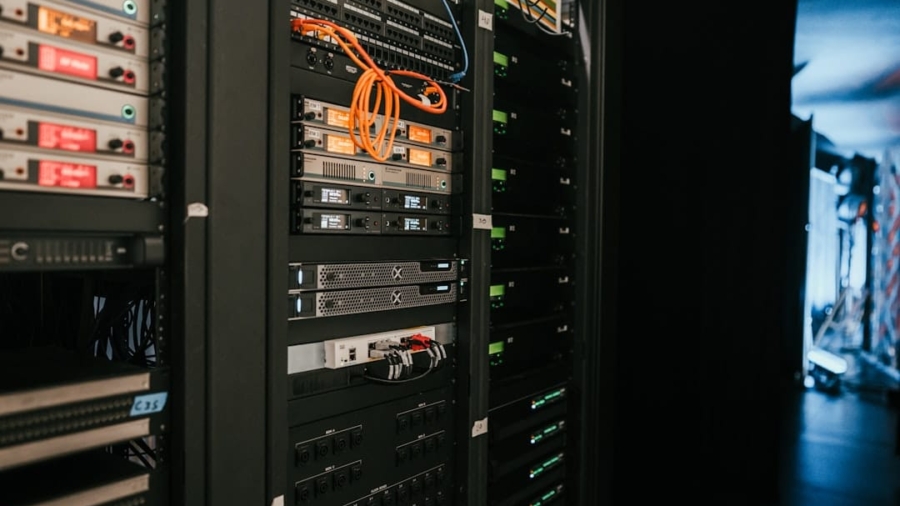
Hard drives and SSDs, while fantastic for everyday use, have their drawbacks. They require constant power, have a finite lifespan, and take up physical space – often in massive, energy-guzzling data centers. Magnetic tapes offer longer-term storage but are slow to access and still have environmental concerns. The energy footprint of these systems is significant and only growing.
The Problem of Obsolescence
Remember floppy disks? Zip drives?
Data storage technologies evolve, and what’s cutting-edge today might be obsolete tomorrow.
This means constantly migrating data from older formats to newer ones, a process that’s expensive, time-consuming, and carries the risk of data loss. We need a solution that future-proofs our information.
In exploring innovative solutions to the global archival crisis, the article on harnessing DNA data storage solutions presents a groundbreaking approach to data preservation. For those interested in the intersection of technology and design, a related article discussing the best software for house plans can provide insights into how digital tools are transforming various fields. You can read more about it here: Best Software for House Plans. This connection highlights the broader implications of data management and storage across different industries.
Key Takeaways
- Clear communication is essential for effective teamwork
- Active listening is crucial for understanding team members’ perspectives
- Conflict resolution skills are necessary for managing disagreements
- Trust and respect are the foundation of a successful team
- Collaboration and cooperation are key for achieving common goals
DNA: Nature’s Ultimate Hard Drive
This is where DNA steps in. It’s the information storage system that life itself has used for billions of years, and it’s incredibly good at it.
Unparalleled Information Density
One of the most jaw-dropping aspects of DNA storage is its density. A single gram of DNA can theoretically store all the digital information ever created by humanity. Think about that for a second. We’re talking petabytes and exabytes crammed into something you can barely see. This makes it an ideal candidate for archival storage, where space is a premium. Imagine replacing entire data centers with a tiny tube.
Incredible Longevity
Unlike electronic storage which degrades over decades, DNA, under the right conditions (like being dry and cool), can last for thousands, even tens of thousands of years. We’ve retrieved genetic information from Neanderthal bones, showing just how robust this molecule is. For preserving historical records, scientific insights, and cultural artifacts, this longevity is unmatched. No more worrying about data migration every few years.
How DNA Data Storage Works: From Bits to Bases

It sounds like science fiction, but the principles are surprisingly elegant, even if the execution is complex.
Encoding Digital Information into DNA
The core idea is to translate the binary language of computers (0s and 1s) into the four-letter alphabet of DNA (A, T, C, G). There are various encoding schemes developed by researchers. For example, a simple approach might map 00 to A, 01 to T, 10 to C, and 11 to G.
More sophisticated methods use redundancy and error correction codes to ensure data integrity during synthesis and sequencing.
Synthesizing the DNA Strands
Once the digital data is encoded, specialized machines called DNA synthesizers create the actual DNA molecules.
These machines chemically “write” the DNA strands base by base, building custom sequences according to the encoded information.
This step is currently the most expensive and time-consuming part of the process, a key area for ongoing research and development.
Reading the Information Back: DNA Sequencing
To retrieve the data, the DNA strands are sequenced. This process determines the order of the A, T, C, and G bases in each strand. Modern high-throughput sequencers can read vast amounts of DNA very quickly.
Once sequenced, the biological sequence is then decoded back into the original binary data, allowing a computer to understand it. Error correction algorithms are crucial here to compensate for any mistakes that might occur during synthesis or sequencing.
Current Challenges and Hurdles on the Path to Adoption

While the promise is huge, DNA data storage isn’t ready for your personal cloud backup just yet. There are significant technological and economic barriers to overcome.
High Synthesis and Sequencing Costs
This is arguably the biggest roadblock. Synthesizing DNA is still incredibly expensive, pricing it far beyond practical use for most applications. Similarly, sequencing, while becoming cheaper, still represents a substantial cost for retrieving large datasets. Researchers are working on enzymatic synthesis methods, which could be more affordable and faster than chemical synthesis.
Speed of Writing and Reading
Compared to electronic storage, the write and read speeds for DNA are agonizingly slow. Synthesizing a significant amount of data can take days or weeks, and even sequencing, while faster, isn’t instantaneous. For archival purposes, where data is written once and rarely accessed, this might be acceptable, but it’s a non-starter for active data. Improvements in microfluidics and parallel processing are aimed at speeding up these processes.
Random Access Limitation
Currently, to retrieve a specific piece of information from a pool of DNA, you often have to sequence the entire batch and then computationally find your data. This is akin to reading a whole library to find one sentence. Researchers are exploring ways to achieve “random access” by using molecular tags or spatial organization, allowing targeted retrieval of specific files without processing everything.
Error Rates and Durability Concerns
While DNA is inherently robust, mistakes can occur during synthesis and sequencing, leading to errors in the stored data. Redundancy and error correction codes are essential to mitigate this. Also, while DNA is long-lived, it’s not indestructible. Conditions like extreme heat, humidity, or exposure to certain chemicals can degrade it. Proper storage conditions are vital.
In exploring innovative solutions to the global archival crisis, one might find it interesting to consider the advancements in technology that can enhance creative fields, such as graphic design. A related article discusses the best laptops for graphic design in 2023, which highlights the importance of powerful computing in managing and storing large amounts of data. As the demand for efficient data storage grows, integrating DNA data storage solutions could revolutionize how we preserve and access information in various domains, including design. For more insights on this topic, you can read the article here.
Future Outlook: When and Where Will DNA Storage Shine?
| Challenges | Solutions |
|---|---|
| Limited physical storage space | Using DNA as a compact and durable storage medium |
| Data degradation over time | DNA offers long-term stability for archival purposes |
| High energy consumption of traditional data centers | DNA data storage requires minimal energy for maintenance |
| Cost of maintaining and upgrading storage infrastructure | DNA data storage can reduce long-term costs and maintenance needs |
Despite the challenges, the pace of innovation in DNA data storage is rapid. We’re already seeing specialized applications emerge, and the future looks promising for its broader adoption in specific niches.
Long-Term Archival Storage
This is the “killer app” for DNA data storage. For data that needs to be preserved for centuries or millennia, but isn’t accessed frequently, DNA’s density and longevity make it an ideal candidate. Think national archives, scientific datasets, medical records, astronomical observations, and historical documents. Governments, large corporations, and research institutions are keenly interested in this use case.
Cold Data Storage for Hyperscalers
Even for tech giants like Microsoft and Google, managing vast amounts of “cold data” – information that’s rarely accessed but must be retained – is a huge challenge. DNA could offer a significantly more energy-efficient and compact solution for these massive datasets, reducing operational costs and environmental impact in the long run.
Niche Applications and Specialized Use Cases
Beyond the obvious archival uses, there are some intriguing niche applications. DNA could potentially be used for secure, unforgeable data embedded in physical objects for anti-counterfeiting measures. It could also play a role in developing robust, long-term storage solutions for space missions, where data integrity and compactness are paramount. Even embedding data into living organisms for biosecurity or tracking purposes is being explored, though with significant ethical considerations.
The Role of Enzymatic DNA Synthesis
Significant breakthroughs are expected from enzymatic DNA synthesis methods. These approaches use enzymes (like TdT, terminal deoxynucleotidyl transferase) to build DNA strands, offering the potential for faster, more accurate, and much cheaper synthesis compared to current chemical methods. If these technologies mature, they could dramatically reduce the cost barrier.
Integration with Existing Infrastructure
For DNA data storage to truly take off, it will need to integrate seamlessly with existing digital infrastructure. Researchers are working on developing standardized interfaces, robotic systems for handling DNA samples, and automated decode/re-encode pipelines that fit within current cloud storage models. The goal is to make it as transparent as possible to the end-user or application.
The journey to widespread DNA data storage is still ongoing, characterized by innovative solutions battling complex technical hurdles. While we’re not yet storing our vacation photos in a test tube, the trajectory of this technology points towards a future where biological molecules become an indispensable part of our global data infrastructure, offering an elegant and enduring solution to the growing archival crisis.
FAQs
What is DNA data storage?
DNA data storage is a method of storing digital data in the form of DNA molecules. This involves encoding the binary data of 0s and 1s into the four nucleotide bases of DNA: adenine (A), cytosine (C), guanine (G), and thymine (T).
How does DNA data storage work?
In DNA data storage, digital data is first converted into the language of DNA using a process called DNA synthesis. The synthesized DNA is then stored in a controlled environment, such as a laboratory, and can be retrieved by sequencing the DNA to convert it back into digital data.
What are the advantages of DNA data storage solutions?
DNA data storage solutions offer several advantages, including high data density, long-term stability, and resistance to obsolescence. DNA can store massive amounts of data in a very small space and can potentially last for thousands of years if stored properly.
What is the global archival crisis and how can DNA data storage help solve it?
The global archival crisis refers to the challenge of preserving and storing the ever-increasing amount of digital data being generated worldwide. Traditional storage methods are reaching their limits, leading to concerns about data loss and degradation. DNA data storage offers a potential solution by providing a highly dense and stable archival medium for long-term data storage.
What are the current challenges and limitations of DNA data storage?
Challenges and limitations of DNA data storage include high costs, slow read and write speeds, and the need for specialized equipment and expertise. Additionally, the technology is still in the early stages of development and has not yet reached widespread commercial availability.
Enjoying our content? Make us a preferred source on Google:
Add us as a Preferred Source on Google