

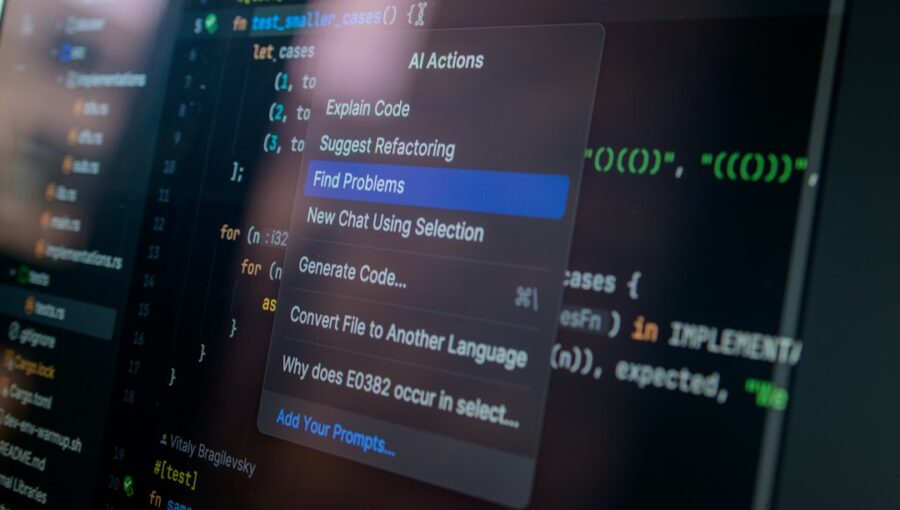
Integrating AI coding assistants into secure enterprise CI/CD pipelines is absolutely doable, and it’s becoming increasingly important for boosting developer productivity while maintaining robust security. The key here isn’t just dropping in a new tool; it’s about thoughtfully adapting your existing secure practices to accommodate these powerful AI helpers. Think of it as enhancing your current security posture rather than weakening it. We’re talking about enabling developers to leverage AI for faster coding, better code quality, and quicker iterations, all without opening up new attack vectors or compromising sensitive information.
Understanding the “Why” and the Core Challenges
Before we dive into the how, let’s quickly touch on why enterprises are even considering this. The promise of AI assistants is significant: auto-completion, code generation, refactoring suggestions, and even bug detection. These tools can dramatically reduce boilerplate, accelerate development cycles, and potentially even help less experienced developers write higher-quality code. However, for a security-conscious enterprise, simply adopting them without careful consideration can introduce a host of issues, from intellectual property leakage to the introduction of vulnerable code.
The Security Tightrope: Productivity vs. Risk
It’s a classic balancing act. On one side, developers are clamoring for tools that make their lives easier and more productive. On the other, security teams are responsible for protecting the organization’s assets. AI coding assistants, by their very nature, interact with and process source code – the crown jewels of many businesses. This interaction raises immediate red flags if not managed properly. The goal isn’t to block AI, but to integrate it in a way that minimizes risk while maximizing its benefits.
Common Concerns with AI in the Pipeline
When we talk about integrating AI into a secure CI/CD, several critical concerns jump out. First and foremost is data privacy and intellectual property (IP). Where does the code go? Who sees it? Is it used to train models? Then there’s the risk of introducing insecure code. AI models, while powerful, can sometimes generate code with subtle vulnerabilities or even license compliance issues. Finally, there’s the operational aspect: how do you manage, monitor, and audit these AI tools within an existing, often complex, enterprise environment? These are the questions we need to address head-on.
For those interested in enhancing their understanding of technology integration in various fields, a related article that might pique your interest is about selecting the perfect smartphone for your girlfriend. This article provides insights into choosing the right device based on personal preferences and needs, which can be crucial in today’s tech-driven world. You can read it here: How to Choose a Smartphone for Your Girlfriend.
Key Takeaways
- The training data includes information and events up to October 2023.
- Insights and knowledge are based on a wide range of sources available until the cutoff date.
- No updates or developments occurring after October 2023 are included in the training.
- Users should verify current information from reliable sources for the latest updates.
- The model’s responses reflect the context and knowledge available up to the specified date.
Establishing a Secure Foundation for AI Integration
The cornerstone of successful AI integration is a solid, secure foundation. This means understanding your current security posture, defining clear policies, and ensuring that your infrastructure can support AI tools without creating new vulnerabilities.
Defining Your AI Usage Policy
Before any tool touches your codebase, you need a clear, well-communicated policy. This policy should outline what AI coding assistants are approved, how they can be used, and what types of code (e.g., sensitive data, proprietary algorithms) should never be fed to external AI services. It’s crucial to differentiate between AI tools that run locally with no external communication and those that send code snippets to cloud-based services for processing. Your policy should cover:
- Approved Tools: List specific AI assistants and their versions.
- Data Handling: Explicitly state what kind of code or data can be shared with AI services (if any) and under what circumstances.
- Training Data: Address whether your code can be used to train AI models, and if so, what agreements are in place.
- Security Scans: Mandate that all AI-generated code must go through the same rigorous security scanning as human-written code.
- Developer Responsibility: Emphasize that developers are ultimately responsible for the code they commit, regardless of its origin.
Choosing the Right AI Assistant Architecture
Not all AI coding assistants are created equal, especially concerning their architecture and data handling. For enterprises, this is a critical differentiator.
Fully Local AI Models
Some AI assistants can run entirely on a developer’s machine or within your private network, never sending code externally. This is often the most secure option from a data privacy perspective, as your IP never leaves your controlled environment. The trade-off might be performance (depending on local hardware) or the breadth of features compared to cloud-backed models. For highly sensitive projects, this architecture is often preferred.
Private Cloud/On-Premise Hosted Models
Another option involves hosting AI models within your own private cloud or on-premise infrastructure. This gives you full control over the data and the model, allowing you to fine-tune it with your own codebase for better contextual suggestions while maintaining data sovereignty. This requires significant infrastructure and MLOps capabilities but offers an excellent balance of security and customization for large enterprises.
Public Cloud/SaaS AI with Enterprise Features
Many popular AI coding assistants are SaaS offerings. When considering these, look for enterprise-grade features such as:
- Dedicated Instances: Your organization gets its own dedicated AI model instance, preventing data commingling.
- Data Isolation: Guarantees that your code is not used to train global models or shared with other customers.
- Compliance Certifications: Look for SOC 2, ISO 27001, HIPAA, or other relevant certifications.
- Data Retention Policies: Understand how long your data is stored and how it’s purged.
- API-First Approach: Integration via APIs often allows for better control and auditing compared to direct IDE plugins.
Secure Network Configuration and Access Control
Regardless of the AI assistant’s architecture, ensure that network access is strictly controlled. If using external AI services, route traffic through secure proxies with strict egress filtering. Implement robust authentication and authorization mechanisms for accessing AI tools, integrating with your existing identity providers (IdPs) like Okta or Azure AD. Least privilege principles apply here: users should only have access to the AI tools and features necessary for their role.
Integrating AI Securely into the CI/CD Pipeline
This is where the rubber meets the road. Simply having an AI assistant in the IDE isn’t enough; its output needs to be scrutinized and integrated into the automated checks that form the backbone of your CI/CD.
Pre-Commit Hooks and Local Scans
Before code even reaches the CI/CD pipeline, introduce checks at the developer workstation level. This can involve:
- Linting and Formatting: Ensure AI-generated code adheres to coding standards immediately.
- Basic Static Analysis: Run lightweight SAST tools as pre-commit hooks to catch obvious vulnerabilities or common mistakes that AI might introduce.
This acts as a first line of defense.
- Developer Review: Emphasize that developers must review all AI-generated code for correctness, security, and adherence to best practices before committing. The AI is an assistant, not an autonomous coding agent.
Enhanced Static Application Security Testing (SAST)
AI-generated code, while potentially correct, can sometimes subtly introduce security vulnerabilities. Your SAST tools should be configured to be extra vigilant.
Comprehensive SAST Integration
Ensure your SAST tools are fully integrated into your CI/CD pipeline and configured to scan every pull request or commit.
Don’t skip AI-generated code. In fact, you might consider enhancing SAST rulesets to specifically look for patterns that AI models are known to generate, which might include:
- Insecure Defaults: AI might default to less secure configurations (e.g., weak encryption, insecure deserialization) if not prompted correctly.
- Obscure Libraries/Dependencies: AI might suggest less common libraries that haven’t been thoroughly vetted or have known vulnerabilities.
- Verbose or Complex Code: While not directly a vulnerability, overly complex AI-generated code can hide subtle flaws, making it harder for human review or other tools to catch issues.
AI-Assisted SAST and Code Review
Ironically, AI can also help with SAST. Some advanced SAST tools use AI/ML to reduce false positives and prioritize findings.
Furthermore, AI can assist in the code review process by highlighting potential security issues or suggesting remediation steps for vulnerabilities found by SAST tools, making it easier for human reviewers to spot and fix issues.
Dynamic Application Security Testing (DAST) and Penetration Testing
SAST catches issues in code, but DAST tests the running application from an attacker’s perspective. AI-generated code needs to undergo the same rigorous DAST and penetration testing as human-written code.
Automated DAST in CI/CD
Integrate DAST tools into your CI/CD pipeline to automatically scan deployed application builds. This ensures that any runtime vulnerabilities, regardless of how the code was generated, are caught before reaching production.
Regular and comprehensive DAST scans are crucial.
Human-Led Penetration Testing
AI coding assistants don’t eliminate the need for human penetration testers. In fact, complex, AI-generated systems might introduce novel interaction patterns or edge cases that only a human can uncover. Regular, thorough penetration tests remain a non-negotiable part of your security strategy.
Software Composition Analysis (SCA)
AI models are often trained on vast amounts of public code, which means they might suggest or generate code snippets that rely on specific open-source libraries.
This brings SCA to the forefront.
Automated Dependency Scanning
Your SCA tools must be integrated into your CI/CD to identify and analyze all third-party and open-source components used in your applications. This includes:
- Vulnerability Detection: Flag known vulnerabilities (CVEs) in libraries suggested or used by AI.
- License Compliance: Ensure that AI-generated code doesn’t introduce components with incompatible open-source licenses.
- Supply Chain Security: Verify the integrity of all dependencies, regardless of whether they were explicitly chosen by a developer or suggested by an AI.
Monitoring, Auditing, and Continuous Improvement
Integrating AI isn’t a one-and-done task. It requires ongoing vigilance, monitoring, and a commitment to continuous improvement.
Logging and Auditing AI Interactions
Transparency is key. You need to know how AI tools are being used, by whom, and what code they are processing.
Centralized Logging of AI Usage
Implement centralized logging for all AI coding assistant interactions. This should include:
- User IDs: Who is using the AI assistant?
- Timestamp: When was the interaction?
- Tool Used: Which specific AI assistant was employed?
- Input/Output (Sanitized): Log what was sent to the AI and what was returned. This might require careful sanitization to avoid logging sensitive intellectual property. The goal isn’t to store the full code, but perhaps hashes or metadata that can be correlated with commits.
- API Calls: For enterprise-grade AI services, log API calls and responses.
This audit trail is crucial for forensic investigations, compliance, and understanding usage patterns.
Integration with SIEM Systems
Feed these AI interaction logs into your Security Information and Event Management (SIEM) system. This allows security teams to correlate AI usage with other security events, detect anomalies, and identify potential misuse or breaches. For example, a sudden spike in sensitive code being sent to an external AI service could trigger an alert.
Performance and Security Metrics for AI-Assisted Development
You can’t improve what you don’t measure. Track metrics related to both the productivity gains and the security implications of AI integration.
Productivity Metrics
- Code Velocity: Are development cycles faster?
- Defect Density: Has the number of bugs (including security bugs) per line of code changed?
- Time-to-Market: Are products released more quickly?
Security Metrics
- AI-Introduced Vulnerabilities: Track the number of security vulnerabilities directly attributable to AI-generated code. This requires careful analysis during SAST/DAST/code review.
- Remediation Rate: How quickly are AI-introduced vulnerabilities fixed?
- False Positive Rate: Are AI tools generating more noise than signal in security reports?
- Compliance Deviations: Are there instances of AI-generated code violating license or internal policy?
These metrics provide valuable insights into the effectiveness and security posture of your AI integration.
Incident Response Planning for AI-Related Issues
What happens if an AI assistant introduces a critical vulnerability that bypasses all your checks, or if there’s a data breach related to an AI service? Your incident response plan needs to be updated.
Specific Playbooks for AI Incidents
Develop specific playbooks for AI-related security incidents. This should cover:
- Detection: How do you detect an AI-related incident?
- Containment: How do you stop the spread of a vulnerable AI-generated component or prevent further data leakage?
- Eradication: How do you remove or remediate the problematic AI-generated code?
- Recovery: How do you restore systems to a secure state?
- Post-Incident Analysis: What lessons can be learned to prevent future AI-related issues?
Communication Strategy
Define a clear communication strategy for AI-related incidents, both internally (developers, security, legal) and externally (if necessary, with AI vendors or customers).
Regular Review and Adaptation
The AI landscape is evolving rapidly. What’s secure today might have new considerations tomorrow.
Policy Updates
Regularly review and update your AI usage policies to reflect new tools, changing threat landscapes, and lessons learned from internal use.
Tool Evaluation
Continuously evaluate new AI coding assistants and features. As new, more secure, or more capable models emerge, be prepared to integrate them responsibly. This includes assessing their data handling, security certifications, and enterprise features.
Training and Awareness
Provide ongoing training for developers and security teams on the secure use of AI coding assistants. Educate developers on their responsibilities when using AI, the potential pitfalls, and best practices for reviewing and validating AI-generated code. For security teams, train them on how to identify and respond to AI-related security risks.
In the ever-evolving landscape of software development, integrating AI coding assistants into secure enterprise CI/CD pipelines is becoming increasingly essential for enhancing productivity and maintaining security. For those interested in exploring the broader implications of technology on everyday devices, a fascinating article discusses the capabilities of the Samsung Galaxy S21 and how it unlocks new possibilities for users. You can read more about it in this insightful piece, which highlights the intersection of innovation and user experience.
Best Practices and Developer Empowerment
| Metric | Description | Recommended Value/Range | Notes |
|---|---|---|---|
| AI Model Accuracy | Percentage of correct code suggestions generated by the AI assistant | ≥ 90% | Higher accuracy reduces manual corrections and speeds up development |
| Security Vulnerability Detection Rate | Percentage of security issues identified by AI during code review | ≥ 95% | Critical for maintaining secure code in CI/CD pipelines |
| Integration Latency | Time taken for AI assistant to analyze and provide feedback | ≤ 5 seconds | Low latency ensures smooth developer experience |
| False Positive Rate | Percentage of incorrect security alerts or code issues flagged | ≤ 5% | Minimizing false positives prevents alert fatigue |
| Compliance Coverage | Percentage of enterprise security/compliance policies enforced by AI | ≥ 90% | Ensures adherence to regulatory and internal standards |
| Pipeline Failure Rate Due to AI | Percentage of CI/CD pipeline failures caused by AI integration issues | ≤ 1% | Maintains pipeline reliability and uptime |
| Developer Adoption Rate | Percentage of developers actively using AI coding assistant in pipeline | ≥ 75% | Higher adoption indicates usefulness and acceptance |
| Data Privacy Compliance | Adherence to data privacy standards (e.g., GDPR, HIPAA) in AI usage | 100% | Mandatory for enterprise data protection |
The ultimate success of integrating AI coding assistants relies on empowering developers while maintaining stringent security. It’s about making security a natural part of their workflow, not a barrier.
Emphasize Human Oversight and Responsibility
This point cannot be stressed enough: developers are ultimately responsible for the code they commit. AI is a tool, not a replacement for human judgment, expertise, and critical thinking. Developers must review every line of AI-generated code for correctness, performance, maintainability, and, crucially, security. This means:
- Understanding the “Why”: Developers should understand why the AI generated a particular snippet and if it aligns with the project’s architecture and security requirements.
- Contextual Awareness: AI often lacks full project context. Developers must ensure AI suggestions fit into the larger codebase without introducing inconsistencies or vulnerabilities.
- Security Mindset: Encourage developers to maintain a security-first mindset even when using AI. Treat AI-generated code with the same skepticism you would treat any new, unverified code.
Curated Prompts and Context
The quality and security of AI-generated code heavily depend on the prompts provided. Encourage developers to use specific, clear, and context-rich prompts.
Internal Knowledge Bases
Create internal knowledge bases or repositories of approved, secure code patterns and examples. Encourage AI to draw upon these for inspiration or validation. Some enterprise AI assistants can even be fine-tuned on your internal codebase, leading to more relevant and secure suggestions.
Secure Prompt Engineering Guidelines
Develop guidelines for “secure prompt engineering.” This might involve:
- Explicitly Requesting Security: E.g., “Generate a Python function to securely validate user input, preventing SQL injection and XSS.”
- Specifying Security Libraries: E.g., “Use
bcryptfor password hashing.” - Avoiding Sensitive Information in Prompts: Remind developers not to paste sensitive data or highly proprietary algorithms directly into prompts for external AI services.
Leverage AI for Security Enhancements
Don’t just view AI as a potential security risk; recognize its potential as a security asset.
AI for Code Review Assistance
Integrate AI tools that can act as “security co-pilots” during code reviews. These tools can highlight potential vulnerabilities, suggest fixes, or even explain the security implications of certain code patterns, making human code reviewers more efficient and effective.
AI for Vulnerability Triage
Use AI to help prioritize and triage findings from SAST and DAST tools. AI can analyze vulnerability reports, reduce false positives, and identify the most critical issues that require immediate attention, streamlining the security remediation process.
By embracing AI coding assistants with a proactive, security-first mindset, enterprises can unlock significant productivity gains without compromising their critical assets.
It’s about intelligent adoption, continuous vigilance, and fostering a culture where security is an integral part of AI-assisted development.
FAQs
What are AI coding assistants?
AI coding assistants are tools that use artificial intelligence and machine learning algorithms to help developers write code more efficiently by providing suggestions, auto-completions, and code snippets.
How can AI coding assistants be integrated into CI/CD pipelines?
AI coding assistants can be integrated into CI/CD pipelines by incorporating them into the development environment, such as IDE plugins or command-line tools, to provide real-time code suggestions and improvements during the coding process.
What are the benefits of integrating AI coding assistants into secure enterprise CI/CD pipelines?
Integrating AI coding assistants into secure enterprise CI/CD pipelines can help improve code quality, reduce errors, increase developer productivity, and accelerate the software development process by automating repetitive tasks and providing intelligent code suggestions.
How can security be ensured when integrating AI coding assistants into CI/CD pipelines?
Security can be ensured when integrating AI coding assistants into CI/CD pipelines by implementing secure coding practices, conducting regular security audits, encrypting sensitive data, and ensuring that the AI tools comply with the organization’s security policies and standards.
What are some popular AI coding assistants that can be integrated into CI/CD pipelines?
Some popular AI coding assistants that can be integrated into CI/CD pipelines include TabNine, Kite, Codota, DeepCode, and GitHub Copilot, which offer advanced code completion, error detection, and code suggestions based on machine learning models.
Enjoying our content? Make us a preferred source on Google:
Add us as a Preferred Source on Google