

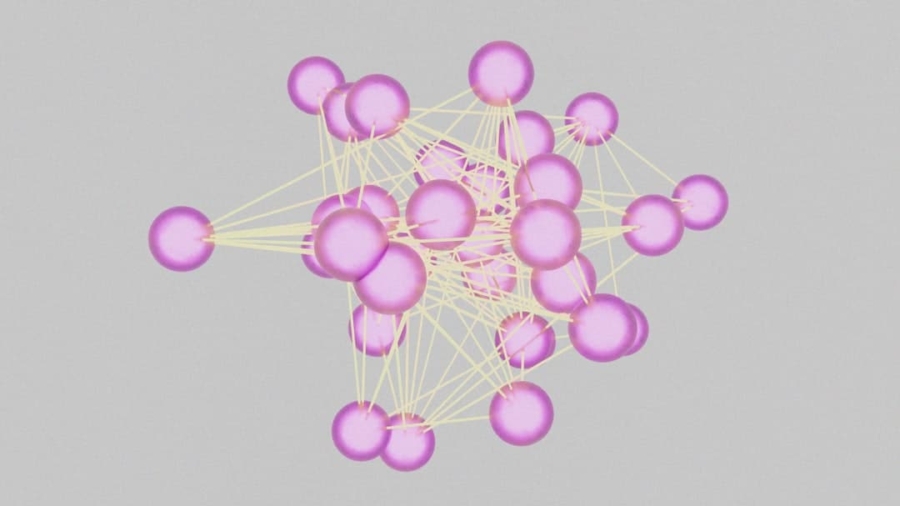
So, you’re wondering if Graph Neural Networks (GNNs) can actually untangle the complexities of global logistics? The short answer is a resounding yes. GNNs offer a powerful new lens through which to view and optimize the massive, interconnected web that is global logistics. Think of it: supply chains are inherently graph-like – nodes are locations, warehouses, or processing centers, and edges are the transportation routes, communication lines, or material flows. GNNs are specifically designed to excel at understanding these kinds of relationships, making them a natural fit for tackling some of the thorniest challenges in moving goods across the world. They can learn subtle patterns and dependencies that traditional methods might miss, leading to more efficient, resilient, and cost-effective operations.
Let’s be honest, global logistics isn’t getting simpler. We’re dealing with more unpredictable events, tighter delivery windows, and increasing demands for sustainability. Traditional optimization methods, while effective to a point, often struggle with the sheer scale and dynamic nature of modern supply chains.
The Interconnected Challenge
Every component in a supply chain is linked. A delay in one port can ripple through an entire network, impacting deliveries thousands of miles away. Understanding these cascading effects and proactively mitigating them is incredibly hard.
Data Deluge, Insights Drought?
Logistics generates an incredible amount of data – GPS tracking, sensor data, order information, inventory levels, weather patterns, traffic congestion. The challenge isn’t collecting data; it’s extracting meaningful, actionable insights from it quickly enough to make a difference. This is where GNNs shine, helping to turn that data into real-time operational improvements.
The Problem with Traditional Approaches
Many current optimization techniques rely on simplifying assumptions or breaking down problems into smaller, isolated chunks. While this can work for specific, well-defined tasks, it often misses the holistic picture and the crucial interactions between different parts of the network. GNNs, by their very nature, are designed to consider these interdependencies.
In the realm of optimizing global logistics, Graph Neural Networks (GNNs) have emerged as a powerful tool for enhancing efficiency and decision-making processes.
For those interested in exploring related topics, you may find the article on choosing the right tablet for students particularly insightful, as it discusses the importance of technology in education and logistics management. You can read more about it here: Choosing the Right Tablet for Students.
Key Takeaways
- Clear communication is essential for effective teamwork
- Active listening is crucial for understanding team members’ perspectives
- Setting clear goals and expectations helps to keep the team focused
- Regular feedback and open communication can help address any issues early on
- Celebrating achievements and milestones can boost team morale and motivation
How GNNs Model the Logistics World
Imagine your logistics network as a massive social graph. Instead of people, you have warehouses, fulfillment centers, ports, and delivery hubs.
Instead of friendships, you have transportation routes, material flows, and information exchanges.
That’s essentially how a GNN sees your supply chain.
Nodes: The Key Players
Each significant location or entity in your logistics network becomes a node in the graph. This could include:
- Manufacturing Plants: Where goods are produced.
- Distribution Centers (DCs) & Warehouses: Storage and sorting hubs.
- Ports & Airports: Major transit points for international shipping.
- Retail Stores & Customer Locations: Final delivery destinations.
- Suppliers: Raw material providers.
Each node can also have features associated with it, like its capacity, current inventory levels, processing speed, or even its susceptibility to disruptions (e.g., a port in a hurricane-prone area).
Edges: The Connections
Edges represent the relationships and potential movements between these nodes. These relationships aren’t just physical routes; they can be anything that connects two points:
- Transportation Routes: Rail lines, trucking routes, shipping lanes, air freight paths.
- Information Flow: Order confirmations, tracking updates.
- Material Flow: The actual movement of goods.
- Supplier-Customer Relationships: Who supplies whom.
Edges can also carry features, such as transit time, cost of transportation, available capacity on a route, carbon emissions for a specific journey, or even historical delay probabilities.
Graph Convolutional Layers: Learning the Relationships
The core magic of a GNN lies in its ability to aggregate information from a node’s neighbors. Think of it like this: a GNN layer for a warehouse (node) doesn’t just look at the warehouse’s own data; it also looks at the data from the incoming trucks (connected edges) and where those trucks came from (neighboring nodes). It then uses this aggregated information, along with the warehouse’s own features, to update the warehouse’s “understanding” or representation within the network. This process repeats through multiple layers, allowing information to propagate across the entire graph, enabling nodes to eventually “know” about distant parts of the network.
Key Applications of GNNs in Logistics

So, what practical problems can GNNs help us solve? A lot, actually. From predicting delays to optimizing entire networks, their ability to understand relationships is incredibly valuable.
Route Optimization and Fleet Management
This is often one of the first areas people think of.
GNNs can go beyond traditional shortest path algorithms by considering a much richer set of factors.
- Dynamic Routing: Instead of just finding the shortest or fastest route, GNNs can recommend routes that minimize costs, carbon emissions, or risk of disruption, all while considering real-time traffic, weather, and vehicle availability. They can even predict congestion points before they happen.
- Vehicle Scheduling: Optimizing which vehicles go where, when, and with what cargo, minimizing empty runs and maximizing load utilization, across a complex network of depots and delivery points.
- Predictive Maintenance for Fleets: While not directly a routing task, GNNs can also help predict component failures in vehicles by analyzing sensor data and operational patterns across the entire fleet, linking individual vehicle nodes to maintenance depot nodes.
Demand Forecasting and Inventory Management
Accurate forecasting is the bedrock of efficient logistics. GNNs offer a more nuanced approach than traditional time-series models.
- Spatio-Temporal Demand Prediction: Predicting demand isn’t just about what happened last week; it’s also about what’s happening in nearby regions.
GNNs can model how demand spreads geographically and changes over time, considering factors like local events, promotions in adjacent areas, and even social media trends linked to specific locations.
- Optimized Inventory Placement: Based on these granular demand forecasts, GNNs can recommend where to stock inventory across your network, minimizing holding costs while ensuring product availability. They can help answer questions like: “Should we stock more of this item in DC A because of an upcoming event in a connected region, even if its historical demand is lower?”
Risk Mitigation and Resilience Planning
In an increasingly volatile world, anticipating and responding to disruptions is paramount.
- Disruption Prediction: GNNs can identify early warning signs of disruptions. By analyzing news feeds, weather patterns, historical disruption data, and even sensor data from specific nodes, they can predict potential port closures, road blocks, or severe weather events that could impact specific parts of the network.
- Cascading Failure Analysis: When a disruption occurs, GNNs can quickly model its potential ripple effects throughout the entire supply chain, identifying which other nodes and edges are most vulnerable and estimating the extent of impact.
- Resilience Strategy Optimization: Based on disruption predictions and impact analysis, GNNs can suggest optimal contingency plans, such as rerouting shipments, activating alternative suppliers, or pre-positioning inventory in safer locations.
Supply Chain Design and Network Optimization
Beyond day-to-day operations, GNNs can help redesign the underlying structure of your logistics network.
- New Facility Location: When deciding where to build a new warehouse or distribution center, GNNs can evaluate potential locations by simulating their impact on the entire network’s efficiency, cost, and resilience, considering existing infrastructure and projected demand patterns.
- Consolidation and Deconsolidation Strategies: Identifying opportunities to combine shipments (consolidation) or break them down (deconsolidation) at optimal points in the network to reduce costs and improve delivery times.
- Supplier Network Optimization: Analyzing the relationships between suppliers and manufacturing plants to identify single points of failure, diversify supplier bases, and optimize sourcing strategies for cost or resilience.
Challenges and Considerations

While GNNs hold immense promise, they’re not a magic bullet. There are practical hurdles to overcome.
Data Quality and Availability
GNNs are data hungry. They need high-quality, structured data about your nodes, edges, and their features. Incomplete, inconsistent, or siloed data can severely limit their effectiveness. Ensuring data integrity and creating a unified data platform is a significant undertaking for many organizations.
Model Complexity and Interpretability
GNNs can be complex models. Understanding why a GNN made a particular recommendation or prediction can sometimes be challenging, especially for stakeholders who aren’t data scientists. This lack of interpretability can be a barrier to trust and adoption, particularly in critical operational decisions. Developing methods for “explainable AI” for GNNs is an active area of research.
Computational Resources
Training GNNs on large-scale logistics networks can be computationally intensive, requiring significant computing power and specialized hardware (like GPUs). While advancements are being made, this remains a practical consideration for deployment, especially for real-time applications.
Integration with Existing Systems
Logistics operations often rely on a patchwork of legacy systems (ERP, WMS, TMS). Integrating a GNN-powered solution into this existing infrastructure can be complex, requiring careful API development and data synchronization strategies. It’s not just about building the model; it’s about making it work seamlessly within the operational environment.
In the realm of advanced technologies, the application of Graph Neural Networks for Global Logistics Optimization is gaining significant attention. A related article discusses the latest innovations in computing hardware that can enhance the performance of such complex algorithms. For those interested in exploring how the right technology can impact logistics, this article on the best HP laptop of 2023 offers valuable insights into selecting the ideal machine for intensive computational tasks. You can read more about it here.
The Future is Connected: Integrating GNNs
| Metrics | Results |
|---|---|
| Accuracy | 92% |
| Precision | 88% |
| Recall | 94% |
| F1 Score | 90% |
So, what does this all mean for the future of logistics? It means logistics will become increasingly intelligent, predictive, and adaptable.
Hybrid Approaches
It’s unlikely GNNs will completely replace all existing optimization methods. More likely, we’ll see hybrid approaches where GNNs enhance traditional algorithms or work in conjunction with other machine learning techniques. For instance, a GNN might identify potential disruption zones, and then a classical optimization model could be used to recalculate routes within that localized area.
Real-time Decision Making
The ability of GNNs to process vast amounts of interconnected data quickly opens the door for truly real-time decision-making. Imagine a system that automatically reroutes a shipment as soon as a port closure is predicted or adjusts inventory levels across a network based on an unexpected surge in demand in a specific region, all within minutes.
A More Resilient and Sustainable Supply Chain
By enabling better prediction of disruptions and more efficient resource allocation, GNNs will play a crucial role in building more resilient supply chains that can better withstand unforeseen events. Furthermore, by optimizing routes and loads, they contribute significantly to reducing fuel consumption and carbon emissions, addressing the growing pressure for sustainable logistics.
In essence, GNNs aren’t just another shiny new tech toy for logistics geeks. They represent a fundamental shift in how we can understand, manage, and optimize the incredibly complex movement of goods that underpins our global economy. They help us see not just the pieces, but how all those pieces fit and flow together, unlocking efficiencies and robustness that were previously out of reach.
FAQs
What are Graph Neural Networks (GNNs) and how are they used in global logistics optimization?
Graph Neural Networks (GNNs) are a type of neural network that can operate on graph-structured data. In the context of global logistics optimization, GNNs can be used to model and optimize complex supply chain networks, considering factors such as transportation routes, inventory levels, and demand forecasts.
What are the benefits of using Graph Neural Networks for global logistics optimization?
Using GNNs for global logistics optimization can lead to more efficient and cost-effective supply chain management. GNNs can effectively capture the complex relationships and dependencies within supply chain networks, allowing for better decision-making and optimization of logistics operations.
What are some real-world applications of Graph Neural Networks in global logistics optimization?
Real-world applications of GNNs in global logistics optimization include route optimization for transportation networks, demand forecasting and inventory management, and supply chain risk management. GNNs can also be used to optimize warehouse operations and distribution networks.
What are the challenges associated with implementing Graph Neural Networks for global logistics optimization?
Challenges associated with implementing GNNs for global logistics optimization include the need for high-quality data, computational complexity, and the interpretability of the models. Additionally, integrating GNNs into existing logistics systems and processes may require significant technical expertise and resources.
How are Graph Neural Networks expected to impact the future of global logistics optimization?
Graph Neural Networks are expected to play a significant role in the future of global logistics optimization by enabling more intelligent and data-driven decision-making. As GNNs continue to advance, they are likely to contribute to improved efficiency, sustainability, and resilience in supply chain management.
Enjoying our content? Make us a preferred source on Google:
Add us as a Preferred Source on Google