

Graph Neural Networks are proving to be a powerful tool for fraud detection in high-volume financial transactions. The core idea is that traditional methods often struggle to capture the complex, non-obvious relationships between transactions, accounts, and individuals that are often tell-tale signs of fraudulent activity. GNNs, by representing these relationships as graphs, can effectively learn patterns that indicate fraud, even when the individual transactions appear legitimate in isolation. This allows them to identify suspicious clusters or sequences of activity that would otherwise slip through the cracks, offering a significant uplift in detection capabilities for financial institutions dealing with massive data streams.
The Challenge of High-Volume Financial Fraud
Detecting fraud in financial transactions is a bit like finding a needle in a haystack, except the haystack is constantly growing and the needles are constantly changing shape. Financial institutions process billions of transactions daily, and a tiny percentage of these represent fraudulent activity. The sheer volume makes manual review impossible, and even sophisticated rule-based systems or traditional machine learning models often fall short.
Limitations of Traditional Fraud Detection
Rule-based systems are a common starting point. These involve setting up predefined conditions that flag a transaction as suspicious, such as a large purchase in a new location or multiple failed login attempts. While effective for known fraud patterns, they are inherently brittle. Fraudsters quickly learn to circumvent these rules, and maintaining them becomes an endless game of catch-up. Moreover, they generate a high number of false positives, leading to legitimate transactions being blocked and customer frustration.
Traditional machine learning (ML) models, like logistic regression, support vector machines (SVMs), or gradient boosting machines, offer an improvement.
They learn patterns from historical data to classify transactions as legitimate or fraudulent.
These models perform well on structured data, often focusing on features directly derived from individual transactions: amount, merchant category, time of day, location, and so on.
However, a key limitation here is their “transaction-centric” view. They typically treat each transaction as an independent data point. While they might incorporate some aggregate features (e.
g.
, “average spend in last hour”), they struggle to inherently model the complex, multi-hop relationships that characterize sophisticated fraud schemes. Consider a scenario where a fraudster uses multiple seemingly legitimate accounts to funnel money through a chain of small transactions, or where a group of individuals colludes. A traditional ML model might view each transaction in this chain as low-risk, failing to connect the dots across multiple entities and transactions.
The Relational Nature of Financial Crime
Fraud isn’t usually an isolated event; it’s often a connected activity. Think about it:
- Account takeovers: A stolen identity might be used to open several new accounts, which then interact with existing mule accounts.
- Money laundering: Funds are moved through a complex web of accounts, often across different banks and jurisdictions, to obscure their origin.
- Collusion: A group of fraudsters might work together, using multiple credit cards or bank accounts to execute a scheme, such as making synthetic identities appear legitimate.
- Synthetic identities: Fraudsters combine real and fake information to create new identities that pass initial checks, which then interact with other “real” or “fake” entities.
These scenarios scream “network.” The relationships between customers, accounts, merchants, devices, and transactions are critical. Traditional models struggle to capture these intricate connections. They might see individual transactions, but they don’t easily perceive the underlying graph structure that links them all together. This is precisely where Graph Neural Networks step in, offering a fundamental shift in how we approach this problem.
In the realm of financial technology, the application of Graph Neural Networks (GNNs) for fraud detection in high-volume transactions has gained significant attention. A related article that explores innovative approaches to leveraging machine learning for identifying fraudulent activities can be found at Discover the Best Tablet for On-Stage Lyrics Today. This resource provides insights into the intersection of technology and finance, highlighting the importance of advanced algorithms in enhancing security measures within the financial sector.
Key Takeaways
- The training data includes information and events up to October 2023.
- Insights and knowledge are based on a wide range of sources available until the cutoff date.
- No updates or developments occurring after October 2023 are included in the training.
- Users should verify current information from reliable sources for the latest updates.
- The model’s responses reflect the context and knowledge available up to the specified date.
Graph Representation of Financial Data
To leverage the power of GNNs, the first crucial step is to transform raw financial transaction data into a graph structure. This isn’t just about drawing lines; it’s about making deliberate choices about what constitutes a “node” and what constitutes an “edge,” and what information these elements carry.
Nodes: Entities and Their Attributes
Nodes in our financial fraud graph typically represent the core entities involved in financial transactions. Common choices include:
- Accounts: A distinct bank account, credit card account, or digital wallet.
- Customers/Users: The individuals or legal entities associated with accounts. This could be a unique customer ID.
- Merchants: The businesses where transactions occur.
- Devices: The devices (e.g., mobile phones, computers) used to initiate transactions.
- IP Addresses: The network locations from which transactions originate.
Each node isn’t just a label; it carries node features. These are attributes that describe the entity. For example:
- Account nodes: Account balance, account age, average transaction value, number of transactions in the last 24 hours, type of account (checking, savings, credit).
- Customer nodes: Age, geographical location, credit score, number of associated accounts, historical fraud flags.
- Merchant nodes: Merchant category code (MCC), average transaction value with this merchant, geographic location, historical fraud rate associated with the merchant.
- Device nodes: Operating system, device model, number of associated accounts, number of transactions initiated from this device.
These features provide the initial input for the GNN, giving it a baseline understanding of each entity before it even considers the relationships.
Edges: Transactions and Relationships
Edges represent the interactions or relationships between these nodes. The most straightforward and fundamental edge is a transaction.
- Transaction Edges: A transaction typically connects a “source” account (or customer) to a “destination” account (or merchant). For example, a transfer from Account A to Account B, or a purchase from Account C to Merchant M.
Just like nodes, edges also have edge features. These describe the transaction itself:
- Transaction amount: The value of the transfer or purchase.
- Timestamp: When the transaction occurred.
- Transaction type: (e.g., debit, credit, online purchase, ATM withdrawal, P2P transfer).
- Currency: The currency of the transaction.
- Geographical information: Originating and destination locations (if available).
- Payment method: (e.g., credit card, debit card, bank transfer).
Beyond direct transactions, edges can also represent other types of relationships that are crucial for fraud detection:
- “Same Device” Edges: Linking accounts or customers that have used the same device within a certain timeframe.
- “Same IP” Edges: Connecting accounts or customers that have originated transactions from the same IP address.
- “Family” or “Business Affiliation” Edges: Representing known connections between customers or accounts (though this data is often harder to obtain and use ethically).
The beauty of a graph is its flexibility. We can create different types of nodes and edges to capture the specific nuances of financial interactions, allowing for a rich and comprehensive representation of the data. For instance, a heterogeneous graph might contain multiple types of nodes (accounts, customers, merchants) and multiple types of edges (transactions, same-device usage).
Dynamic Graph Construction
Financial transactions are continuous, meaning the graph is constantly evolving. New transactions add new edges, and potentially new nodes (new customers, new merchants). This dynamism is a significant consideration for GNNs in a production environment.
- Temporal aspects: The order and timing of transactions are often critical. Fraudulent patterns frequently involve sequences of events. GNNs can be designed to incorporate temporal information, for example, by adding time as an edge feature or by using time-evolving graph neural networks.
- Streaming updates: Continuously updating the graph and re-running GNN inference on a streaming basis is a practical challenge. Techniques like mini-batch processing or incremental graph updates are necessary to handle high-volume, real-time data. This ensures that the model can detect emerging fraud patterns quickly without needing to rebuild and re-train the entire graph from scratch every time.
The process of designing and constructing this graph is critical. A well-designed graph provides the GNN with the rich relational context it needs to identify subtle and sophisticated fraud schemes that would otherwise go unnoticed.
How Graph Neural Networks Work for Fraud Detection
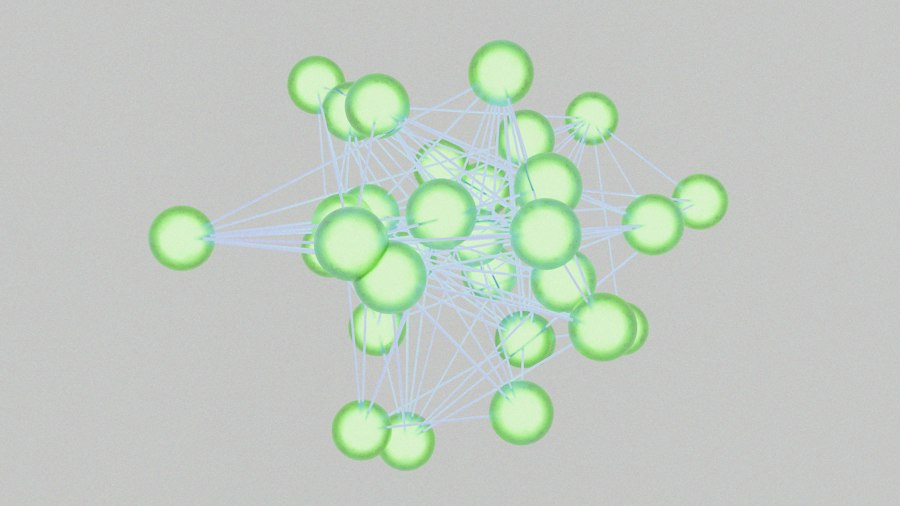
Graph Neural Networks are a class of deep learning models designed to operate on data structured as graphs. Unlike traditional neural networks that expect fixed-size input vectors, GNNs can handle arbitrary graph structures and leverage the connections between nodes to learn powerful representations.
The Message Passing Paradigm
At the heart of most GNNs is the message passing paradigm. Imagine each node in the graph as a tiny information processor.
In a GNN, information is iteratively exchanged between neighboring nodes. Here’s a simplified breakdown:
- Initialize Node Embeddings: Each node starts with an initial feature vector (its attributes, as discussed in the “Nodes” section). These are essentially numerical representations of the node’s characteristics.
- Message Generation: In each “layer” or “iteration” of the GNN, every node generates a “message” based on its current embedding and potentially its edge features.
This message is then sent to its direct neighbors.
- Message Aggregation: Each node collects all the messages it received from its neighbors. It then aggregates these messages into a single vector. Common aggregation functions include summing, averaging, or using more complex neural network layers (like an attention mechanism) to weigh incoming messages differently.
- Update Node Embedding: Finally, each node updates its own embedding by combining its previous embedding with the aggregated message.
This update step typically involves a neural network layer, allowing the model to learn complex transformations.
This process is repeated for several layers. With each layer, a node’s embedding becomes richer, incorporating information from increasingly distant neighbors. After ‘k’ layers, a node’s embedding will contain information from its k-hop neighborhood – meaning it has effectively “seen” and integrated data from nodes that are ‘k’ steps away in the graph.
Learning Node Representations (Embeddings)
The ultimate goal of this message passing is to learn meaningful node embeddings.
These are low-dimensional vector representations for each node that capture its structural role in the graph and its features, as well as the features and structures of its neighborhood.
For fraud detection, these embeddings are incredibly powerful. A fraudulent account, for example, might have an embedding that reflects its unusual connections to a cluster of other flagged accounts, even if its individual transaction features appear benign. Similarly, a legitimate account involved in a large number of transactions might still have an embedding that places it far away from known fraudulent patterns due to the context of its connections.
Applying GNNs to Fraud Detection
Once these rich node embeddings are learned, they can be used for various fraud detection tasks:
- Node Classification: This is the most common application.
After the GNN has computed the embeddings for all nodes, a simple classifier (e.g., a logistic regression, a small multi-layer perceptron, or even a simple threshold) is applied on top of each node’s embedding to predict whether that node (e.g., an account, a customer, or even a transaction-as-node) is fraudulent or legitimate. For example, predicting if an account is compromised.
- Edge Classification: In some setups, you might want to classify the edges themselves. If a transaction is represented as an edge, then classifying that edge as fraudulent or legitimate is the goal.
This often involves combining the embeddings of the two nodes connected by the edge, along with the edge features, into a new representation that is then fed to a classifier.
- Graph Classification (Sub-graph Detection): In more complex scenarios, you might identify entire sub-graphs as fraudulent. For instance, a specific pattern of money laundering might involve a cluster of accounts and transactions forming a specific graph motif. Here, the GNN could learn to identify these suspicious sub-graphs.
A key advantage is the GNN’s ability to generalize to unseen fraud patterns.
If it learns that a specific network structure (e.g., a “fan-out” pattern from a newly created account to many others) is indicative of fraud, it can detect similar patterns even with new entities and transactions, without explicitly being coded for them.
Types of GNN Architectures
While message passing is the general framework, several specific GNN architectures implement it in different ways. Some popular ones include:
- Graph Convolutional Networks (GCNs): One of the foundational GNNs. They aggregate neighbor information by averaging or summing up transformed feature vectors, often using a normalized adjacency matrix.
- Graph Attention Networks (GATs): GATs introduce an attention mechanism, allowing them to assign different weights to different neighbors during aggregation.
This means a node can pay more attention to more relevant neighbors, which is particularly useful in noisy financial graphs where not all connections are equally informative.
- GraphSAGE: Designed for inductive learning, meaning it can generalize to unseen nodes and entire graphs. GraphSAGE learns an aggregation function that can be applied to any node’s neighborhood, making it suitable for dynamic graphs where new nodes and edges are constantly appearing. This makes it particularly attractive for high-volume, continuously evolving financial data.
Choosing the right GNN architecture depends on the specific characteristics of your graph data and the fraud patterns you’re trying to detect.
Regardless of the specific architecture, the underlying principle remains: leverage the graph structure to learn robust, context-aware representations that pinpoint fraudulent activity.
Advantages and Challenges for High-Volume Data
Graph Neural Networks offer compelling benefits for fraud detection, especially in environments dealing with massive transaction volumes. However, they also introduce a new set of practical challenges that need careful consideration.
Key Advantages of GNNs
- Capturing Relational Context: This is the biggest differentiator. GNNs inherently model the relationships between entities. They can detect fraud rings, mule networks, and complex money laundering schemes that involve multiple accounts and transactions, where individual transactions might appear innocuous. Traditional models often miss these “connect-the-dots” patterns.
- Improved Accuracy and Reduced False Positives: By understanding the broader context, GNNs can often achieve higher detection rates (true positives) while simultaneously reducing false positives. A transaction that looks suspicious in isolation might be validated as legitimate when its surrounding network confirms normal behavior, and vice-versa.
- Early Detection of Novel Fraud Patterns: GNNs can learn abstract structural patterns indicative of fraud. This allows them to identify emerging or previously unseen fraud types where the “fingerprint” is in the network structure rather than just specific transaction attributes. Rule-based systems and even traditional ML struggle with novelty.
- Feature Learning Automation: GNNs automatically learn powerful features (embeddings) directly from the graph structure and node/edge attributes. This reduces the need for extensive manual feature engineering, which is a time-consuming and expertise-heavy process in traditional ML.
- Inductive Capabilities (with GraphSAGE-like models): Models like GraphSAGE can learn aggregation functions that generalize to new, unseen nodes and edges. This is crucial for high-volume financial data where the graph is constantly growing with new customers, accounts, and transactions. It means the model doesn’t necessarily need to be retrained from scratch for every new piece of data.
Practical Challenges and Considerations
While the advantages are significant, implementing GNNs in a high-volume financial environment is not without its hurdles.
- Graph Construction and Maintenance:
- Data Integration: Merging diverse data sources (transaction logs, customer profiles, device data, IP logs) into a unified graph structure is complex. Ensuring data quality and consistency across these sources is paramount.
- Scalability: Building and storing a graph with billions of nodes and trillions of edges (representing years of transactions) requires specialized graph databases or distributed graph processing frameworks. Traditional relational databases are often ill-suited for this.
- Dynamic Updates: Financial graphs are constantly changing. Efficiently updating the graph in real-time or near real-time with new transactions and entities without rebuilding the entire structure is a major engineering challenge. This impacts both training and inference.
- Computational Resources:
- Training Time: Training GNNs on massive graphs can be computationally intensive and time-consuming, requiring significant GPU resources. Techniques like mini-batching, graph sampling, and distributed training are essential.
- Inference Latency: For real-time fraud detection, the GNN needs to process new transactions and update predictions with very low latency. This is often more challenging than for traditional ML models due to the need to traverse graph neighborhoods.
- Explainability:
- Deep learning models, including GNNs, are often considered “black boxes.” Understanding why a GNN flagged a particular transaction or account as fraudulent can be difficult. This is a critical concern in regulated industries like finance, where explainability is often a legal or compliance requirement.
- Developing methods for GNN interpretability (e.g., identifying influential neighbors, significant paths, or critical features) is an active area of research and essential for practical deployment.
- Imbalanced Data:
- Fraudulent transactions are a tiny fraction of the total. This severe class imbalance can lead GNNs to become biased towards the majority (legitimate) class, resulting in poor detection of rare fraud events.
- Techniques like oversampling, undersampling, using specialized loss functions (e.g., Focal Loss), or anomaly detection approaches are necessary to address this.
- Data Privacy and Security:
- Financial data is highly sensitive. Storing and processing it in a graph structure, especially across different data silos, raises significant privacy and security concerns. Anonymization, pseudonymization, and robust access controls are critical.
- Using graph data can inadvertently reveal private information about individuals through their connections, even if individual node features are anonymized. This requires careful consideration and adherence to regulations like GDPR.
Addressing these challenges requires a strong interdisciplinary team comprising data scientists, machine learning engineers, and data engineers, along with a robust infrastructure. However, the potential uplift in fraud detection capabilities often justifies the investment.
In the realm of financial technology, the application of Graph Neural Networks for fraud detection in high-volume transactions has garnered significant attention. A related article discusses the importance of selecting the right tools for enhancing user experience, which can be crucial in financial applications. By understanding how to choose the best technology, developers can create systems that not only detect fraudulent activities but also improve overall transaction efficiency. For more insights on technology selection, you can read the article here: how to choose the right technology.
Implementing GNNs in a Production Environment
| Metric | Description | Typical Value | Importance for Fraud Detection |
|---|---|---|---|
| Accuracy | Proportion of correctly identified transactions (fraudulent and legitimate) | 85% – 95% | Measures overall correctness of the model |
| Precision | Proportion of detected fraud cases that are actually fraud | 70% – 90% | Reduces false positives, important to avoid unnecessary alerts |
| Recall (Sensitivity) | Proportion of actual fraud cases detected by the model | 75% – 95% | Critical to catch as many fraud cases as possible |
| F1-Score | Harmonic mean of precision and recall | 75% – 92% | Balances precision and recall for overall fraud detection quality |
| ROC-AUC | Area under the Receiver Operating Characteristic curve | 0.85 – 0.98 | Measures model’s ability to distinguish fraud vs. non-fraud |
| False Positive Rate | Proportion of legitimate transactions incorrectly flagged as fraud | 1% – 5% | Lower rates reduce customer inconvenience and operational costs |
| Throughput | Number of transactions processed per second | 1000 – 10,000+ | Ensures real-time or near-real-time fraud detection in high-volume settings |
| Latency | Time taken to classify a transaction | 10 – 100 milliseconds | Critical for timely fraud prevention |
| Graph Size | Number of nodes and edges representing transactions and relationships | Millions of nodes, tens of millions of edges | Reflects complexity and scale of financial network modeled |
| Embedding Dimension | Size of node feature vectors learned by GNN | 64 – 256 | Impacts model expressiveness and computational cost |
Deploying Graph Neural Networks for fraud detection in a live, high-volume financial system is a complex undertaking that goes beyond just model training. It involves a robust data pipeline, scalable infrastructure, and a clear deployment strategy.
Data Engineering and Graph Building
The journey begins long before model training, with meticulous data preparation.
- Data Ingestion and Harmonization: Financial institutions deal with diverse data sources: transaction logs from various systems (card processing, online banking, P2P transfers), customer master data, device fingerprints, IP address logs, merchant data, and more. All this data needs to be ingested, cleaned, validated, and harmonized into a consistent format.
- Graph Schema Design: A critical early step is to define the graph schema: what are the node types (e.g., customer, account, merchant, device, IP)? What are the edge types (e.g.,
TRANSACTION_FROM_TO,USED_DEVICE,ORIGINATED_FROM_IP)? What features will be associated with each node and edge? This design needs to be flexible enough to accommodate future data sources and fraud patterns. - Initial Graph Construction: Building the initial graph from historical data is a significant task. This might involve ETL (Extract, Transform, Load) processes to populate a graph database or a distributed graph processing framework (like Apache Spark GraphX or AWS Neptune, Neo4j, ArangoDB).
- Real-time Graph Updates: This is where things get challenging for high-volume data. As new transactions flow in, the graph needs to be updated. This could involve:
- Stream Processing: Using technologies like Apache Kafka and Flink/Spark Streaming to process transactions in real-time, adding new nodes and edges to the graph as they occur.
- Incremental Graph Updates: The graph database or framework must support efficient incremental updates rather than requiring a full rebuild.
- Temporal Considerations: Managing the temporal aspect of the graph is key. Edges often have expiration times or windows of relevance (e.g., “device used in last 24 hours”).
Model Training and Evaluation
Once the graph is ready, the GNN model can be trained.
- Feature Engineering (Node/Edge Attributes): While GNNs reduce the need for relational feature engineering, individual node and edge features are still crucial. This includes aggregating historical transaction data (e.g., average transaction amount in the last hour for an account, count of unique merchants visited), categorical encoding, and numerical scaling.
- Graph Sampling: Training GNNs on massive graphs directly is often intractable. Graph sampling techniques (e.g., neighborhood sampling, subgraph sampling) are essential to create smaller, manageable subgraphs for training in mini-batches. This allows the model to learn from a representative sample of the full graph.
- Hyperparameter Tuning: Like any deep learning model, GNNs require careful tuning of hyperparameters (e.g., number of layers, embedding dimensions, learning rate, aggregation function, attention heads).
- Handling Imbalance: As discussed, financial fraud data is highly imbalanced. Techniques like oversampling minority class nodes/edges, undersampling majority class, using specific loss functions (e.g., weighted cross-entropy, Focal Loss), or training with anomaly detection objectives are critical.
- Evaluation Metrics: Beyond standard accuracy, metrics like Precision, Recall, F1-score, Area Under the Receiver Operating Characteristic Curve (AUROC), and Area Under the Precision-Recall Curve (AUPRC) are crucial, especially for imbalanced datasets. It’s also vital to consider business metrics like false positive rate (FPR) and detection rate at a specific false positive threshold, as these directly impact operational costs and customer experience.
Model Deployment and Inference
Getting the trained GNN model into production for real-time fraud detection involves several steps:
- Real-time Feature Stores: Node and edge features need to be accessible with low latency during inference. A real-time feature store can cache pre-computed features and facilitate quick lookups.
- Graph Querying for Inference: When a new transaction arrives, the GNN needs to query its local neighborhood in the graph to gather information. This involves efficient graph traversal to retrieve relevant nodes and edges within a certain “hop” distance.
- Scalable Inference Service: The GNN model needs to be deployed as a high-throughput, low-latency inference service. This often involves containerization (Docker, Kubernetes) and deploying on cloud-based GPU instances or specialized hardware.
- Decision Engine Integration: The GNN’s output (a fraud score or classification) needs to be integrated into the existing fraud decision engine. This might involve combining the GNN’s score with outputs from other detection systems (rule engines, traditional ML models) to make a final decision (e.g., approve, deny, flag for manual review).
- Monitoring and Retraining: Once deployed, continuous monitoring of model performance is essential. Metrics like detection rate, false positive rate, and latency need to be tracked. As fraud patterns evolve, the model will inevitably drift, necessitating periodic retraining with fresh data to maintain its effectiveness. Automated retraining pipelines are often implemented.
The entire production pipeline, from data ingestion to model deployment and monitoring, must be robust, scalable, and resilient to handle the immense volume and real-time demands of financial transactions.
FAQs
What are Graph Neural Networks (GNNs)?
Graph Neural Networks (GNNs) are a class of neural networks designed to process data structured as graphs. They leverage the relationships and connections between nodes (data points) to learn representations that can be used for various tasks, such as classification, regression, and clustering. GNNs are particularly effective in scenarios where the data is interconnected, making them suitable for applications like fraud detection in financial transactions.
How do GNNs contribute to fraud detection in financial transactions?
GNNs enhance fraud detection by analyzing the relationships between different entities involved in financial transactions, such as users, accounts, and transactions themselves. By modeling these interactions as a graph, GNNs can identify patterns and anomalies that may indicate fraudulent behavior, allowing for more accurate and timely detection compared to traditional methods.
What are the advantages of using GNNs over traditional fraud detection methods?
The advantages of using GNNs for fraud detection include their ability to capture complex relationships and dependencies between entities, improved scalability for high-volume transactions, and enhanced predictive accuracy. GNNs can also adapt to evolving fraud patterns by continuously learning from new data, making them more robust than traditional rule-based or statistical methods.
What types of data are typically used in GNN-based fraud detection?
In GNN-based fraud detection, data typically includes transaction records, user profiles, account information, and historical fraud cases. This data is structured into a graph format, where nodes represent entities (e.g., users, accounts) and edges represent relationships (e.g., transactions between users). Additional features such as transaction amounts, timestamps, and geographical locations may also be incorporated to enhance the model’s performance.
What challenges are associated with implementing GNNs for fraud detection?
Challenges in implementing GNNs for fraud detection include the need for large amounts of labeled training data, the complexity of graph construction, and the computational resources required for training deep learning models. Additionally, ensuring the model’s interpretability and addressing potential biases in the data are critical for gaining trust from stakeholders in financial institutions.
Enjoying our content? Make us a preferred source on Google:
Add us as a Preferred Source on Google