

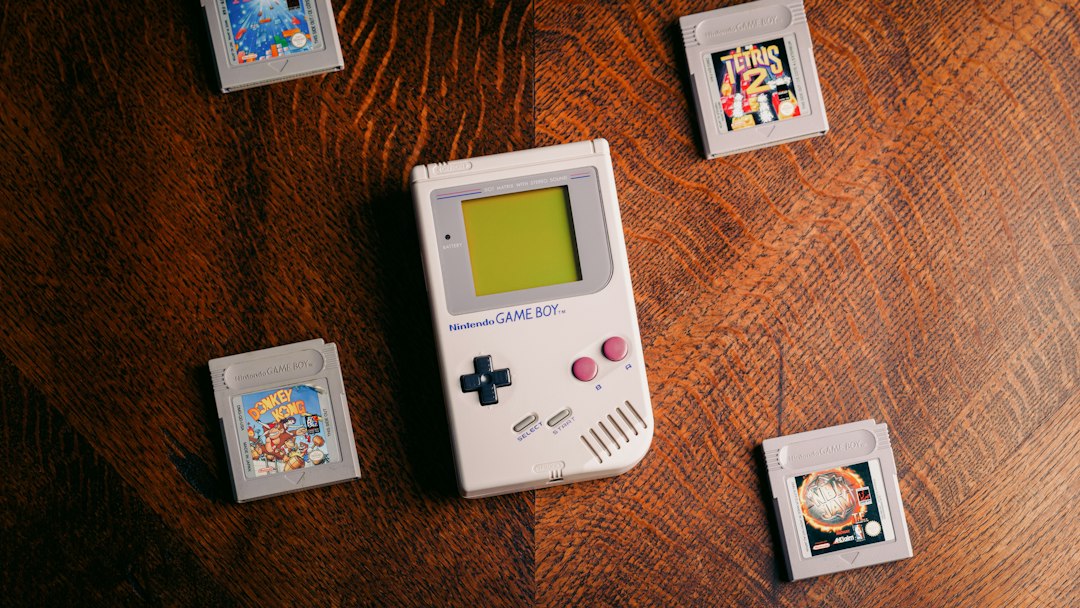
Game preservation and native emulation face a complex web of legal and technical hurdles, primarily stemming from intellectual property laws and the ever-evolving nature of software and hardware. Essentially, keeping older games playable and accessible means navigating copyright, DRM, and the significant technical challenge of replicating the original play environment accurately.
The Urgency of Digital Preservation
We’re in a bit of a race against time when it comes to preserving digital games. Unlike physical media like books or films, which often degrade slowly and predictably, digital content can vanish almost instantly if not actively maintained. A server shutdown, a licensing expiration, or a format becoming obsolete can render a game unplayable overnight. This is especially true for modern software, which often relies on online components, always-on DRM, or specific operating system versions that quickly become unsupported.
Why Digital Games Are So Fragile
Think about it: many modern games aren’t just a single file you pop into a console. They’re intricate ecosystems involving server infrastructure for multiplayer, patches and updates downloaded post-launch, digital rights management (DRM) checks, and often proprietary hardware architectures. When a developer or publisher decides to stop supporting a game, those crucial online services disappear. This leaves players with an incomplete or entirely unplayable experience, even if they physically own the game disc. The “digital-only” trend further exacerbates this, as there’s no physical artifact to even begin with once a storefront closes.
The Cultural Significance of Games
Beyond mere entertainment, video games are a significant cultural artifact of our time. They reflect technological advancements, artistic trends, social commentaries, and historical moments. Imagine if we lost entire decades of film, music, or literature; that’s the equivalent threat we face with games. Preserving them isn’t just about nostalgia; it’s about safeguarding a crucial part of our shared cultural heritage for future generations of historians, researchers, and, of course, players. This aspect often gets overlooked in the legal and technical discussions, but it’s a driving force for many preservationists.
Game preservation and native emulation face numerous legal and technical challenges, particularly as the landscape of digital media continues to evolve. An interesting related article discusses the implications of non-fungible tokens (NFTs) in the context of digital art and ownership, which can also extend to the realm of video games. This article highlights how NFTs could potentially impact the preservation of digital assets and the challenges that arise in maintaining the integrity of these works over time. For more insights on this topic, you can read the article here: What is NFT Image?.
Key Takeaways
- The training data includes information and events up to October 2023.
- Insights and knowledge are based on a wide range of sources available until the cutoff date.
- No updates or developments occurring after October 2023 are included in the training.
- Users should verify current information from reliable sources for the latest updates.
- The model’s responses reflect the context and knowledge available up to the specified date.
Legal Minefields and Intellectual Property
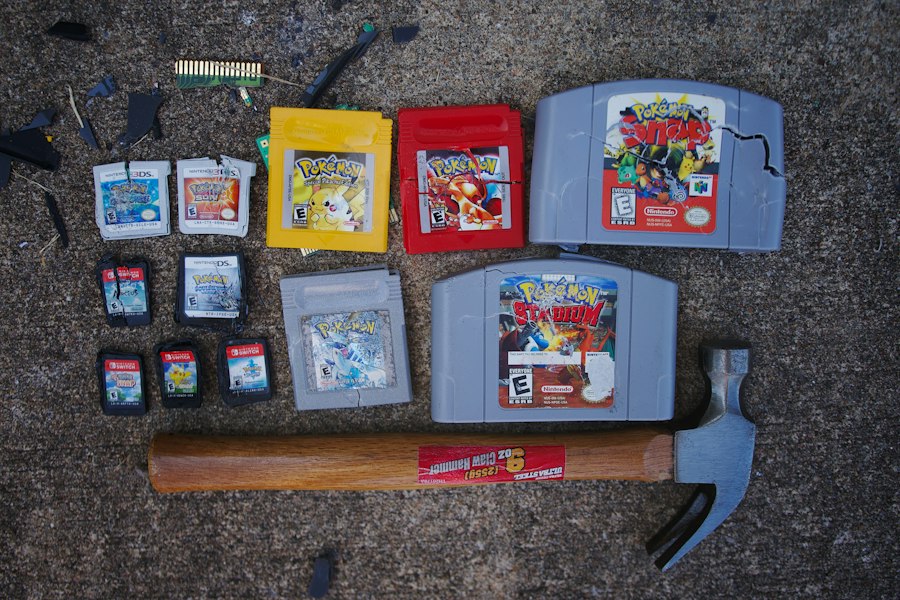
The legal landscape is perhaps the trickiest part of game preservation and native emulation. Copyright law, specifically, creates a significant barrier. Developers and publishers own the intellectual property (IP) of their games, and any act of copying, distributing, or modifying that software without explicit permission can be seen as infringement. This clashes directly with the needs of preservation, which often requires making copies, reverse-engineering, and distributing emulation software.
Copyright and Fair Use Limitations
In most jurisdictions, making unauthorized copies of copyrighted software, even for archival purposes, is technically illegal. While some countries have provisions for “fair use” or “fair dealing,” these are often narrowly defined and rarely apply broadly to the systematic preservation and distribution efforts needed for games. For instance, in the US, the Digital Millennium Copyright Act (DMCA) has provisions against circumventing technological protection measures (TPMs) like DRM. This makes it a legal gray area, or outright illegal, to even bypass DRM to access content you legitimately own, let alone to archive it. Preservationists often have to navigate these rules very carefully, and sometimes operate in legally ambiguous spaces, hoping for a lack of enforcement or for future legislative changes.
The DMCA and TPMs
The DMCA, enacted in 1998, has been a significant hurdle. Its anti-circumvention provisions prohibit bypassing “technological protection measures” (TPMs), which is a fancy term for DRM. Many older games, and certainly modern ones, rely heavily on DRM to prevent piracy. To properly preserve and emulate a game, especially one with online components or copy protection, these TPMs often need to be bypassed or understood. Doing so, even for legitimate archival or research purposes, can put preservationists at legal risk. While the US Copyright Office grants limited exemptions every three years, these are often specific and don’t provide broad protection for the ongoing, proactive work of game preservation. For example, specific exemptions have sometimes been granted for archival preservation of certain classes of video games when their authorized servers have been shut down, but these are often narrow in scope.
Abandonware and Licensing Issues
Another common issue arises with “abandonware” – games that are no longer commercially sold or supported by their copyright holders. While it feels like these games should be free to preserve and share, legally, they often aren’t. Copyright typically lasts for many decades after creation or even after the death of the creator. This means a game released in the 1990s could still be under copyright well into the 2060s or beyond. Publishers might no longer exist, or the IP might be held by a successor company with no interest in older titles. Getting explicit permission is often impossible, leaving these games in a legal limbo where preservation efforts are technically infringing. Licensing agreements also complicate things; a game might use third-party middleware, licensed music, or other assets that make redistribution by anyone other than the original publisher legally fraught.
Technical Gauntlets of Native Emulation
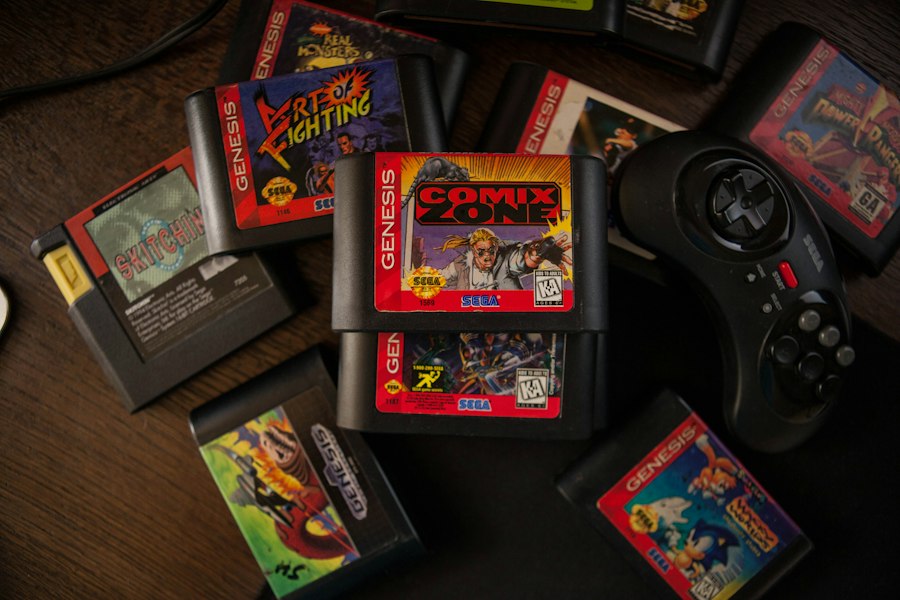
Beyond the legal hurdles, the technical challenges of native emulation are formidable. Modern software, especially games, is designed to run on very specific hardware and software stacks. Replicating that environment accurately enough for a game to function as intended is an incredibly complex engineering task.
Hardware Replication and CPU Architecture
Each console or PC architecture has its own unique instruction set, memory management unit (MMU), graphics processor (GPU), and input/output (I/O) controllers. Native emulation aims to simulate all of these components in software on a completely different machine. This isn’t just about making the game “boot up”; it’s about accurately mimicking the timing, quirks, and exact behavior of the original hardware.
For example, the PlayStation 2’s Emotion Engine CPU and Graphics Synthesizer GPU were highly specialized, and emulating them efficiently and accurately on a modern x86 CPU is a monumental task that has taken decades of dedicated effort. Differences in floating-point precision, instruction pipeline behavior, and even subtle hardware bugs need to be replicated for perfect compatibility.
Operating Systems and Middleware Dependencies
It’s not just the bare metal; the operating system (OS) and various middleware also play a huge role. Many older PC games, for instance, relied on specific versions of Windows (like Windows 95 or XP), DirectX APIs, or proprietary drivers that are no longer supported or compatible with modern systems.
Console games have their own proprietary system software. Emulators often need to not only simulate the hardware but also provide a compatible environment for the game’s OS calls and dependencies. This can involve extensive reverse engineering to understand undocumented APIs and system behaviors.
Middleware like audio libraries (e.g., Miles Sound System), video codecs, or physics engines used in development can also become defunct or unsupported, making games reliant on them harder to run.
The Challenge of Just-In-Time Compilation
Many advanced emulators utilize Just-In-Time (JIT) compilation. This technique translates the original CPU’s instructions into the host CPU’s instructions on the fly, as the program is running. This is crucial for achieving playable speeds, as direct interpretation is often too slow. However, JIT compilation is incredibly complex.
It requires deep knowledge of both the guest and host CPU architectures, careful optimization to avoid performance bottlenecks, and robust error handling to ensure stability. Different CPU architectures have different registers, instruction sets, and memory models, making the translation process far from straightforward. Subtle bugs in the JIT compiler can lead to game crashes, graphical glitches, or incorrect game logic.
Graphics and Audio Emulation Accuracy
Graphics emulation goes beyond just rendering polygons.
It involves accurately replicating the original GPU’s rendering pipeline, including its texture mapping, lighting calculations, blending modes, and various fixed-function stages. Modern GPUs often work very differently, and mapping older GPU features to new ones can be challenging. Think about the unique graphical effects of consoles like the Nintendo 64 or Sega Saturn; faithfully recreating their distinctive looks often requires specific hacks or clever workarounds.
Audio emulation is equally tricky. It involves simulating proprietary sound chips, their digital signal processing (DSP) capabilities, and accurate timing for music and sound effects. Incorrect timing or inaccurate DSP emulation can lead to garbled audio or missing sound cues, significantly detracting from the experience.
Preserving Online Functionality
Many modern games are “always online” or heavily rely on server-side components for multiplayer, DRM, or even single-player progression.
Preserving these games means not just emulating the client software but also replicating the original server infrastructure. This is an enormous technical undertaking, often requiring dedicated volunteer efforts to reverse-engineer server protocols and build custom “private servers.” The legal implications here are also significant, as operating a server that mimics a company’s official one can lead to legal action, even if the original servers are long defunct. This is where the tension between technical possibility and legal permission becomes most acute.
Practical Approaches and Community Efforts
Despite the daunting legal and technical landscape, game preservation is actively happening through various practical approaches, often driven by dedicated communities and a few institutional efforts.
Community-Driven Emulation Projects
The vast majority of successful native emulation comes from passionate, volunteer-driven communities. Projects like Dolphin (GameCube/Wii), PCSX2 (PlayStation 2), RPCS3 (PlayStation 3), and Yuzu/Ryujinx (Nintendo Switch) are incredible feats of collaborative engineering. These groups dedicate thousands of hours to reverse-engineering hardware, writing code, debugging, and documenting their findings. Their success often depends on sharing knowledge, open-source development, and the collective expertise of many individuals. Without these efforts, countless games would have already been lost to time. These communities also often create comprehensive wikis and compatibility lists, serving as invaluable resources.
Archival Initiatives and Digital Libraries
Some institutions are stepping up to the challenge. Organizations like the Internet Archive have vast collections of software, including many classic games, often making them playable in-browser via emulators. The Library of Congress, among others, is also exploring methods for digital preservation. However, institutional efforts often move slowly due to legal constraints, funding limitations, and the sheer scale of the task. They typically focus on acquiring and storing the digital assets, with emulation often being a secondary or tertiary concern, or relying on community tools. University research projects also contribute, often focusing on specific technical challenges or legal frameworks.
Source Code Preservation
One of the “holy grails” of preservation is the original source code. If the source code for a game is available, it allows for native ports to modern platforms, easier debugging, and a much deeper understanding of the game’s mechanics and design. However, source code is rarely released publicly, being a closely guarded secret of game developers. When it is released, often years or decades later by benevolent developers or through leaks, it becomes an invaluable resource for preservationists and modders. Projects like the ‘OpenMW’ recreation of Morrowind or ‘OpenRCT2’ for RollerCoaster Tycoon 2 are prime examples of what’s possible when source code, or sufficient reverse engineering to recreate it, becomes available.
Advocacy for Legal Reform
A crucial aspect of practical preservation is advocating for changes in intellectual property law. Preservationists and academics are pushing for clearer exemptions under copyright law, especially for archival and research purposes.
This includes lobbying for broader fair use provisions that explicitly cover circumventing DRM for preservation, creating exceptions for abandonware, and clarifying the legal status of operating non-commercial, non-infringing emulation servers for defunct online games.
These legal reforms are slow and challenging, but they are essential for creating a sustainable future for game preservation.
Game preservation and native emulation face numerous legal and technical challenges, particularly when it comes to archiving modern software.
An insightful article that delves into the intricacies of this topic can be found at
5G Innovations (13) Wireless Communication Trends (13) Article (343) Augmented Reality & Virtual Reality (969)
- Metaverse (299)
- Virtual Workplaces (35)
- VR & AR Games (34)
Cybersecurity & Tech Ethics (842)
- Cyber Threats & Solutions (3)
- Ethics in AI (33)
- Privacy Protection (32)
Drones, Robotics & Automation (521)
- Automation in Industry (33)
- Consumer Drones (33)
- Industrial Robotics (33)
EdTech & Educational Innovations (380)
- EdTech Tools (18)
- Online Learning Platforms (4)
- Virtual Classrooms (34)
Emerging Technologies (2,164) FinTech & Digital Finance (485) Frontpage Article (1) Gaming & Interactive Entertainment (419) Health & Biotech Innovations (783)
- AI in Healthcare (3)
- Biotech Trends (4)
- Wearable Health Devices (543)
News (97) Reviews (129) Smart Home & IoT (482)
- Connected Devices (3)
- Home Automation (4)
- Robotics for Home (33)
- SmartPhone (48)
Space & Aerospace Technologies (381)
- Aerospace Innovations (4)
- Commercial Spaceflight (3)
- Space Exploration (62)
Sustainable Technology (853) Tech Careers & Jobs (376) Tech Guides & Tutorials (1,251)
- DIY Tech Projects (3)
- Getting Started with Tech (60)
- Laptop & PC (58)
- Productivity & Everyday Tech Tips (361)
- Social Media (64)
- Software (358)
- Software How-to (3)
Uncategorized (146)