


Energy harvesting switches represent a distinct category of electrical switches that operate without the need for external power sources like wired connections or batteries. Instead, these devices convert ambient energy from their immediate environment into electrical power sufficient to transmit a signal. This capability allows for wireless and self-powered operation, offering advantages in various applications, particularly where conventional power solutions are impractical or undesirable. This article will delve into the principles, technologies, applications, and challenges associated with energy harvesting switches.
Energy harvesting switches represent a significant advancement in technology, eliminating the need for wires and batteries by harnessing energy from the environment. This innovative approach not only enhances convenience but also contributes to sustainability. For those interested in the intersection of technology and design, a related article discussing the best laptops for architects can provide insights into how modern devices can complement such advancements. You can read more about it in this article: The Best Laptop for Architects.
Principles of Energy Harvesting
At its core, energy harvesting involves capturing small amounts of energy that would otherwise be dissipated as waste heat, vibration, or electromagnetic radiation, and converting it into usable electrical energy. Think of it as gleaning scattered seeds from a field, rather than planting a crop specifically for harvest. Energy harvesting switches leverage this principle to generate the brief pulse of power required to send a wireless signal upon actuation.
Piezoelectric Energy Harvesting
Piezoelectric materials generate an electrical charge when subjected to mechanical stress. This phenomenon, known as the piezoelectric effect, is central to many energy harvesting switch designs. When you press a piezoelectric switch, the mechanical deformation of the material produces a voltage.
Direct Piezoelectric Effect
The direct piezoelectric effect is the primary mechanism utilized in switches. Mechanical strain, such as that induced by a finger press or a door opening, deforms the crystal lattice of the piezoelectric material. This deformation alters the dipole moments within the material, resulting in a net electrical polarization across its surfaces. This momentary electrical charge can then be stored in a small capacitor or directly used to power a low-power transmitter.
Material Selection
Common piezoelectric materials include lead zirconate titanate (PZT) ceramics, polyvinylidene fluoride (PVDF) polymers, and increasingly, lead-free alternatives. The choice of material impacts the energy conversion efficiency, mechanical robustness, and cost of the switch. PZT, while highly efficient, contains lead, prompting research into environmentally friendlier options.
Electromagnetic Energy Harvesting
Electromagnetic energy harvesting in switches typically involves the principle of electromagnetic induction. A change in magnetic flux through a coil induces an electromotive force (EMF) and thus a current.
Inductive Coupling
In an energy harvesting switch employing inductive coupling, the mechanical action of the switch movement changes the relative position of a magnet and a coil. As the magnet moves relative to the coil, it generates a changing magnetic field, which in turn induces a current in the coil. This transient current provides the power for the wireless transmission. This is analogous to how a bicycle dynamo generates light by a wheel turning a magnet near a coil.
Coil and Magnet Design
The geometry of the coil (number of turns, wire gauge, core material) and the strength and shape of the magnet are critical design parameters. Optimization focuses on maximizing the induced voltage and current for a given mechanical displacement and speed of actuation. Rare-earth magnets, such as Neodymium magnets, are often used due to their high magnetic field strength.
Other Harvesting Methods
While piezoelectric and electromagnetic methods are predominant for self-powered switches, other energy harvesting techniques exist and may see future integration or niche applications.
Thermoelectric Generators (TEGs)
Thermoelectric generators convert temperature differences directly into electrical energy via the Seebeck effect. While less common for momentary switch actuation due to their continuous power generation nature, TEGs could potentially power switches in environments with stable temperature differentials, perhaps in industrial settings or integrated into heated surfaces. However, the energy generated is typically too low for instantaneous signal transmission from a single actuation.
Photoelectric Cells (Solar)
Solar cells, or photovoltaic cells, convert light energy into electrical energy. While widely used for continuous power generation, their application in simple “switch” functions is less direct. A light-powered switch would require sufficient ambient light and a mechanism to differentiate between various states, rather than a simple mechanical actuation. However, low-power photo-sensors could be integrated into self-powered devices to detect light changes, effectively acting as a switch. The challenge lies in generating a discernible power pulse from a momentary light condition change that is comparable to a mechanical press.
Architecture of Energy Harvesting Switches

An energy harvesting switch is more than just the energy conversion material. It integrates several components to achieve its wireless, battery-free functionality. The journey from a user’s press to a received signal involves a series of transformations and processes.
Energy Conversion Module
This is the core component responsible for transforming mechanical energy (or other ambient energy) into electrical energy. As discussed, this typically involves piezoelectric elements or miniaturized electromagnetic generators. The design prioritizes maximizing energy yield from a small, brief mechanical input.
Mechanical Actuation Mechanism
The physical design of the switch directly impacts the efficiency of energy conversion. A well-designed mechanism ensures that the mechanical force applied by the user is efficiently translated into the deformation of the piezoelectric material or the movement of the magnet relative to the coil. This often involves levers, springs, or specific cam profiles to amplify the displacement or force.
Power Management Unit (PMU)
The energy harvested is often characterized by a brief burst of power that may not be directly suitable for powering a radio transmitter. The PMU acts as an intermediary, conditioning and storing this energy. It’s akin to a small reservoir that collects sporadic rainwater and then releases it in a controlled stream.
Energy Storage
A small capacitor is typically used to store the harvested energy. Supercapacitors are often favored due to their high power density and ability to handle numerous charge/discharge cycles. The capacitor accumulates charge until a sufficient voltage level is reached to power the subsequent components.
Voltage Regulation and Control
The PMU may include voltage regulators to provide a stable voltage to the radio transmitter, even if the input voltage from the harvester fluctuates. It also manages the charging and discharging of the capacitor, ensuring efficient energy transfer and preventing overcharging or deep discharge.
Wireless Transmitter Module
Once sufficient energy is accumulated, the PMU triggers the wireless transmitter. This module encodes the switch state (e.g., ON or OFF, or a unique identifier) into a radio frequency (RF) signal and broadcasts it.
Low-Power Radio Transceiver
The choice of radio transceiver is critical. It must be ultra-low power to operate effectively with the limited energy available from harvesting. Technologies like Bluetooth Low Energy (BLE), Zigbee, or proprietary ultra-low-power protocols are frequently employed. The range of the transmission is directly related to the power output of the transmitter, which is constrained by the harvested energy.
Antenna Design
A compact and efficient antenna is integrated into the switch module to radiate the RF signal. Antenna design is a balance between size, efficiency, and desired transmission range.
Advantages and Disadvantages
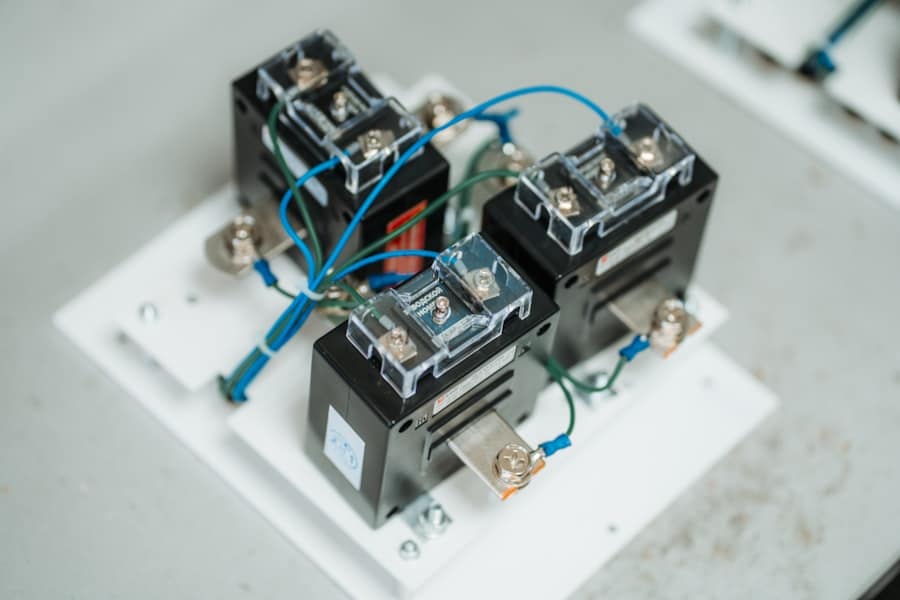
Energy harvesting switches offer a compelling set of benefits, but also come with inherent limitations that need to be considered.
Key Advantages
The absence of wires and batteries simplifies installation and reduces maintenance overhead significantly.
Reduced Installation Complexity
Eliminating wiring removes the need for electrical conduits, extensive labor, and adherence to complex wiring regulations. This makes installation faster, cheaper, and less disruptive, especially in retrofitting scenarios or in temporary installations. It’s like having a remote control for every light, but without ever needing to change its batteries.
Lower Maintenance Costs
Batteries have a finite lifespan and require periodic replacement, which incurs labor costs and can be particularly challenging in hard-to-reach locations. By removing batteries, maintenance is drastically reduced, leading to a lower total cost of ownership over the lifetime of the product.
Environmental Benefits
The absence of batteries reduces the consumption of raw materials and eliminates the disposal challenges associated with hazardous battery waste. This contributes to a more sustainable product lifecycle. Furthermore, the reduced need for wiring also conserves raw materials like copper.
Enhanced Flexibility and Mobility
Wireless, battery-free operation grants unparalleled flexibility in device placement. Switches can be repositioned easily without electrical infrastructure constraints, enabling adaptive smart home layouts or agile industrial sensor deployments.
Limitations and Challenges
Despite the advantages, energy harvesting switches face certain technical and environmental constraints.
Limited Power Output
The amount of energy harvested from a single actuation is inherently small, typically in the millijoule range. This limits the complexity of the radio transmission, the range of the signal, and the type of functions the switch can perform. Intensive data processing or long-range communication are generally beyond these devices’ capabilities.
Dependence on Actuation Force
The reliability of energy harvesting switches directly correlates with the mechanical force applied. If the actuation force is too weak or too slow, insufficient energy may be generated, leading to missed signals. This can be a concern in applications where consistent user interaction cannot be guaranteed.
Cost Considerations
While the long-term operational costs might be lower, the initial manufacturing cost of energy harvesting components (piezoelectric materials, specialized low-power electronics) can sometimes be higher than traditional wired or battery-powered switches. However, as the technology matures and manufacturing scales, these costs are expected to decrease.
Environmental Factors
Extreme temperatures, humidity, or significant electromagnetic interference can potentially impact the performance and lifespan of energy harvesting switches and their integrated electronics. Selecting materials and designing robust enclosures are crucial for reliable operation in harsh environments.
Energy harvesting switches represent a significant advancement in technology, eliminating the need for wires and batteries in various applications. These innovative devices can harness energy from their surroundings, making them ideal for smart home systems and IoT devices. For those interested in the intersection of technology and convenience, a related article discusses the best smartwatch apps of 2023, showcasing how wearable technology continues to evolve and integrate seamlessly into our daily lives. You can explore this further in the article found here.
Applications
| Metric | Value | Unit | Description |
|---|---|---|---|
| Energy Conversion Efficiency | 70 | % | Percentage of mechanical energy converted to electrical energy |
| Operating Voltage | 3.3 | V | Typical voltage output generated by the switch |
| Power Output | 5 | mW | Maximum power generated during actuation |
| Switch Actuation Force | 2 | N | Force required to activate the switch |
| Response Time | 10 | ms | Time taken for the switch to generate usable energy after actuation |
| Lifetime | 1,000,000 | cycles | Number of actuations before performance degradation |
| Energy Storage | Integrated Capacitor | – | Type of energy storage used within the switch system |
| Wireless Transmission Range | 10 | m | Maximum distance for wireless signal transmission |
Energy harvesting switches are finding their way into a diverse range of applications, driven by their unique capabilities. They act as distributed, self-sufficient “eyes and ears” in various systems.
Smart Homes and Buildings
In smart environments, these switches simplify the control of lighting, HVAC systems, and access control.
Wireless Light Switches
Perhaps the most common application, wireless light switches powered by body motion eliminate the need for traditional electrical wiring to light fixtures. This allows for flexible placement, even on glass surfaces or in locations without existing electrical boxes, bringing great convenience to renovations and new constructions.
Window and Door Sensors
Integrated into door and window frames, these switches can detect opening/closing events, transmitting signals for security systems, occupancy detection, or HVAC control. The mechanical action of the door or window provides the energy for the transmission.
Environmental Controls
Temperature or humidity sensors with integrated energy harvesting switches could be triggered by preset conditions or manual override, communicating with building management systems without requiring battery replacements.
Industrial Automation
The harsh and often expansive nature of industrial environments makes battery replacement cumbersome and wiring expensive.
Machine Status Monitoring
Position sensors on conveyor belts, robotic arms, or machinery parts can report their state (e.g., open/closed, extended/retracted) without external power. This facilitates preventive maintenance and optimizes operational efficiency.
Access Control and Safety Interlocks
Energy harvesting switches can be used in safety interlocks on machinery, ensuring that guards are closed or access points are secured before operation, enhancing worker safety without complex electrical runs.
Asset Tracking
While not directly a “switch” in the traditional sense, energy harvesting principles can be applied to create self-powered tags for tracking assets within a facility. Movement or vibration generates the energy to periodically transmit the asset’s location or status.
Medical and Healthcare
Miniaturization and the need for sterile, easily deployable devices make energy harvesting switches attractive in healthcare settings.
Patient Monitoring Devices
Wearable switches or embedded sensors in medical equipment could monitor patient activity or device status, reducing the cabling burden and infection risks associated with traditional wired systems. Imagine a call button that never needs a fresh battery.
Disposable Medical Instruments
For single-use or limited-use instruments, energy harvesting could negate the need for integrated batteries, simplifying disposal and reducing environmental impact while still allowing for wireless data transmission or functional control.
Energy harvesting switches represent a significant advancement in technology, allowing devices to operate without the need for traditional power sources like wires or batteries. This innovative approach not only enhances convenience but also contributes to sustainability by reducing electronic waste. For those interested in exploring more about cutting-edge technology, a related article discusses the latest advancements in laptops, including some of the best Lenovo models available today. You can read more about it here.
Future Developments
The field of energy harvesting switches is dynamic, with ongoing research and development focused on enhancing performance and expanding applications.
Increased Energy Efficiency
Research continues into new materials and designs that can convert mechanical energy into electrical energy with higher efficiency. This includes exploring novel piezoelectric composites, optimizing magnetic circuit designs for electromagnetic harvesting, and refining power management circuits to minimize parasitic losses. The goal is to extract more power from less mechanical input.
Miniaturization and Integration
Developing smaller, more integrated components is a key trend. This involves System-in-Package (SiP) and System-on-Chip (SoC) approaches to combine the harvester, PMU, and wireless transmitter into a single, compact module. This will enable their integration into an even wider array of products, from smart fabrics to tiny sensors.
Multi-Source Harvesting
Future designs may incorporate multiple energy harvesting mechanisms within a single switch (e.g., combining piezoelectric and thermoelectric properties). This “hybrid” approach could provide greater robustness and reliability, ensuring operation even if one energy source is temporarily unavailable or insufficient. For example, a switch might harvest energy from both a press and ambient light.
Advanced Wireless Protocols
The development of even more energy-efficient wireless communication protocols will further extend the reach and functionality of these switches. This includes innovations in ultra-low-power radio silicon and communication strategies that minimize airtime and data packet sizes.
Advanced Sensing Capabilities
Beyond simple ON/OFF states, future energy harvesting switches may integrate more complex sensing capabilities, such as multi-axis pressure sensing, gesture recognition, or even rudimentary environmental monitoring, all powered by the act of interaction. This would transform them from mere binary switches into truly interactive, self-powered interfaces.
FAQs
What are energy harvesting switches?
Energy harvesting switches are devices that generate electrical energy from mechanical actions, such as pressing a button, without the need for external power sources like batteries or wired connections.
How do energy harvesting switches work without batteries?
These switches convert mechanical energy from user interactions into electrical energy using technologies like piezoelectric materials or electromagnetic induction, enabling them to operate independently of batteries.
What are the advantages of using energy harvesting switches?
Advantages include reduced maintenance since there are no batteries to replace, elimination of wiring complexity, increased reliability, and environmental benefits due to lower electronic waste.
Where are energy harvesting switches commonly used?
They are often used in applications such as building automation, industrial controls, smart home devices, and remote or hard-to-reach locations where wiring or battery replacement is impractical.
Are energy harvesting switches as reliable as traditional battery-powered switches?
Yes, energy harvesting switches are designed to be highly reliable, with fewer points of failure due to the absence of batteries and wiring, though their performance depends on the energy generated from user interactions.