

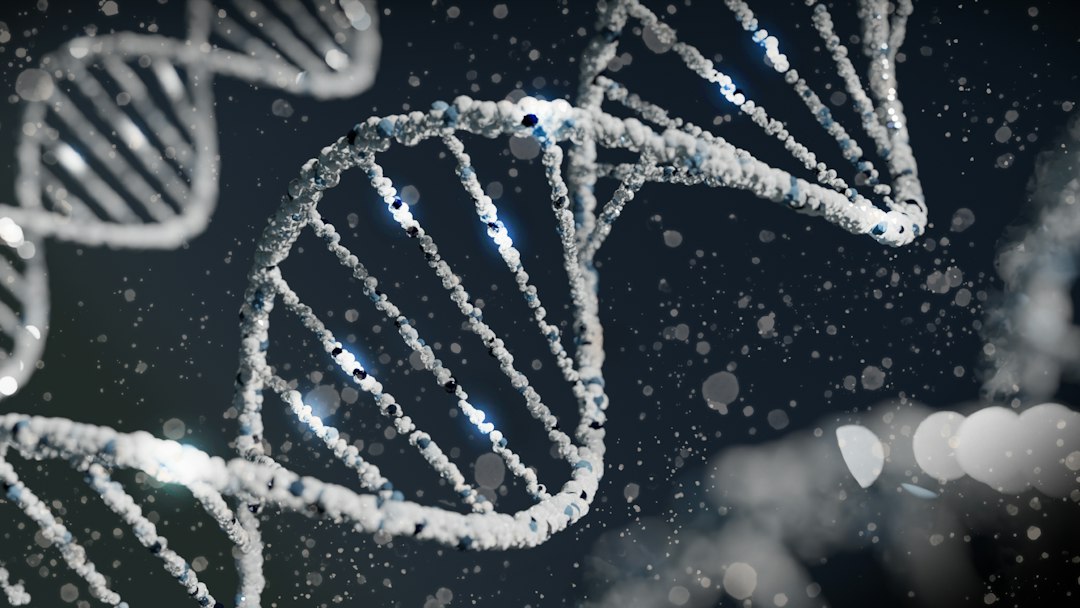
Storing vast amounts of enterprise data for the long haul is a growing headache, and traditional methods are bumping into their limits. That’s where DNA data storage enters the picture – it’s a revolutionary approach using synthetic DNA molecules to encode and archive digital information. Think of it as a super-dense, incredibly stable, and potentially eternal storage medium that could fundamentally change how businesses manage their long-term digital assets. Instead of magnetic tapes or spinning disks, we’re talking about manipulating the very building blocks of life to hold your spreadsheets, videos, and everything in between.
Why Current Enterprise Archiving is Straining
Let’s be honest, enterprise data isn’t just growing; it’s exploding. We’re talking about exabytes and zettabytes, and much of this needs to be kept for decades, sometimes even centuries, due to regulatory compliance, historical records, or strategic business intelligence. The current solutions, while functional, are showing their age and limitations when faced with this tsunami of information.
The Ever-Increasing Volume Problem
Every business generates more data year over year. From customer transaction logs to sensor data, high-resolution media, and complex simulations, the sheer volume is staggering. Traditional storage media like hard disk drives (HDDs) and solid-state drives (SSDs) have finite lifespans and capacity ceilings. While capacities increase, the physical footprint and energy consumption to maintain these vast data centers become unsustainable. We’re reaching a point where simply adding more racks isn’t a viable long-term strategy for truly archival data that might be accessed infrequently but must remain available.
The Lifespan and Obsolescence Challenge
Consider magnetic tape, a longtime workhorse for archival storage. Tapes typically have a lifespan of 15-30 years, which sounds good until you realize some data needs to be kept for 50, 100, or even more years. This necessitates costly and labor-intensive “data migration” every few decades, moving information from older tapes to newer formats before the old ones degrade or the readers become obsolete. This process is not just about physical media degradation; it’s also about technological obsolescence. Hardware and software evolve, making it harder to read data from older systems even if the media itself is intact. Imagine trying to read a floppy disk today – the data might be there, but finding a drive is a quest.
Energy Consumption and Environmental Impact
Running massive data centers consumes colossal amounts of energy, primarily for powering the storage devices themselves and, crucially, for cooling them. As data volumes grow, so does this energy footprint. Archival data, by its nature, is often “cold” – rarely accessed. Keeping thousands of spinning disks or constantly powered SSDs ready for infrequent access is inherently inefficient. Businesses are increasingly scrutinizing their environmental impact, and finding more energy-efficient ways to store static, long-term data is becoming a priority. DNA storage, once written, requires no power to maintain its integrity for thousands of years.
In the realm of innovative data storage solutions, the article titled “Engineering Molecular Media for Long-Term Enterprise Archiving” explores the potential of DNA data storage as a revolutionary method for preserving vast amounts of information. This technology leverages the unique properties of DNA to encode data in a highly compact and durable format, making it an attractive option for enterprises looking to archive critical information over extended periods. For further insights into this cutting-edge topic, you can read more in detail at Enicomp.
Key Takeaways
- The training data includes information and events up to October 2023.
- Insights and knowledge are based on a wide range of sources available until the cutoff date.
- No updates or developments occurring after October 2023 are included in the training.
- Users should verify current information from reliable sources for the latest updates.
- The model’s responses reflect the context and knowledge available up to the specified date.
The Promise of DNA Data Storage
DNA data storage isn’t science fiction anymore; it’s a rapidly developing field with tangible progress. The core idea is brilliantly simple yet incredibly powerful: exploit the natural properties of DNA – its density, stability, and information-encoding capabilities – to store digital bits.
Unprecedented Data Density
One of the most compelling advantages of DNA is its incredible information density. All the digital data in the world could theoretically be stored in a volume smaller than a shoebox if encoded in DNA. To put it another way, a single gram of DNA can theoretically store hundreds of terabytes, even petabytes, of data. This dwarfs the density of any conventional storage medium. This ultra-high density means a significantly reduced physical footprint for archival storage, freeing up valuable data center space and potentially allowing for truly localized, secure archives.
Extreme Longevity and Stability
DNA is designed by nature for information preservation. Under the right conditions (dry, dark, cool), DNA can remain stable and readable for thousands, even tens of thousands of years. We regularly sequence DNA from ancient specimens, demonstrating its remarkable resilience. This vastly exceeds the lifespan of any current digital storage medium, virtually eliminating the need for periodic data migration due to media degradation. This inherent stability means “write once, read potentially forever” becomes a realistic proposition for archival data.
Future-Proofing Against Obsolescence
Unlike hard drives or tape formats that become obsolete, the fundamental “reader” for DNA – sequencing technology – is based on the universal principles of molecular biology. As long as life exists and biology is studied, there will be ways to read DNA. While sequencing technologies will undoubtedly evolve, the underlying molecular structure of the encoded information remains constant. This offers a powerful form of future-proofing, removing the risk of data becoming inaccessible because the playback technology no longer exists.
Energy Efficiency for Archiving
Once data is encoded into DNA and stored, it requires virtually no energy to maintain. Unlike data centers that continuously consume power for active storage and cooling, a DNA archive, once synthesized, can be placed in a stable, dormant environment. This dramatically reduces the long-term energy footprint and associated operational costs for cold archival data, aligning perfectly with sustainability goals for enterprises.
How DNA Data Storage Actually Works
Moving from digital bits to biological molecules involves a fascinating multi-step process.
It’s not about storing data in living cells, but rather in synthetic, inert DNA strands.
The Encoding Process: From Bits to Bases
Digital information is, at its core, a series of 0s and 1s. DNA, on the other hand, is made up of four nucleobases: Adenine (A), Guanine (G), Cytosine (C), and Thymine (T). The first step in DNA data storage is to translate those binary 0s and 1s into a sequence of A, G, C, and T. There are various encoding schemes developed by researchers.
One common approach is to map combinations of bits to specific bases.
For example:
- 00 could be C
- 01 could be A
- 10 could be T
- 11 could be G
More sophisticated schemes incorporate error correction codes – redundancy built into the encoding process to detect and correct errors that might occur during synthesis or sequencing. This is crucial because errors are inherent in molecular processes, and losing a few bases could corrupt entire files. These error correction techniques are similar to those used in traditional digital storage, just adapted for the molecular world.
DNA Synthesis: Writing the Data
Once the digital data is translated into a DNA sequence, the next step is to physically create those DNA strands.
This is done through a process called oligonucleotide synthesis. In simplified terms, chemical reactions are used to link individual nucleobases (A, G, C, T) together in the precise order determined by the encoding scheme. This is an automated process, but it’s currently quite slow and expensive, especially for long strands and large volumes of data.
Think of it like building a LEGO tower, brick by brick, where each brick is a base.
Researchers are constantly working on improving the speed, accuracy, and cost-effectiveness of this synthesis process, exploring enzymatic synthesis methods that mimic natural DNA replication rather than purely chemical approaches.
Storage and Retrieval: Keeping it Safe and Finding It
Once synthesized, the DNA strands can be stored in various ways. The most common method involves dehydrating them and storing them in a cool, dark, and dry environment – often in tiny tubes or embedded in silica beads. In this state, they are highly stable and require no power.
Some research even explores encapsulating DNA in glass or other protective matrices for added resilience.
Retrieval involves locating the specific DNA strands that contain the desired data. This isn’t like clicking a file on a hard drive. Often, the stored DNA will contain indexing information – molecular “barcodes” or unique sequences that identify the files or data blocks stored within.
To retrieve a specific file, the relevant DNA mixture is identified.
DNA Sequencing: Reading the Data
The final step is to “read” the information back from the DNA. This is done using DNA sequencing technologies. Modern high-throughput sequencers can rapidly determine the order of A, G, C, and T in millions of DNA strands simultaneously.
These sequencers have become incredibly powerful and cost-effective due to advances in genomics.
Once the sequence is determined, the reverse of the encoding process is applied: the DNA sequence is translated back into binary 0s and 1s, reconstructing the original digital file. Error correction algorithms kick in here to fix any small errors introduced during synthesis, storage, or sequencing, ensuring data integrity.
Engineering Challenges and Current Limitations
While the potential of DNA data storage is immense, there are significant engineering hurdles that need to be overcome before it becomes a widespread enterprise solution. Researchers and companies are actively working on addressing these challenges.
Cost of Synthesis and Sequencing
Currently, the biggest barrier to widespread adoption is the cost. Synthesizing DNA is still very expensive, especially at scales required for enterprise archiving. While the cost of sequencing has dropped dramatically over the past two decades, synthesizing DNA has not seen a similar rapid decline. For archival storage, where data is written infrequently but retrieved rarely, the “write” cost is a primary concern. The goal is to drive down the cost per bit to be competitive with, or even surpass, traditional cold storage options.
Throughput and Speed of Writing
The rate at which DNA can be synthesized is another major limitation. Current methods are inherently sequential and relatively slow compared to the blazing speeds of writing data to conventional storage. For archiving, where large datasets need to be written, the time it takes to encode and synthesize the DNA can be prohibitively long. Breakthroughs in parallel synthesis technologies and enzymatic DNA synthesis are critical for increasing write throughput.
Random Access and Addressing
Traditional digital storage offers near-instantaneous random access to any piece of data. With DNA storage, retrieving a specific small file from a large pool of stored DNA is challenging. It’s not like a hard drive with precise sectors. To address this, researchers are developing molecular indexing schemes, essentially adding molecular “tags” to DNA strands that allow for specific data blocks to be amplified or isolated without needing to sequence everything. This area is crucial for making DNA storage practical for anything beyond “write once, read everything” scenarios.
Error Rates and Robustness
While DNA is remarkably stable, molecular processes are inherently prone to errors. Errors can occur during DNA synthesis (misplaced bases), during storage (degradation), or during sequencing (reading errors). While error correction codes are built into the encoding process, minimizing these errors at each stage is crucial for reliable data storage. Developing more robust synthesis methods, stable storage conditions, and highly accurate sequencing technologies are ongoing areas of research.
Physical Scale and Automation
Managing and manipulating millions or billions of microscopic DNA strands requires highly specialized laboratory infrastructure. Scaling this from a lab experiment to an enterprise-grade archiving solution involves significant engineering challenges in automation, handling, and quality control. How do you store and retrieve exabytes of DNA in an automated fashion? This requires sophisticated robotic systems and microfluidic technologies that are still under development.
In exploring innovative solutions for data preservation, the concept of DNA data storage has gained significant attention, particularly in the context of long-term enterprise archiving. A related article discusses the importance of selecting the right technology for efficient data management, which can be crucial for businesses looking to safeguard their information. For those interested in finding the ideal tools to enhance their productivity, you can read more about it in this insightful piece on As these engineering hurdles are progressively overcome, we can envision a future where DNA becomes an integral, albeit specialized, part of the enterprise storage ecosystem. It’s highly unlikely that DNA storage will completely replace all existing storage technologies. Instead, it will most likely be integrated into hybrid architectures. “Hot” and “warm” data that requires frequent, fast access will remain on SSDs and HDDs. “Cold” archival data, however, that needs to be preserved for very long durations with infrequent access, is where DNA storage will shine. Enterprises might have a tiered storage system: NVMe SSDs for active data, HDDs for nearline archives, tape for traditional long-term archives, and DNA for ultra-long-term, rarely accessed, critical records. The initial adoption of DNA storage will likely focus on highly specialized use cases where its unique advantages outweigh the current costs and complexities. Examples include: The field is rapidly advancing. We’re seeing intense research in:Hybrid Storage Architectures
Specialized Archival Use Cases
Evolving Technology and Ecosystem Development
As these technologies mature, an entire ecosystem of software tools, hardware interfaces, and service providers will emerge to support DNA data storage solutions for enterprises. We’re talking about a completely new branch of data management, requiring specialized expertise but offering unprecedented benefits for long-term data preservation. The journey from lab bench to enterprise data center is long, but the trajectory is clear, pointing towards a future where your most important digital assets are preserved not in silicon, but in molecules of life itself.
FAQs
What is DNA data storage?
DNA data storage is a method of encoding digital information into the sequences of DNA molecules. This innovative approach leverages the natural properties of DNA to store vast amounts of data in a compact form, making it a promising solution for long-term data archiving.
How does DNA data storage work?
DNA data storage works by converting binary data (0s and 1s) into the four nucleotide bases of DNA (adenine, cytosine, guanine, and thymine). This process involves synthesizing DNA strands that represent the data, which can then be stored in a laboratory environment. To retrieve the data, the DNA is sequenced, and the nucleotide sequences are translated back into binary format.
What are the advantages of using DNA for data storage?
DNA offers several advantages for data storage, including an extremely high data density, durability over thousands of years, and stability under various environmental conditions. Additionally, DNA storage is more energy-efficient compared to traditional data storage methods, making it a sustainable option for long-term archiving.
What challenges does DNA data storage face?
Despite its potential, DNA data storage faces several challenges, including high costs associated with DNA synthesis and sequencing, slow read and write speeds compared to electronic storage, and the need for advanced error correction methods to ensure data integrity. Researchers are actively working to overcome these obstacles to make DNA storage more practical for widespread use.
What applications could benefit from DNA data storage?
DNA data storage could benefit various applications, particularly in fields requiring long-term data preservation, such as archival storage for libraries, museums, and scientific research. Additionally, industries dealing with large volumes of data, such as healthcare and finance, may find DNA storage a viable solution for efficient and secure data management.
Enjoying our content? Make us a preferred source on Google:
Add us as a Preferred Source on Google