

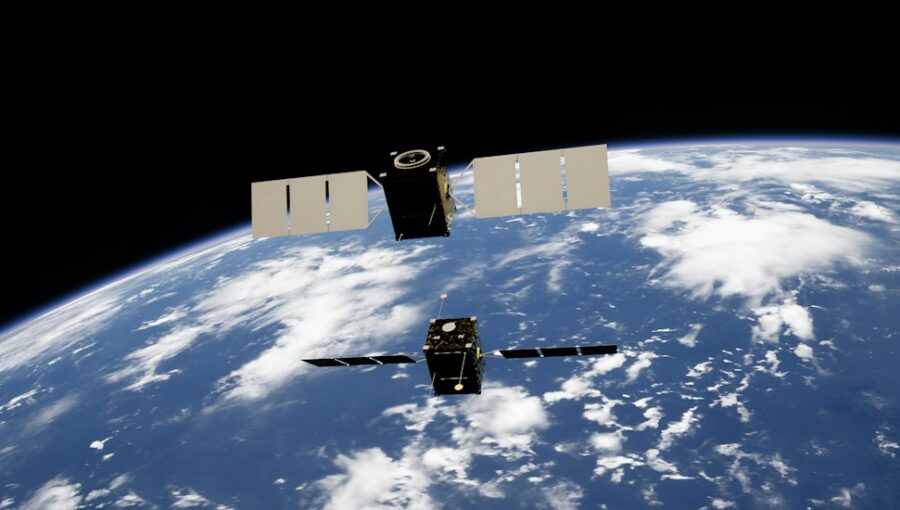
Direct-to-cell satellite connectivity is, put simply, a way for your regular smartphone to connect directly to a satellite in orbit, allowing you to make calls, send texts, and sometimes even get data service in places where traditional cellular networks don’t reach. For businesses operating in remote areas, this technology is a game-changer, offering a reliable communication lifeline that wasn’t previously possible without specialized, often bulky, equipment. It’s about bringing connectivity to the last mile, and then some.
The Gap in Enterprise Connectivity
For years, enterprises operating in sectors like mining, oil and gas, agriculture, maritime, emergency services, and even remote tourism have faced a significant challenge: reliable communication beyond urban centers. Traditional cellular networks are designed for population density, making it economically unfeasible to build cell towers in sparsely populated or geographically challenging regions. This leaves vast swathes of the globe, often critical to these industries, as communication black holes.
The Cost of Disconnection
The consequences of this communication gap are far-reaching. Imagine a mining operation in a desert. A critical piece of machinery breaks down, and the on-site team can’t communicate with headquarters for urgent technical support or spare parts. Delays cost money, sometimes millions, and can even pose safety risks. In agriculture, real-time data from remote sensors on crop health or livestock location can be crucial for optimizing yields and preventing losses, but without connectivity, this data remains trapped. For maritime vessels, navigating treacherous waters or responding to emergencies without a consistent communication link is a serious safety hazard.
Existing Solutions and Their Limitations
Before direct-to-cell, enterprises in these remote zones relied on a patchwork of solutions. Satellite phones were a common choice, offering voice and sometimes low-bandwidth data, but they are expensive, require specialized handsets, and often have a steep learning curve. VSAT (Very Small Aperture Terminal) systems provide robust internet access but are typically fixed installations, require significant power, and involve complex setup and maintenance. Mesh networks can extend local connectivity but still need a primary backhaul to a cellular or satellite connection, often encountering the same remote access issues. While these solutions have served their purpose, they often come with high costs, limited flexibility, or don’t seamlessly integrate with the everyday tools and devices employees are accustomed to. They represent a compromise rather than a truly integrated communication strategy.
In the evolving landscape of communication technology, the article on Apple Watch vs. Samsung Galaxy Watch highlights the importance of connectivity in wearable devices, which is increasingly relevant as Direct-to-Cell Satellite Connectivity emerges as a solution for bridging enterprise communications in remote zones. This innovative technology not only enhances communication capabilities for businesses operating in isolated areas but also complements the functionalities of smartwatches, allowing users to stay connected regardless of their location.
Key Takeaways
- The training data includes information and events up to October 2023.
- Insights and knowledge are based on a wide range of sources available until the cutoff date.
- No updates or developments occurring after October 2023 are included in the training.
- Users should verify current information from reliable sources for the latest updates.
- The model’s responses reflect the context and knowledge available up to the specified date.
How Direct-to-Cell Satellite Connectivity Works

The underlying principle of direct-to-cell is to bypass ground infrastructure by connecting directly to satellites. However, it’s not as simple as pointing your phone at the sky. Several key technological advancements and architectural considerations make this possible.
Low Earth Orbit (LEO) Satellite Constellations
Unlike geostationary satellites, which orbit at a much higher altitude and appear stationary from the ground, LEO satellites orbit much closer to Earth, typically between 160 and 2,000 kilometers. This proximity drastically reduces latency (the delay in communication) and allows for weaker signals to be received by standard smartphone antennas. Crucially, a constellation of LEO satellites is required to provide continuous coverage. As one satellite moves out of range, another moves in, ensuring a handover without loss of connection. Companies like Starlink, OneWeb, and now players entering the direct-to-cell space like AST SpaceMobile and Lynk Global, are building and deploying these extensive LEO constellations.
Specialized Satellite Payloads
While your phone’s antenna is designed for terrestrial cell towers, it’s not built for the vast distances to a satellite. The magic happens on the satellite itself. Direct-to-cell satellites carry specialized payloads that act like “floating cell towers.” These payloads are equipped with massive, powerful antennas and advanced processing capabilities that can detect and amplify the relatively weak signals emitted by a standard smartphone. They essentially mimic a ground-based cell tower from space, converting the cellular signal into a satellite signal and vice-versa. This is a significant engineering feat, as it requires the satellite to handle a wide range of frequencies and protocols that regular cell towers manage on the ground.
Software Defined Radios and Protocols
Another critical component is the use of software-defined radios (SDRs) on both the satellite and, in some cases, with software updates on the smartphone itself. SDRs offer immense flexibility, allowing the satellite to adapt to different cellular standards (2G, 4G, 5G) and dynamically manage bandwidth and power. On the smartphone side, a simple software update, or sometimes a new SIM card, can enable the device to “see” and connect to these satellite signals. This ensures that the user experience is as close as possible to traditional cellular, without requiring a specialized satellite phone. The protocols used also need to account for factors like Doppler shift (the change in frequency due to the relative motion of the satellite) and atmospheric interference, which are more pronounced with LEO satellites.
Frequency Spectrum and Regulatory Hurdles
Operating direct-to-cell services requires access to specific frequency spectrums. This is a complex regulatory landscape, as traditional cellular spectrum is allocated for terrestrial use. Satellite operators need to coordinate with national regulators and cellular carriers to ensure their satellite signals don’t interfere with existing ground networks. Many direct-to-cell providers are partnering with existing mobile network operators (MNOs) to leverage their licensed spectrum and integrate seamlessly into their services, allowing for “roaming” onto satellite networks when terrestrial coverage is unavailable. This collaboration is key to widespread adoption.
Key Benefits for Enterprises

The implications of direct-to-cell connectivity for businesses operating in remote environments are transformative. It offers a suite of benefits that directly address the challenges of operating beyond traditional network infrastructure.
Ubiquitous Communication and Safety
The most immediate benefit is ubiquitous communication. Employees in remote areas can stay connected, not just with colleagues but also with emergency services.
This significantly enhances safety protocols.
A lone worker in a remote field, a geologist exploring an unchartered area, or a maritime crew member in distress can make a call or send a text directly from their standard smartphone.
This capability reduces risks, improves response times in emergencies, and provides peace of mind for both employees and management. For industries with strict safety regulations, this is an invaluable asset.
Operational Efficiency and Real-time Data
Beyond safety, direct-to-cell connectivity drives operational efficiency. Businesses can leverage real-time data from remote assets, whether it’s monitoring equipment performance on an oil rig, tracking agricultural machinery, or receiving diagnostic information from sensors in a remote substation.
This data allows for predictive maintenance, optimized resource allocation, and faster decision-making, minimizing downtime and maximizing productivity. Imagine a scenario where a critical pump on a pipeline starts showing early signs of failure. With real-time telemetry via direct-to-cell, maintenance can be scheduled proactively, avoiding a costly, unplanned shutdown.
Cost Savings and Scalability
While initial satellite infrastructure investments are substantial, direct-to-cell connectivity can lead to long-term cost savings for enterprises.
It eliminates the need for expensive, specialized satellite phones for every employee and reduces reliance on bulky VSAT terminals in many scenarios. Employees can use their existing smartphones, reducing training needs and equipment costs. Furthermore, the scalability of satellite networks means that as an enterprise expands its operations into new remote territories, connectivity can be readily available without the need for additional terrestrial infrastructure build-out.
This flexibility allows businesses to adapt and grow more agilely.
Business Continuity and Disaster Recovery
In the event of natural disasters or localized network outages, terrestrial communication infrastructure can be severely compromised. Direct-to-cell satellite connectivity offers a robust backup, ensuring business continuity. Emergency services, relief organizations, and businesses with critical operations can maintain communication when ground networks fail.
This resilience is vital for disaster recovery efforts, allowing for better coordination, faster response, and more effective resource deployment during crises. It acts as an essential lifeline when all other communication channels are down.
Use Cases Across Industries
The practical applications of direct-to-cell satellite connectivity span a wide array of industries, each with unique needs and challenges.
Mining and Exploration
For mining operations, direct-to-cell connectivity revolutionizes safety and efficiency. Miners working underground or in remote open-pit mines can maintain constant contact with supervisors, crucial for emergency response and daily operations. Real-time telemetry from heavy machinery allows for predictive maintenance, minimizing breakdowns in hostile environments. Geologists in exploration teams, often working far from any existing infrastructure, can share critical data, maps, and findings instantly, accelerating decision-making and reducing the need for costly manual data transfer trips. This also improves supply chain logistics, ensuring the timely delivery of vital equipment and resources.
Oil and Gas
The oil and gas industry often operates in some of the most remote and challenging environments on Earth, from offshore platforms to desert pipelines. Direct-to-cell enables continuous monitoring of remote wellheads, pipelines, and processing facilities. Sensors can transmit data on pressure, temperature, and flow rates in real-time, allowing for immediate anomaly detection and preventing costly leaks or equipment failures. For field engineers and maintenance crews, direct communication with central control rooms significantly improves response times to incidents, enhances safety during hazardous operations, and optimizes resource deployment across vast territories.
Agriculture and Fisheries
In agriculture, direct-to-cell empowers precision farming. Farmers can monitor soil conditions, crop health, and livestock movements across vast farmlands, even those miles from any cell tower. Drones equipped with sensors can transmit data directly to the cloud via satellite, enabling data-driven decisions on irrigation, fertilization, and pest control. For the fishing industry, direct-to-cell connectivity allows vessels to stay in touch with shore, receive updated weather forecasts, communicate catch data, and request assistance in emergencies, significantly enhancing safety and operational efficiency in open waters. It facilitates better compliance with fishing regulations and traceability of seafood.
Logistics and Transportation
Long-haul trucking, railway operations, and shipping lines often traverse areas with patchy or non-existent cellular coverage. Direct-to-cell provides a consistent communication link for drivers and crew, enhancing safety and enabling real-time tracking of vehicles and cargo. Dispatchers can communicate with drivers, reroute shipments, and respond to emergencies regardless of location. This constant connectivity improves operational efficiency, reduces delivery delays, and strengthens supply chain visibility. For last-mile delivery in rural areas, it ensures that even the most remote deliveries can be tracked and coordinated.
Emergency Services and Disaster Relief
When natural disasters strike, terrestrial communication infrastructure is often among the first casualties. Direct-to-cell connectivity provides a critical lifeline for first responders, search and rescue teams, and disaster relief organizations. It allows them to coordinate efforts, share critical information, and communicate with affected populations when traditional networks are down. This rapid deployment of communication capabilities is invaluable for saving lives, distributing aid, and restoring order in chaotic situations, demonstrating the technology’s vital role in humanitarian efforts.
Direct-to-Cell Satellite Connectivity is revolutionizing enterprise communications, especially in remote areas where traditional networks fall short. For those interested in exploring the latest technology trends, a related article discusses the best Huawei laptops of 2023, which can enhance productivity in such challenging environments. You can read more about it here. This integration of advanced satellite communication with powerful computing devices is paving the way for more reliable and efficient operations in isolated regions.
The Road Ahead: Challenges and Future Outlook
| Metric | Description | Value | Unit |
|---|---|---|---|
| Latency | Time delay in data transmission | 600 | ms |
| Bandwidth | Maximum data transfer rate | 50 | Mbps |
| Coverage Area | Geographical area served by satellite | 1,000,000 | km² |
| Uptime | Network availability percentage | 99.9 | % |
| Deployment Time | Time to set up connectivity in remote zones | 48 | hours |
| Device Compatibility | Number of enterprise device types supported | 150 | devices |
| Power Consumption | Average power usage per terminal | 25 | Watts |
| Data Security Level | Encryption standard used | AES-256 | Standard |
While direct-to-cell satellite connectivity holds immense promise, it’s a rapidly evolving field with its share of challenges and exciting future prospects.
Technical Hurdles and Optimization
Despite the significant advancements, technical hurdles remain. Optimizing battery life on standard smartphones when connecting to satellites is a key area of research, as the phone needs to amplify its signal much more than for a terrestrial tower.
The limited bandwidth initially offered by some direct-to-cell services means they are primarily suited for texts and calls, with higher data speeds still under development.
Overcoming issues like signal degradation due to weather, tree cover, or urban canyons also requires ongoing innovation. Furthermore, the handover between satellites in LEO constellations needs to be seamless to avoid dropped calls or data interruptions, demanding sophisticated algorithms and robust network management.
Regulatory and Commercial Complexities
Navigating the global regulatory landscape for spectrum allocation and cross-border operations is a monumental task. Each country has its own rules, and securing licenses for satellite communication can be a lengthy process. The commercial model is also evolving. How will direct-to-cell services be priced? Will they be an add-on to existing cellular plans, a standalone subscription, or a hybrid? The partnerships between satellite operators and traditional mobile network operators (MNOs) will be crucial in defining these commercial offerings and ensuring widespread adoption without fragmenting the market. Integration into existing enterprise IT systems also needs to be smooth and secure.
Emerging Technologies and Enhanced Capabilities
Looking ahead, the capabilities of direct-to-cell are expected to grow significantly. We’ll likely see higher bandwidth offerings, enabling more robust data services, including limited video conferencing and real-time streaming for specific applications. The integration of IoT (Internet of Things) devices directly to satellite will expand, allowing for truly global asset tracking and monitoring on a massive scale without the need for gateways. Machine-to-machine (M2M) communication via direct-to-cell will become increasingly prevalent for industrial automation in remote settings. Further advancements in satellite antenna technology, artificial intelligence for signal processing, and quantum communication for enhanced security could all play a role in shaping the future of this transformative technology. The ultimate goal is to make satellite connectivity indistinguishable from terrestrial cellular for the end-user, irrespective of their location.
FAQs
What is direct-to-cell satellite connectivity?
Direct-to-cell satellite connectivity is a technology that enables direct communication between satellites and cell phones, bypassing the need for traditional ground-based infrastructure like cell towers.
How does direct-to-cell satellite connectivity benefit enterprises operating in remote zones?
Direct-to-cell satellite connectivity allows enterprises operating in remote zones to establish reliable communication networks for their employees, enabling seamless connectivity for voice calls, messaging, and data transfer even in areas with limited or no terrestrial coverage.
What are the advantages of using direct-to-cell satellite connectivity for enterprise communications?
Some advantages of using direct-to-cell satellite connectivity for enterprise communications include global coverage, increased reliability in remote areas, enhanced security, and the ability to quickly deploy communication networks in disaster-stricken regions.
How does direct-to-cell satellite connectivity differ from traditional satellite communication systems?
Unlike traditional satellite communication systems that require specialized equipment and are primarily used for data transfer, direct-to-cell satellite connectivity leverages existing cell phones and allows for seamless integration with cellular networks, providing a more user-friendly and cost-effective solution for enterprise communications.
What are some potential challenges or limitations of direct-to-cell satellite connectivity?
Some potential challenges or limitations of direct-to-cell satellite connectivity include higher costs compared to terrestrial networks, limited bandwidth capacity leading to slower data speeds, and potential signal disruptions in extreme weather conditions or heavily forested areas.
Enjoying our content? Make us a preferred source on Google:
Add us as a Preferred Source on Google