

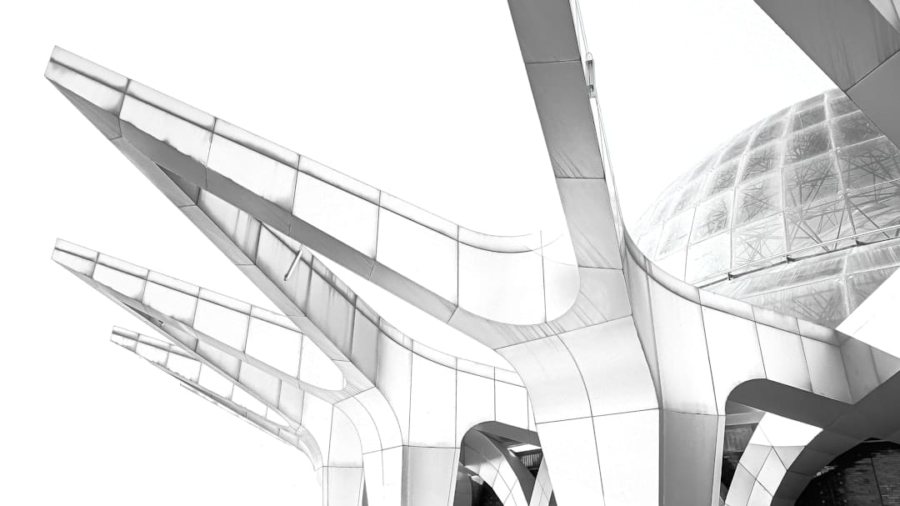
Diffusion models are totally changing the game for how we approach architectural design. Instead of just being a fancy image generator, they’re becoming incredibly powerful tools for optimizing designs based on specific criteria, and that’s a huge deal for architects and urban planners. Think of it like this: instead of just drawing a building and hoping for the best, you can now use AI to explore countless variations that meet your needs – whether that’s for energy efficiency, structural integrity, or even just a pleasing aesthetic. It’s like having an impossibly fast, tireless assistant who can brainstorm and refine designs with you.
Beyond Pretty Pictures: What Diffusion Models Actually Do
So, we’re talking about more than just making a design look nice. Diffusion models, at their core, learn from existing data to generate new data that shares similar characteristics. In architecture, this means they can learn from thousands of building plans, urban layouts, or material configurations.
Generative Powerhouse for Design Exploration
The real magic happens when you start prompting these models with specific requirements or constraints. Instead of just creating something “architectural,” you can ask for a design that maximizes natural light, minimizes material use, or fits seamlessly into a specific historical context. This generative power allows for an unprecedented level of design exploration that would be impossible for a human designer to achieve in a reasonable timeframe. It’s less about coming up with one perfect solution and more about exploring a vast landscape of possibilities.
Optimizing for Performance, Not Just Appearance
This is where the “optimization” part truly shines. We’re moving beyond subjective aesthetic judgments to more quantifiable metrics. Imagine being able to input desired energy performance targets, structural load requirements, or even pedestrian flow data. Diffusion models can then generate designs that aim to fulfill these criteria, pushing the boundaries of what’s practically achievable. This isn’t just about making things look good; it’s about making them work better.
In exploring the innovative applications of diffusion models in architectural design optimization, it is interesting to consider how these techniques can enhance various engineering processes. For instance, a related article discusses the best software for fault tree analysis in 2023, which highlights tools that can aid in identifying potential failures in complex systems. This can be particularly relevant for architects and engineers looking to integrate safety and reliability into their designs. You can read more about it in the article here: Best Software for Fault Tree Analysis in 2023.
Practical Applications in Architectural Design
Let’s get down to brass tacks. How are architects actually using these things in their day-to-day? It’s not just a theoretical concept; real-world applications are popping up everywhere.
Early-Stage Concept Generation
One of the biggest time-sinks in architectural design is the initial conceptual phase. Brainstorming multiple ideas, sketching, and iterating can take weeks. Diffusion models can condense this process dramatically.
Here, architects can input broad parameters – say, a residential building on a sloped site with a focus on views – and get dozens, if not hundreds, of different conceptual layouts and massing studies almost instantly. This doesn’t replace the architect’s creativity; it amplifies it by providing a rich palette of starting points. It frees up more time for critical thinking and refinement, rather than just generating options from scratch.
Site-Specific Design Adaptations
Every site is unique, with its own microclimate, topography, and surrounding context. Adapting a design to these specific conditions can be a painstaking process.
Diffusion models, trained on detailed geographical data, can propose designs that are optimally oriented for solar gain in winter, shaded from harsh summer sun, or designed to mitigate specific wind patterns. They can also seamlessly integrate with existing urban fabric or respond to complex site constraints like ancient ruins or protected ecosystems, often suggesting solutions a human might not immediately consider. This takes the guesswork out of site integration and delivers more environmentally responsive designs.
Material and Structural Optimization
Choosing the right materials and structural systems isn’t just about cost; it’s about performance, sustainability, and constructability.
Instead of manually calculating complex structural loads or comparing various material properties, architects can use diffusion models to propose solutions that meet specific structural integrity requirements while also minimizing material usage or optimizing for certain embodied carbon targets. They can explore innovative structural forms that are both efficient and aesthetically pleasing, potentially leading to lighter, more resilient, and more sustainable buildings. Think of it as having an intelligent material scientist and structural engineer built right into your design tool.
Overcoming Design Challenges with AI
Architectural design is rarely a straightforward path. There are always trade-offs, constraints, and unexpected hurdles. Diffusion models are proving to be surprisingly adept at navigating these complexities.
Balancing Conflicting Design Parameters
Often, a design goal will conflict with another. For example, maximizing daylight might compromise thermal performance, or structural efficiency might limit aesthetic freedom. This is where diffusion models shine as multi-objective optimizers.
By weighting different parameters – energy efficiency, structural stability, cost, aesthetic appeal, client preferences – the models can generate designs that represent the best possible compromise or intelligently navigate these trade-offs to present a range of balanced solutions. This ability to consider numerous factors simultaneously, and to present a spectrum of optimized outcomes, is a huge step forward from traditional, often sequential, design workflows. It allows architects to make more informed decisions about inherent design trade-offs.
Accelerating Iteration and Feedback Loops
Traditional design processes often involve long feedback loops. A design is created, reviewed, revised, and so on. Each iteration can take significant time and effort.
Diffusion models dramatically shorten these loops.
An architect can generate a design, immediately see how it performs against various metrics, adjust parameters, and generate a new iteration within minutes. This rapid iteration allows for far more exploration within a project timeline, meaning architects can arrive at more refined and thoroughly tested designs. It’s like having instantaneous peer review and performance analysis built into your initial design concept.
Exploring Unconventional and Innovative Forms
Sometimes, the best solution isn’t the most obvious one. Architects are constantly pushing the boundaries of what’s possible, but human intuition can still be limited by past experiences.
Diffusion models, by learning from vast and diverse datasets, can propose novel geometries, spatial arrangements, and material combinations that might not occur to a human designer. They can explore radical departures from conventional architectural typologies, potentially leading to truly innovative and groundbreaking designs that challenge existing paradigms and create entirely new architectural possibilities. This isn’t just about making existing forms better; it’s about discovering new forms altogether.
The Workflow: How Architects Integrate These Tools
It’s not like architects just type in “make me a building” and walk away. There’s a nuanced process involved in integrating diffusion models into current practices.
Data Preparation and Model Training
Before any generating happens, the models need to learn. This involves curating and preparing massive datasets relevant to architectural design.
This might include thousands of floor plans, building facades, urban master plans, structural diagrams, or even internal environmental data. For specialized applications, an architect or firm might even train a model on their own past projects to capture their unique design language or specific technical expertise. This data curation is a critical first step because the quality of the output directly depends on the quality and relevance of the input data. “Garbage in, garbage out” definitely applies here.
Prompt Engineering and Parameter Definition
This is where the architect really steers the ship. It’s about clearly articulating desired outcomes and constraints to the AI.
Instead of just vague ideas, architects learn to craft detailed “prompts” – written instructions combined with specific design parameters. This could involve defining functional requirements, aesthetic preferences (e.g., “brutalist concrete,” “organic timber”), material palettes, site-specific conditions, energy performance targets, or even desired emotional responses to a space. Learning to “speak” to the AI effectively, and to continuously refine these prompts, becomes a crucial skill. It’s less about drawing and more about defining and curating.
Post-Processing and Human Refinement
The AI generates options, but the architect still makes the final call. The results from diffusion models are rarely perfect out-of-the-box.
The generated designs need to be critically evaluated, refined, and often physically modeled or further developed using traditional CAD/BIM software. The architect’s expertise in aesthetics, constructability, budget, and client communication remains paramount. The AI is a powerful assistant, but it doesn’t replace the human touch; it empowers it. It’s about a symbiotic relationship where the AI handles the heavy lifting of generation and exploration, and the human provides the nuanced judgment and creative vision.
In exploring the potential of diffusion models for architectural design optimization, it’s interesting to consider how advancements in software can enhance the design process. A related article discusses the best software for interior design in 2023, highlighting tools that can complement the capabilities of diffusion models. By integrating these innovative technologies, architects can create more efficient and aesthetically pleasing spaces. For more insights on this topic, you can check out the article here.
Challenges and Future Directions
While incredibly promising, it’s not all smooth sailing. There are definitely some hurdles to address and exciting avenues to explore.
Data Bias and Ethical Considerations
Diffusion models learn from data, and if that data contains biases, those biases will be reflected in the output. This is a significant concern in architecture.
If the training data primarily consists of Western, modernist buildings, the AI might struggle to generate relevant designs for other cultural contexts or historical styles. There are also ethical questions around authorship, intellectual property, and the potential impact on architectural employment. Addressing data bias through diverse datasets and implementing robust ethical guidelines will be crucial for the responsible development and deployment of these tools. We need to actively ensure these tools don’t just reinforce existing norms but genuinely expand possibilities for everyone.
Integration with Existing Software Workflows
For diffusion models to truly become mainstream, they need to integrate seamlessly with the existing software architects use daily – CAD, BIM, rendering engines, and analysis tools.
Currently, this integration can still be clunky, often requiring manual data transfer or complex scripting. Developing robust APIs and direct plugins will be essential to streamline workflows and reduce friction. The goal is to make these generative capabilities feel like just another tool in the architect’s arsenal, rather than a separate, siloed process. This seamless integration will unlock their full potential.
The Evolving Role of the Architect
With AI taking on more generative and optimization tasks, the architect’s role is undoubtedly shifting. It’s not a threat, but an evolution.
Architects will increasingly become curators, critics, and choreographers of AI-generated content. Their skills in critical thinking, aesthetic judgment, client communication, and understanding human needs will become even more valuable. The future architect will be a master of defining problems, setting parameters for AI, and then expertly refining and bringing the AI’s output to life in the built environment. It’s less about drawing lines and more about defining ideas and shaping outcomes.
Towards Fully Autonomous Optimization Loops
Looking ahead, imagine a future where the optimization loop becomes largely autonomous.
Diffusion models could integrate directly with real-time performance simulations and feedback systems. A design might be generated, then automatically evaluated for energy performance, structural integrity, and constructability using specialized analysis models. The diffusion model could then use these performance metrics as feedback to iteratively refine and optimize the design without constant human intervention. This would allow for an unprecedented level of real-time design intelligence and optimization, potentially leading to buildings that are not only designed better but also continuously improving throughout their lifecycle – from concept to construction and even during operation. That’s a pretty exciting, if ambitious, horizon.
FAQs
What are diffusion models in architectural design optimization?
Diffusion models in architectural design optimization are mathematical and computational tools used to simulate the spread of information, resources, or design parameters within a given architectural space. These models help architects and designers understand how different elements interact and influence each other within a building or urban environment.
How are diffusion models used in architectural design optimization?
Diffusion models are used in architectural design optimization to analyze and optimize various aspects of a building or urban environment, such as natural lighting, air flow, heat distribution, and pedestrian movement. By simulating the diffusion of these elements, architects and designers can make informed decisions to improve the overall performance and functionality of a space.
What are the benefits of using diffusion models in architectural design optimization?
Using diffusion models in architectural design optimization allows architects and designers to gain insights into how different design parameters interact and influence each other. This can lead to more efficient and sustainable designs, improved user experience, and better overall performance of the built environment.
What are some common diffusion models used in architectural design optimization?
Some common diffusion models used in architectural design optimization include computational fluid dynamics (CFD) for analyzing air flow and thermal comfort, daylighting simulation for studying natural lighting distribution, and pedestrian flow modeling for optimizing circulation and wayfinding within a building or urban space.
How do diffusion models contribute to sustainable architectural design?
Diffusion models contribute to sustainable architectural design by allowing architects and designers to optimize the use of natural resources such as daylight and ventilation, as well as to minimize energy consumption and environmental impact. By understanding how different design parameters diffuse within a space, sustainable design strategies can be implemented to create more efficient and environmentally friendly buildings and urban environments.
Enjoying our content? Make us a preferred source on Google:
Add us as a Preferred Source on Google