

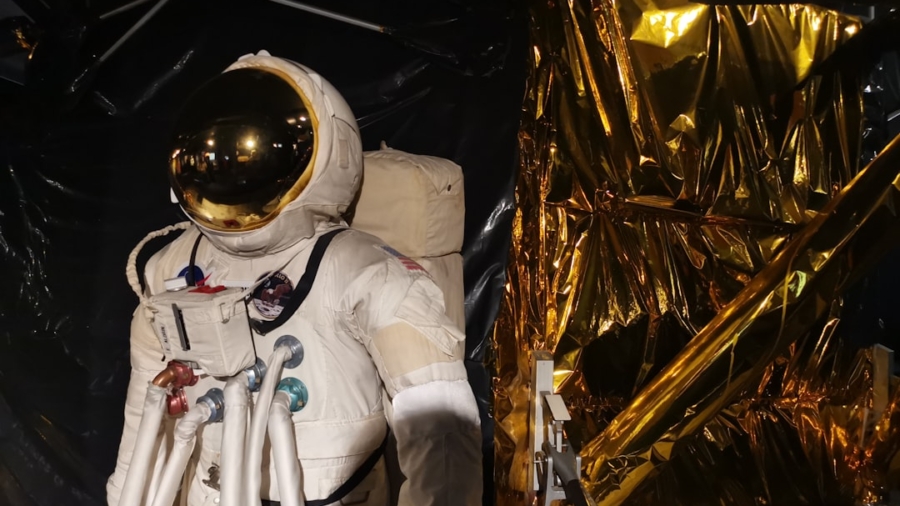
Alright, let’s dive into what goes into building the spacesuits of the future, especially for those truly wild places beyond Earth. The short answer? It’s about designing highly adaptable, robust systems that can handle significantly more extreme conditions than anything we’ve dealt with before, while also offering greater mobility and self-sufficiency for astronauts. We’re talking about suits that are less like stiff, bulky capsules and more like personalized, agile spacecraft for one.
The environments we’re aiming for, like Mars or the icy moons of Jupiter and Saturn, are a whole different ballgame compared to the relatively sheltered world of Earth orbit or even the Moon. They present a gauntlet of challenges that push current spacesuit technology to its absolute limit, and often beyond.
Mars: Dust, Radiation, and Temperature Swings
Mars is the most immediate target for human exploration, and it’s no paradise. Its thin atmosphere offers little protection from the sun’s radiation or micrometeoroids.
- Radiation Exposure: Unlike Earth, Mars lacks a strong magnetic field or a thick atmosphere to deflect cosmic rays and solar particle events. This means astronauts will face a constant barrage of high-energy radiation, increasing cancer risk and potential acute radiation sickness. Future suits need integrated, lightweight radiation shielding that can be effective without making the suit impossibly heavy or inflexible. This isn’t just a material science problem; it’s also a design challenge to ensure shielding covers critical areas without impeding movement.
- Abrasive Dust: Martian dust isn’t just annoying; it’s a major engineering headache. It’s incredibly fine, electrostatically charged, and highly abrasive, like talcum powder mixed with fine glass shards. It gets everywhere, degrades seals, clogs mechanisms, scratches visors, and can even be toxic if inhaled. Suits need active dust mitigation systems, perhaps using electrostatic fields or self-cleaning surfaces, and highly resilient materials for critical components. We also need to think about how dust affects don/doffing procedures and the potential for contamination of habitats.
- Extreme Temperature Variations: While not as dramatic as the Moon’s, Martian temperatures can swing wildly, from around 20°C (68°F) at the equator during summer day to -100°C (-148°F) at the poles during winter. This demands advanced thermal management systems within the suit that can efficiently heat and cool, maintaining a comfortable and safe internal environment for the astronaut. This often involves intricate layering of insulating materials, active heating elements, and efficient heat exchangers.
Icy Moons: Cryogenic Cold and Exotic Atmospheres
Venturing further out to places like Europa or Titan brings even more daunting challenges, pushing the boundaries of material science and life support.
- Cryogenic Temperatures: Imagine temperatures plummeting to -180°C (-292°F) or even -200°C (-328°F). Most common materials become brittle and shatter at these extremes. Suits for these environments will require entirely new classes of materials that retain flexibility and strength at cryogenic temperatures, along with incredibly robust thermal insulation that can handle such massive temperature differentials.
- Exotic Atmospheres: Titan, for example, has a dense atmosphere of nitrogen and methane. While this offers some radiation shielding, it presents unique challenges for seals and material compatibility. The methane could potentially react with certain suit materials or, more acutely, pose a flammability risk for internal suit components if not properly sealed away. It also introduces visibility issues due to suspended aerosols. Suits would need to be leak-tight against different atmospheric compositions and pressures, and materials would need to be chemically inert.
- Low Gravity and Surface Interaction: While generally beneficial for mobility, low gravity can also make surface operations tricky. Suits need to be designed to accommodate different gaits and movement styles, potentially with integrated locomotion assistance or specialized footwear to prevent slips on icy or loose terrain.
In the quest to develop next-generation spacesuits for extreme extraterrestrial environments, it is essential to consider advancements in technology that can enhance human adaptability and safety in space. A related article that explores innovative technology in consumer devices, which may inspire future spacesuit designs, can be found at Huawei Mate 50 Pro. This article discusses the cutting-edge features of the Huawei Mate 50 Pro, showcasing how advancements in materials and technology can influence the design and functionality of spacesuits for harsh conditions on planets like Mars or the Moon.
Key Takeaways
- Clear communication is essential for effective teamwork
- Active listening is crucial for understanding team members’ perspectives
- Setting clear goals and expectations helps to keep the team focused
- Regular feedback and open communication can help address any issues early on
- Celebrating achievements and milestones can boost team morale and motivation
Core Design Principles for Next-Gen Spacesuits
Moving beyond existing suits requires a fundamental shift in how we approach their design and functionality. It’s less about incrementally improving current models and more about rethinking the entire system.
Enhanced Mobility and Dexterity
Current spacesuits, while marvels of engineering, are notoriously bulky and restrictive.
Astronauts expend significant energy just moving within them.
- Flexible Pressure Garments: The goal is to move towards suits that act more like a second skin, maintaining internal pressure without becoming rigid. This involves advanced joint designs, potentially using bellows or rolling convolutes made from new elastomeric materials. Future suits might even incorporate “non-Newtonian” fluids or materials that stiffen on impact to offer protection while remaining flexible for movement.
- Improved Glove Design: Hand dexterity is critical for scientific tasks and equipment manipulation. Engineers are exploring haptic feedback systems, better articulation in the fingers and wrist, and new material combinations that offer protection without compromising fine motor skills. This includes thin, robust outer layers and internal layers that conform to the hand.
- Reduced Donning and Doffing Time: Current suits can take hours to put on and take off. Future designs, especially for surface exploration, might incorporate rear-entry designs that allow astronauts to essentially “walk into” the suit from a habitat airlock, significantly reducing dust contamination and suit-up time. This involves clever seal designs and internal mechanisms to pull the suit closed.
Integrated Life Support and Environmental Control
The backpack-like Portable Life Support System (PLSS) is heavy and cumbersome. Future designs aim for fully integrated, more efficient systems.
- Closed-Loop Systems: To reduce resupply needs, next-gen suits will likely incorporate more advanced closed-loop systems for air and water. This means filtering and recycling exhaled CO2, condensing and purifying exhaled moisture for drinking, and recycling wastewater from cooling systems. This requires miniature, highly efficient scrubbers, condensers, and filters.
- Advanced Thermal Management: Beyond active heating and cooling, suits could incorporate phase-change materials that absorb and release heat, or more sophisticated radiative cooling panels that can adapt to varying temperatures. The goal is to manage the astronaut’s metabolic heat efficiently without relying solely on large heat exchangers or vast water reserves.
- Miniaturized Power and Communications: Power systems need to be lightweight and long-lasting, possibly incorporating flexible solar cells on the suit’s exterior or advanced battery technologies. Integrated communication systems will require robust antennas and redundancy, able to relay data and voice over long distances and through potentially challenging atmospheric conditions.
Advanced Materials and Manufacturing Techniques

The evolution of spacesuits is intrinsically linked to breakthroughs in material science and how we build things.
Old methods won’t cut it for new challenges.
Novel Fabrics and Coatings
Performance gains won’t just come from engineering; they’ll stem from the very atoms of the materials themselves.
- Self-Healing Materials: Imagine a suit that can automatically patch small punctures or tears. Research into self-healing polymers and composites could significantly extend suit lifespan and improve astronaut safety, reducing reliance on manual repairs in challenging environments.
- Smart Textiles: These could integrate sensors directly into the fabric to monitor vital signs, suit integrity, or even environmental parameters. Materials that can change their thermal properties in response to external conditions – becoming more insulating or radiative as needed – are also under investigation.
- Radiation-Shielding Composites: Developing lightweight yet effective radiation shielding is a holy grail.
This includes materials infused with hydrogen (which is good at blocking radiation), as well as layered composites designed to scatter dangerous particles. The challenge is integrating these without compromising flexibility or adding too much bulk.
Additive Manufacturing (3D Printing)
3D printing offers unprecedented design freedom and on-demand fabrication capabilities, which are crucial for space exploration.
- Customization and Perfect Fit: Every astronaut is different. 3D printing allows for tailored suit components, ensuring a perfect, comfortable, and efficient fit for each individual, which is key for mobility and fatigue reduction.
Imagine scanning an astronaut’s body and printing custom-fit gloves or boots on demand.
- On-Demand Repair and Replacement: Instead of carrying vast inventories of spares, astronauts could print replacement parts or tools as needed in a habitat, reducing launch mass and logistic complexity. This could include printing seals, connectors, or even structural components.
- Complex Geometries: 3D printing excels at creating intricate internal structures, such as cooling channels or pneumatic actuators, that would be difficult or impossible with traditional manufacturing methods. This allows for highly integrated, multi-functional components within the suit itself.
Human-Machine Interface and Autonomy

A spacesuit needs to be more than just protective gear; it needs to be an intelligent partner.
Augmented Reality and Data Visualization
Astronauts need quick access to critical information without being distracted from their tasks.
- Integrated Displays: Helmet-mounted displays (HMDs) or visors with augmented reality (AR) capabilities can overlay critical data – suit diagnostics, navigation paths, geological surveys, comms information – directly into the astronaut’s field of view. This minimizes the need to look down at wrist controls or internal displays, keeping attention on the task and environment.
- Haptic Feedback: Vibrations or tactile cues could be used to alert astronauts to system anomalies, proximity warnings, or even guide them through complex procedures, especially in low-visibility conditions or when auditory channels are busy.
AI and Cognitive Assistance
Bringing AI into the suit can offload cognitive burden and enhance safety.
- Intelligent Diagnostics: AI systems could constantly monitor suit health, predict potential failures, and offer troubleshooting steps or even semi-autonomously initiate repairs or workarounds. This takes pressure off the astronaut and ground control.
- Task Guidance and Navigation: AI could provide step-by-step instructions for complex scientific experiments, guide astronauts along optimal traverse routes, or even suggest sampling locations based on live data feeds from orbital assets.
- Adaptive Life Support: AI could dynamically adjust thermal control, oxygen flow, and other life support parameters based on the astronaut’s metabolic rate, activity level, and environmental conditions, optimizing resource use and comfort.
In the quest to create advanced spacesuits capable of withstanding the harsh conditions of extraterrestrial environments, researchers are also exploring innovative technologies that can enhance human performance in extreme situations. A related article discusses the importance of selecting the right tools for leadership roles, emphasizing how technology can play a crucial role in decision-making. For more insights on this topic, you can read about it in the article on how to choose a smartphone for chief executives here. This connection highlights the broader implications of technology in both space exploration and everyday leadership.
Testing and Validation in Analog Environments
| Spacesuit Component | Metrics |
|---|---|
| Mobility | Range of motion in joints (degrees) |
| Life Support System | Duration of oxygen supply (hours) |
| Thermal Control | Temperature regulation range (°C) |
| Material Durability | Resistance to abrasion and puncture (cycles) |
| Communication | Range of signal transmission (meters) |
Before sending humans into the unknown, these next-gen suits need to undergo rigorous, real-world-like testing.
Terrestrial Analog Sites
Earth offers numerous locations that mimic key aspects of extraterrestrial environments.
- Deserts (Mars Analogues): Places like the Mojave Desert, the Atacama, or areas in Utah and Arizona offer dust, rocky terrain, and temperature swings that can simulate Martian surface operations. These are crucial for testing dust mitigation, mobility over rough ground, and human-factors integration.
- Volcanic Fields (Lunar/Mars Analogues): Basaltic plains and lava tubes found in places like Iceland, Hawaii, or the Canary Islands provide excellent analogues for lunar and Martian regolith, as well as opportunities to test cave exploration capabilities.
- Arctic/Antarctic (Icy Moon Analogues): The extreme cold and icy conditions of polar regions are invaluable for testing cryogenic materials, advanced thermal management systems, and specialized locomotion in environments similar to Europa or Enceladus.
Subaquatic Environments (Microgravity Analogues)
While not mimicking surface conditions, underwater testing provides a good proxy for microgravity.
- Neutral Buoyancy Laboratory (NBL): Training in large pools like the NBL allows astronauts to experience reduced weight and practice EVAs (Extravehicular Activities) and suit operations in a somewhat unburdened state. This helps refine suit kinematics, tool handling, and task execution without the full stresses of actual space. It’s also a great way to evaluate alternative suit designs and configurations before committing to expensive space-rated hardware.
Developing the next generation of spacesuits isn’t just about incremental improvements; it’s a fundamental reimagining of what a personal spacecraft can be. It integrates advanced materials, AI, robotics, and entirely new engineering approaches to prepare humans for the truly extreme, isolated, and alien environments that await us beyond Earth. It’s a massive undertaking, but absolutely essential for making humanity a multi-planet species.
FAQs
What are next-generation spacesuits?
Next-generation spacesuits are advanced protective garments designed to enable astronauts to operate in extreme extraterrestrial environments, such as the surface of the moon, Mars, or other celestial bodies. These suits are equipped with advanced technologies to provide life support, mobility, and protection from harsh conditions.
What are the challenges in developing spacesuits for extreme extraterrestrial environments?
Developing spacesuits for extreme extraterrestrial environments presents several challenges, including the need to withstand extreme temperatures, radiation, micrometeoroids, and dust. Additionally, the suits must provide mobility and dexterity for astronauts to perform complex tasks while maintaining life support systems.
What technologies are being incorporated into next-generation spacesuits?
Next-generation spacesuits are incorporating advanced technologies such as advanced materials for enhanced durability and flexibility, regenerative life support systems, improved mobility and dexterity through exoskeletons, and enhanced communication and data transmission capabilities.
How are next-generation spacesuits being tested and validated?
Next-generation spacesuits are being tested and validated through a combination of simulated extraterrestrial environments, such as vacuum chambers and extreme temperature chambers, as well as field tests in analog environments on Earth that mimic the conditions of the moon or Mars.
What are the potential applications of next-generation spacesuits?
Next-generation spacesuits have the potential to enable human exploration and habitation of the moon, Mars, and other celestial bodies, as well as support a wide range of scientific research and commercial activities in space. Additionally, these suits could also be adapted for use in extreme environments on Earth, such as deep-sea exploration or hazardous industrial settings.
Enjoying our content? Make us a preferred source on Google:
Add us as a Preferred Source on Google