

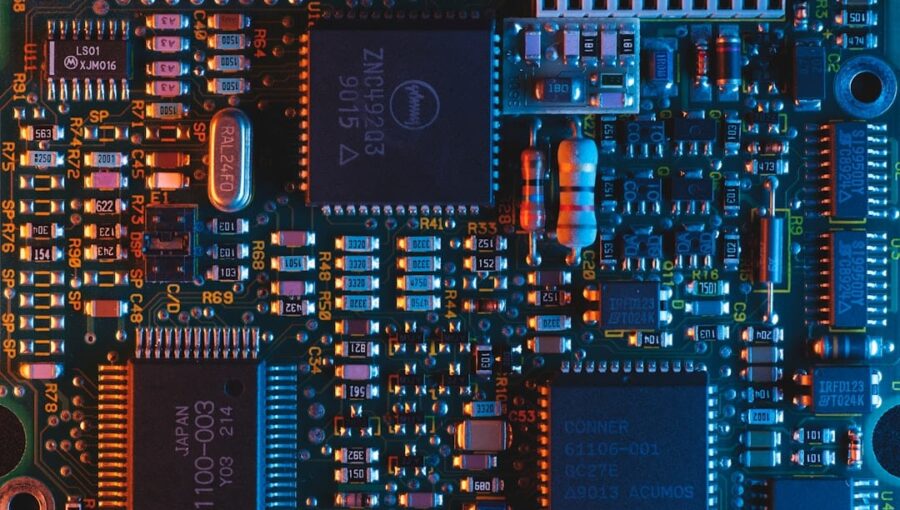
Biodegradable circuit boards made from plant-based polymers are absolutely happening. The core idea is to move away from traditional, largely non-recyclable electronic waste by using materials that can break down naturally at the end of a device’s life. Think about it: instead of your old smartphone components sitting in a landfill for centuries, they could eventually return to the earth. This isn’t just wishful thinking; researchers and companies are actively developing and refining these technologies right now, bringing us closer to truly sustainable electronics.
Let’s be honest, our current electronics system has a big problem: e-waste. Every year, millions of tons of old gadgets, from phones to fridges, end up in landfills. This isn’t just an eyesore; it’s a huge environmental and health concern.
The E-Waste Epidemic
The sheer volume of electronic waste is staggering. When these devices are simply thrown away, they release toxic chemicals like lead, mercury, and cadmium into the soil and groundwater. These substances can then enter our food chain and environment, causing serious health issues for both humans and wildlife. Traditional circuit boards, made primarily from fiberglass (FR-4) and various plastics, aren’t designed to degrade. They’ll stick around for an incredibly long time, acting as miniature time capsules of pollution.
Resource Depletion and Energy Consumption
It’s not just about what happens after we’re done with our electronics; it’s also about what goes into making them. Manufacturing traditional circuit boards requires significant amounts of raw materials, many of which are finite. Think about the mining of rare earth elements and other metals, which often comes with its own set of environmental and ethical challenges. The energy consumed in these manufacturing processes also adds to our carbon footprint. Biodegradable alternatives, especially those derived from plants, offer a pathway to reduce reliance on these finite resources and potentially lower the energy intensity of production.
The Limitations of Current Recycling
While electronics recycling programs exist, they’re far from a perfect solution. The process is often complex, expensive, and not always efficient at recovering all valuable materials. Many components are difficult to separate, and the economics don’t always favor complete recovery, especially for lower-value plastics. Moreover, the environmental impact of transporting and processing e-waste globally can also be significant. Biodegradable options don’t eliminate the need for recycling entirely, but they offer an “end-of-life” solution that’s inherently more environmentally friendly than current methods. They provide a graceful exit strategy for components that are too difficult or uneconomical to recycle.
In the quest for sustainable technology, the development of biodegradable circuit boards from plant-based polymers presents a promising solution to electronic waste. This innovative approach aligns with the growing demand for eco-friendly materials in the tech industry. For further insights into how technology can enhance our lives while promoting sustainability, you can explore this related article on health management devices at What is the Best Android Health Management Watches?.
Key Takeaways
- Clear communication is essential for effective teamwork
- Active listening is crucial for understanding team members’ perspectives
- Setting clear goals and expectations helps to keep the team focused
- Regular feedback and open communication can help address any issues early on
- Celebrating achievements and milestones can boost team morale and motivation
The Building Blocks: Plant-Based Polymers
So, what exactly are these “plant-based polymers” we’re talking about? Essentially, they’re plastics (or plastic-like materials) derived from renewable biomass sources, rather than fossil fuels. They are the backbone of biodegradable circuit boards, replacing the conventional fiberglass and epoxy resins.
Polylactic Acid (PLA)
You might have heard of PLA. It’s a popular biodegradable polymer, often used in things like compostable packaging and 3D printing filaments. It’s derived from renewable resources like corn starch or sugarcane. For circuit boards, PLA offers good mechanical strength and can be processed into thin films. While its heat resistance is a bit lower than traditional FR-4, innovations are improving this. Its availability and relatively low cost make it an attractive candidate.
Cellulose-Based Materials
Cellulose is another star player. It’s the most abundant organic polymer on Earth, found in the cell walls of plants. Think wood pulp or cotton. Cellulose can be processed into various forms, including paper-like substrates or even regenerated cellulose films. These materials can be surprisingly durable and offer excellent dielectric properties, meaning they’re good electrical insulators, which is crucial for circuit boards. Researchers are exploring ways to enhance their rigidity and moisture resistance.
Starch and Lignin-Based Polymers
Beyond PLA and cellulose, other plant-based polymers are also being investigated. Starch, another abundant natural polymer, can be modified to create biodegradable plastics. Lignin, a complex polymer found in plant cell walls (it’s what makes wood stiff), is a vast untapped resource from the pulp and paper industry. Researchers are developing ways to integrate lignin into polymer matrices, potentially adding strength and even fire resistance to sustainable circuit board materials. These materials offer diverse properties that can be tweaked to meet specific electronic requirements.
Challenges in Development

Making a circuit board isn’t just about finding a new base material; it’s an intricate dance of functionality, durability, and manufacturability. Shifting to biodegradable alternatives introduces a whole new set of technical hurdles.
Thermal Stability and Mechanical Strength
Traditional FR-4 circuit boards are incredibly robust. They can withstand high temperatures during soldering processes (over 200°C) and the mechanical stresses of device assembly and daily use.
Many plant-based polymers, in their raw form, don’t initially match this performance. They can soften at lower temperatures or lack the rigidity needed to support components without flexing. Researchers are working on improving these properties through chemical modifications, reinforcement with natural fibers, or blending different polymers.
The goal is to achieve a balance between biodegradability and the necessary operational ruggedness.
Dielectric Properties and Moisture Resistance
For a circuit board to function correctly, the substrate needs to be an excellent electrical insulator. It shouldn’t conduct electricity where it’s not supposed to, especially at high frequencies, and it needs to maintain these properties consistently. Many natural polymers can be more susceptible to moisture absorption than traditional epoxy resins.
Water can reduce insulation resistance and even lead to short circuits. Developing biodegradable materials that offer stable dielectric properties and sufficient moisture resistance without compromising biodegradability is a significant R&D focus. This might involve surface treatments or incorporating hydrophobic additives.
Manufacturing Compatibility and Cost
Switching to new materials means potentially re-tooling manufacturing lines. Current circuit board fabrication relies on established processes like etching and plating on FR-4. New biodegradable substrates need to be compatible with these processes, or new, equally efficient methods need to be developed. This includes ensuring good adhesion for metallic traces, stable drilling without delamination, and compatibility with standard assembly techniques.
Furthermore, the cost of these new materials and processes needs to be competitive or offer clear long-term environmental and societal benefits to justify a higher initial investment. Scaling up production of these novel materials is key to bringing down costs.
Advancements and Promising Solutions

Despite the challenges, significant progress is being made. It’s not just theoretical anymore; labs and even some companies are showing tangible results.
Natural Fiber Reinforcement
Just like fiberglass strengthens epoxy in FR-4, natural fibers can reinforce plant-based polymers. Fibers like bamboo, flax, cotton, or even wood pulp can be incorporated into polymer matrices to significantly boost mechanical strength, rigidity, and even thermal resistance. These composites can mimic the properties of traditional boards more closely while retaining biodegradability. The choice of fiber and its integration method are crucial for optimizing the final material properties.
Hybrid Approaches and Multi-Layer Designs
Sometimes, a single material isn’t enough. Researchers are exploring hybrid designs where layers of different biodegradable materials are carefully combined. For instance, a cellulose-based core might be sandwiched between thin layers of a more heat-resistant bioplastic. This allows engineers to leverage the best properties of each material while mitigating their individual weaknesses. These multi-layer structures can provide superior overall performance, enabling more complex circuits.
Conductive Inks and Bio-Metals
A circuit board isn’t just a substrate; it’s also the conductive traces that carry electricity. While traditional boards use copper, biodegradable alternatives are exploring new approaches. Conductive inks, often based on silver or carbon nanoparticles, can be printed directly onto biodegradable substrates at lower temperatures, reducing thermal stress on the polymer. Beyond these, research is even looking into “bio-metals” – metals that can be recovered or processed more sustainably, or even composites that incorporate biodegradable binders for the conductive traces. The entire stack-up, from substrate to conductor, is being re-evaluated for sustainability.
In the quest for sustainable technology, researchers are increasingly focusing on innovative materials, such as plant-based polymers, to create biodegradable circuit boards. This shift not only addresses the growing electronic waste problem but also aligns with broader environmental goals. A related article discusses the latest trends in technology and sustainability, highlighting how these advancements are being embraced across various industries. For more insights on the intersection of technology and sustainability, you can read about the top trends on YouTube in 2023 by following this link.
The Future of Sustainable Electronics
| Metrics | Results |
|---|---|
| Biodegradability | High |
| Material Cost | Low |
| Performance | Comparable to traditional circuit boards |
| Environmental Impact | Reduced |
Where do we go from here? The development of biodegradable circuit boards isn’t an isolated effort; it’s part of a much larger shift towards a circular economy in electronics.
Disposable and Short-Life Electronics
One immediate application for biodegradable circuit boards could be in disposable or short-life electronics. Think about medical sensors meant for a single use, smart packaging that monitors freshness, or even consumer electronics designed for a short lifecycle (e.g., promotional items). For these products, the longevity of traditional circuit boards is simply overkill, and their biodegradability at the end of life becomes a huge advantage, simplifying waste management. This also opens up possibilities for new product categories where disposability is a feature, not a drawback.
Integration with Modular and Repairable Designs
Biodegradable circuit boards don’t necessarily mean “throwaway” electronics. In fact, they could integrate beautifully with the growing movement towards modular and repairable designs. Imagine a phone where individual components – if they fail – could be easily replaced with biodegradable versions. Or, at the product’s end-of-life, components that are still functional could be easily separated and reused, while the biodegradable elements naturally decompose. This creates a tiered approach to sustainability, maximizing resource efficiency.
Policy, Industry, and Consumer Adoption
The widespread adoption of biodegradable circuit boards will require more than just technological breakthroughs. It needs supportive policies from governments (e.g., incentives for sustainable manufacturing, regulations on e-waste), a commitment from major electronics manufacturers, and consumer awareness and demand.
As consumers become more environmentally conscious, their preference for greener products will put pressure on the industry to innovate.
Education about the benefits and feasibility of these technologies will be crucial to drive change at all levels, fostering a market where sustainable electronics are not just a niche, but the norm.
FAQs
What are plant-based polymers?
Plant-based polymers are polymers that are derived from renewable plant sources such as corn, sugarcane, or cellulose. These polymers are considered more sustainable and environmentally friendly compared to traditional petroleum-based polymers.
How are biodegradable circuit boards made from plant-based polymers?
Biodegradable circuit boards made from plant-based polymers are created by using these renewable materials as the base for the circuit board substrate. The plant-based polymers are processed and formed into the required shape and then used as the foundation for the electronic components of the circuit board.
What are the benefits of using plant-based polymers for circuit boards?
Using plant-based polymers for circuit boards offers several benefits, including reduced environmental impact, biodegradability, and a decreased reliance on non-renewable resources. Additionally, these materials can be composted at the end of their life cycle, reducing electronic waste.
Are plant-based polymer circuit boards as durable as traditional circuit boards?
While plant-based polymer circuit boards may not be as durable as traditional circuit boards made from synthetic materials, ongoing research and development are focused on improving the strength and resilience of these biodegradable alternatives.
What are the potential applications for biodegradable circuit boards made from plant-based polymers?
Biodegradable circuit boards made from plant-based polymers have the potential to be used in a variety of electronic devices, including consumer electronics, medical devices, and other applications where sustainability and environmental impact are important considerations.
Enjoying our content? Make us a preferred source on Google:
Add us as a Preferred Source on Google