

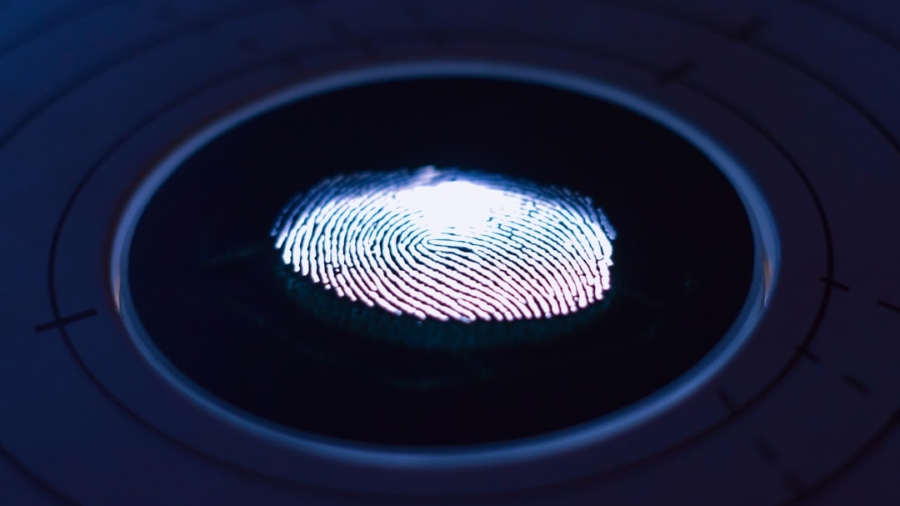
You’re probably wondering how companies and individuals can protect sensitive biometric data – like your fingerprints, face scans, and voiceprints – without making you feel like you’re constantly being watched or tracked. It’s a big concern, especially with how much we rely on these unique identifiers now. The good news is, it’s definitely possible by focusing on smart design, rigorous security practices, and giving users more control, rather than just piling on more surveillance.
Biometric data is different from your password or credit card number. You can’t easily “reset” your fingerprint if it’s compromised. Unlike a lost key, a stolen biometric identifier is gone for good. This inherent permanence makes its protection absolutely crucial.
Why Biometrics Are So Appealing (and Risky)
- Convenience: Unlocking your phone with a glance or a thumbprint is undeniably quick.
- Security (in theory): The idea is that only your unique features can grant access.
- Ubiquity: We’re seeing biometric authentication pop up everywhere, from your smartphone to your gym membership card.
The “Can’t Change It” Problem
This is the core issue. Imagine your social security number being leaked. It’s bad, but you can get a new one. Imagine your face or fingerprint being leaked. You can’t get a new face or a new set of fingerprints. This makes the stakes incredibly high when it comes to protecting biometric information.
Beyond the Obvious: What Else is Included?
It’s not just your fingerprint or face. Biometric data can encompass a surprisingly broad range of unique biological and behavioral characteristics, including:
- Iris patterns: The unique structure of your eye’s iris.
- Voiceprints: The distinct patterns of your speech.
- Gait analysis: The way you walk.
- Keystroke dynamics: The rhythm and force with which you type.
- DNA: Though less common for authentication purposes, it’s undeniably biometric.
In the ongoing discussion about privacy and security, a related article that explores the intersection of technology and user experience can be found at Which Smartwatches Allow You to View Pictures on Them?. This article highlights how smartwatches, while enhancing user convenience, also raise concerns regarding biometric data security and user anonymity. As we navigate the balance between functionality and privacy, understanding the capabilities of wearable technology becomes increasingly important in the context of defending against biometric data theft.
Key Takeaways
- Clear communication is essential for effective teamwork
- Active listening is crucial for understanding team members’ perspectives
- Setting clear goals and expectations helps to keep the team focused
- Regular feedback and open communication can help address any issues early on
- Celebrating achievements and milestones can boost team morale and motivation
Shifting the Focus: From Collection to Secure Storage and Processing
The primary goal should be to minimize the risk associated with handling biometric data in the first place. This means thinking critically about why you need it and how you’re going to keep it safe.
Less is More: Minimizing Data Collection
- Purpose Limitation: Only collect biometric data when it’s absolutely necessary for a specific, defined purpose. Don’t collect it “just in case.”
- Just-in-Time Processing: Process biometric data only when it’s needed for an authentication event, rather than storing raw templates indefinitely.
- Anonymization and Pseudonymization: Where possible, anonymize or pseudonymize data so that it cannot be directly linked to an individual. This is tricky with biometrics, but the principle applies to associated metadata.
On-Device Processing: Keeping it Local
This is a major game-changer for user anonymity and data security. Instead of sending your sensitive biometric data to a company’s servers, it’s processed right on your device.
Secure Enclaves and Trusted Execution Environments (TEEs)
- What they are: These are dedicated, isolated hardware components within your device (like your smartphone). Think of them as a secure vault within your phone.
- How they work: Your biometric data (e.g., the fingerprint template) is stored and matched within this secure enclave. The raw data never leaves it, and even the operating system on your phone can’t access it directly.
- The benefit: If your device is compromised, the biometric data within the TEE remains protected, significantly reducing the risk of theft. Apple’s Secure Enclave and Android’s Trusted Execution Environment are prime examples of this technology in action.
Template Generation and Storage Locally
- The process: When you first register your fingerprint or face, the device captures the raw image. This raw data is then converted into a mathematical representation, a “template.” This template is a mathematical abstraction, not a direct copy of your fingerprint.
- Where it lives: This template is then stored only within the secure enclave on your device. It’s never transmitted to the cloud for storage.
- The verification step: When you attempt to authenticate, a new scan is taken, converted into a template, and this new template is compared to the stored template within the secure enclave. Only a match confirmation is sent out, not the template itself.
The Risk of Centralized Databases
Storing large amounts of biometric data in one central location is a dream target for hackers. The potential fallout from a breach is immense, involving millions of individuals.
The “All Eggs in One Basket” Problem
- High-value target: A centralized database of biometric data is like a super-vault for cybercriminals. If breached, the consequences are catastrophic.
- Scale of impact: Unlike a password leak where individuals can change passwords, a biometric leak means the compromised data is compromised forever for everyone.
Federated Learning for Training Models
- What it is: Instead of sending all your device’s data to a central server for model training, federated learning allows models to be trained on decentralized data residing on users’ devices.
- How it helps anonymity: Only model updates, not raw data, are sent back to the central server. This drastically reduces the amount of personal data that needs to be collected and transmitted, enhancing user privacy. The model learns from the collective, but your individual data stays put.
Anonymizing While Authenticating: The Illusion of Privacy

Achieving true anonymity while using biometrics for authentication is inherently challenging. The goal is less about making the data itself anonymous and more about ensuring that the act of authentication doesn’t reveal more than it needs to.
Zero-Knowledge Proofs: The Secret Handshake
This is a more advanced cryptographic concept, but it’s powerful for privacy.
How Zero-Knowledge Proofs Work (in a Nutshell)
- The premise: One party (the prover) can prove to another party (the verifier) that they know a piece of information (e.g., a secret value) without revealing any information about that secret itself, beyond the fact that they know it.
- Applying to biometrics: Imagine proving you have a valid fingerprint to unlock a service without the service ever seeing or storing your actual fingerprint data. This could be achieved through complex cryptographic protocols where your device generates a proof of authentication that can be verified without revealing the underlying biometric template.
- The ideal scenario: This would allow for highly secure authentication where the server only knows “yes, this user is authenticated” and nothing more about their biometric identity.
It’s still a developing area for practical biometric applications, but the potential is significant.
Differential Privacy: Adding Noise to the Data
This is about making it difficult to identify an individual even if they have access to aggregated data.
The Concept of Adding “Noise”
- Purpose: To allow the analysis of aggregate data without revealing information about any single individual.
- How it might apply: In scenarios where aggregated biometric data might be used for analytics (a risky proposition itself), differential privacy techniques could be applied to add carefully calibrated “noise” to the data. This noise makes it statistically impossible to infer whether a specific individual’s data was included in the aggregate.
- Limitations for direct authentication: This is less directly applicable to the real-time authentication process itself but more to the analysis of collected data.
Tokenization: Replacing Sensitive Data with Proxies
Instead of directly using or storing biometric templates, tokenization replaces them with a surrogate value.
What is Tokenization?
- The concept: A token is a random or pseudorandom string that serves as a substitute for sensitive data.
- In biometrics: When you enroll your biometric, your device might generate a token that represents your biometric identity. This token is then stored by the service.
When you authenticate, your device generates a new token based on your biometric and presents it to the service for verification. The service verifies the token, not the biometric data itself.
- Key advantage: The token is useless if stolen on its own, and it doesn’t reveal any information about your actual biometric features. This is a strong method for decoupling the authentication process from the raw sensitive data.
User Control and Transparency: Empowering Individuals

Ultimately, true security and privacy require that users are informed and have agency over their data.
Clear Consent and Granular Permissions
- No hidden collection: Users must be explicitly informed when their biometric data is being collected, how it will be used, and with whom it might be shared.
- Opt-in, not opt-out: For many applications, biometric collection should be an opt-in feature, not something that’s automatically enabled.
- Revoking access: Users must have an easy and straightforward way to revoke access to their biometric data at any time.
Transparency About Data Handling
- “How it works” explanations: Companies should provide clear, understandable explanations of their biometric data handling practices. This goes beyond a dense privacy policy.
- Data lifecycle clarity: Users should know how long their data is retained and what happens to it when their account is closed.
Education and Awareness Campaigns
- Understanding the risks: Many users are unaware of the implications of biometric data compromise. Educating them about the permanence and potential misuse of this data is crucial.
- Best practices: Empowering users with knowledge about how to protect their devices and be mindful of where they grant biometric access can go a long way.
In the ongoing discussion about protecting sensitive information, a related article explores innovative strategies for safeguarding user data in the digital age. This piece delves into the implications of biometric data theft and emphasizes the importance of maintaining user anonymity while implementing robust security measures.
For those interested in further understanding these concepts, you can read more about effective data protection strategies in the article found at
5G Innovations (13) Wireless Communication Trends (13) Article (343) Augmented Reality & Virtual Reality (896)
- Metaverse (263)
- Virtual Workplaces (35)
- VR & AR Games (34)
Cybersecurity & Tech Ethics (805)
- Cyber Threats & Solutions (3)
- Ethics in AI (33)
- Privacy Protection (32)
Drones, Robotics & Automation (486)
- Automation in Industry (33)
- Consumer Drones (33)
- Industrial Robotics (33)
EdTech & Educational Innovations (344)
- EdTech Tools (18)
- Online Learning Platforms (4)
- Virtual Classrooms (34)
Emerging Technologies (1,981) FinTech & Digital Finance (448) Frontpage Article (1) Gaming & Interactive Entertainment (382) Health & Biotech Innovations (711)
- AI in Healthcare (3)
- Biotech Trends (4)
- Wearable Health Devices (506)
News (97) Reviews (129) Smart Home & IoT (446)
- Connected Devices (3)
- Home Automation (4)
- Robotics for Home (33)
- SmartPhone (48)
Space & Aerospace Technologies (344)
- Aerospace Innovations (4)
- Commercial Spaceflight (3)
- Space Exploration (62)
Sustainable Technology (780) Tech Careers & Jobs (339) Tech Guides & Tutorials (1,141)
- DIY Tech Projects (3)
- Getting Started with Tech (60)
- Laptop & PC (58)
- Productivity & Everyday Tech Tips (324)
- Social Media (64)
- Software (321)
- Software How-to (3)
Uncategorized (146)