


Blockchain bridges, while crucial for early cross-chain interactions, have unfortunately become notorious for their vulnerabilities, leading to significant asset losses. The path forward for robust cross-chain interoperability lies in more sophisticated protocols that move beyond the inherent risks of current bridge designs, focusing on secure, decentralized liquidity solutions that don’t centralize trust or create single points of failure. These next-generation protocols aim to solve liquidity fragmentation by enabling seamless asset transfers and communication across disparate blockchain networks without relying on the same vulnerable mechanisms that have plagued traditional bridges.
The Core Problem: Liquidity Fragmentation and Bridge Vulnerabilities
At its heart, the blockchain ecosystem suffers from liquidity fragmentation. Each blockchain operates as its own sovereign island, meaning assets on one chain can’t natively be used on another. This limits capital efficiency and hinders the growth of decentralized applications (dApps) that could benefit from a wider pool of users and resources.
Why Existing Bridges Fall Short
The initial answer to this problem was the creation of blockchain bridges. These tools allow assets to be “locked” on one chain and “minted” as wrapped versions on another, or facilitate direct transfers through relayers. While effective in theory, their practical implementation has often introduced significant security risks.
Centralized Trust and Custodial Risks
Many bridges rely on centralized or semi-centralized validators and multi-signature schemes to secure locked assets. This creates a honeypot scenario: if these custodians are compromised, all assets held by the bridge are at risk. The more valuable the assets, the greater the incentive for attackers.
Technical Complexity and Attack Vectors
The intricate logic of bridge contracts, combined with the need to handle state transitions across different chains, creates a large attack surface. Bugs in smart contracts, compromised oracles, or exploited validator networks can all lead to catastrophic losses. We’ve seen numerous examples, from the Ronin Bridge to the Wormhole exploit, illustrating these systemic weaknesses.
Lack of True Interoperability
Beyond security, many bridges offer only asset transfer functionality. True interoperability encompasses not just moving tokens, but also enabling dApps on one chain to interact with smart contracts or data on another. Traditional bridges often fall short in providing this deeper level of cross-chain communication.
In the realm of blockchain technology, the discussion around Cross-Chain Interoperability Protocols is gaining momentum as a solution to liquidity fragmentation, particularly in light of the vulnerabilities associated with traditional bridges. For those interested in exploring how technology can enhance everyday life, a related article on choosing the right tablet for your child can provide valuable insights into selecting devices that foster learning and creativity. You can read more about this topic in the article here: How to Choose Your Child’s First Tablet.
Key Takeaways
- The training data includes information and events up to October 2023.
- Insights and knowledge are based on a wide range of sources available until the cutoff date.
- No updates or developments occurring after October 2023 are included in the training.
- Users should verify current information from reliable sources for the latest updates.
- The model’s responses reflect the context and knowledge available up to the specified date.
Next-Generation Approaches: Beyond Wrapped Assets
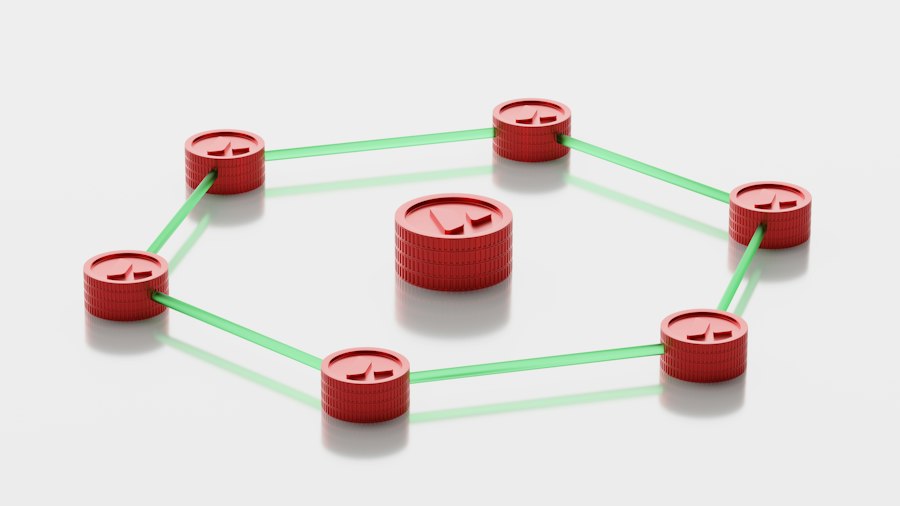
To truly solve liquidity fragmentation and move past the vulnerabilities of early bridges, a new paradigm is emerging. These advanced protocols focus on creating native cross-chain interactions without the need for wrapped assets or centralized custody, fostering more secure and efficient capital flows.
Atomic Swaps and Direct Exchange Protocols
One foundational approach is the use of atomic swaps. These allow two parties to exchange cryptocurrencies from different blockchains directly, without a trusted third party. The transaction is either fully completed or fully reversed, ensuring neither party is unfairly disadvantaged.
Hash Time-Locked Contracts (HTLCs)
HTLCs are a common mechanism for atomic swaps. They use cryptographic hashes and time locks to ensure that if one party broadcasts a payment, the other party has a limited time to do the same before the first payment is refunded. This creates a trustless escrow system for the exchange. While effective for simple token swaps, HTLCs can be complex to scale for generalized messaging or high-frequency trading across many different chains.
Decentralized Exchange (DEX) Aggregators and Order Books
Some protocols are building cross-chain DEXs that aggregate liquidity from various chains. Rather than bridging assets, they facilitate trades by matching orders across different networks. This can involve complex routing algorithms and relies on efficient communication between chain-specific liquidity pools. The key here is not moving the assets themselves, but facilitating the exchange of them.
Cross-Chain Messaging Protocols
Beyond asset transfer, true interoperability requires the ability for smart contracts on one chain to send messages and trigger actions on another. These protocols focus on secure, generalized message passing.
Light Client Verification
Some protocols use light clients to verify the state of other chains. A light client only downloads a small portion of a blockchain’s data, typically block headers, to verify transactions without needing to download the entire chain. This is a resource-efficient way for one chain to cryptographically verify events on another, reducing reliance on external validators or oracles.
Relayer Networks and State Proofs
Relayer networks are used to transport messages between chains. However, instead of simply forwarding messages, they often accompany these messages with cryptographic proofs of their validity, generated from the source chain’s state. The destination chain can then verify these proofs using its own light client or a dedicated smart contract, ensuring the message’s authenticity and integrity. This significantly reduces the trust placed in the relayers themselves.
Interoperability Hubs and Network of Networks

Another compelling direction involves dedicated interoperability hubs or “network of networks” architectures. Instead of every chain building direct bridges to every other chain (an n-squared problem), chains connect to a central hub that facilitates communication and asset transfers.
Cosmos Inter-Blockchain Communication Protocol (IBC)
IBC is a prime example of an interoperability hub. It’s a protocol that allows sovereign blockchains (called “zones” in the Cosmos ecosystem) to securely exchange data and tokens.
Each zone maintains its own light client of other zones it wishes to connect with, enabling cryptographic proof of state transitions.
Trustless Asset Transfers
With IBC, assets are not wrapped or custodied by a central bridge. Instead, when tokens are sent from Chain A to Chain B, they are locked on Chain A, and a corresponding amount is minted on Chain B. The reverse process (burning on Chain B and unlocking on Chain A) ensures a 1:1 backing.
This process relies on light client verification and message passing, not a central custodian.
Generalized Message Passing
IBC extends beyond just asset transfers. It provides a framework for generalized message passing, meaning dApps on different Cosmos zones can interact and compose services, creating a more interconnected and composable ecosystem. This allows for complex cross-chain applications without the need for bespoke bridge implementations for each use case.
Polkadot’s Parachains and Cross-Chain Message Passing (XCMP)
Polkadot takes a similar “network of networks” approach, but with a different architecture.
It consists of a central “Relay Chain” that provides shared security and consensus for connected parallel blockchains called “parachains.”
Shared Security Model
Parachains derive their security directly from the Relay Chain, meaning they don’t need to establish their own validator sets. This significantly reduces the overhead and potential attack surface for individual chains.
Cross-Chain Message Passing (XCMP)
XCMP is the protocol that enables communication between parachains, and between parachains and the Relay Chain. It allows for arbitrary message passing, including asset transfers, smart contract calls, and data sharing.
Like IBC, it focuses on verifiable state transitions rather than central custody. Messages are typically routed through the Relay Chain, which verifies their authenticity and ensures delivery to the target parachain.
Zero-Knowledge Proofs for Enhanced Security
Zero-knowledge proofs (ZKPs) are rapidly emerging as a transformative technology for cross-chain interoperability, offering a way to verify information without revealing the underlying data, thus enhancing both privacy and security.
Verifying State Without Revealing Details
In the context of cross-chain communication, ZKPs can be used to prove that a certain event or transaction occurred on one chain without needing to reveal the entire block header or transaction details to the destination chain.
ZK-Bridges and Trustless Verification
A “ZK-bridge” would use ZKPs to generate cryptographic proofs of asset lock-ups or state changes on the source chain. These proofs, much smaller than full block headers, can then be efficiently verified by a smart contract on the destination chain. This significantly reduces the amount of data that needs to be transmitted and processed, while maintaining a high level of cryptographic security.
Reduced Data Load and Cost
By minimizing the data needed for verification, ZKPs can lead to lower transaction costs and faster verification times for cross-chain interactions. This is particularly beneficial for resource-constrained chains or those with high transaction fees.
Preventing Replay Attacks and Invalid State Transitions
ZKPs can be designed to prove the validity of a state transition, ensuring that a bridge operator or relayer hasn’t tampered with the message or attempted a replay attack. The proof inherently demonstrates that the state change is legitimate and adheres to the rules of the source chain.
Limitations and Future Developments
While promising, ZKP-based solutions are still in active development. Generating ZKPs can be computationally intensive, and integrating them into existing blockchain architectures requires significant engineering effort. However, as ZKP technology matures and hardware acceleration improves, we can expect to see them play an increasingly vital role in securing and scaling cross-chain interoperability.
Cross-Chain Interoperability Protocols are becoming increasingly vital in addressing the challenges of liquidity fragmentation in the blockchain ecosystem. As these protocols evolve, they offer innovative solutions that go beyond the limitations of traditional bridges, which often present vulnerabilities. For those interested in exploring the broader implications of technology on business, a related article discusses the best software for small businesses in 2023, highlighting tools that can enhance operational efficiency.
You can read more about it
5G Innovations (13) Wireless Communication Trends (13) Article (343) Augmented Reality & Virtual Reality (946)
- Metaverse (288)
- Virtual Workplaces (35)
- VR & AR Games (34)
Cybersecurity & Tech Ethics (831)
- Cyber Threats & Solutions (3)
- Ethics in AI (33)
- Privacy Protection (32)
Drones, Robotics & Automation (511)
- Automation in Industry (33)
- Consumer Drones (33)
- Industrial Robotics (33)
EdTech & Educational Innovations (369)
- EdTech Tools (18)
- Online Learning Platforms (4)
- Virtual Classrooms (34)
Emerging Technologies (2,107) FinTech & Digital Finance (473) Frontpage Article (1) Gaming & Interactive Entertainment (407) Health & Biotech Innovations (760)
- AI in Healthcare (3)
- Biotech Trends (4)
- Wearable Health Devices (531)
News (97) Reviews (129) Smart Home & IoT (471)
- Connected Devices (3)
- Home Automation (4)
- Robotics for Home (33)
- SmartPhone (48)
Space & Aerospace Technologies (369)
- Aerospace Innovations (4)
- Commercial Spaceflight (3)
- Space Exploration (62)
Sustainable Technology (830) Tech Careers & Jobs (364) Tech Guides & Tutorials (1,217)
- DIY Tech Projects (3)
- Getting Started with Tech (60)
- Laptop & PC (58)
- Productivity & Everyday Tech Tips (349)
- Social Media (64)
- Software (347)
- Software How-to (3)
Uncategorized (146)