

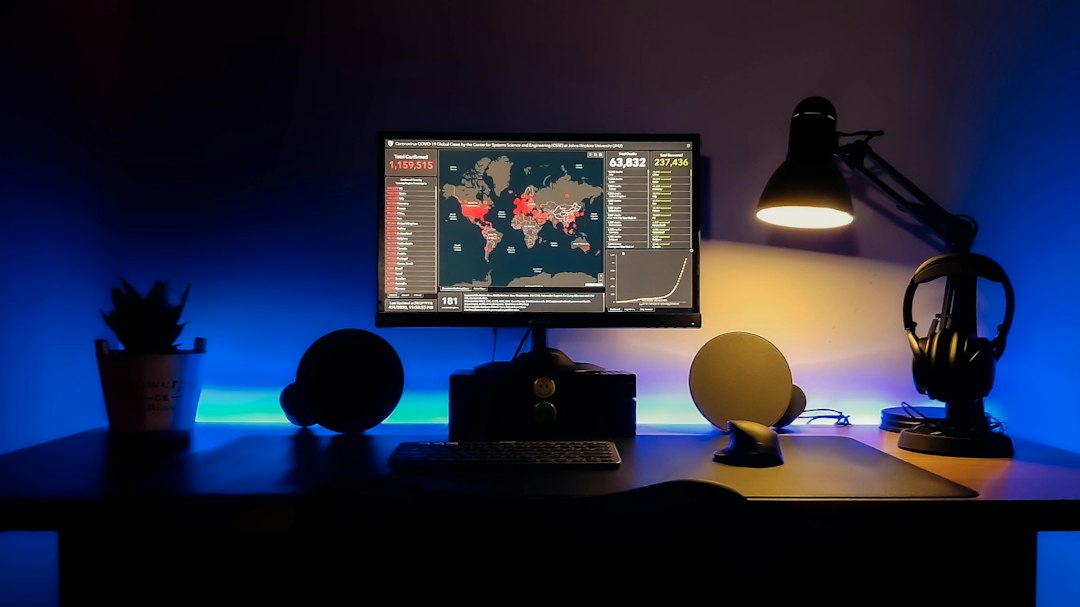
Ever wonder if your lights could just know what you need? Like dimming for a movie without you fumbling for a switch, or brightening as the sun sets to keep your focus sharp? That’s the core idea behind context-aware ambient lighting, and by mixing computer vision with good old lux tracking, we’re getting remarkably close to lights that truly understand your environment and your activity. It’s about moving beyond simple on/off or dimming to creating an optimal visual experience automatically, based on real-time data from the world around you.
Understanding the “Why” Behind Smart Lighting
Before diving into the tech, let’s nail down why this kind of intelligent lighting is so valuable. We spend a significant portion of our lives indoors, often under artificial light that might not always be ideal. Traditional lighting setups, even those with dimmers, require manual adjustment, which can be inconvenient or simply forgotten. The goal of context-aware ambient lighting isn’t just automation; it’s optimization for human well-being, productivity, and energy efficiency.
Human-Centric Benefits
Think about your daily routine. In the morning, you might need brighter, cooler light to help you wake up and focus. By afternoon, a slightly warmer, more moderate light can reduce eye strain. As evening approaches, a much warmer, dimmer light helps signal to your body that it’s time to wind down, supporting natural circadian rhythms. Static lighting often misses these nuances, potentially contributing to fatigue, reduced productivity, or even sleep disturbances. A system that adapts to the time of day, your activity, and the natural light available ensures you always have the most beneficial lighting environment without needing to think about it.
Energy Efficiency and Sustainability
It’s easy to leave lights on longer than necessary or at a brighter level than required. A context-aware system, by continuously monitoring ambient light levels (lux tracking) and understanding occupancy or activity (computer vision), can significantly reduce energy consumption. If there’s ample natural light, the system can dim or turn off artificial lights. If a room is empty, lights can be switched off automatically. This intelligent control minimizes waste, lowers electricity bills, and contributes to a more sustainable footprint. It’s a pragmatic approach to energy conservation that doesn’t sacrifice comfort or utility.
In the realm of innovative technology, the integration of context-aware systems has gained significant attention, particularly in the development of ambient lighting solutions that utilize computer vision and lux tracking. A related article that delves into the intricacies of advanced software applications is available at Uncovering the Best Order Flow Trading Software: In-Depth Reviews and Analysis. This article explores the intersection of technology and user experience, highlighting how software can adapt to various contexts, much like ambient lighting systems that respond to environmental changes.
Key Takeaways
- The training data includes information and events up to October 2023.
- Insights and knowledge are based on a wide range of sources available until the cutoff date.
- No updates or developments occurring after October 2023 are included in the training.
- Users should verify current information from reliable sources for the latest updates.
- The model’s responses reflect the context and knowledge available up to the specified date.
The Role of Lux Tracking: Measuring Light Quantitatively
Lux tracking is the bedrock of any truly adaptive lighting system. It provides the objective, quantitative data about the amount of light present in a given space. Without knowing how bright a room actually is, any lighting adjustment would be guesswork.
How Lux Sensors Work
Lux sensors, often integrated into smart devices, dedicated light meters, or even some security cameras, measure illuminance – the total amount of light that falls on a surface. They typically use a photodiode or phototransistor that generates a current proportional to the intensity of the light hitting it. This current is then converted into a lux reading, a standardized unit that allows for consistent measurement.
Calibrating for Optimal Illuminance
The “right” amount of light isn’t a fixed number; it depends on the task and the individual. However, there are general guidelines. For instance, office spaces might aim for 300-500 lux for general work, while a more intricate task like drafting could benefit from 750-1000 lux. Lounging areas might be perfectly comfortable at 100-200 lux. A context-aware system uses these target ranges, comparing them to the real-time lux readings. If the ambient light (natural + artificial) falls below the target for a given activity, the system can incrementally increase artificial lighting. Conversely, if it’s too bright, lights can be dimmed.
Responding to Natural Light Changes
This is where lux tracking truly shines. As the sun rises and sets, or as clouds pass overhead, the amount of natural light entering a space fluctuates dramatically. A static lighting setup would be oblivious to these changes. A lux-tracking system, however, constantly monitors these shifts. If a sudden burst of sunlight brightens the room, the artificial lights can dim proportionally, saving energy and avoiding over-illumination. As dusk approaches, the system can gradually ramp up artificial lighting to maintain a consistent perceived brightness, preventing the abrupt feeling of the room getting dark. This smooth transition is key to comfortable and unobtrusive ambient lighting.
Computer Vision: Adding Context and Nuance
While lux tracking tells us how much light there is, computer vision tells us what’s happening in the space. This is where the “context-aware” truly comes into play. Cameras, paired with intelligent software, can interpret scenes, identify objects, and even infer activities, providing a rich layer of data that takes lighting far beyond simple brightness adjustments.
Occupancy and Presence Detection
The most straightforward application of computer vision in lighting is detecting whether a room is occupied. Instead of simple motion sensors that can be triggered by a pet or a curtain blowing, computer vision can often distinguish between humans and other objects. This means lights only turn on when a person is present and active, not just when something moves.
Furthermore, it can track how many people are in a space, potentially adjusting overall brightness or even directing light to specific zones within a larger area.
This granular control boosts energy savings and enhances comfort.
Activity Recognition for Tailored Lighting
This is where things get truly exciting. Imagine a system that recognizes you’re:
- Watching a movie: The lights dim to a soft, warm glow, perhaps highlighting a specific wall for a cozy ambiance.
- Reading a book: A focused spotlight brightens over your reading chair, while the rest of the room stays at a comfortable background level.
- Working at a desk: Lights over the desk brighten to a cooler, more invigorating hue, optimizing for focus and reducing eye strain.
- Cooking in the kitchen: Task lighting over countertops activates, providing clear visibility for chopping and preparing food.
Computer vision can achieve this by analyzing posture, object interaction (e.g., holding a book, sitting at a desk with a laptop), and movement patterns. This moves beyond basic presence to understanding the purpose of being in a space, allowing for highly personalized and functional lighting adjustments.
Understanding Environmental Factors
Beyond human activity, computer vision can also interpret other elements of the environment that might influence lighting.
- Window State: Is the curtain drawn?
Is a blind open or closed? A camera can detect this, informing the system whether natural light is even accessible, refining the lux tracking data.
- Object Detection: Identifying specific furniture layouts or reflective surfaces could help in optimizing light distribution or avoiding glare. For instance, if a TV is detected, the system might dim lights to prevent screen reflections.
- Color Analysis (Experimental): While more advanced, future systems might even analyze the dominant colors in a room’s decor or the clothes a person is wearing to subtly adjust color temperature or accent lighting for aesthetic appeal.
Integrating the Data: The Brain of the System
Having lux data and computer vision insights is powerful, but the real magic happens when these two streams of information are combined and processed by a central “brain” – an intelligent control system. This brain makes the real-time decisions that translate raw data into tangible lighting adjustments.
Data Fusion and Contextual Interpretation
The control system continuously pulls data from both lux sensors and computer vision modules. It doesn’t just treat them as separate inputs; it fuses them to build a comprehensive understanding of the environment.
- Example 1: Lux sensor reads high ambient light. Computer vision detects a person reading a book near a window. Interpretation: The system might decide to not activate artificial task lighting over the reading area, understanding that natural light is currently sufficient for that activity.
- Example 2: Lux sensor reads low ambient light. Computer vision detects a person working intensely at a desk. Interpretation: The system activates and brightens artificial task lighting over the desk, possibly opting for a cooler color temperature to enhance focus, while keeping general room lighting at a moderate level.
This fusion allows for much more nuanced and intelligent decision-making than either technology could achieve alone. It prevents unnecessary lighting adjustments and ensures the light is always appropriate for the specific context.
Adaptive Algorithms and Machine Learning
The rules for these decisions aren’t always hard-coded. Modern context-aware systems increasingly leverage adaptive algorithms and machine learning.
- Initial Setup: Users might set initial preferences (e.g., “I prefer cooler light when working,” “I like lights to be very dim for movies”).
- Learning Over Time: The system observes user interactions. If the user frequently manually overrides a specific lighting profile for a given activity or light level, the system can learn from this and adjust its future behavior. For example, if you always dim the lights further than the system suggests for movie watching, it will eventually learn your preferred “movie dimness.”
- Predictive Capabilities: With enough data, a system could even begin to anticipate needs. If it learns you always start working at your desk around 9 AM and prefer a certain light level, it might proactively adjust the lighting slightly before you even sit down, based on your detected presence in the general vicinity.
This learning aspect is crucial for moving beyond rigid automation to truly personalized and intuitive lighting that feels like it’s anticipating your needs rather than simply reacting.
In exploring the advancements in context-aware ambient lighting, a fascinating article discusses the integration of software tools for enhancing design workflows, which can be particularly relevant for projects involving computer vision and lux tracking. This article highlights the benefits of converting designs from Studio3 to SVG format, making it easier to implement lighting solutions in various applications. For more insights, you can read the full article here.
Implementation and Practical Considerations
| Metric | Description | Value | Unit | Notes |
|---|---|---|---|---|
| Ambient Light Intensity | Measured environmental light level | 350 | lux | Typical indoor office lighting |
| Camera Frame Rate | Rate at which computer vision captures frames | 30 | fps | Ensures smooth context detection |
| Response Time | Time to adjust lighting after context change | 500 | milliseconds | Latency from detection to lighting adjustment |
| Lux Sensor Accuracy | Precision of ambient light measurement | ±5 | lux | Calibration dependent |
| Power Consumption | Energy used by lighting system during operation | 12 | watts | Average for LED ambient lighting |
| Color Temperature Range | Adjustable lighting color temperature | 2700 – 6500 | Kelvin | Warm to cool white spectrum |
| Detection Accuracy | Correct context recognition rate | 92 | % | Based on test dataset |
| Lighting Adjustment Steps | Number of discrete brightness levels | 10 | levels | For smooth dimming transitions |
Bringing context-aware ambient lighting to life involves more than just theoretical concepts. There are practical aspects to consider, from hardware choices to data privacy.
Hardware Components
A robust system typically requires:
- Smart Light Fixtures: These are LED fixtures that can be individually controlled for brightness, color temperature (warm to cool white), and sometimes even full RGB color. They often communicate via protocols like Zigbee, Z-Wave, Wi-Fi, or Bluetooth.
- Lux Sensors: Integrated into wall switches, ceiling mounts, or dedicated sensors.
- Cameras/Computer Vision Modules: These could be discreet ceiling-mounted sensors, smart security cameras, or even repurposed webcams in some non-critical applications. The key is their ability to feed visual data to the processing unit.
- Central Control Hub/Processor: This is the “brain” that collects data, runs the algorithms, and sends commands to the lights. It could be a dedicated smart home hub, a mini-PC, or a cloud-based service.
Privacy and Data Security
Using cameras in living or working spaces immediately raises privacy concerns. This is a critical factor that needs careful consideration.
- Anonymized Data: Ideally, computer vision systems used for lighting should process images locally (edge computing) and only extract relevant, anonymized data (e.g., “human detected,” “sitting posture,” “no specific identity information”). The raw video feed should not be stored or transmitted unnecessarily.
- Transparency: Users should be fully aware of what data is being collected, how it’s used, and who has access to it.
- Opt-Out Options: The system should allow users to opt out of certain features or disable camera feeds if they choose, even if it means sacrificing some of the context-aware benefits.
- Secure Communication: All data transmission between sensors, cameras, and the hub should be encrypted to prevent unauthorized access.
Responsible implementation of computer vision for lighting prioritizes function over surveillance, ensuring user comfort and trust.
System Calibration and User Preferences
Even with advanced algorithms, initial calibration and the ability for users to express preferences are vital.
- Initial Brightness Targets: While the system can learn, providing initial optimal lux targets for various activities (reading, cooking, relaxing) helps kickstart its performance.
- Color Temperature Preferences: Some users prefer warmer light generally, others cooler. The system should allow setting these personal biases.
- Feedback Mechanisms: A simple way for users to provide feedback (“too bright,” “too dim,” “wrong color”) helps the machine learning models refine their outputs more quickly. This could be a voice command, a button press on a wall panel, or an app interface.
By blending the objective data of lux tracking and computer vision with subjective human preferences, context-aware lighting can truly become a seamless and delightful experience. It’s about empowering your environment to serve your needs, rather than requiring constant manual intervention.
FAQs
What is context-aware ambient lighting?
Context-aware ambient lighting refers to a lighting system that adjusts its brightness, color, and intensity based on the surrounding environment, activities, and user preferences.
How does computer vision play a role in context-aware ambient lighting?
Computer vision technology is used to analyze the visual information of a space, such as the presence of people, objects, and lighting conditions, to make real-time adjustments to the ambient lighting accordingly.
What is Lux tracking and how is it utilized in ambient lighting systems?
Lux tracking involves monitoring the ambient light levels in a space using sensors. This data is then used to adjust the artificial lighting to maintain a consistent level of illumination or to complement the natural light available.
What are the benefits of using context-aware ambient lighting in various environments?
Some benefits of context-aware ambient lighting include energy savings, improved user experience, enhanced productivity, and the ability to create dynamic and personalized lighting atmospheres based on specific needs and preferences.
How can context-aware ambient lighting systems enhance smart home or office environments?
By integrating computer vision and Lux tracking technologies, context-aware ambient lighting systems can create more comfortable and efficient living or working spaces by automatically adjusting the lighting to suit different activities, moods, and times of day.
Enjoying our content? Make us a preferred source on Google:
Add us as a Preferred Source on Google