

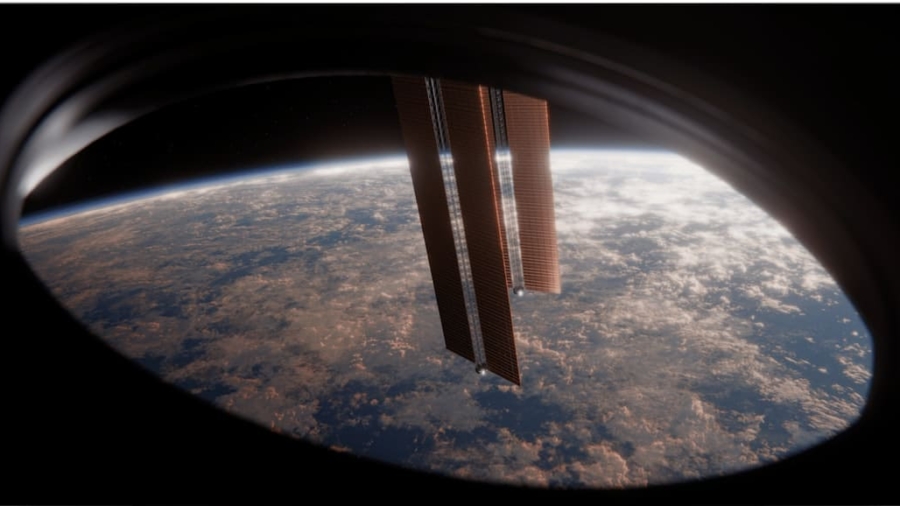
So, you’re curious about those commercial space stations popping up and what they mean for low Earth orbit (LEO)? Basically, we’re moving beyond government-run operations and into a new era where businesses are building out infrastructure in space, much like we developed roads and internet back on Earth. This opens up a whole lot of new possibilities, from tourism and research to manufacturing and even resource extraction. Think of it as building a neighborhood in space, with different companies offering different services and amenities.
It’s not just a sudden whim; several forces are converging to make building and operating commercial space stations a viable prospect. For decades, LEO operations were almost exclusively the domain of national space agencies like NASA and Roscosmos. However, a combination of technological advancements, decreasing launch costs, and growing commercial interest has created a perfect storm for private enterprise to take the lead.
The Cost Equation: Launching is Getting Cheaper
One of the biggest hurdles to space exploration and development has always been the sheer expense of getting anything off the ground. Rocket launches used to be astronomically priced, making ambitious projects financially unfeasible for most organizations outside of large government budgets.
The Reusability Revolution
The game-changer here has been the development of reusable rockets. Companies like SpaceX have proven that rockets can be landed and reused, drastically cutting down the cost per launch. This makes it much more economical to send up components for space stations, supplies for astronauts, and eventually, people for commercial purposes.
Miniaturization and Efficiency
Beyond rockets, the ongoing miniaturization of electronics and more efficient propulsion systems also contribute to lower overall mission costs. Smaller, lighter components mean less mass to launch, and more sophisticated, reliable systems can operate for longer with less resupply.
Government Support and Shifting Priorities
While private companies are now spearheading much of this development, government agencies are playing a crucial, albeit evolving, role. Rather than being the sole operators, many national space agencies are shifting to becoming customers of commercial LEO services.
The “New Space” Ecosystem
This shift is part of a broader movement often referred to as “New Space,” where governments are encouraging private sector innovation. Instead of building their own stations, agencies like NASA can contract with private companies for services like crew transport, cargo delivery, and even laboratory space. This frees up government resources for more ambitious deep-space missions.
International Collaboration and Agreements
Existing international agreements and new collaborations are also laying the groundwork. The International Space Station (ISS) itself, a marvel of multinational cooperation, has provided invaluable experience and demonstrated the feasibility of long-term human presence in LEO. As the ISS nears the end of its operational life, the transition to commercial platforms is a natural progression.
The Growing Market Demand
It’s not just about capability; there’s a genuine demand for what commercial space stations can offer.
Various industries are seeing the unique advantages of a LEO environment, creating a strong market pull for these new facilities.
Scientific Research Beyond Earth
The ability to conduct research in a microgravity environment is highly sought after for a wide range of scientific disciplines. From drug development and materials science to fundamental physics, LEO offers conditions that simply cannot be replicated on Earth. Commercial stations can offer dedicated lab modules and services tailored to specific research needs.
The Dawn of Space Tourism
Perhaps the most visible demand driver is the burgeoning space tourism industry. Companies are actively developing orbital flights and private astronaut missions, and commercial space stations will serve as the destinations for these pioneering travelers, offering unique experiences and overnight stays in orbit.
As the concept of commercial space stations gains momentum, the article on the Enicomp blog titled “Commercial Space Stations and the New Era of Low Earth Orbit Infrastructure” explores the transformative potential of private ventures in space. This piece delves into how these developments can revolutionize scientific research, tourism, and manufacturing in low Earth orbit. For more insights on this topic, you can read the full article here: Commercial Space Stations and the New Era of Low Earth Orbit Infrastructure.
Key Takeaways
- Clear communication is essential for effective teamwork
- Active listening is crucial for understanding team members’ perspectives
- Setting clear goals and expectations helps to keep the team focused
- Regular feedback and open communication can help address any issues early on
- Celebrating achievements and milestones can boost team morale and motivation
The Players and Their Visions: Who’s Building What?
The LEO landscape is becoming increasingly dynamic with several companies vying to establish their own orbital outposts. Each has a slightly different approach, catering to various market segments and technological ambitions.
Axiom Space: The Luxury Habitation Model
Axiom Space is one of the most prominent companies aiming to build a private space station. Their vision is to create a multi-module commercial space station that can serve as a research hub, a manufacturing facility, and a destination for private astronauts.
First Module Deployment
Axiom’s strategy involves attaching their initial modules to the ISS, leveraging existing infrastructure for early operations. This allows them to gain experience and generate revenue while building out their own free-flying station. They are focusing on comfortable living quarters and advanced research capabilities.
Targeting High-Value Research and Tourism
Axiom is targeting customers willing to pay a premium for microgravity research facilities and exclusive space tourism experiences. Their approach emphasizes not just functionality but also the comfort and luxury expected by their clientele.
As the landscape of space exploration evolves, the emergence of commercial space stations marks a significant shift in low Earth orbit infrastructure. A related article discusses the various factors to consider when selecting technology for gaming, which parallels the careful planning needed for developing space habitats. Understanding the right tools and systems is crucial for both gamers and space entrepreneurs alike. For more insights on making informed choices in technology, you can read the article com/how-to-choose-smartphone-for-games/’>here.
Blue Origin’s Orbital Reef: A Collaborative Approach
Jeff Bezos’s Blue Origin, in partnership with Sierra Space and others, is developing a different kind of commercial space station called Orbital Reef. This venture emphasizes a more modular and collaborative approach to LEO infrastructure.
A “Business Park” in Orbit
Orbital Reef is envisioned as a multi-purpose commercial destination, a sort of “business park” in space. It’s designed to accommodate a wide range of activities, from dedicated research labs and manufacturing facilities to media production and even educational outreach programs.
Scalability and Flexibility
The modular design of Orbital Reef aims for scalability and flexibility, allowing different
FAQs

What are commercial space stations?
Commercial space stations are privately owned and operated facilities in low Earth orbit that are used for scientific research, manufacturing, tourism, and other commercial activities. These stations are designed to provide a platform for a wide range of activities in space.
How are commercial space stations different from government-operated space stations?
Commercial space stations are operated by private companies, whereas government-operated space stations are typically run by national space agencies, such as NASA or Roscosmos. Commercial space stations are also designed to accommodate commercial activities and are open to use by a variety of customers.
What is the significance of commercial space stations in the new era of low Earth orbit infrastructure?
Commercial space stations are expected to play a key role in the development of a robust and sustainable low Earth orbit infrastructure. They are poised to support a wide range of activities, including scientific research, technology development, manufacturing, and space tourism, which will contribute to the growth of the space economy.
Who are the key players in the development of commercial space stations?
Several companies are actively involved in the development of commercial space stations, including Axiom Space, Bigelow Aerospace, and Nanoracks. These companies are working to build and operate their own space stations, as well as to provide services and facilities for other commercial and government customers.
What are the potential benefits of commercial space stations?
Commercial space stations have the potential to drive innovation, create new economic opportunities, and expand humanity’s presence in space. They can also support scientific research and technology development, as well as enable new commercial activities, such as space manufacturing and tourism.
Enjoying our content? Make us a preferred source on Google:
Add us as a Preferred Source on Google