

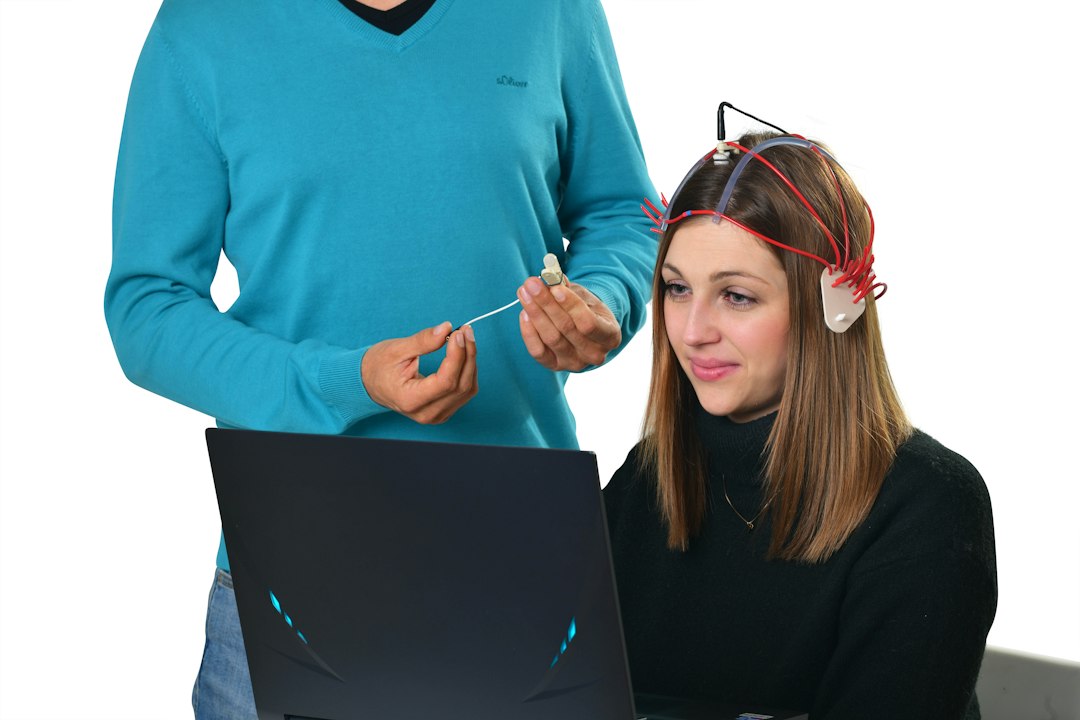
So, you’re wondering if Brain-Computer Interfaces (BCIs) are actually making a difference in neurological rehabilitation beyond just a cool concept in a lab.
The short answer is yes, they absolutely are, though the journey from intricate laboratory setups to seamless everyday use is still very much in progress.
We’re seeing real breakthroughs that are starting to translate into tangible improvements for people recovering from conditions like stroke, spinal cord injury, and other neurological impairments. It’s not science fiction anymore; it’s a developing reality, offering new avenues for regaining movement, communication, and independence.
Unpacking Brain-Computer Interfaces: The Basics
At its core, a BCI is a direct communication pathway between an external device and the brain. It bypasses the body’s natural peripheral nervous system, which might be damaged or impaired, to allow thoughts or intentions to directly control technology. Imagine being able to move a robotic arm just by thinking about it, or controlling a cursor on a screen without touching a mouse. That’s the fundamental promise, and it’s particularly transformative for individuals whose natural motor pathways are compromised.
How BCIs Read Your Brain
The magic starts with reading brain activity. There are a few main ways this happens, each with its own trade-offs.
Non-Invasive Methods: EEG
The most common and accessible method is electroencephalography (EEG). This involves placing electrodes on the scalp to detect electrical signals produced by the brain. It’s like listening to the chatter of a large crowd from outside a building – you can hear that there’s activity, and sometimes even decipher patterns, but pinpointing individual conversations is tricky. EEG is safe, relatively inexpensive, and doesn’t require surgery. However, its spatial resolution (how precisely it can locate the source of a signal) is limited, and signals can be affected by interference from muscles or even just blinking. Despite these limitations, advancements in signal processing and machine learning are making EEG-based BCIs increasingly powerful for rehabilitation, especially in tasks like motor imagery training where a person imagines moving a limb.
Invasive Methods: ECoG and Intracortical Implants
For more precise and robust control, researchers often turn to invasive methods. Electrocorticography (ECoG) involves placing electrode grids directly on the surface of the brain, under the skull. This provides much clearer signals than EEG because there’s no skull or skin to attenuate them. It’s still a significant surgery, but the signals are strong enough for more complex control, like decoding speech intentions or fine motor movements.
Even more invasive are intracortical implants, where tiny electrodes are placed into the brain tissue itself. These can record the firing of individual neurons or small groups of neurons, offering the highest spatial and temporal resolution currently available. This is where you see the most impressive demonstrations of prosthetic limb control with multiple degrees of freedom. The challenge here is the risk associated with brain surgery and the long-term stability and biocompatibility of the implants. The body can react to foreign objects, potentially degrading signal quality over time.
The BCI Loop: From Thought to Action
Regardless of how brain signals are acquired, the BCI process generally follows a loop:
- Signal Acquisition: Electrodes pick up brain activity.
- Signal Processing: Raw signals are filtered, amplified, and cleaned up to remove noise.
- Feature Extraction: Specific patterns or features relevant to the user’s intent are identified (e.g., changes in brain rhythm associated with imagining movement).
- Translation Algorithm: These features are then translated into commands for an external device (e.g., “move cursor left,” “open prosthetic hand”).
- Device Control: The external device responds to the commands.
- Feedback: The user receives visual, auditory, or haptic feedback about the device’s action, allowing them to refine their control. This feedback is crucial for learning and improving BCI performance.
This continuous loop allows users to learn to modulate their brain activity to control the BCI, and for the BCI to adapt to the user’s unique brain patterns.
In exploring the advancements in Brain-Computer Interfaces (BCIs) for neurological rehabilitation, it is interesting to consider how wearable technology, such as smartwatches, can complement these innovations. A related article that discusses the impact of smartwatches on health monitoring and mobility is available at