

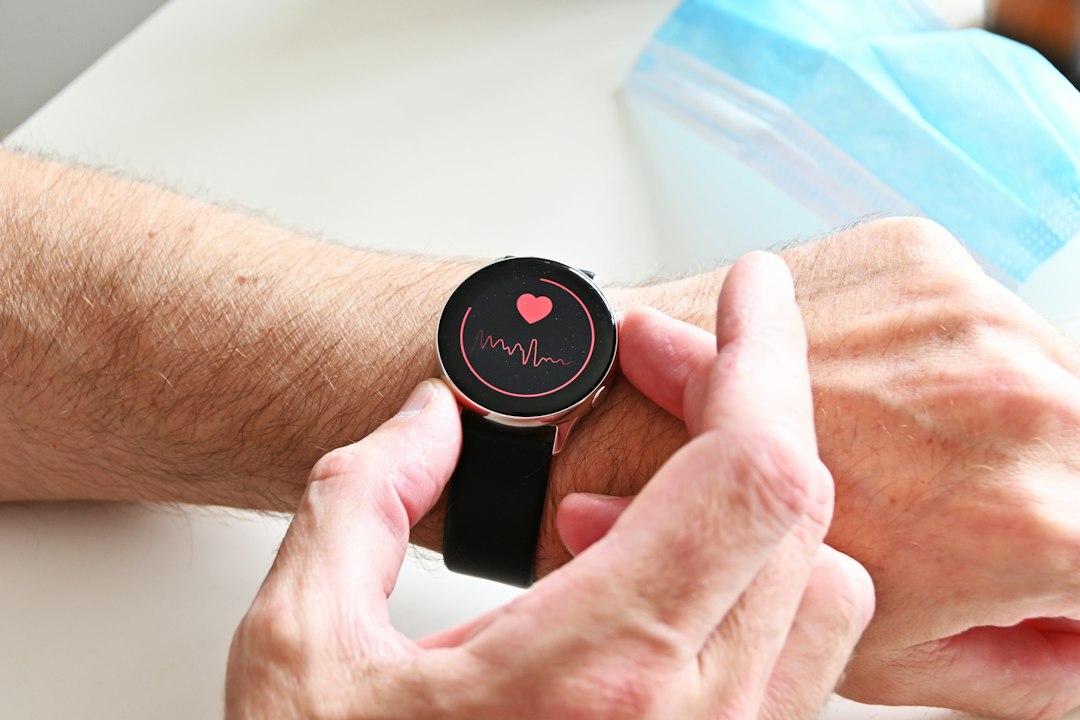
So, how accurate are those smart bands that claim to measure your body fat? In short, while they can provide a convenient, on-the-go estimate of your body composition, they’re not as precise as clinical-grade devices. They use a technology called Bioimpedance Spectroscopy (BIS), which is a step up from basic Bioelectrical Impedance Analysis (BIA) you might find in some smart scales. This means they can give you a bit more detail about what’s happening inside your body than just a single number, but there are still some important things to keep in mind regarding their practical accuracy and how to interpret the results.
The Science Behind the Wrist: How BIS Works
Let’s break down how these little gadgets on your wrist attempt to figure out what you’re made of. It all comes down to electricity, but don’t worry, it’s very low power and completely safe.
A Quick Peek at Bioelectrical Impedance Analysis (BIA)
Before we dive into spectroscopy, it’s helpful to understand its simpler cousin, Bioelectrical Impedance Analysis (BIA). Imagine your body as a series of different conductors and resistors. Water, with its dissolved electrolytes, conducts electricity pretty well. Fat, on the other hand, contains much less water and therefore resists the flow of electricity more. Bones and muscles fall somewhere in between.
In a traditional BIA device, a very small, harmless electrical current is sent through your body. The device then measures how much resistance (impedance) it encounters. Based on this resistance, along with information you input like your height, weight, age, and sex, algorithms estimate your body composition – typically your body fat percentage, lean mass, and total body water. The key here is that most basic BIA devices use a single frequency of electrical current.
Stepping Up to Bioimpedance Spectroscopy (BIS)
This is where BIS comes in, and it’s a bit more sophisticated. Instead of just one frequency, BIS uses multiple frequencies of electrical current, often ranging from very low (kilohertz) to very high (megahertz).
Why does this matter?
Think of your body’s cells. They have membranes, which act like tiny capacitors. At low frequencies, the electrical current tends to travel around the outside of these cell membranes, primarily through the extracellular fluid (the fluid outside your cells). As the frequency increases, the current starts to penetrate the cell membranes and travel through the intracellular fluid (the fluid inside your cells) as well.
By analyzing how the impedance changes across this range of frequencies, BIS can differentiate between extracellular water and intracellular water. This distinction is crucial because lean tissue (muscle) has a higher proportion of intracellular water, while fat tissue has very little. This multi-frequency approach provides a much more detailed “picture” of your body’s fluid compartments, allowing for more nuanced estimations of body fat, muscle mass, and even cellular health markers compared to single-frequency BIA.
The Electrode Dance on Your Wrist
So, how does this translate to a smart band? Most smart bands capable of BIS have at least two electrodes, often integrated into the band itself or the watch case. When you activate the measurement, these electrodes send the low-level currents through a localized path – usually across your wrist and forearm.
This is an important distinction from full-body BIA or BIS devices (like some smart scales or clinical devices where you stand on electrodes or hold hand electrodes). A full-body measurement sends the current through your torso, which is considered more representative of your overall body composition. A wrist-based measurement is inherently regional. The device measures the impedance of the tissue in that specific area. Algorithms then take this regional measurement and, using your demographic data, extrapolate it to estimate your whole-body composition. This extrapolation is where some of the accuracy challenges can arise, as the composition of your wrist and forearm might not perfectly represent your entire body.
Bioimpedance Spectroscopy in smart bands has gained significant attention for its potential in body composition analysis, particularly in wearable technology. A related article that explores the innovative features of smart devices, including their unique capabilities in health monitoring, can be found at this link. This article highlights how advancements in technology, such as those seen in smart bands, are revolutionizing personal health management and providing users with valuable insights into their body composition directly from their wrists.
Key Takeaways
- The training data includes information and events up to October 2023.
- Insights and knowledge are based on a wide range of sources available until the cutoff date.
- No updates or developments occurring after October 2023 are included in the training.
- Users should verify current information from reliable sources for the latest updates.
- The model’s responses reflect the context and knowledge available up to the specified date.
What Your Smart Band Actually Measures and Estimates
It’s helpful to understand the difference between what the electrodes directly measure and what the device then calculates for you. It’s not magic, it’s algorithms working hard behind the scenes.
Direct Measurements: Impedance and Phase Angle
The primary data points that the BIS electrodes on your smart band collect are electrical impedance and phase angle across various frequencies.
- Impedance: As we discussed, this is the body’s resistance to the electrical current. It’s measured in Ohms (Ω). The device takes many impedance readings at different frequencies.
- Phase Angle: This is a bit more complex. When an electrical current passes through biological tissue, there’s a slight delay between the voltage and the current waves. This delay is the phase angle, and it’s measured in degrees. The cell membranes, acting as capacitors, cause this phase shift. A higher phase angle is generally associated with a greater proportion of healthy cell membranes, indicating more intact cellular structure, which is often correlated with more lean body mass and better cellular health.
These raw measurements are the foundation of all the subsequent estimations.
Estimated Body Composition Metrics
Once the device has its raw impedance and phase angle data across multiple frequencies, its internal algorithms, often developed with extensive research and large datasets, kick in. Using your inputted height, weight, age, and sex, these algorithms estimate various body composition metrics:
- Body Fat Percentage (BF%): This is often the headline number people are interested in. It’s the proportion of your total body weight that is fat. The device estimates total body water from the BIS data, then infers lean mass (muscle, organs, bones), and the remainder is assumed to be fat.
- Skeletal Muscle Mass (SMM): This estimates the total weight of your skeletal muscles. It’s derived from the lean mass estimation, often using specific factors for different demographics.
- Body Water Percentage (TBW%): This is the total amount of water in your body. BIS can even sometimes differentiate between Intracellular Water (ICW) and Extracellular Water (ECW), offering a more detailed look at your fluid balance. This can be particularly interesting for athletes or people managing conditions affecting fluid retention.
- Basal Metabolic Rate (BMR): While not directly a body composition metric, BMR is often calculated by these devices. It’s an estimate of the calories your body burns at rest to maintain basic bodily functions. This calculation typically uses your estimated lean mass, age, sex, and weight, as lean mass is a major driver of BMR.
It’s important to remember that these are all estimations based on a regional measurement and predictive algorithms. They are not direct measurements of these specific tissues throughout your entire body.
The Accuracy Quandary: How Reliable Are These Wrist Measurements?
This is where the rubber meets the road. While smart bands are incredibly convenient, their accuracy for body composition isn’t on par with dedicated clinical devices. Let’s dig into why.
Factors Limiting Wrist-Based Accuracy
Several fundamental reasons contribute to the accuracy limitations of wrist-based BIS:
- Regional Measurement vs.
Whole-Body Composition:
This is perhaps the biggest factor. The smart band sends current through your wrist and forearm. It’s only directly measuring the impedance of that specific limb.Your body fat distribution isn’t uniform. Many people store more fat in their trunk or thighs than in their forearms. The algorithms then have to extrapolate from this regional measurement to estimate your entire body composition.
This extrapolation relies on statistical models and average population data, which might not perfectly represent your individual body composition.
- Algorithm Dependence and Customization: Each manufacturer uses its own proprietary algorithms. These algorithms are developed using various reference methods (like DEXA or hydrostatic weighing) on specific populations. If you fall outside the typical demographic of the population used to train the algorithm (e.g., a very muscular bodybuilder, or someone with significant fluid retention), the estimations might be less accurate for you.
- Technical Constraints and Electrode Placement: The small size of smart bands means smaller electrodes and a shorter current path compared to full-body devices.
The exact placement of the watch, the tightness of the band, and even slight movements during the measurement can influence the readings.
- Data Input Quality: The device relies heavily on the personal data you provide (height, weight, age, sex). If this information is inaccurate, your body composition estimates will also be off.
Comparing to Gold Standards and Other Methods
When we talk about “accuracy” in body composition, we usually compare against “gold standard” methods:
- DEXA (Dual-Energy X-ray Absorptiometry): Considered the most accurate and widely accepted clinical method for body composition, providing detailed measurements of bone mineral density, lean mass, and fat mass in different body regions.
- Hydrostatic Weighing (Underwater Weighing): A very accurate method that measures body density by submerging you in water.
- Air Displacement Plethysmography (Bod Pod): Similar to hydrostatic weighing but uses air displacement to determine body volume and density.
Compared to these methods, smart band BIS measurements typically show a larger margin of error. Studies often find that while smart bands can show trends in body composition changes reasonably well, their absolute values for body fat percentage or muscle mass can differ significantly from DEXA, sometimes by several percentage points.
- Smart Scales (BIA): Many smart scales also use BIA.
Some are simple two-electrode foot-to-foot devices, while others offer more advanced options with hand electrodes (four electrodes total) that send current through the torso. Even these can have variability, but a good four-electrode scale might offer a slightly more representative whole-body measurement than a wrist-only device. Smart bands are generally a step up from basic two-electrode smart scales due to BIS (multi-frequency) but are still limited by the regional measurement.
What Does “Good Enough” Look Like?
So, if they’re not perfectly accurate, are they useless?
Not at all! For many people, “good enough” is precisely what they need.
- Tracking Trends: This is where smart bands shine. If you measure consistently under similar conditions (e.g., first thing in the morning, before eating or exercising), your smart band can effectively show you if your body fat is generally going up or down, or if your muscle mass is increasing.
This trend data is often more valuable for personal health and fitness goals than a single, ultra-precise snapshot.
- Motivation and Awareness: Simply having these numbers available can increase your awareness of your body composition and motivate you to make healthier choices.
- Convenience: The sheer convenience of getting a body composition estimate on your wrist anytime, anywhere, is unmatched by clinical devices.
The key is to understand that the number you see is an estimate and to use it for tracking trends rather than obsessing over its absolute precision.
Best Practices for Consistent and Meaningful Readings
Even with the inherent limitations, you can maximize the consistency and usefulness of your smart band’s BIS readings by adopting a few sensible practices. Think of it like getting consistent readings from a bathroom scale – conditions matter.
Standardizing Your Measurement Conditions
Consistency is king when you’re tracking trends. Small variations in your body’s hydration, skin temperature, or even the placement of the band can influence the electrical current’s path and therefore the impedance readings.
- Timing is Key: Aim to measure at the same time every day, or at least under similar circumstances. The ideal time is usually first thing in the morning, after using the restroom, and before eating, drinking, or exercising. Your body tends to be in its most stable state then.
- Hydration Status: Hydration significantly impacts impedance. Being dehydrated increases impedance, potentially leading to an overestimation of body fat. Being overly hydrated (e.g., immediately after drinking a large amount of water) can decrease impedance. Try to be consistently hydrated (but not over-hydrated) for each measurement.
- Temperature Matters: Skin temperature can affect conductivity. Avoid measuring immediately after a hot shower or when you’re very cold, as this can affect the readings.
- Empty Bladder/Bowel: For best consistency, measure after emptying your bladder and bowels. This minimizes the variable weight of waste products.
- Avoid Exercise and Alcohol: Intense exercise, especially resistance training, can cause temporary fluid shifts that alter impedance. Alcohol is a diuretic and can affect hydration. Give your body a few hours to normalize after these activities before measuring.
- No Food or Drink Immediately Before: Digestion involves fluid shifts. Wait at least 2-3 hours after a meal or large drink before taking a reading.
Proper Device Placement and Usage
How you wear and use the band during the measurement also makes a difference.
- Wear it Correctly: Ensure the smart band is worn snugly but comfortably on your non-dominant wrist, at least two finger-widths above your wrist bone. If it’s too loose, the electrodes might not make good contact. If it’s too tight, it could constrict blood flow.
- Clean Electrodes: Dirt, sweat, or lotions on the electrodes or your skin can interfere with conductivity. Make sure both your skin and the electrodes are clean and dry before measuring.
- Stillness is Essential: Remain as still as possible during the measurement. Moving your arm or hand can introduce artifacts into the readings. Many devices require you to hold your arm in a specific position (e.g., straight out, or bringing your fingers to the electrodes on the watch face) to ensure a complete circuit. Follow your device’s instructions precisely.
- Input Accurate Personal Data: Double-check that your height, weight (current!), age, and sex are accurately entered into the app. These are critical variables for the algorithms.
- Weight Consistency: Remember that the smart band’s BIS only measures impedance. Your weight is still a crucial input for the algorithm to calculate percentages. Use a consistent, accurate scale for your daily weight measurements and ensure that weight is regularly updated in your smart band’s accompanying app.
Interpreting the Data: Focus on Trends, Not Absolutes
This is perhaps the most critical piece of advice.
- Embrace the Trend: Don’t get hung up on a single number. A single reading of 20.5% body fat isn’t as informative as seeing your body fat percentage steadily decrease from 22% over several weeks. Look at the graphs and averages over time.
- Contextualize with Other Metrics: Combine your BIS data with other health metrics from your smart band, such as activity levels, heart rate, sleep patterns, and manual weigh-ins. Are your body fat numbers decreasing while your activity is increasing and you’re feeling stronger? That’s a good sign.
- Understand Day-to-Day Variability: It’s normal for readings to fluctuate slightly day-to-day, even under consistent conditions. Don’t panic over a small bump up in body fat one morning. Look at the weekly or monthly averages.
- Consult a Professional for Clinical Accuracy: If you need highly accurate body composition measurements for medical reasons, serious athletic training, or a precise baseline, seek out a clinical DEXA scan or other gold standard methods. Your smart band is a great tool for personal tracking, but it’s not a diagnostic medical device.
- Listen to Your Body: Ultimately, how you feel, your energy levels, your strength, and how your clothes fit are also important indicators of progress, perhaps even more so than a number on your wrist. Use the smart band data as one piece of the puzzle, not the whole picture.
By being mindful of these factors, you can get the most meaningful and consistent insights from your smart band’s body composition features.
Bioimpedance Spectroscopy in smart bands has emerged as a revolutionary method for body composition analysis, allowing users to monitor their health conveniently from their wrists. This technology not only provides insights into body fat percentage and muscle mass but also enhances the overall fitness tracking experience. For those interested in the intersection of fashion and technology, a related article discusses how Wear OS by Google integrates stylish designs with advanced health monitoring features, making it easier for users to stay fashionable while keeping track of their wellness. You can read more about this innovative approach in the article here.
The Future of Wrist-Worn Body Composition Analysis
| Metric | Description | Typical Range / Value | Unit | Notes |
|---|---|---|---|---|
| Frequency Range | Electrical frequencies used for impedance measurement | 5 kHz – 1 MHz | kHz / MHz | Multiple frequencies improve accuracy of tissue differentiation |
| Impedance Magnitude | Measured opposition to current flow through body tissues | 200 – 1000 | Ohms (Ω) | Varies with hydration and tissue composition |
| Phase Angle | Phase difference between voltage and current | 3 – 10 | Degrees (°) | Indicator of cell membrane integrity and body cell mass |
| Body Fat Percentage | Estimated proportion of fat mass in the body | 10 – 35 | % | Derived from impedance and anthropometric data |
| Fat-Free Mass | Mass of all body components except fat | 45 – 80 | kg | Includes muscle, bone, water, and organs |
| Total Body Water | Amount of water contained in the body | 30 – 50 | Liters | Important for hydration status monitoring |
| Measurement Time | Duration to complete a bioimpedance scan | 5 – 15 | Seconds | Short measurement time suitable for wearable devices |
| Electrode Configuration | Number and placement of electrodes on the wristband | 2 – 4 electrodes | Count | Optimized for wrist anatomy and signal quality |
| Accuracy (Body Fat %) | Deviation compared to gold standard methods | ±3 – 5 | % | Acceptable for consumer health monitoring |
| Power Consumption | Energy used during measurement | 1 – 5 | mW | Low power design critical for battery life |
The field of wearables is constantly evolving, and body composition analysis on the wrist is no exception. We can expect to see continued improvements and expanded capabilities in the years to come.
Emerging Technologies and Research Directions
Manufacturers and researchers are continually looking for ways to enhance the accuracy and utility of wearable body composition devices.
- Advanced Multi-Frequency BIS Algorithms: As computing power in wearables increases, so too can the sophistication of the BIS algorithms. This might involve using even more frequencies, or more complex mathematical models to better account for individual physiological differences and regional limitations. Machine learning and AI are already playing a significant role in refining these algorithms, allowing them to learn from vast datasets and potentially adapt more effectively to individual users.
- Integration with Other Biometric Sensors: The real power of future wearables might lie in combining BIS data with information from other sensors already present in smart bands. Imagine integrating body temperature, heart rate variability (HRV), sweat analysis, and even continuous glucose monitoring (if it becomes miniaturized) with BIS. This could allow for more nuanced insights into hydration status, metabolic health, and even early detection of illness that affects fluid balance or body composition. For instance, a sudden shift in ICW/ECW ratio combined with a change in HRV could signal impending illness or overtraining.
- Improved Electrode Design and Placement: Expect innovations in how electrodes are integrated into the band and how they interact with the skin. This could include more flexible materials, larger contact areas, or even dynamic electrode arrays that optimize current paths. Some devices might even explore incorporating electrodes into other parts of the body (e.g., a smart ring for one hand, paired with the watch on the other wrist) to achieve a more comprehensive, albeit still not full-body, measurement without requiring a dedicated scale.
- Personalized Algorithms: Instead of relying solely on general population averages, future devices might be able to “learn” your personal body composition patterns over time. By consistently tracking your measurements and correlating them with your activity, diet, and potentially even occasional external validations (like a professional DEXA scan), the device’s algorithm could become more finely tuned to your unique physiology. This would move away from a one-size-fits-all model towards truly personalized body composition tracking.
The Role of Regulatory Scrutiny and User Education
As these devices become more advanced and offer increasingly detailed health insights, the regulatory landscape will also likely evolve.
- Medical Device Classification: Some advanced features, particularly those that offer diagnostic-level insights, might push certain smart bands into the realm of medical devices, requiring stricter regulatory approvals (like FDA clearance in the US). This would bring a higher level of scrutiny to their accuracy and reliability claims.
- Data Privacy and Security: The collection of increasingly sensitive personal health data will highlight the importance of robust data privacy and security measures from manufacturers. Users will want assurances that their body composition and other biometric data are protected.
- Enhanced User Education: With greater sophistication comes a greater need for user understanding. Manufacturers will need to improve how they communicate the capabilities and, critically, the limitations of these devices. Clear explanations of what is measured versus what is estimated, and how to interpret trends versus absolute values, will be crucial to prevent misuse or misunderstanding of the data. This means moving beyond just displaying numbers to providing actionable insights and contextual information.
Ultimately, smart bands with BIS technology are poised to become even more valuable tools for personal health and fitness management. While they may never fully replace gold-standard clinical assessments for diagnostic purposes, their convenience, combined with ongoing technological advancements, will likely make them an indispensable part of many people’s health tracking routines, offering increasingly insightful glimpses into their body’s composition right from their wrist.
Enjoying our content? Make us a preferred source on Google:
Add us as a Preferred Source on Google