


Autonomous Network Operations (ANO) is essentially about making networks smarter, capable of fixing issues before they even impact users. When it comes to Wide Area Network (WAN) outages, this means using machine learning (ML) to predict when a problem might occur and then automatically taking steps to prevent or mitigate it. Think of it as your network developing an intuition and acting on it, saving you from frantic troubleshooting calls and lost productivity.
The Shifting Landscape of WAN Management
Managing a modern WAN is far from the static task it once was. Today, businesses rely heavily on global connectivity, supporting everything from cloud applications to remote workforces and IoT devices. The complexity has skyrocketed, with hybrid cloud deployments, diverse connectivity options (MPLS, SD-WAN, internet broadband), and an ever-increasing demand for uptime and performance. Traditional, reactive approaches to network management—waiting for a ticket to be opened or an alert to fire—are simply no longer sufficient. These methods lead to significant downtime, frustrated users, and considerable operational costs. The sheer volume of telemetry data generated by modern WANs, from device logs to traffic flow statistics and performance metrics, is overwhelming for human operators to analyze effectively in real-time. This is where autonomous network operations, powered by machine learning, steps in as a critical evolution.
Challenges in Traditional WAN Outage Resolution
The conventional process for addressing WAN outages is inherently slow and resource-intensive. When an issue arises, it typically follows a series of manual steps. First, an alert might be triggered, or more often, users report performance degradation or complete loss of service. This kicks off a frantic investigation. Network engineers then have to sift through a mountain of data – router logs, firewall logs, switch statistics, application performance monitoring (APM) tools, and more – to pinpoint the root cause. Is it a circuit issue? A misconfigured routing protocol? A hardware failure? A security incident? This diagnostic phase alone can take hours, even days, especially in complex, multi-vendor environments.
Once the root cause is identified, the remediation process begins, often involving manual configuration changes, device reboots, or coordination with service providers. Each step is prone to human error and adds to the overall Mean Time To Resolution (MTTR). The problem is exacerbated by the often-siloed nature of IT operations, where network teams, server teams, and application teams might use different tools and have limited visibility into each other’s domains. This fragmented approach makes swift, coordinated action difficult, leading to prolonged outages and significant business impact. The reactive nature of these processes means that by the time an issue is resolved, damage has already occurred, whether it’s lost revenue, damaged reputation, or reduced employee productivity.
The Promise of Autonomous Network Operations
Autonomous Network Operations offers a compelling alternative to this reactive paradigm. At its core, ANO aims to automate the entire lifecycle of network management, from monitoring and analysis to planning, execution, and verification, with minimal human intervention. For WAN outage remediation, this translates into a shift from reactive firefighting to proactive, predictive maintenance. Instead of waiting for a circuit to go down, ANO systems, driven by machine learning, can identify subtle precursors to failure.
Imagine a system that observes minute fluctuations in latency, packet loss, or BGP neighbor states across multiple paths and predicts, with a high degree of confidence, that a particular circuit is likely to fail within the next hour. Based on this prediction, the system can then automatically reroute traffic, provision backup links, or even initiate a diagnostic script and escalate to a service provider before users experience any disruption. This proactive approach significantly reduces MTTR, often to near zero, as problems are addressed before they become service-impacting. Furthermore, ANO systems learn over time, continuously refining their predictive models and remediation strategies based on historical data and the outcomes of previous actions. This continuous learning makes the network more resilient and self-optimizing, enabling businesses to maintain high levels of connectivity and performance even as their networks grow in complexity.
In the realm of network management, the article on Autonomous Network Operations: Leveraging Machine Learning for Predictive WAN Outage Remediation highlights the transformative impact of machine learning on enhancing network reliability.
For those interested in exploring how technology can improve user experiences beyond network operations, a related piece can be found at
Clustering algorithms (like K-Means or DBSCAN) or dimensionality reduction techniques (like PCA) can analyze raw network telemetry data (e.
, Random Forests, or Gradient Boosting Machines (GBMs) can be effectively used here. The goal is to build a model that can predict a “bad state” based on current network telemetry. When a future data point exhibits similar characteristics to previously labeled “bad” states, the model flags it as an anomaly or a likely precursor to an outage. The challenge here is obtaining sufficiently large and accurately labeled datasets, especially for rare outage events. Data augmentation and synthetic data generation techniques can help mitigate this.</p>
<h4>Unsupervised Learning for Baseline Establishment</h4>
<p>Unsupervised learning models work with unlabeled data, aiming to find inherent structures or patterns within the data. This is particularly useful for establishing “normal” network baselines. Networks are dynamic; what constitutes normal behavior changes based on time of day, day of week, application usage, and even ongoing projects. Manually defining static thresholds for every metric across every device is impractical and often leads to an excessive number of false positives or missed events.</p>
<blockquote style=)
g., interface counters, CPU utilization, memory usage, traffic flows) to identify clusters of “normal” behavior. Once a baseline of normal operation is established, any significant deviation from these learned clusters can be flagged as an anomaly. This approach is powerful because it doesn’t require prior knowledge of what an “anomaly” looks like, allowing the system to detect novel types of issues or shifts in network behavior. For example, a gradual, subtle increase in BGP path flap rates might not exceed a predefined threshold, but an unsupervised model might identify it as a significant departure from the established baseline for that specific router, indicating an underlying instability.
Reinforcement Learning for Remediation Actions
Reinforcement learning (RL) is perhaps the most advanced and promising application of ML for autonomous network operations. Unlike supervised or unsupervised learning, RL agents learn through trial and error by interacting with an environment. The agent performs actions and receives rewards or penalties based on the outcome. For WAN outage remediation, an RL agent could learn optimal remediation strategies.
Imagine an RL agent observing a predicted outage scenario. It could choose from a set of actions: reroute traffic over a different path, increase bandwidth on a backup link, restart a network service, or notify a human operator. Each action has an associated “reward” (e.g., successful avoidance of outage, minimal service impact) or “penalty” (e.g., increased latency, new service disruption). Over countless iterations (often simulated in a digital twin environment before deployment to production), the agent learns the best sequence of actions to take for various predicted outage types. This is particularly powerful for complex scenarios where multiple interdependencies exist, and the optimal solution is not immediately obvious. RL can optimize for multiple objectives simultaneously, such as minimizing latency while also ensuring cost-effectiveness of link usage.
Data Sources and Feature Engineering
The effectiveness of any machine learning model hinges on the quality and relevance of the data it’s trained on. For predictive WAN outage remediation, the network generates a wealth of telemetry that serves as potential input features for ML models.
Key Data Sources
- SNMP MIBs and Device Counters: Interface statistics (input/output errors, discards, utilization), CPU and memory utilization, BGP/OSPF neighbor states, VPN tunnel status.
- Flow Data (NetFlow, IPFIX, sFlow): Provides detailed information about traffic patterns, source/destination IPs, ports, protocols, and application usage, which can highlight unusual traffic spikes or drops.
- Syslog and Event Logs: Critical for capturing configuration changes, hardware failures, protocol errors, security alerts, and device reboots.
- Application Performance Monitoring (APM) Data: Information about end-user experience, application response times, transaction rates, which can correlate network issues with business impact.
- Synthetic Monitoring Data: Probes sending traffic across the WAN to measure end-to-end latency, jitter, and packet loss, offering an independent view of path quality.
- Cloud Provider APIs: For hybrid cloud environments, APIs provide insights into cloud network resource health, virtual private cloud (VPC) connectivity, and gateway status.
- Configuration Management Databases (CMDBs): Provides the topological context, understanding which devices are connected, their roles, and dependencies.
- Historical Outage Data: Records of past outages, their root causes, duration, and the remediation steps taken – crucial for training supervised models.
Feature Engineering
Raw data often needs to be transformed and enriched into “features” that machine learning algorithms can understand and learn from. This process, known as feature engineering, is crucial. For example:
- Time-series aggregation: Instead of raw timestamped events, create features like “average utilization over 5 minutes,” “standard deviation of latency over 15 minutes,” or “number of BGP route flaps per hour.”
- Rate of change: Calculate the derivative of metrics to detect sudden spikes or drops (e.g., “rate of change of input errors”).
- Ratios and derived metrics: Create features like “packet loss percentage,” “jitter,” or “ratio of control plane to data plane traffic.”
- Categorical encoding: Convert textual log messages or device types into numerical representations.
- Contextual features: Incorporate metadata like “time of day,” “day of week,” “device location,” or “criticality of application” to provide richer context for predictions.
Effective feature engineering can significantly improve the accuracy and interpretability of ML models, allowing them to better discern subtle patterns that indicate an impending WAN outage.
The Predictive Remediation Workflow in Action
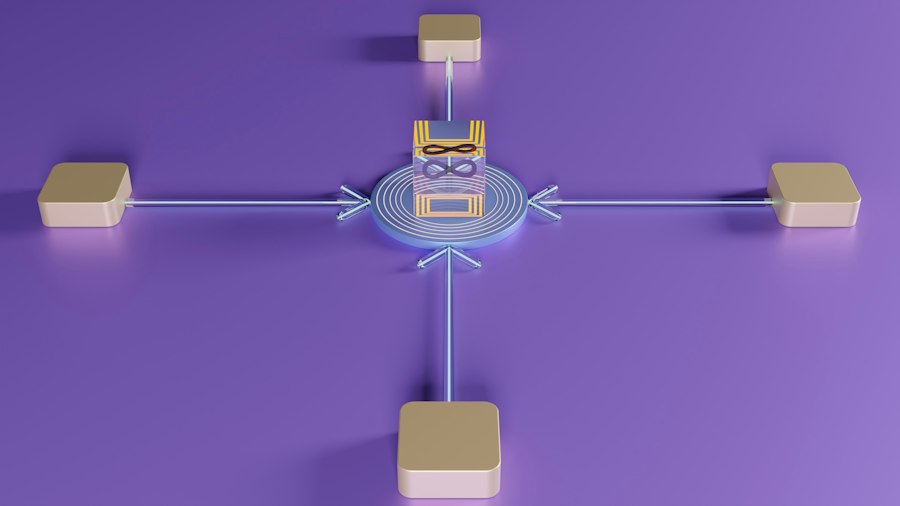
Implementing predictive WAN outage remediation involves a structured workflow that integrates machine learning models into the operational fabric of the network. This isn’t just about throwing data at an algorithm; it’s about creating a cohesive, automated system.
In the realm of network management, the integration of machine learning into Autonomous Network Operations is proving to be a game-changer, particularly for predictive WAN outage remediation. This innovative approach not only enhances operational efficiency but also minimizes downtime, ensuring seamless connectivity.
For those interested in exploring more about how technology can optimize various aspects of business, a related article discusses essential tools for enhancing online presence, which can be found here. By leveraging advanced solutions, organizations can stay ahead of potential disruptions while maximizing their digital strategies.
Data Collection and Ingestion
The first step is establishing robust data collection mechanisms.
This involves deploying agents, configuring telemetry streams, and integrating with existing monitoring tools. All the data sources mentioned previously (SNMP, NetFlow, Syslog, APM, etc.) must be ingested into a centralized data lake or time-series database. This data needs to be high-fidelity, timestamped accurately, and normalized to ensure consistency across different sources and vendors.
Data pipelines (e.g., using Apache Kafka, Elasticsearch, or specialized network data platforms) are essential to handle the massive volume and velocity of network telemetry. Real-time ingestion is crucial for timely predictions, while historical data storage is vital for model training and validation.
Real-time Analytics and Anomaly Detection
Once ingested, the data flows into a real-time analytics engine. This is where the machine learning models, primarily unsupervised and supervised learning algorithms, come into play.
Unsupervised models continuously monitor the incoming data streams to establish dynamic baselines for normal network behavior. Any significant deviation from these baselines is flagged as an anomaly. Simultaneously, supervised models, trained on historical outage data, look for specific patterns or sequences of events that are known precursors to WAN outages.
For example, a model might detect a gradual increase in round-trip time (RTT) for traffic traversing a specific MPLS circuit, coupled with a slight uptick in BGP path flaps and an increase in CPU utilization on the edge router.
While each metric individually might not cross a critical threshold, the combination of these subtle anomalies, identified by the ML model, could trigger a “predictive alert.” The system might also correlate these anomalies with specific applications experiencing performance degradation, adding more weight to the prediction. The goal here is to identify potential issues as early as possible, moving from reactive “post-mortem” analysis to proactive “pre-mortem” warnings.
Predictive Modeling and Risk Assessment
When an anomaly or pattern indicative of an impending outage is detected, the system moves to the predictive modeling and risk assessment phase. Here, more sophisticated models, often leveraging time-series forecasting techniques (e.g., ARIMA, Prophet, or deep learning models like LSTMs), can estimate the likelihood and potential impact of a full-blown outage.
The model might predict:
- “There is an 80% chance that WAN circuit ‘X’ will experience a complete outage within the next 30 minutes.”
- “This potential outage could impact critical application ‘Y’ for users in region ‘Z’.”
- “The estimated service degradation before full outage is a 50% increase in latency and 10% packet loss.”
This phase also involves correlating the predicted outage with the network topology and business services. Which applications are dependent on the affected circuit? Which user groups will be impacted?
What is the business criticality of those applications and users? This context is vital for determining the appropriate remediation strategy. The system assigns a risk score to the predicted event, considering both its likelihood and its potential business impact.
Automated Remediation and Validation
This is where the “autonomous” aspect truly shines.
Based on the predicted outage, its risk score, and predefined policies, the system automatically triggers remediation actions. This often involves reinforcement learning agents or sophisticated rule-based engines informed by ML. Examples of automated remediation actions include:
- Traffic Rerouting: Automatically adjusting routing tables (e.g., BGP local preference, OSPF costs) to steer traffic away from the potentially failing circuit to a healthy backup link (e.g., an SD-WAN overlay, internet broadband, or another MPLS circuit).
- Bandwidth Provisioning: If a backup link exists but has limited capacity, the system might automatically provision additional bandwidth with the service provider (if API-driven orchestration is in place) or activate a dormant high-capacity link.
- Configuration Changes: Applying temporary configuration changes to stabilize a device or protocol, such as adjusting keep-alive timers or throttling non-critical traffic.
- Device Failover: Initiating a hot standby router failover to a redundant device if the prediction points to a hardware failure.
- Automated Diagnostics: Executing a series of diagnostic scripts (e.g., ping, traceroute, interface diagnostics) to gather more granular information and confirm the prediction, which can then be fed back into the ML models.
- Proactive Notification: If full automation isn’t possible or within policy, automatically opening a ticket with the service provider or notifying the operations team with a detailed analysis and recommended actions, effectively shortening the diagnostic phase for human operators.
Crucially, after any remediation action, the system continuously monitors the network to validate the effectiveness of the intervention.
Did the outage occur? Was service restored? Did performance improve?
This validation feedback loop is essential for refining the machine learning models and optimizing future remediation strategies, making the autonomous network more intelligent over time.
Integrating Autonomous Operations into Your Ecosystem
Adopting autonomous network operations, especially for something as critical as predictive WAN outage remediation, is a journey that requires careful planning and integration with your existing IT ecosystem. It’s not a standalone product but a capability that enhances and connects various operational domains.
Bridging the Gap with Existing Tools
Most organizations already have a significant investment in network monitoring, management, and orchestration tools. A successful autonomous operations strategy doesn’t discard these but rather integrates with them.
Network Performance Monitoring (NPM) Tools
Existing NPM tools (e.g.,켄트, SolarWinds, AppDynamics, Dynatrace) are rich sources of real-time telemetry. ANO platforms should integrate with these tools via APIs, SNMP traps, or direct data feeds to ingest performance metrics, alarms, and flow data. Instead of replacing NPM, ANO layers intelligence on top, providing predictive insights and automated remediation capabilities that NPM tools typically lack. The ANO system can also send its predictive alerts and remediation outcomes back to the NPM dashboards for centralized visibility.
Service Desk and IT Service Management (ITSM) Platforms
For scenarios where human intervention is still required or for auditing purposes, integration with ITSM platforms (e.g., ServiceNow, Jira Service Management) is crucial. The ANO system can automatically open tickets for predicted outages, populate them with detailed diagnostic information and recommended actions, and even close tickets upon successful automated remediation. This streamlines incident management, reduces manual toil for service desk agents, and ensures a complete audit trail.
Configuration Management and Orchestration Systems
Configuration Management Databases (CMDBs) provide the essential context of network topology, device inventory, and dependencies, which are vital for the ANO system to understand the potential impact of a predicted outage. Furthermore, integration with network orchestration platforms (e.g., Ansible, Puppet, bespoke SDN controllers) allows the ANO system to programmatically execute remediation actions such as reconfiguring devices, provisioning bandwidth, or adjusting routing policies. These orchestration systems act as the execution layer for the decisions made by the machine learning models.
Gradual Adoption and Policy-Driven Automation
Implementing full autonomy from day one can be daunting and risky. A phased approach is generally recommended, starting with supervised automation and gradually moving towards more autonomous decision-making.
Supervised Automation
Begin by deploying machine learning models for predictive anomaly detection and risk assessment. When a potential outage is predicted, the system doesn’t immediately act but rather generates a detailed alert, diagnostic report, and proposed remediation actions for a human operator to review and approve. This “human-in-the-loop” approach allows the operations team to build trust in the system’s predictions and recommendations, validate the models, and refine the policies governing automation. It’s a stepping stone where the system provides intelligent recommendations, but the final decision to act rests with a human.
Policy-Driven Automation
As confidence grows, specific remediation actions can be automated based on predefined policies. These policies act as guardrails, defining when, where, and what types of actions the autonomous system can take. For example:
- Criticality: “For predicted outages affecting critical applications (e.g., ERP, CRM), automatically reroute traffic if the predicted likelihood is above 70% and estimated impact is severe.”
- Severity: “For minor predicted performance degradation on non-critical links, trigger automated diagnostics and notify the NOC, but do not automatically reroute traffic.”
- Time of Day: “Allow full autonomous remediation during off-peak hours, but require human approval during business hours for certain actions.”
- Cost: “Prioritize rerouting over existing backup links before provisioning new cloud interconnects, unless dictated by service level agreements (SLAs).”
These policies are crucial for managing risk and ensuring that autonomous actions align with business objectives and operational best practices. They evolve over time as the system learns and as the organization gains more experience with autonomous operations.
Security and Governance Considerations
Autonomous operations introduce new security and governance considerations.
Secure Access and Control
The system making automated changes to the network must itself be highly secure. This includes robust authentication, authorization, and auditing mechanisms for the autonomous platform itself, as well as for its integrations with other systems. Granular access controls must ensure that the autonomous agent can only execute actions within its defined scope and policies.
Audit Trails and Rollback Capabilities
Every automated action must be meticulously logged, creating an immutable audit trail. This is essential for troubleshooting, compliance, and understanding the system’s behavior. Furthermore, robust rollback capabilities are critical. If an autonomous action inadvertently causes new problems, there must be a straightforward way to revert to a previous stable state. This might involve version control for network configurations or snapshots of network states.
Data Privacy and Compliance
The vast amount of network telemetry data collected often includes sensitive information. Organizations must ensure that data collection, storage, and processing adhere to relevant data privacy regulations (e.g., GDPR, CCPA). Anonymization and aggregation techniques may be necessary, and strict access controls over the data lake are paramount.
By carefully considering these integration, adoption, and governance aspects, organizations can build a robust and trustworthy autonomous network operations capability that truly leverages machine learning for predictive WAN outage remediation, transforming their network from a reactive liability into a proactive, self-healing asset. This shift is not merely about technology; it’s about a fundamental change in how networks are managed, delivering unparalleled resilience and agility in an increasingly connected world.
FAQs
What are Autonomous Network Operations?
Autonomous Network Operations refer to the use of advanced technologies, such as artificial intelligence and machine learning, to automate the management and optimization of network functions. This approach aims to enhance network performance, reduce human intervention, and improve overall operational efficiency.
How does machine learning contribute to predictive WAN outage remediation?
Machine learning algorithms analyze historical network data to identify patterns and anomalies that may indicate potential outages. By predicting these issues before they occur, organizations can proactively address them, minimizing downtime and ensuring continuous network availability.
What is WAN, and why is it important for businesses?
WAN stands for Wide Area Network, which connects multiple local area networks (LANs) across large geographical distances. It is crucial for businesses as it enables communication and data transfer between different office locations, supports remote work, and facilitates access to cloud services.
What are the benefits of using autonomous network operations in WAN management?
The benefits include improved network reliability, reduced operational costs, faster response times to outages, enhanced security through real-time monitoring, and the ability to scale network resources efficiently as business needs change.
What challenges might organizations face when implementing autonomous network operations?
Organizations may encounter challenges such as the complexity of integrating new technologies with existing systems, the need for skilled personnel to manage and interpret machine learning outputs, potential data privacy concerns, and the initial costs associated with deploying advanced network solutions.
Enjoying our content? Make us a preferred source on Google:
Add us as a Preferred Source on Google