

Warehouse fulfillment is undergoing a significant shift, moving away from traditional fixed conveyor systems towards the agility and intelligence of Autonomous Mobile Robots (AMRs). The core difference boils down to flexibility, scalability, and how efficiently a system can adapt to changing demands and product mixes. While fixed conveyors excel at moving high volumes of uniform items along predetermined paths, AMRs offer a dynamic, reconfigurable approach that can dramatically improve throughput, reduce labor costs, and optimize space utilization in modern warehouses facing ever-increasing e-commerce pressures and SKU proliferation. This article will explore the practical considerations and operational impacts of choosing between these two distinct automation strategies.
The Enduring Role of Fixed Conveyors
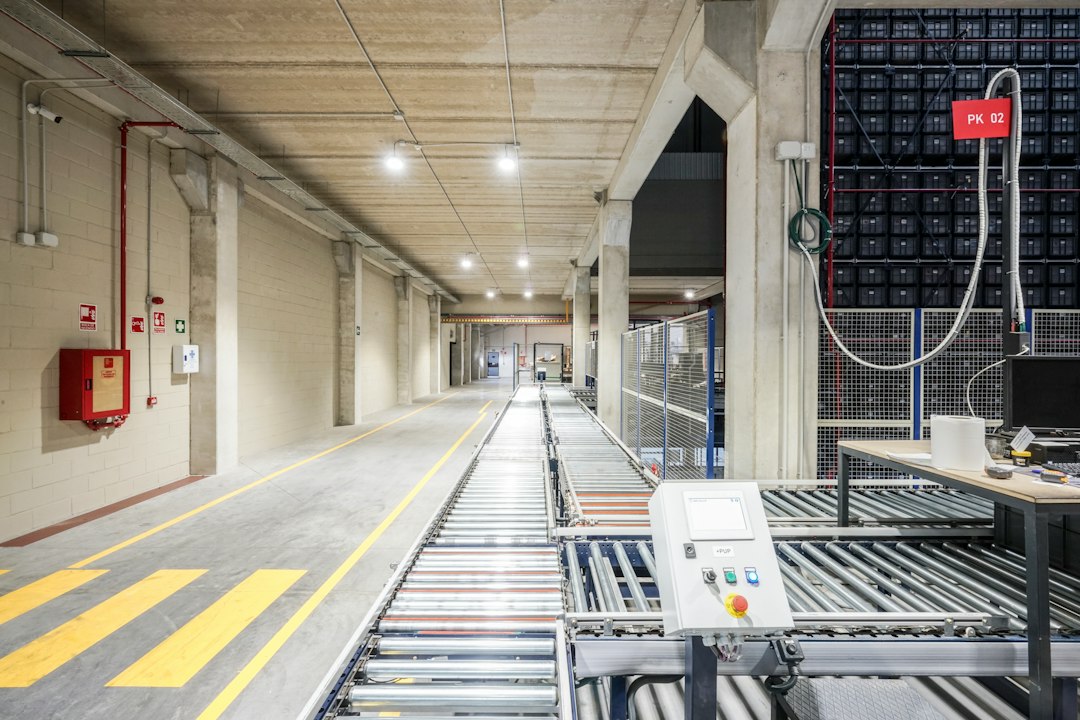
Fixed conveyor systems have been the backbone of warehouse automation for decades, and for good reason. They are incredibly efficient at moving items consistently and rapidly along defined routes. When a warehouse has a predictable product flow, high volume of similar items, and a relatively stable layout, conveyors can be an excellent choice.
When Fixed Conveyors Still Shine
Think about operations like parcel sortation hubs or large distribution centers for a single product line, such as bottled beverages or packaged goods, where items arrive, get sorted, and move to shipping docks with minimal variation. In these scenarios, the capital investment in a robust conveyor network can be justified by the sheer volume and speed of throughput achieved. They offer a continuous flow, which can be critical for certain processes, like packing lines or accumulation before palletization.
Types and Functionality
Fixed conveyors come in a variety of forms. Belt conveyors are common for general item transport, while roller conveyors (powered or gravity-fed) are often used for cartons and totes. Sortation conveyors, like shoe sorters or cross-belt sorters, are highly sophisticated systems designed to divert items to specific lanes at high speeds. Each type serves a particular purpose, and a complete system often integrates several different types to achieve the desired material flow.
The design process for these systems is intricate, involving detailed engineering to ensure smooth transitions, efficient accumulation, and accurate sortation.
Advantages of Fixed Systems
The primary advantages of fixed conveyors are their high throughput capacity, consistent performance, and proven reliability. Once installed and optimized, they can operate with minimal human intervention, reducing the need for manual transport. They are excellent for continuous flow processes and can handle heavy loads that might be challenging for some AMR types. The predictability of their paths also simplifies safety protocols in their operational zones.
Limitations of Fixed Systems
Despite their strengths, fixed conveyors have significant limitations in today’s dynamic fulfillment environment. Their inflexibility is perhaps the biggest drawback. Changing a layout, adding new processes, or adjusting to new product flows requires substantial time, cost, and disruption. Rerouting a conveyor line isn’t a simple task; it often involves structural modifications, electrical work, and extensive re-engineering. This lack of adaptability makes them less suitable for businesses experiencing rapid growth, seasonal peaks, or frequent changes in product mix and order profiles. Furthermore, they consume a fixed footprint, often creating physical barriers and limiting accessibility within the warehouse.
In the ongoing debate between Autonomous Mobile Robots (AMRs) and fixed conveyors in modern warehouse fulfillment, it’s essential to consider the broader implications of technology in various industries. A related article that explores advancements in technology and their applications is available at Discover the Best Laptops for Blender in 2023: Top Picks and Reviews. This piece highlights how cutting-edge technology, including powerful laptops, can enhance productivity and efficiency, paralleling the benefits that AMRs and fixed conveyors bring to warehouse operations.
Key Takeaways
- The training data includes information and events up to October 2023.
- Insights and knowledge are based on a wide range of sources available until the cutoff date.
- No updates or developments occurring after October 2023 are included in the training.
- Users should verify current information from reliable sources for the latest updates.
- The model’s responses reflect the context and knowledge available up to the specified date.
The Rise of Autonomous Mobile Robots (AMRs)
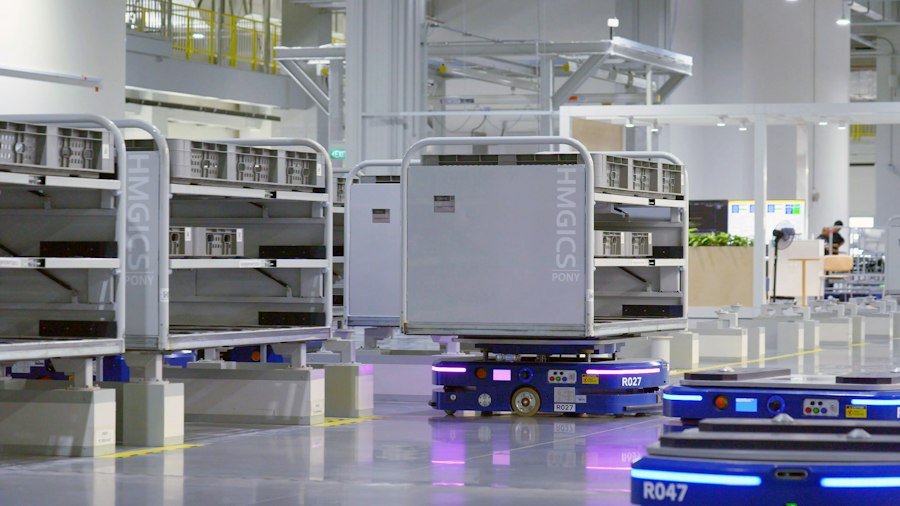
Autonomous Mobile Robots represent a paradigm shift in warehouse automation. Unlike their older cousins, Automated Guided Vehicles (AGVs) which follow fixed magnetic tape or wires, AMRs navigate independently using onboard sensors, cameras, and sophisticated software. They build maps of their environment, detect obstacles, and dynamically choose the most efficient path to their destination. This intelligence and flexibility are what make them so disruptive to traditional warehouse design.
What Makes AMRs Different from AGVs?
The distinction between AMRs and AGVs is crucial. AGVs are essentially “dumb” robots that follow predefined routes and stop if an obstacle is in their way. They are like trains on tracks. AMRs, on the other hand, are more like self-driving cars. They understand their surroundings, can recalculate routes on the fly, and even interact with their environment by picking up or dropping off items. This autonomy allows them to operate more effectively in human-centric environments and adapt to unexpected changes.
Core Technologies Enabling AMRs
Several key technologies power AMRs. Lidar (Light Detection and Ranging) and vision systems allow them to map their environment and detect obstacles. Simultaneous Localization and Mapping (SLAM) algorithms enable them to build a map while simultaneously locating themselves within it. Advanced navigation software and artificial intelligence allow them to plan optimal routes, avoid collisions, and communicate with a central fleet management system. Connectivity, often through Wi-Fi or 5G, is also essential for coordinating their movements and receiving tasks.
Different Types of AMRs in Fulfillment
AMRs come in various forms, each suited for different tasks:
- Goods-to-Person (GTP) Robots: These are perhaps the most well-known. They bring shelves or totes directly to a human pick station, eliminating the need for pickers to walk long distances. This significantly boosts picking efficiency and reduces worker fatigue.
- Person-to-Goods (PTG) or Collaborative Picking Robots: These robots accompany human pickers, carrying picked items, and guiding them to the next picking location. They reduce walking time and allow pickers to focus solely on the picking task.
- Sorting Robots: Small, flat robots that lift and carry items to specific chutes for sortation. They offer highly flexible and scalable sortation capabilities, often used in e-commerce fulfillment.
- Pallet Movers/Forklift AMRs: Larger AMRs designed to transport pallets or heavy loads across the warehouse floor, automating horizontal transport tasks traditionally done by forklifts.
- Mobile Manipulation Robots: Less common but emerging, these robots combine mobile bases with robotic arms to perform more complex tasks like individual item picking (piece picking).
Key Advantages of AMRs
The advantages of AMRs are compelling for modern fulfillment centers:
- Flexibility and Scalability: This is their standout feature. AMRs can be added or removed from a fleet as demand fluctuates. Their paths are software-defined, meaning layout changes are often just a software update away, not a construction project.
- Reduced Walking Time/Improved Productivity: For human workers, AMRs dramatically reduce the time spent walking to pick items, allowing them to focus on value-added tasks. This can lead to significant productivity gains and less physical strain.
- Space Optimization: By eliminating fixed aisles for conveyors, warehouses can often increase storage density. AMRs can navigate narrower paths and optimize travel routes more dynamically.
- Faster Implementation: Compared to complex fixed conveyor systems, AMR deployments can often be quicker and less disruptive, especially for smaller-scale initial rollouts.
- Adaptability to Changes: They thrive in environments with dynamic order profiles, seasonal peaks, and evolving SKU mixes. Their ability to reroute and adapt to obstacles means they are far more resilient to operational changes.
- Lower Capital Expenditure (in some cases): While a full-scale AMR deployment can be a significant investment, the modularity often allows for a phased approach, and for smaller operations or highly variable needs, the overall cost and risk can be lower than a massive fixed infrastructure project.
Challenges and Considerations for AMRs
Despite their benefits, AMRs also present challenges:
- Battery Management: Charging infrastructure and intelligent battery management are critical for continuous operation. Downtime for charging needs to be factored into operational planning.
- Integration Complexity: Integrating AMRs with existing Warehouse Management Systems (WMS), Warehouse Execution Systems (WES), and other automation can be complex, requiring robust APIs and middleware.
- Safety Protocols: While AMRs are designed to operate safely alongside humans, comprehensive safety protocols, clear operational zones, and proper training are essential.
- Maintenance and Support: While simpler than some complex fixed systems, AMRs are still sophisticated machines requiring regular maintenance and technical support.
- Throughput Limitations (for some applications): While excellent for many tasks, very high-speed, continuous sortation of millions of items an hour might still favor highly specialized fixed systems.
Operational Impact and Strategic Choices
Deciding between AMRs and fixed conveyors isn’t just a technological choice; it’s a strategic business decision that impacts everything from facility layout to labor management and overall supply chain agility.
Facility Layout and Space Utilization
Fixed conveyors dictate a rigid layout, often requiring dedicated aisles and sacrificing usable floor space for transport lanes. This can limit storage density and make future reconfigurations difficult. AMRs, on the other hand, offer much greater flexibility.
They can operate in shared spaces with humans, navigate existing layouts, and allow for denser storage configurations since their “paths” are virtual. This adaptability can defer the need for new facility construction or allow for better utilization of existing space.
Labor Efficiency and Workforce Transformation
The impact on labor is profound. Fixed conveyors often require human intervention at specific points, such as loading or unloading, but the bulk of the transport is automated.
AMRs, particularly GTP systems, radically change the nature of picking work, reducing walking and freeing up human workers for more complex tasks, quality control, or value-added services. This isn’t just about reducing headcount; it’s about making existing labor more productive, reducing physical strain, and potentially improving job satisfaction by removing monotonous tasks. It also helps address labor shortages by maximizing the output of available staff.
Scalability and Adaptability to Market Changes
This is where AMRs truly excel in the modern landscape.
E-commerce fulfillment is characterized by unpredictable demand spikes (e.g., Black Friday), rapid SKU proliferation, and constant pressure for faster delivery. Fixed systems struggle to adapt to these fluctuations. Adding a new product line or experiencing a sudden surge in orders can quickly bottleneck a fixed conveyor system.
AMRs, by being modular, allow companies to scale up or down their automation investment by simply adding or removing robots. This resilience to market volatility is a significant competitive advantage.
Throughput vs. Flexibility: Finding the Balance
It’s not always an either/or situation.
For operations that require extremely high, consistent throughput of uniform items, a hybrid approach might be best. Imagine a primary sorting hub using fixed conveyors for initial high-speed sortation, then AMRs taking over for more granular, flexible tasks like moving items to specific packing stations or outbound lanes. The key is to analyze the specific operational needs: what’s the volume, variety, velocity, and variability of items?
Initial Investment and Total Cost of Ownership (TCO)
The initial capital expenditure for a large, complex fixed conveyor system can be substantial, often involving significant civil engineering and structural modifications.
While AMRs also represent a considerable investment, their modular nature can allow for phased deployment, spreading the cost over time. When considering TCO, factors like maintenance, energy consumption, and the cost of operational disruptions due to inflexibility must be weighed. The ability of AMRs to postpone or avoid entirely the need for a new facility due to space constraints can also represent enormous long-term savings.
Implementation and Integration Best Practices
Successfully deploying either AMRs or fixed conveyors requires careful planning, design, and integration. It’s not just about buying the hardware; it’s about optimizing the entire system.
Defining Requirements and Goals
Before even looking at solutions, clearly define your operational goals. What problems are you trying to solve? Is it reducing labor costs, increasing throughput, improving accuracy, or maximizing space? What are your current volumes, predicted growth, peak requirements, and product characteristics (size, weight, fragility)? A thorough understanding of your current state and future needs is paramount.
Simulation and Modeling
For both conveyor systems and AMR fleets, advanced simulation software is invaluable. It allows you to model different scenarios, test various layouts, predict throughput, identify bottlenecks, and optimize resource allocation before any physical installation begins. This can save significant time and money by de-risking the project. For AMRs, this includes simulating fleet size, charging cycles, and path optimization.
Phased Deployment Strategies
With AMRs, a phased deployment is often a smart approach. Start with a smaller fleet in a contained area, prove the concept, fine-tune the operation, and then gradually expand. This allows for learning and iteration, minimizing disruption to ongoing operations. Fixed conveyors, due to their integrated nature, typically require a larger, more disruptive single-phase installation, though specific sections can sometimes be added incrementally.
Integration with Existing Systems
Regardless of the chosen technology, seamless integration with your existing WMS, WES, and potentially ERP (Enterprise Resource Planning) systems is critical. This ensures that the automation receives accurate instructions, reports status updates, and fits into the broader operational workflow. Robust APIs and clear data exchange protocols are essential. Often, a WES layer is introduced to orchestrate the automation and provide real-time control and optimization.
Safety and Change Management
Safety is non-negotiable. For fixed conveyors, this means proper guarding, emergency stops, and clear operational zones. For AMRs, it involves defining operating areas, setting speed limits, implementing collision avoidance, and training human workers on how to safely interact with robots. Change management is equally important. Employees need to understand why these changes are happening, how their roles might evolve, and receive adequate training. A well-communicated transition plan can mitigate resistance and ensure a smoother adoption.
In the ongoing debate of Autonomous Mobile Robots versus Fixed Conveyors, understanding the broader implications of technology in warehouse fulfillment is essential. A related article discusses how innovative software solutions can enhance warehouse design and efficiency, making it a valuable read for those interested in optimizing their operations. You can explore this further in the article about the best software for house plans, which highlights the importance of integrating technology in various fields. For more insights, check out the article here.
The Future of Warehouse Fulfillment
| Metric | Autonomous Mobile Robots (AMRs) | Fixed Conveyors |
|---|---|---|
| Initial Setup Time | Weeks to months | Months to over a year |
| Flexibility | High – easily reprogrammable and scalable | Low – fixed paths and layouts |
| Space Utilization | Optimized – can navigate narrow aisles and dynamic layouts | Requires dedicated lanes and space |
| Throughput Capacity | Moderate to high, scalable by adding more robots | High, consistent flow but limited by fixed design |
| Maintenance Requirements | Moderate – software updates and battery management | High – mechanical wear and conveyor belt replacements |
| Operational Cost | Lower long-term due to adaptability and energy efficiency | Higher due to fixed infrastructure and energy consumption |
| Downtime Impact | Localized – individual robot failure affects limited area | System-wide – conveyor failure can halt entire line |
| Integration Complexity | Moderate – requires software and fleet management systems | High – physical installation and layout redesign needed |
The trajectory for warehouse fulfillment is clear: increasing automation, greater flexibility, and intelligence at every step. While fixed conveyors will likely retain a role in specific high-volume, highly predictable applications, the dynamic nature of modern commerce increasingly favors the agility and adaptability of AMRs.
Hybrid Solutions and Coexistence
The most common future scenario will likely be hybrid solutions where AMRs and fixed conveyors coexist and complement each other. Imagine AMRs feeding products into a high-speed sortation conveyor, or taking items from an outbound conveyor to load trucks. The strengths of each technology can be leveraged to create highly optimized and resilient fulfillment operations. This combines the continuous flow and speed of conveyors with the point-to-point flexibility and scalability of AMRs.
Further Advances in AMR Technology
AMRs are continually evolving. We can expect improvements in battery life and charging speed, more sophisticated navigation and perception capabilities, and enhanced collaboration features that allow robots to work more seamlessly with humans and other robots. The development of mobile manipulation robots, capable of handling individual items, will further blur the lines between human and robot tasks in piece-picking operations.
AI and Data-Driven Optimization
The future will also see greater integration of AI and machine learning to optimize AMR fleets and overall warehouse operations. This means predictive maintenance for robots, dynamic task allocation based on real-time conditions, intelligent routing that anticipates congestion, and continuous learning from operational data to improve efficiency over time. The “brain” behind the robots will become increasingly sophisticated, making the entire fulfillment process smarter and more responsive.
The Human Element in an Automated Future
Even with advanced automation, human workers remain central. Their roles will shift from repetitive, manual tasks to supervision, maintenance, problem-solving, and managing the automated systems. The focus will be on creating human-robot collaborative environments where each excels at what they do best, leading to more efficient, safer, and ultimately more productive workplaces. The redesign of modern warehouse fulfillment isn’t just about replacing equipment; it’s about reimagining the entire operational ecosystem.
FAQs
What are Autonomous Mobile Robots (AMRs)?
Autonomous Mobile Robots (AMRs) are robotic systems designed to navigate and transport goods within a warehouse or fulfillment center without human intervention. They utilize advanced sensors, cameras, and artificial intelligence to map their environment, avoid obstacles, and optimize their routes for efficient movement.
How do fixed conveyors differ from AMRs in warehouse operations?
Fixed conveyors are stationary systems that transport goods along a predetermined path, typically requiring a set layout and infrastructure. In contrast, AMRs are flexible and can adapt to changing warehouse layouts, allowing for dynamic routing and the ability to operate in various environments without the need for extensive physical modifications.
What are the advantages of using AMRs over fixed conveyors?
AMRs offer several advantages, including increased flexibility, scalability, and efficiency. They can easily navigate around obstacles, adapt to changes in warehouse layout, and handle varying types of loads. Additionally, AMRs can reduce labor costs and improve order fulfillment speed by working alongside human workers or autonomously.
What are the challenges associated with implementing AMRs in warehouses?
Implementing AMRs can present challenges such as the initial investment cost, integration with existing systems, and the need for ongoing maintenance and software updates. Additionally, training staff to work alongside AMRs and ensuring safety protocols are in place can also be significant considerations for warehouse operators.
Can AMRs and fixed conveyors be used together in a warehouse setting?
Yes, AMRs and fixed conveyors can be effectively integrated within the same warehouse environment. This hybrid approach allows businesses to leverage the strengths of both systems, using fixed conveyors for high-volume, repetitive tasks while employing AMRs for flexible, on-demand transportation of goods, ultimately enhancing overall operational efficiency.
Enjoying our content? Make us a preferred source on Google:
Add us as a Preferred Source on Google