

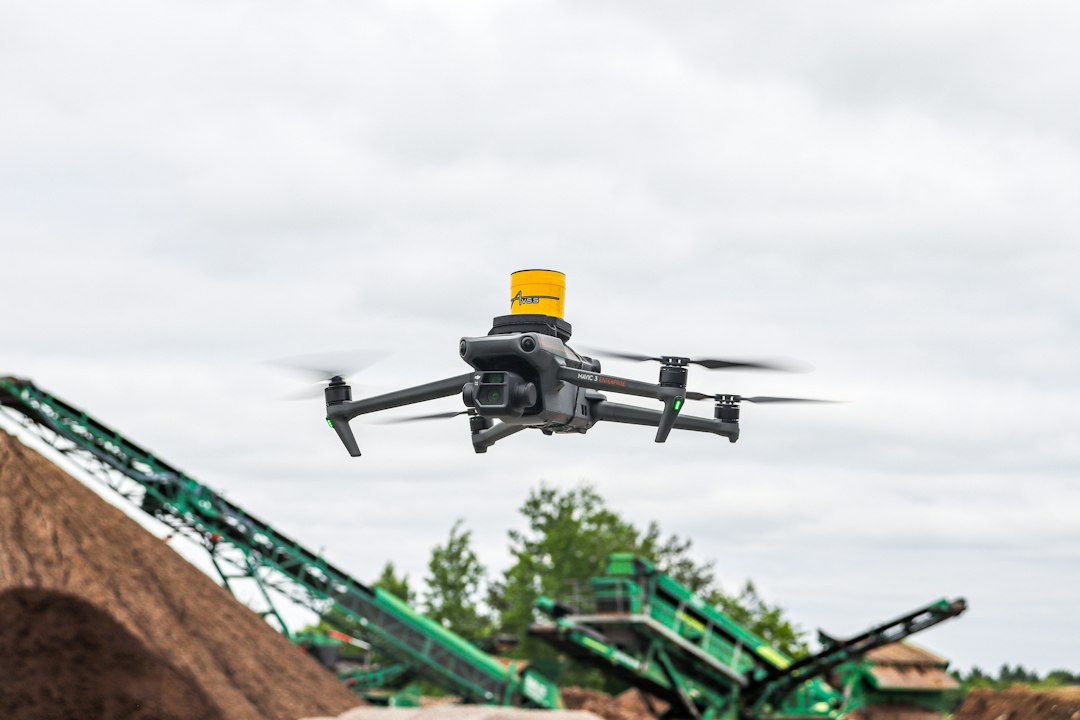
Autonomous last-mile delivery drones are, simply put, uncrewed aerial vehicles (UAVs) designed to transport packages from a local distribution hub directly to a customer’s doorstep, all without human intervention during the flight itself. These aren’t just fancy toys; they represent a significant shift in logistics, promising faster delivery times, reduced labor costs, and potentially a smaller environmental footprint. The core idea is to automate the final leg of a package’s journey, which is often the most complex and expensive part of the delivery chain.
Understanding the Drone Hardware and Software
When we talk about delivery drones, we’re really looking at a sophisticated combination of physical components and intelligent programming. It’s not just a motor and a propeller; there’s a lot going on under the hood to ensure safe and efficient operation.
Drone Design and Components
At a fundamental level, most delivery drones are multi-rotor aircraft, similar to the consumer drones you might be familiar with, but scaled up and specialized for carrying payloads.
Airframe and Propulsion System
The airframe needs to be robust yet lightweight. Materials like carbon fiber composites are common due to their strength-to-weight ratio. The propulsion system typically involves multiple electric motors (quadcopters, hexacopters, octocopters are common) driving propellers. The number of rotors often correlates with payload capacity and redundancy. More rotors generally mean more lift and a greater ability to continue flying even if one motor fails, which is crucial for reliability. Battery technology, usually high-density lithium-polymer (LiPo) cells, dictates flight duration and payload capacity – a constant balancing act. Some designs are exploring hybrid systems (combining electric and small internal combustion engines) to extend range, though this adds complexity and weight.
Navigation and Sensing Equipment
Accurate navigation is non-negotiable. This involves a suite of sensors. GPS (Global Positioning System) is foundational, providing location data. However, GPS can be prone to errors, especially in urban canyons or areas with signal interference. Therefore, drones often augment GPS with other systems like Inertial Measurement Units (IMUs – accelerometers and gyroscopes) for precise attitude and velocity estimation, and magnetometers for heading. For obstacle avoidance and landing, various sensors come into play: lidar (Light Detection and Ranging) for mapping the environment in 3D, radar for detecting objects through adverse weather, and optical cameras (both visible light and sometimes thermal) for visual navigation and object identification. These sensors feed data into the drone’s flight controller, which is essentially the drone’s brain.
Payload Mechanism
How the package is carried and released is a critical design element. Common approaches include a bottom-mounted compartment that opens to drop the package, or a retractable winch system that lowers the package to the ground. The latter can be more versatile, allowing for deliveries to areas where a drone can’t safely land (e.g., a backyard with obstacles) and reducing the need for precise landing maneuvers. Security of the payload during flight is also a consideration, ensuring it doesn’t shift or get damaged.
Flight Control and Autonomous Operation Software
The software is where the real “intelligence” resides. It’s what transforms a collection of hardware into an autonomous delivery vehicle.
Flight Management System (FMS)
The FMS is the core operating system of the drone.
It takes inputs from all the sensors, processes flight plans, and sends commands to the propulsion system to maintain stability, altitude, and direction.
This system is responsible for executing pre-planned routes, managing ascent and descent profiles, and handling emergency procedures. It’s designed with redundancy in mind, often having backup systems to take over if a primary component fails.
Navigation and Path Planning Algorithms
These algorithms are what enable the drone to get from point A to point B efficiently and safely. They take the planned route from the ground control system and translate it into specific flight commands. This includes obstacle avoidance algorithms that use sensor data to dynamically adjust the drone’s path around unexpected obstructions (buildings, trees, other aircraft). Path planning also involves optimizing for factors like energy consumption, flight time, and airspace restrictions. In dynamic environments, these algorithms need to be highly reactive.
Vision Systems and AI for Landing
For the final approach and delivery, vision systems combined with artificial intelligence (AI) play a crucial role. AI-powered computer vision can identify suitable landing zones, distinguish between permissible and impermissible surfaces, and even recognize specific markers at the delivery point (e.g., a QR code indicating a safe drop-off spot). This helps ensure precise and safe package placement, minimizing the risk of damage or misdelivery. Machine learning models are trained on vast datasets of imagery to improve recognition capabilities in varying lighting and weather conditions.
In exploring the advancements in autonomous last-mile delivery drones, it’s interesting to consider how technology is shaping various sectors, including health management. A related article discusses the best Android health management watches, highlighting the integration of smart technology in personal health tracking. For those interested in the intersection of technology and logistics, this article provides valuable insights into how innovations in one field can influence developments in another. You can read more about it here: What is the Best Android Health Management Watches?.
Key Takeaways
- The training data includes information and events up to October 2023.
- Insights and knowledge are based on a wide range of sources available until the cutoff date.
- No updates or developments occurring after October 2023 are included in the training.
- Users should verify current information from reliable sources for the latest updates.
- The model’s responses reflect the context and knowledge available up to the specified date.
Fleet Management Architectures
Managing a single drone is one thing; managing hundreds or thousands of them operating simultaneously is a whole different ballgame. This requires a robust, scalable, and intelligent fleet management system.
Centralized Command and Control Systems
Think of this as the air traffic control for your drone fleet. A centralized system provides oversight and coordination for all operational drones.
Mission Planning and Scheduling
This is where delivery orders are translated into drone missions. The system takes customer requests, available drones, package weight, destination, and current weather conditions into account. Advanced algorithms then optimize routes for multiple drones, aiming to minimize flight time, maximize drone utilization, and reduce energy consumption. This often involves solving complex “traveling salesman” type problems, but for many drones and dynamic variables. The system also needs to consider drone battery levels and recharge cycles.
Real-time Monitoring and Telemetry
Once drones are in the air, the command center needs to know exactly what they’re doing. This involves real-time telemetry data: drone location, altitude, speed, battery status, payload status, and sensor readings. Any deviations from the planned flight path or abnormal sensor readings trigger alerts. This continuous stream of data allows operators to intervene if necessary and provides valuable information for post-flight analysis.
Emergency Protocols and Human Intervention
Despite all the automation, things can go wrong. The system needs clearly defined emergency protocols. This might include rerouting a drone, initiating an emergency landing at a designated safe zone, or returning to base. Human operators are typically on standby to take over manual control in critical situations, although the goal is to minimize such interventions. The system should provide clear, actionable information to operators to facilitate quick decision-making.
Communication Networks and Data Exchange
Reliable communication is the backbone of any drone operation. Without it, the fleet management system is blind.
Beyond Visual Line of Sight (BVLOS) Communication
For last-mile delivery, drones will almost certainly operate Beyond Visual Line of Sight (BVLOS). This means relying on robust radio frequency (RF) communication. This typically involves cellular networks (4G/5G) for wide-area coverage and high bandwidth, allowing for telemetry streaming and command transmission. Satellite communication might be used as a backup in remote areas or for truly global operations, though it’s generally slower and more expensive. Redundancy in communication links is vital to prevent loss of control.
Data Logging and Analytics
Every aspect of a drone’s flight, from sensor readings to command executions, is logged. This data is invaluable for several reasons. It allows for post-flight analysis to identify operational efficiencies, pinpoint causes of incidents, and improve algorithms. Analytics can reveal patterns in battery degradation, motor wear, or common navigation challenges, helping to predict maintenance needs and refine drone design and operational procedures.
This continuous feedback loop is essential for iterative improvement.
Cybersecurity Measures
With sensitive package information and the potential for malicious interference, cybersecurity is paramount. This involves encrypting all communication between drones and the ground control station, secure authentication protocols for drone access, and robust firewalls to protect the central systems. Protecting against spoofing (faking GPS signals) or jamming (interfering with communication) is also a critical consideration.
Airspace Integration and Regulatory Compliance
Drones don’t fly in a vacuum; they share airspace with other aircraft, and their operations are subject to specific rules and regulations. This is a complex area that’s constantly evolving.
Unmanned Aircraft System Traffic Management (UTM)
UTM is essentially an air traffic control system specifically designed for drones. It’s a critical component for safe and scalable drone operations.
Airspace Classification and Restrictions
Just like manned aviation, airspace for drones is classified. There are areas where drones can fly freely (often low-altitude, uncongested areas), areas with restrictions (e.g., near airports, government buildings, critical infrastructure), and no-fly zones.
UTM systems must integrate real-time airspace data, including temporary flight restrictions (TFRs) and notice to airmen (NOTAMs), to ensure drones operate within permitted boundaries. This dynamic awareness is crucial for preventing incursions into sensitive areas.
Drone Identification and Tracking
For safety and accountability, every drone needs to be identifiable and trackable. This often involves remote ID systems that broadcast a drone’s unique identifier, location, and velocity, allowing authorities and other airspace users to know who is operating what.
UTM systems aggregate this data to provide a comprehensive picture of drone activity in a given area, helping to prevent collisions and manage traffic flow.
Conflict Detection and Resolution
As more drones take to the skies, the risk of mid-air collisions increases. UTM systems are designed to detect potential conflicts between drones, or between drones and manned aircraft, and issue alerts. Advanced systems can even suggest or automatically implement resolution maneuvers, such as adjusting altitude or heading, to avoid collisions.
This requires sophisticated algorithms that process real-time position data from all registered aircraft.
Regulatory Frameworks and Certification
Regulations are the bedrock of safe and legal drone operations. They vary significantly by country and region, making international deployment complex.
Certification of Drones and Operators
Before a drone can fly commercially, it typically needs to undergo a certification process to ensure it meets airworthiness standards. This includes validating its design, manufacturing quality, and flight characteristics.
Operators also need to be certified, demonstrating proficiency in drone operation, understanding of regulations, and emergency procedures. These certifications are designed to ensure a baseline level of safety and competence.
Privacy and Security Concerns
Drones, especially those with cameras, raise significant privacy concerns. Regulations often address limitations on where drones can fly, what data they can collect, and how that data is stored and used.
For example, rules might prohibit flying over private property without consent or restrict data collection in public spaces. Security protocols are also often mandated to prevent unauthorized access to drone systems or data.
Environmental Impact Regulations
While drones promise a smaller carbon footprint than traditional delivery vehicles, their environmental impact isn’t zero. Regulations might address noise pollution (especially in residential areas), battery disposal, and the environmental impact of manufacturing.
There’s also a focus on ensuring drones don’t disturb wildlife or contribute to habitat destruction, particularly in sensitive ecological zones.
Integration with Existing Logistics Infrastructure
Delivery drones aren’t standalone entities; they’re part of a larger, interconnected logistics ecosystem. Their effectiveness hinges on how seamlessly they integrate with existing systems.
Launch and Landing Infrastructure
Drones need a place to start their journey and finish it. This isn’t just a patch of grass; it requires specialized infrastructure.
Drone Hubs and Vertiports
These are dedicated facilities where drones are loaded with packages, undergo maintenance checks, and recharge their batteries. Think of them as miniature airports for drones. Vertiports, specifically, are designed for vertical take-off and landing (VTOL) aircraft, providing dedicated landing pads and facilities. They need to be strategically located close to customer dense areas or existing distribution centers to minimize drone flight times and maximize efficiency.
Automated Package Handling Systems
Once a drone lands, the process needs to be as automated as possible. This involves robotic systems for loading and unloading packages, transferring them to storage or directly to customers. Conveyor belts, robotic arms, and automated storage and retrieval systems (AS/RS) are all part of this. The goal is to minimize human intervention at the hub, reducing labor costs and speeding up turnaround times for drones.
Battery Charging and Swapping Stations
Given current battery technology limitations, drones will need frequent recharging or battery swaps. Automated stations are crucial for this. A robotic arm could swap out a depleted battery for a fully charged one in minutes, minimizing downtime. Inductive charging pads that charge batteries wirelessly while the drone is parked are also being explored. This infrastructure needs to be robust, reliable, and able to handle many drones simultaneously.
Data Exchange with Supply Chain Systems
The drone fleet management system can’t operate in isolation. It needs to communicate effectively with other parts of the supply chain.
Order Management Systems (OMS) Integration
When a customer places an order, the Order Management System (OMS) needs to communicate that information directly to the drone fleet management system. This includes package details, delivery address, and delivery preferences. This integration ensures that the drone system has all the necessary information to create a mission plan.
Warehouse Management Systems (WMS) Integration
The Warehouse Management System (WMS) is responsible for locating and preparing the correct package for drone delivery. It needs to know when a drone is scheduled for pickup so it can have the package ready at the drone hub. This real-time coordination prevents delays and ensures packages are loaded onto the correct drone efficiently.
Customer Communication and Tracking
Customers expect to know where their package is at all times. The drone fleet management system needs to feed real-time tracking information back to customer-facing applications. This allows customers to track their drone’s progress, receive notifications about estimated arrival times, and be alerted when the package has been delivered. This transparency builds trust and improves the overall customer experience.
In exploring the advancements in autonomous last-mile delivery drones, one can gain further insights by examining a related article that discusses the best software options for small businesses in 2023. This resource highlights how innovative software solutions can enhance operational efficiency, which is crucial for managing drone fleets effectively. For more information, you can check out the article on best software for small businesses in 2023. Understanding these tools can provide valuable context for the technical architectures involved in drone delivery systems.
Challenges and Future Outlook
| Metric | Description | Typical Value / Range | Unit |
|---|---|---|---|
| Drone Payload Capacity | Maximum weight the drone can carry per delivery | 2 – 5 | kg |
| Flight Range | Maximum distance a drone can travel on a single battery charge | 10 – 30 | km |
| Average Flight Speed | Typical cruising speed during delivery missions | 40 – 60 | km/h |
| Battery Life | Duration of continuous flight before recharge is needed | 20 – 40 | minutes |
| Fleet Size | Number of drones managed in a typical last-mile delivery fleet | 10 – 100 | units |
| Delivery Success Rate | Percentage of deliveries completed without failure or delay | 90 – 98 | % |
| Charging Time | Time required to fully recharge drone batteries | 30 – 60 | minutes |
| Autonomy Level | Degree of autonomous operation (navigation, obstacle avoidance) | Level 4 – Level 5 | SAE Levels |
| Communication Latency | Time delay in command and control communication | 50 – 200 | milliseconds |
| Operational Altitude | Typical flying altitude for last-mile delivery drones | 30 – 120 | meters |
While the promise of autonomous last-mile delivery drones is significant, there are still considerable hurdles to overcome before widespread adoption.
Technical Limitations
Current technology, while impressive, still has its boundaries.
Battery Life and Range
This remains one of the biggest constraints. Current battery technology limits drone flight times and payload capacity. Longer range often means smaller payloads, and vice versa. Significant breakthroughs in battery energy density or alternative power sources (e.g., hydrogen fuel cells, highly efficient hybrid systems) are needed to make long-range, heavy-payload drone deliveries commercially viable on a large scale.
Weather Resiliency
Drones are generally sensitive to adverse weather conditions like strong winds, heavy rain, snow, and ice. While some can operate in light rain, robust operations will require drones that can reliably handle a wider range of weather. This demands more advanced materials, sealed electronics, and sophisticated flight control algorithms that can compensate for gusty conditions.
Payload Capacity and Versatility
Most current delivery drones are designed for relatively small, lightweight packages. Delivering a full grocery order or a large item is beyond their current capabilities. Future development needs to focus on increasing payload capacity while maintaining efficiency, and potentially on modular payload systems that can adapt to different package sizes and shapes.
Public Acceptance and Social Impact
Technology isn’t just about engineering; it’s about people and how they react to it.
Noise Pollution
A fleet of hundreds or thousands of drones flying over residential areas could generate significant noise, leading to public complaints and resistance. Drone manufacturers are actively working on quieter propeller designs and acoustic shielding, but it remains a major concern that needs to be addressed for broad public acceptance.
Privacy Concerns
As mentioned earlier, the public is rightly concerned about drones carrying cameras flying over their homes. Clear regulations, transparent data collection policies, and public education campaigns will be crucial to alleviate these fears. The perception that drones are “spying” must be counteracted.
Job Displacement
The automation inherent in drone delivery raises concerns about job displacement in the traditional delivery sector. While new jobs in drone maintenance, operations, and software development will emerge, the overall impact on employment needs to be considered and managed through retraining programs or new economic opportunities.
Regulatory Harmonization and Standardization
The patchwork of regulations is a major bottleneck.
Cross-border Operations
For larger logistics companies, operating across state or national borders with drones is currently a regulatory nightmare due to differing rules. Harmonization of regulations across jurisdictions is essential for scalable and efficient multi-region operations. This includes common standards for drone certification, operator licensing, and airspace management.
International Standards for UTM
Just as air traffic control has international standards, so too will UTM. Developing global standards for drone identification, communication protocols, and conflict resolution will be vital to ensure safe and interoperable drone operations worldwide, especially as BVLOS operations become more common.
Liability and Insurance Frameworks
Who is liable if a drone causes damage or injury? Current insurance and liability frameworks are often ill-equipped to handle the complexities of autonomous drone operations. Clear, fair, and comprehensive legal frameworks are needed to cover accidents, malfunctions, and cybersecurity breaches, providing certainty for operators and protection for the public.
Despite these challenges, the future of autonomous last-mile delivery drones is bright. Continued technological advancements, coupled with progressive regulatory frameworks and increasing public acceptance, will pave the way for a transformative shift in how goods are delivered. The journey is complex, but the destination—faster, more efficient, and potentially more sustainable deliveries—is a powerful motivator.
FAQs
What is the purpose of autonomous last-mile delivery drones?
Autonomous last-mile delivery drones are designed to efficiently transport packages from distribution centers to customers’ doorsteps, reducing delivery times and costs while minimizing the need for human intervention.
How do technical architectures of autonomous delivery drones work?
Technical architectures of autonomous delivery drones typically involve a combination of sensors, GPS technology, artificial intelligence, and communication systems to navigate, avoid obstacles, and deliver packages accurately and safely.
What are the benefits of using autonomous drones for last-mile delivery?
Using autonomous drones for last-mile delivery can lead to faster delivery times, reduced carbon emissions, lower delivery costs, increased delivery efficiency, and improved customer satisfaction due to timely and accurate deliveries.
How is fleet management handled in autonomous last-mile delivery drone operations?
Fleet management in autonomous last-mile delivery drone operations involves monitoring drone performance, scheduling deliveries, optimizing routes, ensuring maintenance, and coordinating multiple drones to efficiently handle a high volume of deliveries.
What are some of the challenges faced in implementing autonomous last-mile delivery drone systems?
Challenges in implementing autonomous last-mile delivery drone systems include regulatory hurdles, safety concerns, limited payload capacity, battery life constraints, inclement weather conditions, and public acceptance of drones flying in urban areas.
Enjoying our content? Make us a preferred source on Google:
Add us as a Preferred Source on Google