

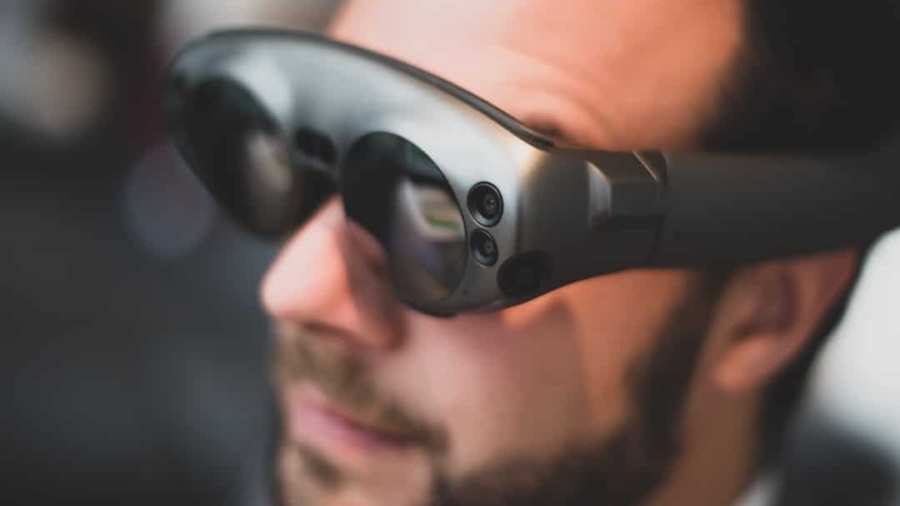
So, you’re wondering how Augmented Reality (AR) fits into the Metaverse for businesses? Simply put, AR acts as a crucial bridge, bringing digital information and experiences into our real-world environment, making the Metaverse feel more immediate and tangible for business applications. Instead of just entering a fully virtual world, AR allows businesses to overlay virtual elements onto their physical operations, marketing, training, and customer interactions. It’s about enhancing what’s already there, not replacing it entirely. This is particularly powerful for businesses looking to blend the best of both worlds – the physical and the digital – without requiring customers or employees to completely leave their current surroundings. Think of it as a stepping stone, making the Metaverse less alien and more accessible for practical business use cases right now.
When we talk about customer engagement in the Metaverse for businesses, AR is a game-changer. It’s not just about creating avatars or virtual storefronts; it’s about bringing those experiences into the customer’s physical world, making them feel more involved and connected without needing a full VR headset.
Immersive Product Try-Ons and Previews
One of the most immediate and impactful uses of AR in this space is allowing customers to virtually “try on” or preview products.
- Virtual Fashion Fit: Imagine trying on clothes, glasses, or accessories virtually from your living room. Customers can see how items look and fit on their own bodies, reducing returns and increasing purchase confidence. This goes beyond simple 2D images, with AR providing a realistic overlay that considers lighting and individual features.
- Home Decor Visualization: Furniture and home goods retailers are using AR to let customers place virtual items in their own homes. This helps people visualize how a couch or a painting would look before buying, solving a major pain point in online shopping for large items. It minimizes guesswork and boosts buyer satisfaction.
- Automotive Customization: Car manufacturers can offer AR apps that let potential buyers customize a vehicle in their driveway. They can change colors, wheels, and interior options, walking around the virtual car and seeing it in their real-world environment, enhancing the pre-purchase experience significantly.
Interactive Marketing Campaigns
AR adds a new dimension to marketing campaigns, moving beyond static ads to create memorable and shareable experiences.
- Gamified Brand Experiences: Brands can create AR games or interactive filters that consumers engage with. Think of Snapchat or Instagram filters that tie into a product launch or a seasonal promotion, allowing users to earn discounts or unlock exclusive content. These aren’t just entertaining; they subtly reinforce brand messaging.
- Augmented Retail Experiences: In brick-and-mortar stores, AR can transform discovery. Customers can use their phones to scan products and see embedded virtual information, such as reviews, ingredient lists, or even a demonstration video overlaying the physical item. This creates a more informed and engaging shopping journey.
- Location-Based AR Campaigns: Imagine walking down a street and an AR overlay promotes a nearby store’s special offer or points you to a virtual scavenger hunt within a specific area. This bridges online advertising with real-world foot traffic, creating timely and geographically relevant marketing opportunities.
Personalized Customer Support
AR can also elevate post-purchase support and customer service, making interactions more practical and less frustrating.
- Remote Assistance with Visual Guidance: When a customer has trouble assembling a product or troubleshooting an appliance, an AR-powered support call can be incredibly useful. A technician can remotely annotate the customer’s real-world view through their phone camera, pointing out specific parts or steps, guiding them visually without being physically present.
- Interactive Product Manuals: Instead of sifting through dense paper manuals, customers could point their phone at a product and see AR overlays that highlight specific buttons, explain functions, or show animation demonstrating how to operate a feature. This makes learning and using products far more intuitive.
In exploring the potential of augmented reality (AR) integration within metaverse business applications, it is essential to consider how various software solutions can enhance operational efficiency. A related article that delves into optimizing workflows and accuracy in business processes is available at Best Software for Tax Preparers: Streamline Your Workflow and Increase Accuracy. This resource provides valuable insights into software tools that can complement AR technologies, ultimately driving innovation and productivity in the metaverse landscape.
Key Takeaways
- Clear communication is essential for effective teamwork
- Active listening is crucial for understanding team members’ perspectives
- Setting clear goals and expectations helps to keep the team focused
- Regular feedback and open communication can help address any issues early on
- Celebrating achievements and milestones can boost team morale and motivation
Streamlining Operations with Metaverse-Integrated AR
Beyond customer-facing applications, AR plays a significant role in making internal business operations more efficient and effective, blending digital tools with physical workflows. This isn’t science fiction; it’s happening in various industries right now.
Enhanced Employee Training and Onboarding
Traditional training methods often lack realism or can be costly to replicate real-world scenarios. AR offers a practical alternative.
- Immersive Skill Development: Instead of just watching a video, new employees can use AR to practice complex tasks in a realistic virtual overlay. For instance, a factory worker can learn to operate new machinery by following AR instructions overlaid directly onto the equipment, without the risk of damaging costly assets or causing safety issues.
- Location-Specific Guidance: AR can provide contextual information and guidance to employees based on their physical location. A retail employee could use AR to see inventory levels for a specific shelf, or a warehouse worker could get directions to the correct picking location overlaid onto their view of the facility.
- Interactive Simulations: For hazardous or intricate jobs, AR allows for safe, repetitive practice. Think of surgeons practicing procedures on virtual anatomical models overlaid onto a physical dummy, or engineers learning to repair complex systems without needing to dismantle actual equipment. This experiential learning significantly improves retention and reduces error rates.
Optimized Logistics and Supply Chain Management
The complexities of modern supply chains can be significantly simplified and made more transparent with AR integration.
- Augmented Picking and Packing: Warehouse workers equipped with AR glasses can receive instructions overlaid directly onto their view, highlighting the correct items to pick, showing optimal routes, and even indicating where items should be placed in a shipping box. This dramatically reduces picking errors and increases efficiency.
- Real-time Inventory Visualization: Imagine scanning a warehouse shelf with an AR device and instantly seeing real-time inventory counts, expiration dates, or upcoming orders for those specific items. This level of immediate, visual data access can prevent stockouts and optimize storage.
- Maintenance and Repair Assistance: Technicians in the field can use AR to access digital blueprints, diagnostics, and step-by-step repair instructions overlaid onto the machinery they are working on. This reduces downtime, improves first-time fix rates, and allows less experienced technicians to handle complex repairs with expert guidance.
Improved Collaboration and Remote Work
With distributed teams becoming the norm, AR can bridge geographical gaps and foster more effective collaboration.
- Shared AR Workspaces: Teams can collaborate on 3D models or designs by overlaying them into their respective physical environments. Engineers in different cities could both see and manipulate a virtual engine prototype on their own desks, gesturing and discussing changes as if they were in the same room.
- Remote Expert Assistance: Similar to customer support, AR enables experts to provide hands-on guidance to on-site personnel from anywhere in the world. A remote expert can see what a field technician sees, annotate their view with arrows and instructions, and guide them through complex installations or repairs. This reduces travel costs and speeds up problem resolution.
Revolutionizing Product Design and Development

The initial stages of a product’s lifecycle – design and development – can see radical improvements through AR, allowing for faster iterations and greater precision.
Virtual Prototyping and Iteration
Creating physical prototypes is costly and time-consuming. AR offers a dynamic, digital alternative.
- Interactive 3D Model Review: Designers and engineers can create virtual 3D models of products and overlay them into the real world. This allows them to walk around, scale, and manipulate the prototype as if it were physically present, identifying design flaws or ergonomic issues much earlier in the process.
- Real-Time Design Collaboration: Teams across different locations can simultaneously view and interact with the same AR prototype.
Imagine architects and clients reviewing a building design, seeing it integrated into the actual construction site before breaking ground, making real-time adjustments and getting immediate feedback.
- Testing and Simulation in Real-World Context: Beyond just viewing, AR can simulate a product’s function within its intended environment. An engineer could test how a new robot arm interacts with existing factory machinery in AR, identifying potential collisions or inefficiencies before any physical manufacturing begins.
Enhanced Quality Control and Inspection
Ensuring product quality is paramount, and AR can make these processes more efficient and accurate.
- Overlaying CAD Data on Physical Products: During manufacturing or assembly, AR can overlay CAD (Computer-Aided Design) drawings or specifications directly onto physical components. Inspectors can quickly verify if parts are correctly placed, aligned, or if there are any discrepancies between the physical item and its digital blueprint.
- Automated Anomaly Detection: Paired with computer vision, AR systems can be trained to detect deviations from the norm.
An AR headset could highlight a misaligned screw or a scratch on a surface, guiding quality control personnel to potential defects that might otherwise be missed.
- Guided Assembly and Disassembly: For complex products, AR can provide step-by-step visual instructions for assembly, reducing errors and speeding up the process. Similarly, for maintenance or repair, AR can guide technicians through the correct disassembly sequence, ensuring no critical steps are missed.
Data Visualization in Physical Spaces
Making complex data sets understandable and actionable is a challenge. AR can bring this data to life in a physical context.
- Performance Metrics Overlay: Imagine walking through a factory floor and seeing AR overlays on machinery displaying real-time operational data like temperature, output, or maintenance schedules.
This provides immediate, contextual insights to floor managers.
- Spatial Data Analysis: For urban planners or property developers, AR can project data like traffic flow, population density, or zoning regulations onto a physical model or even the actual landscape, aiding in more informed decision-making.
Monetization Strategies for AR in the Metaverse

Businesses actively implementing AR within the Metaverse aren’t just doing it for fun; there are clear monetization paths. It’s about creating new revenue streams and enhancing existing ones through innovative digital experiences.
Direct Sales of AR Experiences and Content
The most straightforward approach is selling AR assets or access to AR-enhanced features.
- Virtual Goods and Digital Collectibles (NFTs): Brands can sell AR filters, digital clothing, or virtual objects that users can “own” and display in their physical environment or within AR-enabled Metaverse spaces. These digital assets, especially when tied to NFTs, create scarcity and value.
- Premium AR Features/Subscriptions: Companies might offer a basic AR experience for free but charge for premium features like advanced customization options for virtual try-ons, exclusive content access, or more sophisticated AR tools.
- Licensed AR Content: Similar to stock photos or music, businesses can license their AR models, environments, or interactive elements to other companies for use in their own applications or campaigns.
Enhanced E-commerce and Retail
AR directly impacts retail by improving the shopping experience and reducing friction, leading to increased conversions and reduced returns.
- Increased Conversion Rates: By allowing customers to virtually try on or place products in their environment, AR addresses common uncertainties in online shopping, making customers more confident in their purchases. This confidence directly translates to higher sales.
- Reduced Returns: When customers have a more accurate understanding of a product’s look, fit, or size before buying, the likelihood of dissatisfaction leading to a return significantly decreases. This saves businesses substantial costs associated with processing returns.
- Virtual Storefronts with AR Overlays: Businesses can create immersive virtual storefronts in the Metaverse that customers can explore using AR. These stores can overlay product information, promotions, or interactive elements onto the customer’s real-world view as they browse, blending the digital and physical shopping journey.
Advertising and Sponsorship in AR Environments
As AR experiences become more widespread, they create new canvases for advertisers.
- In-AR Advertisements: Within AR games, social filters, or utility apps, brands can place contextual advertisements. This could range from virtual billboards in an AR city game to sponsored brand elements integrated into a product visualization tool.
- Branded AR Experiences: Companies can create their own branded AR experiences (e.g., an AR game promoting a new movie or a filter showcasing a new makeup line) and monetize them through data collection, lead generation, or driving traffic to their other products/services.
- Partnerships and Collaborations: Brands can partner with AR platform providers or popular AR content creators to integrate their products or messaging into existing popular AR experiences, reaching a wider audience through native-feeling placements.
Data Collection and Analytics
Every interaction within an AR environment generates valuable data that businesses can leverage.
- User Behavior Insights: Tracking how users interact with AR content – what they look at, how long they engage, what they customize – can provide deep insights into preferences, pain points, and product appeal. This data refines future product development and marketing strategies.
- Personalization and Targeting: With detailed user data, businesses can offer hyper-personalized AR experiences and targeted advertising. If a user frequently tries on virtual sneakers, they might receive AR ads for new shoe releases.
- Spatial Analytics: In retail or industrial settings, AR-collected data can provide insights into traffic flow, product interaction, or workflow efficiency, allowing businesses to optimize physical layouts and operational processes effectively.
As businesses increasingly explore the potential of augmented reality integration in the metaverse, understanding the latest technological trends becomes essential. A related article discusses the top smartwatches of 2023, highlighting how wearable technology can enhance user experiences in virtual environments. By examining these advancements, companies can better strategize their applications in the metaverse. For more insights on cutting-edge technology, check out this article on smartwatches.
Future Outlook: Challenges and Evolution of AR in Metaverse Business
| Metrics | Value |
|---|---|
| Market Size | Projected to reach 30 billion by 2025 |
| Business Adoption | Increasing at a rapid pace |
| Use Cases | Training, product visualization, remote assistance |
| Challenges | Integration complexity, cost, user experience |
While the present applications are exciting, the journey of AR in Metaverse business is still evolving. There are significant hurdles to overcome, but also immense potential for growth.
Technical Hurdles and Infrastructure Needs
The promise of seamless AR in the Metaverse relies heavily on underlying technology that is still maturing.
- Device Limitations: Current AR headsets (like Magic Leap or HoloLens) are still relatively bulky, expensive, and have limited fields of view, making mass consumer adoption challenging. Smartphone AR is more accessible but less immersive.
- Processing Power and Connectivity: Rendering complex AR environments in real-time, especially when interacting with others in a shared Metaverse space, demands significant processing power and low-latency, high-bandwidth connectivity (5G and beyond). This infrastructure isn’t ubiquitous yet.
- Spatial Computing Accuracy: For AR to be truly useful in business, especially for design, maintenance, or logistics, its ability to accurately map and persistently anchor virtual objects to real-world locations needs to be highly precise and stable across different environments.
Interoperability and Standards
For AR experiences to truly feel like part of a cohesive Metaverse, they need to communicate and interact across different platforms.
- Fragmented Ecosystems: Currently, many AR experiences are siloed within specific apps or platforms. A digital asset bought in one AR environment might not be usable in another, limiting the true “metaverse” feel.
- Need for Open Standards: The industry needs common standards for asset formats, spatial anchoring, identity, and data exchange to allow seamless transfer and interaction of AR content and user profiles across various AR/Metaverse platforms. Without this, the Metaverse remains a collection of disconnected islands.
- Cross-Platform Development Tools: Developers face challenges creating AR experiences that work consistently across different hardware (phones, headsets) and operating systems. More robust, standardized development tools are crucial for widespread adoption.
User Experience and Adoption Barriers
Even with perfect tech, getting people to embrace AR for business requires overcoming human-centric challenges.
- Usability and Intuition: AR interfaces need to be intuitive and easy to use for a broad range of users, from factory floor workers to everyday consumers. Clunky controls or complex setup processes will deter adoption.
- Privacy Concerns and Data Security: Overlaying digital information onto the real world and collecting data about user interactions raises significant privacy questions. Businesses need clear policies and robust security measures to build trust.
- Social Acceptance and Cognitive Load: Will people be comfortable wearing AR glasses in public or for extended periods at work? The cognitive effort of processing both real and virtual information simultaneously needs to be manageable without causing fatigue or distraction.
The Evolution Towards Pervasive AR
Despite the challenges, the trajectory is clear: AR is moving towards becoming an increasingly pervasive part of our environments, eventually blending almost seamlessly with our reality.
- Smarter AR Glasses: Future AR glasses will likely be lightweight, stylish, and offer wider fields of view, making them more acceptable for daily use in various business and personal contexts.
- Contextual AI Integration: AR will be increasingly powered by AI that understands context, anticipates user needs, and proactively delivers relevant information or experiences without explicit prompts, making interactions more natural and helpful.
- Digital Twin Integration: The ultimate vision involves AR deeply integrated with digital twins of physical objects, buildings, or even entire cities, allowing for real-time monitoring, simulation, and interaction with complex systems in a highly intuitive way.
In conclusion, Augmented Reality isn’t just a fleeting trend; it’s a foundational technology that’s actively shaping how businesses operate within the evolving Metaverse. From transforming customer interactions and streamlining internal workflows to revolutionizing product development and creating new revenue streams, AR offers tangible, practical benefits. While there are technical and user adoption challenges ahead, the continued evolution of AR hardware, software, and industry standards promises an even more integrated and impactful future. Businesses that strategically embrace AR now are not just preparing for the Metaverse; they’re actively building the bridges that will connect their operations and customers to this next frontier of digital interaction.
FAQs
What is augmented reality (AR) integration in metaverse business applications?
Augmented reality integration in metaverse business applications refers to the incorporation of AR technology into virtual environments to enhance the user experience and provide new opportunities for businesses to engage with customers, employees, and partners.
How does augmented reality enhance metaverse business applications?
Augmented reality enhances metaverse business applications by overlaying digital information, such as 3D models, animations, and interactive elements, onto the real-world environment, creating immersive and interactive experiences for users.
What are some examples of augmented reality integration in metaverse business applications?
Examples of augmented reality integration in metaverse business applications include virtual product demonstrations, interactive training simulations, virtual meetings and conferences, and immersive marketing experiences.
What are the benefits of integrating augmented reality into metaverse business applications?
The benefits of integrating augmented reality into metaverse business applications include improved user engagement, enhanced communication and collaboration, increased brand awareness, and the ability to provide unique and memorable experiences for customers.
What are the challenges of implementing augmented reality in metaverse business applications?
Challenges of implementing augmented reality in metaverse business applications include technical complexity, high development costs, hardware and software compatibility issues, and the need for user education and adoption.
Enjoying our content? Make us a preferred source on Google:
Add us as a Preferred Source on Google