


You’re probably here because you’re building a system that needs to handle a lot of requests, and you’re wondering how an API Gateway fits into that picture, especially in a distributed setup. Simply put, an API Gateway acts as a single entry point for all your client requests, routing them to the appropriate microservices, and often handles cross-cutting concerns like authentication, rate limiting, and logging. For high-throughput, distributed architectures, it’s not just a nice-to-have; it’s practically a necessity to manage complexity and ensure scalability. Without one, clients would have to know about and interact with many different services directly, which quickly becomes unmanageable and less secure.
Why API Gateways are Crucial for Throughput
In a world of microservices, each service typically exposes its own API. If a client needs to interact with several services to complete a single operation – say, fetching user data from one service, order history from another, and payment details from a third – that client would have to make multiple network calls. This creates chattiness, increases latency due to multiple round trips, and makes the client code more complex. An API Gateway solves this by providing a unified, often aggregated, interface.
Consolidating Client Interactions
Instead of clients making direct calls to numerous backend services, they make a single call to the API Gateway. The Gateway then takes on the responsibility of fanning out these requests to the relevant internal services, aggregating the responses, and returning a single, coherent response to the client. This significantly reduces the number of network hops for the client and simplifies client-side development. Think of it as a smart receptionist for your services.
Offloading Cross-Cutting Concerns
Many concerns apply to almost every API call, regardless of the specific service being invoked. These “cross-cutting concerns” include things like authentication, authorization, rate limiting, logging, monitoring, and even caching. Without an API Gateway, you’d have to implement these functionalities repeatedly in every single microservice, leading to code duplication, increased development time, and a higher chance of inconsistencies and errors. The Gateway centralizes these functions, ensuring they are applied consistently and managed in one place.
Enhancing Security and Resilience
The Gateway acts as a security perimeter. It can inspect incoming requests, apply security policies, and even protect backend services from direct exposure to the internet.
For example, it can filter out malicious requests or apply sophisticated authentication schemes before any request reaches your valuable internal services.
This layer also provides a great place to implement circuit breakers and bulkheads, which are vital patterns for building resilient distributed systems. If one backend service is struggling, the Gateway can gracefully degrade its functionality or route traffic away from it, preventing a cascading failure.
In exploring the intricacies of API Gateway Patterns for High-Throughput Distributed Architectures, it’s beneficial to consider related discussions on the evolution of digital media platforms. A pertinent article that delves into the historical context and technological advancements in this space can be found at this link. This resource provides insights into how media networks have adapted their architectures to meet increasing demands, paralleling the principles of API gateway patterns in modern distributed systems.
Key Takeaways
- The training data includes information and events up to October 2023.
- Insights and knowledge are based on a wide range of sources available until the cutoff date.
- No updates or developments occurring after October 2023 are included in the training.
- Users should verify current information from reliable sources for the latest updates.
- The model’s responses reflect the context and knowledge available up to the specified date.
Common API Gateway Patterns

There isn’t a one-size-fits-all solution for API Gateways. The pattern you choose often depends on your specific needs regarding complexity, traffic, and organizational structure.
Centralized Gateway Pattern
This is perhaps the most straightforward approach. Here, a single API Gateway instance or cluster handles all incoming traffic for all your backend services. It acts as the sole entry point to your entire microservice ecosystem.
Advantages of Centralized Gateways
The main benefit here is simplicity of deployment and management. You have one place to configure security, routing, and other policies. It’s easier to implement consistent governance and monitoring across all APIs. This pattern is often a good starting point for organizations adopting microservices, especially when their service landscape is not excessively complex or distributed across many teams.
Challenges with Centralized Gateways
The biggest challenge with a centralized gateway is that it can become a single point of failure and a bottleneck. As your system scales and more services are added, this single gateway might struggle to handle the increased load. Furthermore, if different teams own different sets of microservices, making changes to the centralized gateway’s configuration can become a coordination nightmare, potentially slowing down development. A bug in the gateway could take down your entire system.
Backend-for-Frontend (BFF) Pattern
The BFF pattern recognizes that different client types (web browsers, iOS apps, Android apps, smartwatches, etc.) often have very different data requirements and interaction patterns. Instead of a single, generic API Gateway, the BFF pattern introduces a dedicated gateway for each client type.
Tailoring APIs for Specific Clients
Each BFF is optimized for a particular client. For example, a web BFF might aggregate data differently and return a structure optimized for a web UI, while a mobile BFF might return a leaner dataset to conserve bandwidth and battery life on mobile devices. This avoids the problem of clients having to over-fetch or under-fetch data from a generic API.
Improving Client-Side Performance
By providing an API tailored to the client, you reduce the need for clients to perform complex data transformations or make multiple backend calls. This leads to faster load times and a smoother user experience, especially on mobile networks where latency and bandwidth can be constraints.
Decentralizing Gateway Development
The BFF pattern also decentralizes the development and ownership of the gateway. Each client-specific team can own and evolve their own BFF, allowing for faster iterations and reducing dependencies on a central gateway team. This aligns well with the microservice philosophy of independent teams and autonomous development.
Aggregation Gateway Pattern
This pattern focuses specifically on combining multiple requests into a single response. It’s often used in conjunction with other patterns, and a centralized gateway or a BFF can certainly implement aggregation.
Reducing Network Round Trips
The core idea is to reduce the number of client-to-service calls. If a client needs data from Service A, Service B, and Service C to render a single screen, the aggregation gateway makes the calls to A, B, and C internally, combines their responses, and sends one consolidated response back to the client. This is particularly valuable for applications with complex UIs that need to display information from many different sources.
Simplifying Client Logic
Without an aggregation gateway, clients would have to manage the asynchronous calls to multiple services, handle potential partial failures, and then combine the data. The aggregation gateway abstracts this complexity away, presenting a simpler, unified API to the client.
Composite Gateway Pattern
The composite pattern combines aspects of several other patterns, typically involving a “root” or main gateway that handles basic routing and security, and then delegates more specialized tasks to smaller, more focused gateways, which might themselves be BFFs or aggregation gateways.
Layered Approach to Functionality
Imagine a system where a main API Gateway handles authentication and basic traffic management. Once authenticated, the request might be routed to a product-specific gateway, which then handles product-related business logic, possibly aggregating data from several product-related microservices. This creates a clear separation of concerns.
Scalability and Ownership
This approach can improve scalability by distributing the load across multiple gateway instances, each responsible for a subset of functionality or services. It also allows different teams to own and manage their specific gateway components, aligning with organizational structures and reducing bottlenecks often seen with a monolithic gateway.
Essential Considerations for High-Throughput Architectures
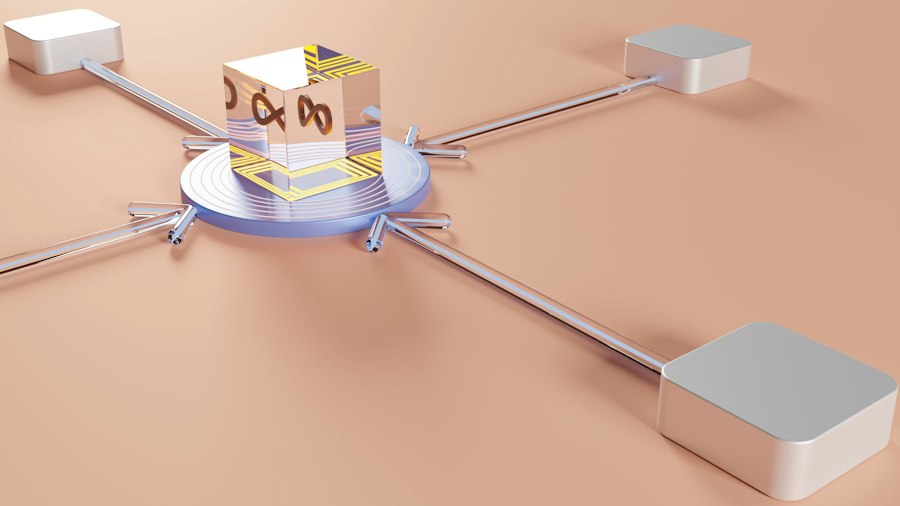
When you’re dealing with high traffic, the choices you make about your API Gateway become even more critical. Performance, resilience, and operational ease are paramount.
Performance and Scalability
A high-throughput architecture demands that your API Gateway itself can handle a massive volume of requests without becoming a bottleneck. This means carefully considering its underlying technology and deployment strategy.
Choosing the Right Technology
Different gateway technologies have different performance characteristics.
Some are highly optimized for raw request throughput (like Nginx or Envoy proxies), while others offer more features but might introduce higher latency (like some commercial API management platforms). Consider technologies that are non-blocking, asynchronous, and designed for concurrent operations. Languages like Go or frameworks like Node.js (with its event loop) are often popular choices for building custom gateways due to their efficiency.
Horizontal Scaling Strategies
To handle increased load, your API Gateway must be horizontally scalable.
This means you should be able to run multiple instances of your gateway behind a load balancer. Ensure your gateway is stateless or that any state it maintains can be easily shared or replicated across instances. Cloud-native solutions often provide auto-scaling capabilities that can automatically spin up or down gateway instances based on traffic patterns.
Caching at the Gateway Level
Implementing caching at the API Gateway can dramatically improve performance for frequently requested, slowly changing data.
By serving cached responses directly from the gateway, you can reduce the load on your backend services and decrease response times for clients. This can be a simple in-memory cache or an external distributed cache system like Redis. Careful cache invalidation strategies are essential to ensure data freshness.
Resilience and Fault Tolerance
In a high-throughput distributed system, failures are inevitable.
Your API Gateway should be designed to withstand these failures and prevent them from cascading throughout your system.
Implementing Circuit Breakers
A circuit breaker pattern prevents a failing service from being continuously hit with requests, which can worsen its state and potentially lead to a cascade of failures. If a backend service becomes unresponsive or starts throwing too many errors, the gateway can “trip” the circuit breaker, stopping requests to that service for a period and returning a fallback response or an error directly to the client. This gives the troubled service time to recover.
Applying Bulkhead Isolation
The bulkhead pattern isolates different parts of your system so that a failure in one area doesn’t affect others.
For an API Gateway, this means segmenting resources (like thread pools, connection pools, or even distinct gateway instances) for different backend services or groups of services. If one service starts consuming excessive resources, it only impacts its allocated bulkhead, leaving other services unaffected.
Timeout and Retry Mechanisms
Properly configured timeouts are crucial. Requests to backend services should have reasonable timeouts.
If a service doesn’t respond within that time, the gateway should fail fast rather than hang indefinitely, tying up resources. Retry mechanisms can be useful for transient failures, but they need to be implemented carefully to avoid overwhelming an already struggling service (e.g., using exponential backoff).
Security and Observability
These are not just good practices; they are non-negotiable for any production-grade system, especially one handling high traffic.
Centralized Authentication and Authorization
The API Gateway is the ideal place to enforce authentication and authorization policies. It can validate API keys, JWTs (JSON Web Tokens), or perform OAuth handshakes before any request even reaches your backend services.
This offloads a significant burden from individual services and ensures consistent security across your entire API landscape.
Rate Limiting and Throttling
To protect your backend services from being overwhelmed by too many requests (accidental or malicious) and to ensure fair usage, implementing rate limiting at the gateway is critical. You can set limits based on API key, IP address, user ID, or other criteria, preventing abuse and ensuring service availability for legitimate users. Throttling can be used to smooth out request spikes.
Robust Logging and Monitoring
A high-throughput system generates a lot of data.
Your API Gateway should produce comprehensive logs detailing every request and its outcome, including request/response headers, body (if necessary and scrubbed for sensitive data), latency, and errors. These logs are invaluable for debugging, auditing, and understanding system behavior. Integrating with a centralized logging system (like ELK Stack or Splunk) is essential.
Distributed Tracing Integration
When a single client request fans out to multiple backend services through the gateway, understanding the flow and pinpointing performance bottlenecks becomes challenging.
Distributed tracing (using tools like OpenTelemetry, Jaeger, or Zipkin) allows you to track a single request as it traverses through various services, providing a holistic view of its journey and identifying where latency is introduced. The API Gateway is the perfect place to initiate and propagate trace IDs.
Deployment Strategies and Patterns
How you deploy your API Gateway significantly impacts its performance, resilience, and operational overhead.
In-Process Gateway
This pattern involves embedding the gateway functionality directly within your application code or running it as a sidecar alongside your service.
Advantages of In-Process
Embedding the gateway logic can simplify deployment, as it’s part of your existing service. It might offer very low latency for routing decisions if the gateway logic is tightly coupled. As a sidecar, it provides a dedicated gateway for each instance of your microservice, offering isolation.
When to Consider In-Process
This approach can work for very simple cases or when you’re using a service mesh (which effectively provides sidecar proxies that handle many gateway-like functions). However, it often couples gateway concerns with service logic, which can lead to tight coupling and make independent evolution difficult. For complex, high-throughput scenarios, a more dedicated, external gateway is often preferred.
Reverse Proxy Gateway
Using a robust reverse proxy like Nginx, Envoy, or HAProxy as your API Gateway is a very common and effective strategy, especially for high-throughput scenarios. These proxies are designed for high performance and low latency.
Leveraging Established Proxy Technology
These tools are battle-tested and highly optimized for handling a large volume of concurrent connections. They provide excellent capabilities for load balancing, SSL/TLS termination, request routing, and basic rate limiting. Many advanced features can be added through modules or scripting (e.g., Lua with Nginx).
Building a Custom Logic Layer
While a pure reverse proxy handles basic routing well, you’ll often need more sophisticated logic (e.g., complex authentication, request aggregation, data transformation).
This is typically achieved by placing a custom-built service behind the reverse proxy.
The proxy handles the raw traffic and basic security, then forwards requests to your custom gateway application, which implements the business logic specific to your API.
Service Mesh Integration
A service mesh (like Istio, Linkerd, or Consul Connect) is another architectural pattern that provides many of the cross-cutting concerns that an API Gateway handles, but at the service-to-service communication level.
Gateway and Mesh Complement Each Other
It’s important to understand that an API Gateway and a service mesh are not mutually exclusive; they actually complement each other. The API Gateway typically sits at the edge of your network, handling ingress traffic from external clients. It’s focused on client-facing APIs and often performs client-specific concerns like API key validation, public API aggregation, and transformation.
A service mesh, on the other hand, operates within your network, managing internal service-to-service communication. It handles things like internal load balancing, traffic routing, mTLS (mutual TLS) between services, resilience patterns (circuit breakers, retries), and observability (metrics, tracing) for internal calls.
Benefits of Combined Approach
In a high-throughput scenario, using both can offer the best of both worlds. The API Gateway secures and manages external access, while the service mesh handles the complexities and resilience of internal communication between your microservices. This separation of concerns allows each component to focus on its primary role, leading to a more robust, scalable, and manageable architecture.
In exploring API Gateway Patterns for High-Throughput Distributed Architectures, one can gain valuable insights into optimizing system performance and scalability. A related article that delves into the latest innovations in technology products can be found at the best tech products of 2023, which highlights tools and solutions that can enhance the efficiency of distributed systems. By understanding these advancements, developers can better implement API gateways that effectively manage traffic and improve overall application responsiveness.
Managing API Gateway Evolution
| Pattern | Description | Throughput Impact | Latency Impact | Scalability | Use Case |
|---|---|---|---|---|---|
| Edge-Optimized API Gateway | Deploys API Gateway at edge locations to reduce latency by serving requests closer to users. | High throughput by offloading traffic to edge nodes | Low latency due to proximity to clients | Highly scalable with global distribution | Global applications with geographically dispersed users |
| Regional API Gateway | API Gateway deployed within a specific region to serve local traffic efficiently. | Moderate to high throughput within region | Moderate latency, optimized for regional users | Scales well within region | Applications targeting specific geographic regions |
| Private API Gateway | API Gateway deployed within a private network or VPC for internal services. | High throughput for internal traffic | Low latency due to private network access | Scalable within private infrastructure | Internal microservices communication |
| API Gateway with Caching | Implements response caching at the gateway to reduce backend load. | Increases throughput by reducing backend calls | Reduces latency for cached responses | Scales well with cache size and invalidation strategy | Read-heavy APIs with repetitive requests |
| API Gateway with Rate Limiting | Controls request rates to protect backend services from overload. | Maintains throughput by preventing spikes | May increase latency if throttling occurs | Scalable with distributed rate limiting mechanisms | Public APIs with unpredictable traffic patterns |
| API Gateway with Load Balancing | Distributes incoming requests across multiple backend instances. | Improves throughput by parallelizing requests | Minimal impact on latency | Highly scalable with backend instance scaling | High availability and fault tolerance requirements |
| API Gateway with Asynchronous Processing | Handles requests asynchronously to improve responsiveness. | Increases throughput by decoupling request handling | Variable latency depending on processing | Scales with message queue and worker pool size | Long-running or batch processing APIs |
An API Gateway is not a static component; it needs to evolve alongside your microservices. Effective management strategies are key to avoiding it becoming a bottleneck for development.
Versioning Strategies
As your APIs change, you’ll need ways to manage different versions. The API Gateway is often the first place to implement versioning strategies.
URI Versioning
Embedding the version directly into the URI (e.g., /v1/products, /v2/products) is a common and straightforward approach. The gateway can then route requests based on this version string to the appropriate backend service version.
Header Versioning
Using a custom HTTP header (e.g., X-API-Version: 1) for versioning allows for cleaner URIs. The gateway would inspect this header to determine the correct service endpoint. This is more flexible as it doesn’t change the resource URI.
Content Negotiation
This approach uses the Accept header (e.g., Accept: application/vnd.mycompany.v1+json) to indicate the desired API version. The gateway would use this information to route to the correct service version. This is the most RESTful approach but can be slightly more complex to implement.
Centralized Configuration Management
As your gateway grows in complexity, managing its configuration (routes, policies, security rules) becomes critical.
GitOps for Gateway Configuration
Treat your gateway’s configuration as code and store it in a Git repository. Use GitOps principles where changes to the Git repo automatically trigger deployments or updates to your gateway configuration. This provides version control, auditability, and a single source of truth for your gateway’s behavior.
Dynamic Configuration Updates
For high-throughput systems, you often can’t afford downtime for configuration changes. Your gateway should support dynamic configuration updates, allowing you to modify routing rules, rate limits, or security policies without restarting the gateway instances. This is often achieved through control planes that push updates to gateway instances or by having gateways poll a configuration service.
Automated Testing and Deployment
Reliable deployment and thorough testing are essential for an API Gateway, especially given its critical position in your architecture.
Comprehensive Test Suites
Beyond unit tests, develop integration tests that verify the gateway’s routing, policy enforcement, and interaction with backend services. End-to-end tests that simulate client requests through the gateway to the services are crucial. Performance tests and load tests should be regular parts of your CI/CD pipeline to ensure the gateway can handle expected and peak traffic.
CI/CD Pipeline Integration
Automate the build, test, and deployment of your API Gateway using a robust CI/CD pipeline. This ensures that changes are introduced reliably and consistently. Blue/Green deployments or Canary releases for your gateway are highly recommended to minimize risk during updates, allowing you to gradually shift traffic to new versions and quickly roll back if issues arise.
FAQs
What is an API Gateway?
An API Gateway is a server that acts as an API front-end, receiving API requests, enforcing throttling and security policies, passing requests to the back-end service, and then passing the response back to the requester.
What are the benefits of using an API Gateway in a distributed architecture?
Using an API Gateway can help simplify the client-side code, improve security by centralizing authentication and authorization, enable load balancing, caching, and rate limiting, and provide insights into API usage through analytics.
What are some common API Gateway patterns for high-throughput distributed architectures?
Some common API Gateway patterns include the Direct Coupling pattern, the API Composition pattern, the API Gateway Aggregation pattern, the API Gateway Decomposition pattern, and the API Gateway as a Service pattern.
How does the Direct Coupling pattern work in an API Gateway?
In the Direct Coupling pattern, the API Gateway forwards the client request directly to the corresponding microservice, bypassing any additional processing. This pattern is simple and efficient but may not provide the flexibility and scalability needed for complex architectures.
What are some key considerations when designing an API Gateway for high-throughput distributed architectures?
When designing an API Gateway, it is important to consider factors such as scalability, fault tolerance, security, monitoring, logging, caching, rate limiting, and the overall performance impact on the system. Proper planning and design are crucial for ensuring the success of the distributed architecture.
Enjoying our content? Make us a preferred source on Google:
Add us as a Preferred Source on Google