

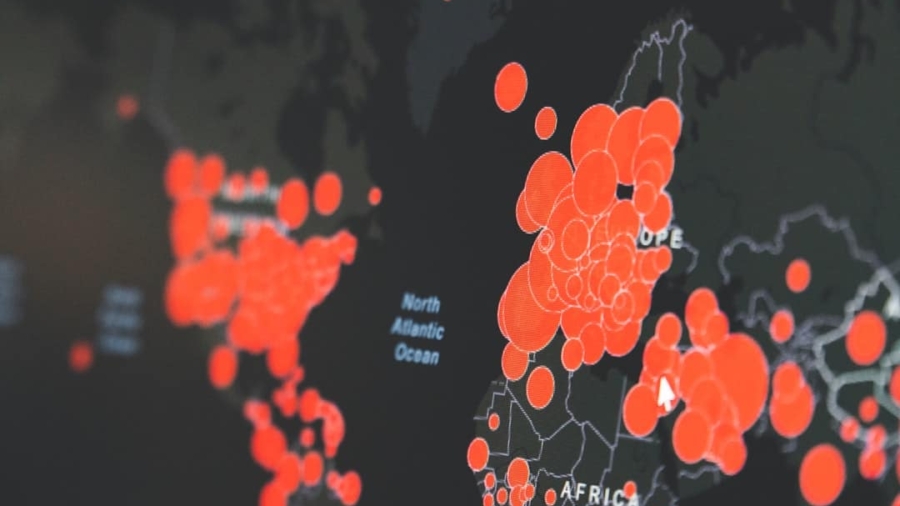
Forecasting epidemic and pandemic outbreaks has always been a monumental challenge for public health experts. But with the rise of artificial intelligence (AI), we’re gaining powerful new tools that can significantly enhance our ability to predict, track, and ultimately mitigate these global health threats. Essentially, AI helps us make sense of vast and complex datasets much faster and more accurately than humans ever could, giving us a crucial head start.
Think about all the bits and pieces of information that swirl around before and during an outbreak: news reports, social media posts, flight patterns, climate data, traditional surveillance data, and even animal health reports. It’s an overwhelming amount to process manually. AI, however, thrives on this kind of data deluge.
Handling Massive Data Sources
Traditional epidemiological methods often rely on reported cases, which can be delayed and incomplete. AI can pull together information from numerous, diverse sources in real-time. This includes:
- Public health surveillance data: The usual suspects like case counts, lab results, and hospital admissions.
- Environmental data: Temperature, humidity, rainfall – factors that can influence vector-borne diseases like dengue or malaria.
- Travel data: Airline passenger numbers, border crossings, public transport usage, helping trace potential spread.
- Animal health data: Monitoring disease outbreaks in animal populations, as many human diseases originate in animals (zoonoses).
Identifying Subtle Patterns
Humans are great at spotting obvious links, but AI can uncover hidden connections and subtle patterns within data that would likely go unnoticed by even the most experienced epidemiologist. These patterns might indicate the early stages of an outbreak or predict its trajectory.
Speed and Efficiency
In an outbreak situation, time is of the essence. AI models can process and analyze data orders of magnitude faster than human teams, providing actionable insights in real-time or near real-time. This rapid analysis means quicker alerts and an earlier response.
In the realm of public health, the application of artificial intelligence in predicting epidemic and pandemic outbreaks has garnered significant attention. A related article that delves into the advancements and methodologies used in this field can be found at this link. This resource highlights the importance of technology in enhancing our understanding of disease spread and improving response strategies, showcasing how AI can be a powerful tool in safeguarding global health.
Key Takeaways
- Clear communication is essential for effective teamwork
- Active listening is crucial for understanding team members’ perspectives
- Setting clear goals and expectations helps to keep the team focused
- Regular feedback and open communication can help address any issues early on
- Celebrating achievements and milestones can boost team morale and motivation
Key AI Technologies in Action
It’s not just one magic AI bullet; it’s a combination of different AI and machine learning techniques working together to give us a clearer picture.
Machine Learning Algorithms
At the heart of many prediction systems are various machine learning algorithms. These algorithms “learn” from historical data to make predictions about future events.
- Deep Learning: A subset of machine learning, deep learning models (like neural networks) are particularly good at handling unstructured data, such as text from social media or images, and finding complex relationships within them. This could mean analyzing the sentiment of online discussions about symptoms or identifying anomalies in satellite imagery related to environmental changes.
- Random Forests and Gradient Boosting: These ensemble methods combine multiple decision trees to produce more accurate and stable predictions. They are excellent for classification tasks – for instance, deciding whether an area is at high or low risk for an outbreak.
- Support Vector Machines (SVMs): Good for finding patterns in data and classifying them, for example, distinguishing between infected and non-infected individuals based on symptom profiles and exposure.
Natural Language Processing (NLP)
NLP allows computers to understand, interpret, and generate human language. This is crucial for sifting through vast amounts of text-based information.
- Social Media Monitoring: NLP can analyze posts on platforms like Twitter or Facebook, looking for keywords related to symptoms, unusual illnesses, or even unconfirmed reports of disease spread. Early whispers online can sometimes precede official health alerts.
- News Article Analysis: Automatically scanning global news outlets for mentions of unusual health events, disease clusters, or emerging pathogens, which can provide critical early warnings.
- Scientific Literature Review: Helping researchers quickly identify relevant studies or breakthroughs in infectious disease research.
Computer Vision
While perhaps less intuitive for disease prediction, computer vision (allowing computers to “see” and interpret images and videos) also plays a role.
- Satellite Imagery Analysis: Monitoring environmental factors like deforestation, urbanization, or changes in water bodies that could impact vector populations (e.g., mosquitoes) or human-animal interfaces.
- Microscopy and Diagnostic Imaging: AI can assist in the rapid analysis of medical images or blood samples to detect pathogens, though this is more for diagnosis than broad prediction.
Practical Applications and Use Cases

Understanding the tech is one thing, but seeing how it’s actually applied really brings its value home.
Early Warning Systems
One of AI’s most impactful roles is in building sophisticated early warning systems. These systems continuously monitor various data streams to detect anomalies.
- Anomaly Detection: AI models are trained on what “normal” disease patterns look like. When new data deviates significantly from these norms (e.g., an unexpected spike in flu-like symptoms in a specific region), the system flags it as a potential alert.
- Syndromic Surveillance: Instead of waiting for laboratory confirmation, AI can analyze clusters of symptoms reported in emergency rooms or by healthcare providers, looking for unusual patterns that might indicate an emerging disease.
- Global Event Monitoring: Projects like BlueDot or HealthMap use AI to scrape news, social media, and official reports worldwide, often identifying outbreaks days or even weeks before official health organizations.
Predictive Modeling of Disease Spread
Once an outbreak is detected, AI can help predict its future course, which is essential for resource allocation and intervention strategies.
- Spatio-temporal Prediction: AI models can predict where an outbreak is likely to spread next and how quickly, considering factors like population density, travel routes, and climate.
This helps in pre-positioning medical supplies, personnel, and implementing targeted travel restrictions.
- R0 Estimation (Reproduction Number): AI can help estimate the basic reproduction number (R0), which indicates how many secondary infections one infected person will cause. This is crucial for understanding the transmissibility of a pathogen and the level of intervention needed.
- Scenario Planning: By running various simulations, AI can model the potential impact of different interventions (e.g., mask mandates, lockdowns, vaccination campaigns) on disease spread, allowing policymakers to make data-driven decisions.
Identifying Risk Factors and Vulnerable Populations
AI isn’t just about detecting outbreaks; it’s also about understanding why and who might be most affected.
- Environmental Risk Assessment: Combining climate data with geographical information to identify areas at higher risk for vector-borne diseases or diseases affected by environmental changes.
- Socioeconomic Vulnerability: Analyzing demographic and socioeconomic data to pinpoint communities most susceptible to severe outbreaks due to factors like poverty, lack of access to healthcare, or overcrowded living conditions. This helps in tailoring public health messages and support.
- Predicting Zoonotic Spillover: By integrating data from animal health surveillance, wildlife movement, and human activity near animal habitats, AI can help predict where and when a pathogen might jump from animals to humans.
Challenges and Ethical Considerations

While incredibly powerful, AI isn’t a silver bullet. There are significant hurdles to overcome.
Data Quality and Availability
AI models are only as good as the data they’re trained on.
- Bias in Data: If historical data reflects existing inequalities or biases (e.g., underreporting in certain communities), AI models can perpetuate and amplify these biases, leading to inaccurate predictions or inequitable resource allocation.
- Data Gaps: Many parts of the world lack robust surveillance systems, meaning there are significant data gaps that AI struggles to fill.
- Proprietary Data: Health data often comes from various sources, some of which are proprietary or not easily shared, hindering comprehensive analysis.
Explainability and Trust
Sometimes, AI models, particularly deep learning ones, can be like a “black box” – they give an answer, but it’s hard to understand how they arrived at that answer.
- Lack of Transparency: Public health officials and the public need to trust the predictions. If the reasoning isn’t clear, it can lead to skepticism and resistance to recommended actions.
- Ethical Concerns: The use of personal data, even aggregated, raises privacy issues. Striking a balance between surveillance for public good and individual privacy is a constant challenge. Who owns the data? How is it secured? Who has access?
Integration with Existing Systems
Implementing AI solutions isn’t just about building the models; it’s about seamlessly integrating them into existing public health infrastructure.
- Interoperability: Different health systems use different data formats and technologies, making it difficult for AI systems to communicate and share information effectively.
- Human Expertise Remains Key: AI is a tool, not a replacement for human epidemiologists, public health officials, and policymakers. Effective deployment requires skilled human oversight and interpretation. The insights from AI need to be translated into actionable strategies by human experts.
Recent advancements in artificial intelligence have shown great promise in predicting epidemic and pandemic outbreaks, as highlighted in a related article. Researchers are leveraging machine learning algorithms to analyze vast amounts of data, enabling them to identify patterns and potential hotspots for disease transmission. This innovative approach not only enhances our preparedness but also aids in timely interventions to mitigate the spread of infectious diseases.
For more insights on this topic, you can read the article
5G Innovations (13) Wireless Communication Trends (13) Article (343) Augmented Reality & Virtual Reality (903)
- Metaverse (267)
- Virtual Workplaces (35)
- VR & AR Games (34)
Cybersecurity & Tech Ethics (809)
- Cyber Threats & Solutions (3)
- Ethics in AI (33)
- Privacy Protection (32)
Drones, Robotics & Automation (489)
- Automation in Industry (33)
- Consumer Drones (33)
- Industrial Robotics (33)
EdTech & Educational Innovations (347)
- EdTech Tools (18)
- Online Learning Platforms (4)
- Virtual Classrooms (34)
Emerging Technologies (1,999) FinTech & Digital Finance (451) Frontpage Article (1) Gaming & Interactive Entertainment (385) Health & Biotech Innovations (717)
- AI in Healthcare (3)
- Biotech Trends (4)
- Wearable Health Devices (509)
News (97) Reviews (129) Smart Home & IoT (450)
- Connected Devices (3)
- Home Automation (4)
- Robotics for Home (33)
- SmartPhone (48)
Space & Aerospace Technologies (347)
- Aerospace Innovations (4)
- Commercial Spaceflight (3)
- Space Exploration (62)
Sustainable Technology (787) Tech Careers & Jobs (342) Tech Guides & Tutorials (1,152)
- DIY Tech Projects (3)
- Getting Started with Tech (60)
- Laptop & PC (58)
- Productivity & Everyday Tech Tips (327)
- Social Media (64)
- Software (325)
- Software How-to (3)
Uncategorized (146)