

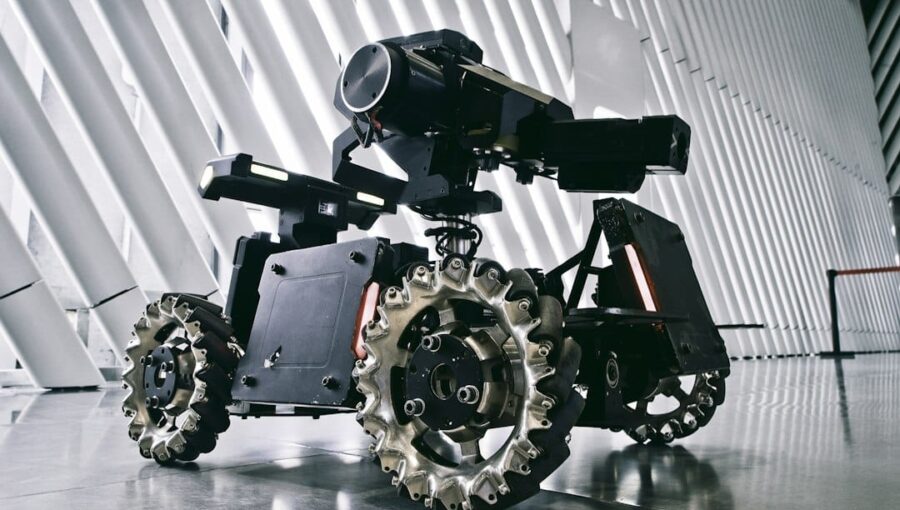
AI-driven autonomous navigation is essentially about giving our deep space probes and planetary rovers the smarts to figure out where they are, where they’re going, and how to get there safely, all without constant human hand-holding. In the vast, unpredictable environments of space and other planets, this autonomy isn’t just a convenience; it’s a critical capability that allows missions to achieve much more than they ever could with traditional, Earth-controlled methods. Think of it as sending a highly capable explorer with its own brain, rather than a remote-controlled toy.
Why Autonomy is a Game Changer for Space Exploration
Getting to space is hard enough, but once our probes and rovers are out there, communicating with them in real-time becomes a massive headache. The sheer distances involved mean that radio signals take minutes, or even hours, to travel between Earth and the spacecraft. This delay, often called “light-time delay,” makes direct teleoperation nearly impossible for anything requiring immediate decision-making, like dodging an unexpected obstacle or precisely maneuvering through a tricky landscape.
Overcoming Light-Time Delay
Imagine trying to drive a car when every input you make takes 20 minutes to register. You’d crash almost instantly! That’s the challenge faced by mission controllers trying to operate a rover on Mars. Autonomous navigation steps in by giving the spacecraft the ability to perceive its surroundings, process that information, and make decisions on the fly. This means a rover can detect a rock in its path and autonomously navigate around it, rather than waiting for instructions from Earth that might arrive long after the collision. For deep space probes, which might be billions of miles away, this capability is even more crucial, enabling them to execute complex maneuvers or scientific observations without constant human intervention.
Enabling More Ambitious Missions
With autonomous navigation, missions aren’t limited by the availability of communication windows or the processing speed of human operators. This opens the door for much more ambitious endeavors. We can send rovers to explore more hazardous terrain, like crater rims or lava tubes, where precise, rapid decision-making is essential. Probes can undertake complex orbital insertions or flyby trajectories that would be too risky or time-consuming to execute with continuous human oversight. Essentially, AI empowers these machines to become more independent explorers, capable of tackling more challenging scientific questions.
Maximizing Scientific Return
Every minute a spacecraft spends waiting for commands from Earth is a minute it’s not collecting data. By reducing reliance on constant human input, autonomous systems allow for more efficient operation. A rover can cover more ground in a single Martian day, or a deep space probe can execute a sequence of scientific observations without needing to “phone home” after each step. This leads directly to a greater volume and variety of scientific data being collected, significantly increasing the overall scientific return of a mission.
In the realm of advanced technology, the development of AI-driven autonomous navigation systems for deep space probes and planetary rovers is a fascinating topic that intersects with various fields of research. A related article that explores the implications of cutting-edge technology in everyday devices can be found at The iPhone 14 Pro: Experience the Power of Pro. This article highlights how advancements in artificial intelligence and machine learning are not only transforming space exploration but also enhancing user experiences in consumer electronics, showcasing the versatility and potential of AI across different applications.
Key Takeaways
- The training data includes information and events up to October 2023.
- Insights and knowledge are based on a wide range of sources available until the cutoff date.
- No updates or developments occurring after October 2023 are included in the training.
- Users should verify current information from reliable sources for the latest updates.
- The model’s responses reflect the context and knowledge available up to the specified date.
Core Technologies Powering Autonomous Navigation
Achieving true autonomy in space requires a suite of sophisticated technologies working together seamlessly. These aren’t just fancy algorithms; they’re robust systems designed to operate reliably in extreme conditions.
Perception and Sensing Systems
Before a spacecraft can make decisions, it needs to understand its surroundings. This is where perception and sensing systems come into play.
Visual Navigation Cameras
Stereo cameras are incredibly common. By capturing two images from slightly different perspectives, just like our own eyes, the spacecraft can create a 3D map of its environment. This allows it to identify obstacles, gauge distances, and map out safe paths. More advanced systems might use multispectral cameras to gather information beyond what’s visible to the human eye, helping to identify different material types or features.
Lidar and Radar for Ranging
Lidar (Light Detection and Ranging) uses pulsed lasers to measure distances to objects, creating highly accurate 3D point clouds of the terrain. This is especially useful in low-light conditions or where visual cues are ambiguous. Radar (Radio Detection and Ranging) works similarly but uses radio waves, making it effective through dust storms or in atmospheres where light might be scattered. Both provide critical data for obstacle avoidance and precise localization.
Inertial Measurement Units (IMUs) and Star Trackers
IMUs combine accelerometers and gyroscopes to track the spacecraft’s orientation and changes in velocity. While they tend to drift over time, they provide crucial short-term stability data. Star trackers, on the other hand, provide incredibly accurate long-term attitude and position information by identifying known star patterns. By combining these, the spacecraft always has a good sense of where it’s pointing and how fast it’s moving.
Localization and Mapping Techniques
Once the spacecraft has sensory data, it needs to figure out where it is within its environment and build a map of that environment.
Simultaneous Localization and Mapping (SLAM)
SLAM is a fundamental technique that allows a robot to build a map of an unknown environment while simultaneously keeping track of its own location within that map. For a rover, this means it can explore a new area, incrementally adding features to its internal map, and consistently update its position relative to those features. This is critical for preventing the rover from getting lost and for planning future paths.
Visual Odometry
Visual odometry uses sequential images from cameras to estimate the spacecraft’s motion. By tracking features across multiple frames, the system can determine how far and in what direction the spacecraft has moved. While susceptible to errors over long distances, it provides a valuable real-time estimate of movement, especially when other sensors might be less effective.
Path Planning and Decision Making
This is where the “AI” really comes into its own, translating sensory data and maps into actionable movement.
A* and RRT Algorithms for Pathfinding
Algorithms like A* (A-star) are classic pathfinding solutions that efficiently find the shortest path between two points while avoiding obstacles based on the generated maps. RRT (Rapidly-exploring Random Tree) is another popular method, particularly good for high-dimensional spaces and complex environments, by incrementally building a tree of possible paths until a goal is reached. These algorithms allow the spacecraft to generate safe and efficient routes.
Reinforcement Learning for Adaptation
Reinforcement learning (RL) is a powerful AI paradigm where an agent learns to make optimal decisions by interacting with an environment and receiving rewards or penalties. For autonomous navigation, an RL agent could learn to navigate complex terrains more efficiently, adapt to unexpected environmental changes, or even discover novel navigation strategies that humans might not have programmed. This allows the system to improve its performance over time.
Challenges Unique to Space Environments
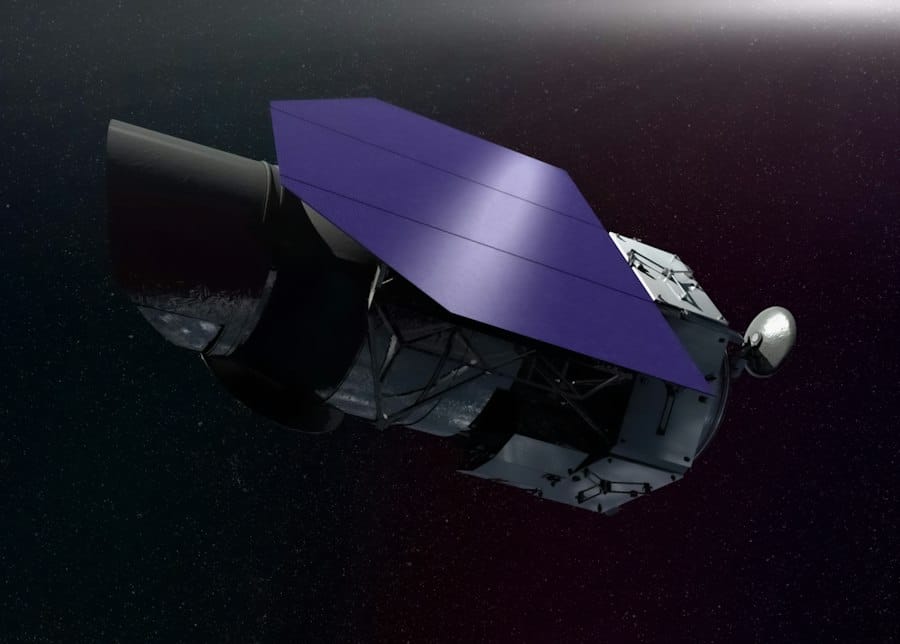
Autonomous navigation on Earth is one thing; doing it in space is a whole different ballgame. The environments our probes and rovers operate in present unique and often extreme challenges that require specialized solutions.
Extreme Temperatures and Radiation
Spacecraft components are exposed to incredibly harsh conditions. Temperatures can swing wildly from scorching heat to cryogenic cold, and the constant barrage of cosmic radiation can corrupt electronics.
This means that AI hardware and software must be “radiation-hardened” and designed to operate flawlessly across vast temperature ranges, a significant engineering challenge. Standard commercial-off-the-shelf (COTS) components simply won’t cut it.
Dust and Unpredictable Terrain
Planetary surfaces, especially Mars, are often covered in fine, abrasive dust. This dust can obscure camera lenses, interfere with optical sensors, and even clog mechanical parts. The terrain itself is highly unpredictable – from loose regolith and steep slopes to jagged rocks and deep crevices. Autonomous systems need to be incredibly robust to these variations, capable of distinguishing between traversable and non-traversable terrain with high accuracy.
Limited Power and Computational Resources
Every watt of power and every megabyte of storage on a spacecraft is precious.
Unlike Earth-bound autonomous vehicles that can draw immense power or connect to powerful cloud computing resources, space-faring systems must operate within extremely tight constraints. This necessitates highly optimized algorithms and specialized low-power processing units that can still handle complex AI tasks efficiently.
Communication Blackouts and Limited Bandwidth
Periods of communication blackout are common, especially when a planet is between Earth and the spacecraft. Even when communication is possible, bandwidth is often very limited.
This reinforces the need for true onboard autonomy; the spacecraft needs to be able to operate effectively for extended periods without human intervention or data uplinks/downlinks.
Current Applications and Future Prospects
AI-driven autonomous navigation isn’t just a futuristic concept; it’s already making significant contributions to space exploration and holds even greater promise for what’s to come.
Mars Rovers: Spirit, Opportunity, Curiosity, and Perseverance
The Mars rovers are perhaps the most famous examples of AI in action for autonomous navigation. While early rovers like Spirit and Opportunity had limited autonomy, primarily for hazard avoidance, Curiosity and especially Perseverance represent significant leaps forward.
AutoNav and Terrain-Relative Navigation
Perseverance’s AutoNav system allows it to drive much faster and further than its predecessors by making real-time decisions about its path, bypassing obstacles without waiting for Earth’s commands. Its Terrain-Relative Navigation (TRN) system, used during landing, matched the descending spacecraft’s location to a pre-loaded map, guiding it to a safe landing spot. This kind of precision navigation is critical for landing in more scientifically interesting, but riskier, areas.
Deep Space Probes and Orbital Missions
Beyond planetary surfaces, autonomous navigation is vital for deep space missions. Probes performing complex maneuvers around distant planets or moons, or navigating asteroid fields, benefit immensely from onboard decision-making.
Autonomous Orbit Maintenance and Collision Avoidance
For satellites and orbital probes, AI can enable autonomous orbit maintenance, adjusting trajectories to compensate for atmospheric drag or gravitational perturbations. More critically, AI can facilitate collision avoidance, identifying potential conjunctions with space debris or other satellites and autonomously executing avoidance maneuvers, a task that is becoming increasingly important with the growing number of objects in orbit.
Future Developments: Swarms, Human-Robot Collaboration, and Extreme Environments
The future of autonomous navigation in space is incredibly exciting, with several key areas of development.
Swarms of Small Probes
Imagine not just one rover, but a swarm of small, interconnected robotic explorers working together. AI will be crucial for coordinating these swarms, allowing them to distribute tasks, share data, and collectively map and explore vast areas more efficiently than a single, large rover ever could. This could involve exploring entire asteroid surfaces or scouting out large lunar regions.
Enhanced Human-Robot Collaboration
While autonomy increases, human oversight remains important. Future systems will likely focus on enhanced human-robot collaboration, where AI handles routine tasks and makes initial decisions, but can flag complex or uncertain situations for human review. This hybrid approach leverages the strengths of both AI’s speed and consistency, and human intuition and problem-solving. Think of it as a smart co-pilot rather than a completely independent pilot.
Exploration of Sub-Surface and Atmospheric Environments
AI will be essential for exploring extreme environments that are currently beyond our reach. This includes sub-surface exploration, such as navigating lava tubes or icy moon oceans, where GPS is unavailable and light is scarce. Similarly, autonomous drones or balloons exploring the atmospheres of planets like Venus or Titan will rely heavily on AI for dynamic navigation in turbulent conditions. These missions will push the boundaries of what autonomous systems can achieve, requiring even more robust and adaptive AI.
Recent advancements in AI-driven autonomous navigation systems have significantly enhanced the capabilities of deep space probes and planetary rovers, enabling them to operate with greater efficiency and precision. A related article discusses the challenges and developments in the realm of autonomous driving technology, particularly focusing on Tesla’s efforts in achieving full self-driving capabilities. For more insights on this topic, you can read the article com/tesla-refutes-elon-musks-timeline-on-full-self-driving/’>here.
These innovations not only pave the way for exploration beyond Earth but also draw parallels to the ongoing evolution of terrestrial autonomous vehicles.
The Road Ahead for Space Autonomy
| Metric | Description | Typical Value / Range | Unit |
|---|---|---|---|
| Navigation Accuracy | Precision of rover or probe position estimation relative to actual location | ±0.5 to 2 | meters |
| Autonomy Level | Degree of independent decision-making capability | Level 3 to Level 5 | Scale (1-5) |
| Obstacle Detection Range | Maximum distance at which obstacles can be detected and classified | 5 to 30 | meters |
| Processing Latency | Time delay between sensor input and navigation decision output | 50 to 200 | milliseconds |
| Energy Consumption | Power used by AI navigation system during operation | 5 to 20 | Watts |
| Communication Delay | Time delay for command and data transmission between Earth and probe/rover | 4 to 44 | minutes |
| Terrain Adaptability | Ability to navigate various surface types (rocky, sandy, icy) | High | Qualitative |
| Mission Duration Supported | Length of autonomous operation without human intervention | Months to Years | Time |
While AI-driven autonomous navigation has already come a long way, there are still significant challenges and exciting opportunities on the horizon. The focus will continue to be on increasing the robustness, reliability, and cognitive capabilities of these systems, pushing them towards true cognitive autonomy.
Explainable AI and Trust
As AI systems become more complex, understanding why they make certain decisions becomes crucial, especially in high-stakes space missions. Developing “explainable AI” (XAI) will be key to building trust in autonomous systems, allowing engineers and scientists to diagnose problems, verify behavior, and make informed decisions about when to intervene.
Onboard Learning and Self-Correction
Current AI systems are largely pre-programmed. Future autonomous navigators will ideally be able to learn and adapt onboard, without constant updates from Earth. This includes recognizing new terrain types, learning to avoid unexpected hazards, or even optimizing their own algorithms based on experience. This self-correction capability would dramatically enhance their resilience and operational lifespan.
Interplanetary Networked Autonomy
Beyond individual spacecraft, the vision is for an entire network of autonomous assets – rovers, landers, orbiters, and even human habitats – working together as a cohesive, intelligent system across an entire planet or solar system. This “interplanetary internet” would rely heavily on advanced AI for resource management, communication routing, and coordinated scientific exploration. This level of networked autonomy would truly revolutionize how we explore the cosmos.
FAQs
What is AI-driven autonomous navigation for deep space probes and planetary rovers?
AI-driven autonomous navigation refers to the use of artificial intelligence algorithms to enable deep space probes and planetary rovers to navigate and make decisions independently without human intervention.
How does AI help in improving navigation for deep space probes and planetary rovers?
AI helps in improving navigation by allowing the probes and rovers to analyze data in real-time, adapt to changing environments, avoid obstacles, and make decisions based on the information gathered during their missions.
What are the benefits of using AI-driven autonomous navigation for space exploration?
The benefits include increased efficiency, reduced communication delays, enhanced decision-making capabilities, improved safety, and the ability to explore more challenging terrains and environments in space.
What challenges are associated with implementing AI-driven autonomous navigation for deep space probes and planetary rovers?
Challenges include the need for robust AI algorithms, potential software errors, hardware limitations, unpredictable environmental conditions, and the risk of mission failure if the AI system malfunctions.
How is AI technology expected to evolve in the future for deep space exploration missions?
In the future, AI technology is expected to become more advanced, enabling deep space probes and planetary rovers to perform complex tasks autonomously, collaborate with each other, and make decisions in real-time without human intervention.
Enjoying our content? Make us a preferred source on Google:
Add us as a Preferred Source on Google