

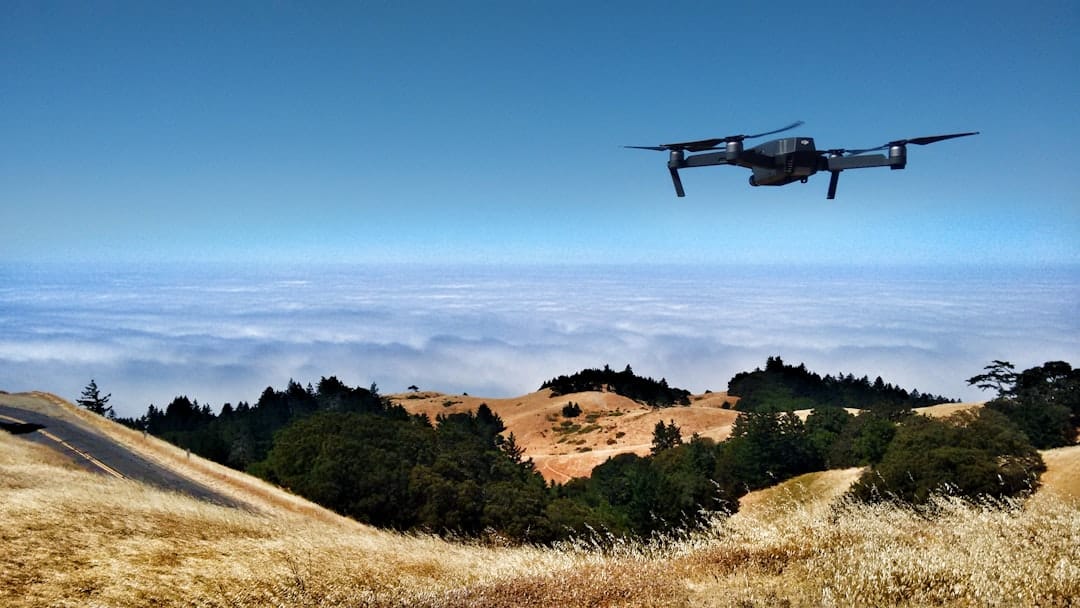
Augmented Reality (AR) is revolutionizing various industries, and its integration into drone operations is no exception.
This technology allows operators to visualize complex data in real-time, providing a richer context for decision-making.
For instance, in agricultural applications, AR can display crop health data directly on the drone’s camera feed, enabling farmers to make informed decisions about irrigation and pest control. Moreover, AR can facilitate remote piloting by providing operators with a more intuitive interface. Instead of relying solely on traditional screens and controls, pilots can use AR glasses or headsets to see a 3D representation of the drone’s environment.
This immersive experience can significantly reduce the cognitive load on pilots, allowing them to focus on critical tasks such as navigation and obstacle avoidance.
Key Takeaways
- AR technology significantly improves drone operation by enhancing pilot situational awareness and navigation.
- It plays a crucial role in pilot training, helping develop skills through immersive, real-time simulations.
- AR aids in collision avoidance by providing pilots with critical, real-time spatial data.
- The technology enables real-time data visualization, facilitating better analysis during remote inspections and surveillance.
- Future integration of AR in drones promises improved communication and coordination but also presents technical and operational challenges.
Enhancing Situational Awareness with AR Technology
Situational awareness is crucial for drone operators, especially in complex environments where multiple variables can affect flight safety. AR technology enhances this awareness by providing real-time overlays of critical information directly in the pilot’s line of sight. For example, during search and rescue missions, AR can display the locations of missing persons or hazardous areas, allowing operators to make quick and informed decisions.
This capability is particularly valuable in emergency situations where time is of the essence. Furthermore, AR can integrate data from various sources, such as weather conditions, terrain maps, and other drones operating in the vicinity. By synthesizing this information into a cohesive visual display, AR helps pilots understand their surroundings better and anticipate potential challenges.
In urban environments, where buildings and other structures can obstruct visibility, AR can highlight safe flight paths and potential obstacles, significantly enhancing operational safety. This level of situational awareness is essential not only for successful mission completion but also for ensuring compliance with aviation regulations.
Improving Pilot Training and Skill Development
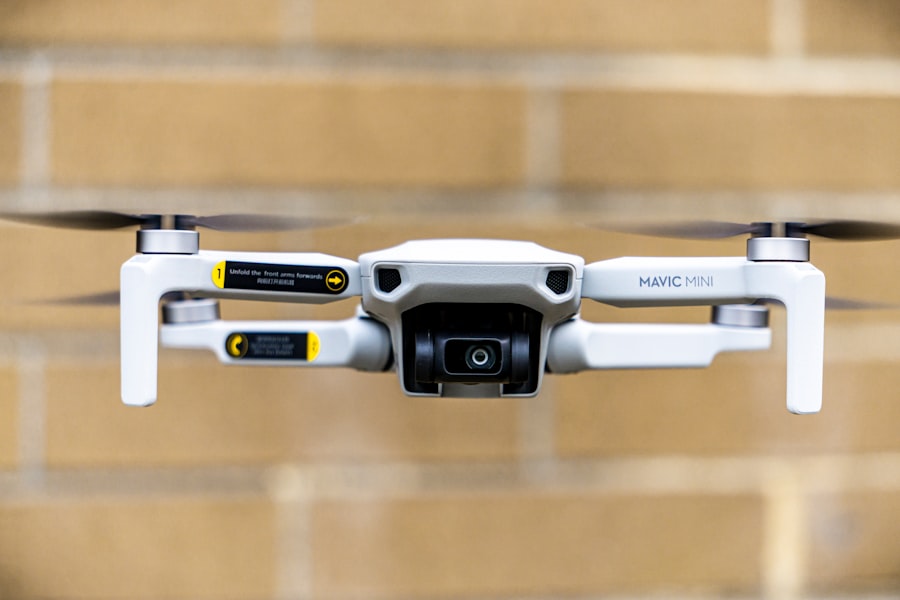
The integration of AR into pilot training programs represents a significant advancement in how drone operators acquire skills. Traditional training methods often rely on simulators or hands-on experience, which can be time-consuming and costly. AR offers a more efficient alternative by providing immersive training environments that simulate real-world scenarios without the associated risks.
Trainees can practice navigating complex environments or responding to emergencies while receiving immediate feedback through AR overlays. For instance, an aspiring drone pilot could use AR to visualize flight paths and obstacles while practicing maneuvers in a controlled setting. This technology allows for repetitive practice of specific skills, such as precision landing or obstacle avoidance, which are critical for safe drone operation.
Additionally, AR can track a trainee’s performance metrics in real-time, offering insights into areas that require improvement. As a result, pilot training becomes more personalized and effective, ultimately leading to a higher standard of operational proficiency.
AR’s Contribution to Collision Avoidance and Navigation
Collision avoidance is one of the most pressing challenges in drone operation, particularly as airspace becomes increasingly crowded with both manned and unmanned aircraft. AR technology plays a pivotal role in enhancing navigation systems by providing pilots with real-time visual cues that indicate potential hazards. For example, AR can highlight nearby obstacles or other drones within the flight path, allowing operators to make timely adjustments to avoid collisions.
In addition to obstacle detection, AR can improve navigation by overlaying GPS data onto the pilot’s view. This feature enables operators to see their exact location relative to landmarks or predefined flight paths without needing to glance away at a separate screen. Such seamless integration of navigation data enhances situational awareness and reduces the likelihood of human error during critical phases of flight.
As regulations evolve to accommodate more drones in shared airspace, the importance of robust collision avoidance systems powered by AR will become increasingly vital.
Real-time Data Visualization and Analysis with AR
| Metric | Without AR | With AR | Impact |
|---|---|---|---|
| Operator Reaction Time | 2.5 seconds | 1.2 seconds | 52% faster response |
| Accident Rate | 8 incidents per 100 flights | 3 incidents per 100 flights | 62.5% reduction |
| Flight Efficiency | 75% mission completion | 90% mission completion | 20% improvement |
| Training Time for Operators | 40 hours | 25 hours | 37.5% less time |
| Situational Awareness Score | 65/100 | 85/100 | 30.8% increase |
The ability to visualize data in real-time is one of the most compelling advantages of integrating AR into drone operations. Drones are equipped with various sensors that collect vast amounts of data during flights—ranging from environmental conditions to structural integrity assessments. However, without effective visualization tools, this data can be overwhelming and difficult to interpret.
AR addresses this challenge by presenting data overlays that allow operators to analyze information intuitively. For instance, in infrastructure inspections, drones can capture high-resolution images and thermal data from bridges or buildings. With AR technology, inspectors can view these images alongside structural models or historical data directly through their headset or device.
This capability not only streamlines the inspection process but also enhances accuracy by providing context that might otherwise be missed. The ability to visualize complex datasets in an accessible format empowers operators to make informed decisions quickly, ultimately improving operational efficiency.
AR’s Role in Remote Inspection and Surveillance
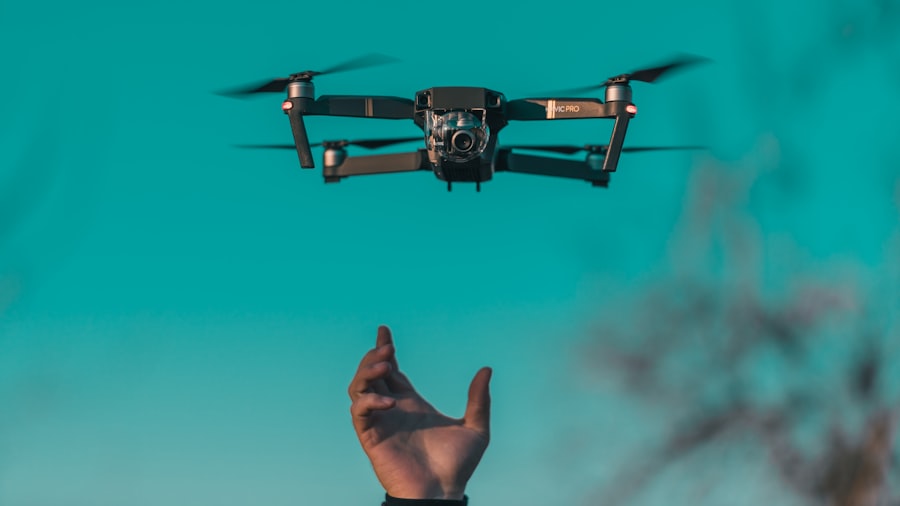
Remote inspection and surveillance are among the most promising applications for drones enhanced by AR technology. In industries such as oil and gas, utilities, and construction, regular inspections are crucial for maintaining safety and compliance standards. Traditionally, these inspections require significant manpower and time; however, drones equipped with AR capabilities can streamline this process dramatically.
For example, during an oil pipeline inspection, a drone can fly along the pipeline while capturing video footage and sensor data. With AR overlays displaying real-time information about pressure levels or previous inspection results, operators can identify anomalies or areas requiring further investigation without needing to be physically present at the site. This not only reduces operational costs but also minimizes risks associated with hazardous environments.
The ability to conduct thorough inspections remotely enhances safety while ensuring that critical infrastructure remains operational.
Integration of AR for Enhanced Communication and Coordination
Effective communication and coordination are essential components of successful drone operations, especially when multiple teams are involved in a single mission. AR technology facilitates this by providing a shared visual context that all team members can access simultaneously. For instance, during a disaster response operation involving multiple agencies, AR can display real-time updates on drone positions, mission objectives, and environmental conditions.
This shared visual framework allows teams to coordinate their efforts more effectively, reducing the likelihood of miscommunication or duplicated efforts. Additionally, AR can enable remote experts to provide guidance to on-site operators by overlaying instructions or annotations directly onto their field of view. This capability is particularly valuable in situations where specialized knowledge is required but not readily available on-site.
By enhancing communication through AR integration, teams can operate more cohesively and respond more effectively to dynamic situations.
Future Opportunities and Challenges for AR in Drone Operation
As the technology behind augmented reality continues to evolve, the future opportunities for its application in drone operations are vast. One promising area is the development of more sophisticated AR interfaces that leverage artificial intelligence (AI) to provide predictive analytics based on historical data and real-time inputs. Such advancements could enable drones to autonomously adjust their flight paths based on anticipated changes in environmental conditions or potential obstacles.
However, several challenges must be addressed before widespread adoption becomes a reality. One significant hurdle is ensuring that AR systems are reliable and resilient under various operating conditions. Factors such as poor lighting or adverse weather can impact the effectiveness of AR overlays; thus, developing robust systems that maintain functionality across diverse environments is crucial.
Additionally, regulatory frameworks will need to adapt to accommodate the increased use of drones equipped with advanced technologies like AR while ensuring safety standards are upheld. In conclusion, augmented reality is poised to transform drone operations across multiple sectors by enhancing situational awareness, improving training methodologies, facilitating remote inspections, and streamlining communication among teams. As technology advances and challenges are addressed, the integration of AR into drone operations will likely become more prevalent, unlocking new possibilities for efficiency and safety in aerial applications.
In exploring the advancements in drone technology, the article on why augmented reality (AR) is crucial for safer and more efficient drone operation highlights the transformative potential of AR in enhancing situational awareness and navigation. For those interested in optimizing their content strategies, a related article that delves into effective tools for improving online visibility is available at NeuronWriter Review: The Best Content SEO Optimization Tool. This resource can provide valuable insights for businesses looking to leverage technology for better performance in various fields, including drone operations.
FAQs
What is Augmented Reality (AR) in the context of drone operation?
Augmented Reality (AR) refers to the technology that overlays digital information, such as data, images, or instructions, onto the real-world view seen by the drone operator. This enhances situational awareness and provides real-time insights during drone flights.
How does AR improve the safety of drone operations?
AR improves safety by providing operators with critical flight data, obstacle warnings, and navigation aids directly in their field of view. This reduces the risk of collisions, helps maintain regulatory compliance, and allows for quicker decision-making in complex environments.
In what ways does AR contribute to more efficient drone operation?
AR streamlines drone operation by offering intuitive controls, real-time telemetry, and mission planning overlays. Operators can perform tasks faster and with greater accuracy, reducing downtime and improving overall mission effectiveness.
Can AR be used with all types of drones?
AR technology can be integrated with most commercial and industrial drones, provided the drone system supports compatible hardware and software interfaces. However, the level of AR functionality may vary depending on the drone model and the AR platform used.
What equipment is needed to use AR for drone operation?
Operators typically need AR-enabled devices such as smart glasses, headsets, or mobile devices with AR capabilities. These devices connect to the drone’s control system to display augmented information during flight.
Are there any limitations to using AR in drone operations?
Limitations include potential hardware compatibility issues, the need for reliable data connections, and environmental factors like lighting conditions that can affect AR visibility. Additionally, operators require training to effectively use AR tools.
Is AR technology compliant with drone regulations?
AR itself is a tool and does not conflict with drone regulations. However, operators must ensure that the use of AR complies with local aviation laws and privacy guidelines, especially when flying in controlled or sensitive airspace.
How does AR assist in complex drone missions?
AR provides enhanced visualization of flight paths, real-time sensor data, and environmental mapping, which helps operators navigate challenging terrains, conduct inspections, or perform search and rescue missions more effectively.
What industries benefit most from AR-enhanced drone operations?
Industries such as construction, agriculture, emergency response, infrastructure inspection, and surveying benefit significantly from AR-enhanced drone operations due to improved safety, precision, and operational efficiency.
Where can I learn more about implementing AR in drone operations?
Information can be found through drone manufacturers, AR technology providers, industry conferences, and specialized training programs focused on integrating AR with unmanned aerial systems.