


Predictive maintenance is a proactive approach to equipment management that leverages data analysis and advanced technologies to predict when machinery is likely to fail. This methodology stands in stark contrast to traditional maintenance strategies, which often rely on scheduled maintenance or reactive repairs after a failure has occurred. By utilizing predictive maintenance, organizations can minimize downtime, extend the lifespan of their assets, and optimize operational efficiency.
The core principle of predictive maintenance is to monitor the condition of equipment in real-time, allowing for timely interventions that can prevent costly breakdowns. The evolution of predictive maintenance has been significantly influenced by advancements in technology, particularly in the realms of data analytics and the Internet of Things (IoT). With the proliferation of sensors and connected devices, industries can now gather vast amounts of data regarding the performance and health of their machinery.
This data serves as the foundation for predictive analytics, enabling organizations to identify patterns and anomalies that may indicate impending failures. As industries increasingly recognize the value of maintaining operational continuity, predictive maintenance has emerged as a critical component of modern asset management strategies.
Key Takeaways
- AI enhances predictive maintenance by analyzing data to foresee equipment failures before they occur.
- Benefits include reduced downtime, cost savings, and improved operational efficiency.
- Challenges involve data quality, integration complexity, and the need for skilled personnel.
- Successful case studies demonstrate significant improvements in maintenance scheduling and asset longevity.
- Future trends point to more advanced AI models and wider adoption across industries for smarter maintenance strategies.
The Role of AI in Predictive Maintenance
Artificial Intelligence (AI) plays a pivotal role in enhancing the effectiveness of predictive maintenance by enabling more sophisticated data analysis and decision-making processes. Machine learning algorithms, a subset of AI, can analyze historical data and identify complex patterns that may not be immediately apparent to human analysts. By training these algorithms on large datasets, organizations can develop models that accurately predict equipment failures based on various indicators such as temperature fluctuations, vibration levels, and operational cycles.
This capability allows for a more nuanced understanding of equipment health and performance. Moreover, AI can facilitate real-time monitoring and analysis, providing organizations with immediate insights into their machinery’s condition. For instance, AI-driven systems can continuously assess sensor data and alert maintenance teams to potential issues before they escalate into significant problems.
This real-time capability not only enhances the accuracy of predictions but also allows for dynamic scheduling of maintenance activities based on actual equipment conditions rather than predetermined timelines. As a result, organizations can achieve a more responsive and agile maintenance strategy that aligns closely with their operational needs.
Benefits of AI in Predictive Maintenance

The integration of AI into predictive maintenance offers numerous benefits that can significantly enhance operational efficiency and reduce costs. One of the most notable advantages is the reduction in unplanned downtime. By accurately predicting when equipment is likely to fail, organizations can schedule maintenance activities during non-peak hours, thereby minimizing disruptions to production processes.
This proactive approach not only preserves productivity but also helps maintain customer satisfaction by ensuring timely delivery of products and services. Additionally, AI-driven predictive maintenance can lead to substantial cost savings. Traditional maintenance practices often involve routine inspections and repairs that may not be necessary, resulting in wasted resources.
In contrast, AI enables organizations to adopt a more targeted approach, focusing maintenance efforts on equipment that genuinely requires attention. This optimization can lead to lower labor costs, reduced inventory expenses for spare parts, and extended equipment lifespans. Furthermore, by preventing catastrophic failures, organizations can avoid the significant costs associated with emergency repairs and production halts.
Challenges and Limitations of AI in Predictive Maintenance
Despite its many advantages, the implementation of AI in predictive maintenance is not without challenges. One significant hurdle is the quality and availability of data. For AI algorithms to function effectively, they require access to high-quality historical data that accurately reflects equipment performance under various conditions.
In many cases, organizations may struggle with incomplete or inconsistent datasets, which can hinder the development of reliable predictive models. Additionally, integrating data from disparate sources—such as different machines or systems—can pose technical challenges that require careful planning and execution. Another limitation is the need for specialized skills and expertise to implement and manage AI-driven predictive maintenance systems.
Organizations may find it challenging to recruit or train personnel with the necessary knowledge in data science, machine learning, and domain-specific engineering. This skills gap can slow down the adoption of AI technologies and limit their effectiveness in driving predictive maintenance initiatives. Furthermore, there may be resistance to change within organizations as employees adapt to new technologies and processes, necessitating comprehensive change management strategies to ensure successful implementation.
Case Studies of Successful AI-Driven Predictive Maintenance
| Metric | Description | Impact of AI on Predictive Maintenance |
|---|---|---|
| Downtime Reduction | Percentage decrease in unplanned equipment downtime | AI enables early fault detection, reducing downtime by up to 30% |
| Maintenance Cost Savings | Reduction in maintenance expenses through optimized scheduling | AI-driven predictive models can cut maintenance costs by 20-25% |
| Equipment Lifespan Extension | Increase in operational life of machinery due to timely interventions | AI helps extend equipment life by 10-15% through proactive care |
| Failure Prediction Accuracy | Precision of forecasting equipment failures before they occur | AI algorithms achieve up to 90% accuracy in failure prediction |
| Data Processing Speed | Time taken to analyze sensor and operational data | AI processes large datasets in real-time, enabling instant insights |
| Resource Optimization | Efficient allocation of maintenance personnel and parts | AI optimizes resource use, improving efficiency by 15-20% |
Several industries have successfully implemented AI-driven predictive maintenance strategies, yielding impressive results that highlight the potential of this approach.
By utilizing machine learning algorithms to analyze sensor data from its production lines, Siemens has been able to predict equipment failures with remarkable accuracy.
This proactive approach has led to a significant reduction in unplanned downtime and has improved overall production efficiency. Another compelling case study comes from General Electric (GE), which has leveraged AI for predictive maintenance in its aviation division. GE developed a system called Predix that collects data from aircraft engines during flight and analyzes it using advanced algorithms.
This system allows GE to predict when engine components are likely to require maintenance or replacement, enabling airlines to schedule repairs during routine service intervals rather than experiencing unexpected failures during flights. The implementation of this predictive maintenance strategy has not only enhanced safety but also reduced operational costs for airlines by optimizing maintenance schedules.
Implementing AI for Predictive Maintenance in Industry
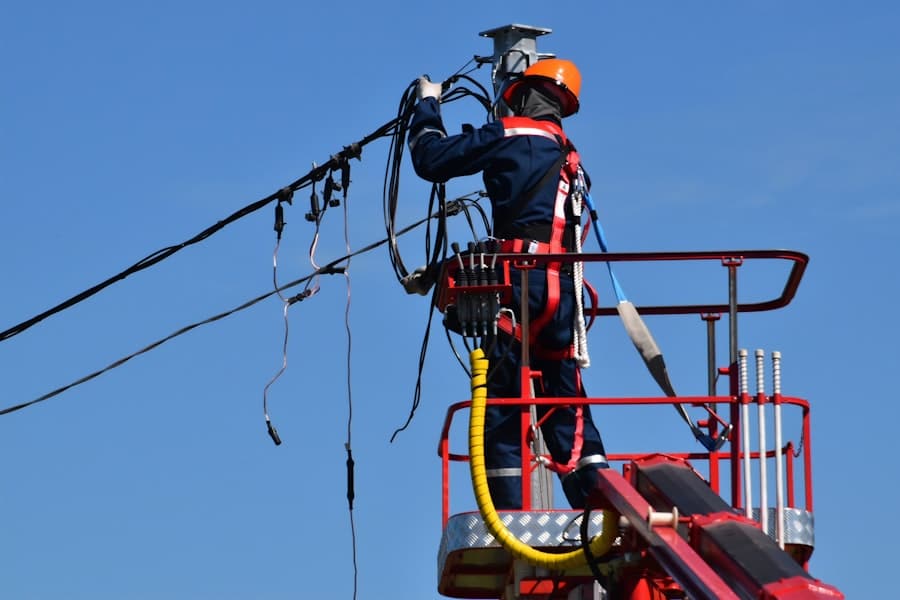
Implementing AI for predictive maintenance requires a strategic approach that encompasses several key steps. First and foremost, organizations must assess their current maintenance practices and identify areas where predictive maintenance could provide value. This assessment should include an evaluation of existing data sources, equipment types, and operational processes.
By understanding their unique context, organizations can tailor their predictive maintenance initiatives to address specific challenges and opportunities. Once the groundwork has been laid, organizations should focus on data collection and integration. This involves installing sensors on critical equipment to gather real-time performance data and ensuring that this data is accessible for analysis.
Organizations may also need to invest in data management systems that facilitate the storage and processing of large datasets. Following this, selecting appropriate machine learning algorithms is crucial for developing predictive models that align with organizational goals. Continuous monitoring and refinement of these models will be necessary as new data becomes available and operational conditions evolve.
Future Trends and Developments in AI for Predictive Maintenance
The future of AI in predictive maintenance is poised for significant advancements as technology continues to evolve. One emerging trend is the increasing use of edge computing, which allows data processing to occur closer to the source rather than relying solely on centralized cloud systems. This shift can enhance real-time analytics capabilities by reducing latency and enabling faster decision-making processes.
As edge computing becomes more prevalent, organizations will be able to implement more responsive predictive maintenance strategies that adapt quickly to changing conditions. Another promising development is the integration of AI with augmented reality (AR) technologies for maintenance training and support. By combining real-time data analytics with AR interfaces, technicians can receive contextual information about equipment health while performing maintenance tasks.
This innovative approach not only enhances the accuracy of repairs but also accelerates training for new employees by providing them with interactive visualizations of complex machinery. As these technologies converge, organizations will likely see further improvements in maintenance efficiency and effectiveness.
The Importance of AI in Driving Efficient and Cost-Effective Predictive Maintenance in Industry
The integration of AI into predictive maintenance represents a transformative shift in how industries manage their assets and ensure operational continuity. By harnessing advanced analytics and machine learning capabilities, organizations can proactively address potential equipment failures before they disrupt production processes. The benefits—ranging from reduced downtime to significant cost savings—underscore the importance of adopting AI-driven strategies in today’s competitive landscape.
As industries continue to navigate the complexities of modern operations, embracing AI for predictive maintenance will be essential for achieving sustainable growth and efficiency.
In the realm of industrial efficiency, understanding the role of technology is crucial. A related article that delves into the importance of selecting the right tools for specific tasks is “How to Choose a Laptop for Video Editing.” This piece highlights the significance of choosing the appropriate technology to enhance productivity, much like how AI is essential for predictive maintenance in industry. For more insights, you can read the article here.
FAQs
What is predictive maintenance?
Predictive maintenance is a proactive approach to equipment maintenance that uses data analysis and monitoring tools to predict when a machine or component is likely to fail. This allows maintenance to be performed just in time to prevent unexpected breakdowns and reduce downtime.
How does AI contribute to predictive maintenance?
AI contributes to predictive maintenance by analyzing large volumes of sensor data, identifying patterns, and detecting anomalies that indicate potential equipment failures. Machine learning algorithms can improve prediction accuracy over time, enabling more effective maintenance scheduling.
Why is AI essential for predictive maintenance in industry?
AI is essential because it can process complex and high-dimensional data faster and more accurately than traditional methods. This leads to earlier detection of issues, optimized maintenance schedules, reduced operational costs, and increased equipment lifespan, which are critical for industrial efficiency.
What types of AI technologies are used in predictive maintenance?
Common AI technologies used include machine learning, deep learning, natural language processing, and computer vision. These technologies help in analyzing sensor data, images, and maintenance logs to predict failures and recommend maintenance actions.
Can predictive maintenance with AI reduce operational costs?
Yes, by predicting failures before they occur, AI-driven predictive maintenance minimizes unplanned downtime, reduces unnecessary maintenance activities, and extends equipment life, all of which contribute to significant cost savings.
Is AI-based predictive maintenance applicable to all industries?
AI-based predictive maintenance is applicable across various industries such as manufacturing, energy, transportation, and aerospace, wherever machinery and equipment are critical to operations and downtime is costly.
What data is required for AI to perform predictive maintenance?
Data typically includes sensor readings (temperature, vibration, pressure), operational logs, maintenance records, and environmental conditions. High-quality, continuous data collection is essential for accurate AI predictions.
Are there challenges in implementing AI for predictive maintenance?
Yes, challenges include data quality and availability, integration with existing systems, the need for specialized expertise, and initial investment costs. However, the long-term benefits often outweigh these challenges.
How does AI improve over time in predictive maintenance?
AI models learn from new data continuously, refining their algorithms to improve prediction accuracy and adapt to changing equipment conditions, leading to more reliable maintenance recommendations.
What is the difference between predictive maintenance and preventive maintenance?
Preventive maintenance is scheduled at regular intervals regardless of equipment condition, while predictive maintenance uses AI and data analysis to perform maintenance only when necessary, based on the actual condition and predicted failure times.