


Augmented Reality (AR) is a technology that superimposes digital content onto real-world environments through devices such as smartphones, tablets, or specialized headsets. This technology has found applications across multiple industries, with cultural heritage institutions increasingly adopting AR to enhance visitor experiences and artifact preservation efforts. Museums utilize AR to provide additional contextual information about exhibits, create interactive displays, and offer virtual reconstructions of damaged or incomplete artifacts.
The implementation of AR in museums addresses several contemporary challenges facing cultural institutions. Visitor engagement has become increasingly important as museums compete with digital entertainment platforms for public attention. AR technology enables museums to provide multilayered information delivery, allowing visitors to access varying levels of detail about exhibits based on their interests and expertise.
Additionally, AR applications can support conservation efforts by reducing physical handling of fragile artifacts while still providing detailed examination opportunities through digital overlays. Museums worldwide have begun integrating AR systems to modernize their educational approaches and expand accessibility. These implementations range from simple smartphone applications that provide audio-visual content when pointed at exhibits, to sophisticated installations that recreate historical environments or demonstrate artifact usage in their original contexts.
The technology also facilitates remote access to collections, enabling virtual museum visits and educational programs that extend beyond physical location constraints.
Key Takeaways
- AR technology is transforming museum preservation by enhancing artifact digitization and conservation efforts.
- Museums use AR to create interactive and immersive visitor experiences, increasing engagement and education.
- Collaboration between museums and AR developers is crucial for creating effective and accurate AR applications.
- Despite its benefits, AR faces challenges such as high costs, technical limitations, and the need for specialized expertise.
- Successful case studies demonstrate AR’s potential to revolutionize museum preservation and suggest promising future developments.
AR Technology and Its Applications in Museums
AR technology encompasses a range of tools and applications that enhance the physical environment with digital content.
For instance, visitors can use their smartphones or tablets to scan QR codes next to artifacts, triggering animations, videos, or detailed descriptions that enrich their understanding of the item’s historical significance.
This application of AR not only makes learning more engaging but also caters to various learning styles, accommodating visual, auditory, and kinesthetic learners. Moreover, AR can facilitate virtual reconstructions of artifacts that may be too fragile or incomplete to display physically. For example, a museum housing ancient pottery can use AR to digitally reconstruct missing pieces, allowing visitors to visualize the artifact as it once was.
This capability not only enhances educational value but also preserves the integrity of the original object by minimizing handling and exposure to environmental factors. Additionally, AR can be employed in guided tours, where visitors receive real-time information about their surroundings, enhancing their overall experience while providing a deeper connection to the exhibits.
Enhancing Visitor Experience with AR
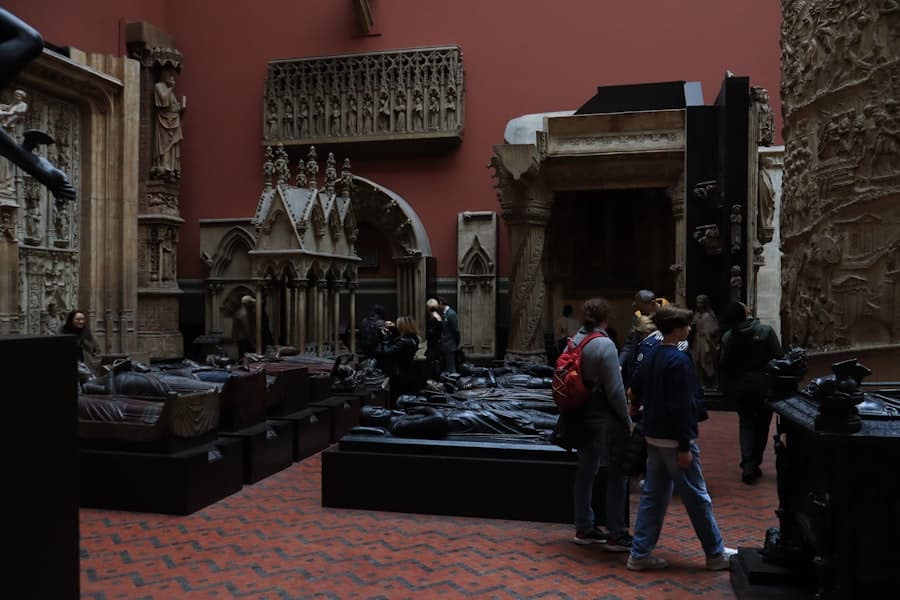
The visitor experience in museums has traditionally been passive, with individuals observing artifacts without much interaction. However, AR has the potential to transform this dynamic into an active learning experience. By incorporating gamification elements into museum exhibits, AR can engage visitors in ways that traditional displays cannot.
For instance, interactive scavenger hunts can be designed where visitors use AR applications to find hidden clues or complete challenges related to the exhibits. This not only makes the visit more enjoyable but also encourages deeper exploration and learning.
For example, a family visiting an art museum might have different preferences than a group of students studying history. An AR application could allow users to select themes or topics of interest, providing customized information and recommendations throughout their visit. This level of personalization fosters a sense of ownership over the learning process and encourages repeat visits as individuals seek new experiences each time they return.
AR’s Role in Digitization and Conservation of Artifacts
The digitization of artifacts is a critical aspect of modern museum practices, enabling institutions to preserve cultural heritage for future generations. AR plays a pivotal role in this process by providing tools for documenting and visualizing artifacts in ways that traditional methods cannot achieve. High-resolution 3D scanning technologies can create detailed digital replicas of objects, which can then be enhanced with AR overlays that provide additional context or historical information.
This approach not only aids in conservation efforts but also allows for remote access to collections that may be too delicate or valuable for public display. In addition to documentation, AR can assist in monitoring the condition of artifacts over time. By integrating sensors and imaging technologies with AR applications, conservators can track changes in an object’s condition and receive alerts when intervention is necessary.
This proactive approach to conservation ensures that artifacts are preserved in optimal conditions while minimizing the risk of deterioration due to environmental factors or human interaction. The ability to visualize these changes through AR further enhances the understanding of an artifact’s history and significance.
Collaborative Efforts between Museums and AR Developers
| Metric | Description | Impact of AR | Example |
|---|---|---|---|
| Artifact Handling Reduction | Number of times physical artifacts are handled | AR reduces handling by providing virtual interaction, minimizing wear and tear | 70% decrease in physical handling in museums using AR exhibits |
| Visitor Engagement Time | Average time visitors spend interacting with exhibits | AR increases engagement by offering immersive and interactive content | Visitors spend 40% more time on AR-enhanced exhibits |
| Preservation Awareness | Visitor understanding of preservation efforts | AR educates visitors on conservation techniques and artifact history | 85% of visitors report increased awareness after AR experience |
| Environmental Monitoring Accuracy | Precision in tracking environmental conditions affecting artifacts | AR interfaces integrate real-time data for better monitoring and response | Improved response time to environmental changes by 30% |
| Restoration Planning Efficiency | Time taken to plan restoration projects | AR visualizations help conservators simulate restoration outcomes | Restoration planning time reduced by 25% |
The successful integration of AR into museum practices often relies on collaborative efforts between museums and technology developers. Museums bring invaluable expertise in curatorial practices and historical context, while developers contribute technical knowledge and innovative solutions. This partnership can lead to the creation of bespoke AR applications tailored specifically to a museum’s collection and audience.
For instance, a museum specializing in natural history might collaborate with developers to create an AR experience that allows visitors to interact with life-sized models of extinct species in their natural habitats. Such collaborations also extend beyond individual institutions; they can involve partnerships between multiple museums or even cross-disciplinary initiatives that include educational institutions and tech companies. These alliances foster knowledge sharing and innovation, leading to more robust AR applications that enhance visitor engagement and educational outcomes.
By pooling resources and expertise, museums can create comprehensive AR experiences that not only highlight their unique collections but also contribute to broader cultural narratives.
Challenges and Limitations of AR in Museum Preservation
Despite its potential benefits, the implementation of AR in museum preservation is not without challenges. One significant hurdle is the cost associated with developing and maintaining AR technologies. Museums often operate on limited budgets, making it difficult to invest in cutting-edge technology without compromising other essential services or programs.
Additionally, the rapid pace of technological advancement means that what is state-of-the-art today may quickly become obsolete, necessitating ongoing investment in updates and new developments. Another challenge lies in ensuring accessibility for all visitors. While many individuals possess smartphones capable of running AR applications, there remains a significant portion of the population who may not have access to such devices or may be unfamiliar with how to use them.
Museums must consider how to create inclusive experiences that do not alienate those who cannot engage with digital content effectively. This may involve providing alternative methods for accessing information or ensuring that physical displays remain informative without relying solely on digital enhancements.
Case Studies of Successful AR Integration in Museums
Several museums around the world have successfully integrated AR into their exhibits, showcasing its potential for enhancing visitor engagement and preserving cultural heritage. The Smithsonian National Museum of Natural History in Washington D.C., for example, has developed an AR app called “Smithsonian Mobile,” which allows visitors to explore exhibits through interactive 3D models and animations. This app not only provides additional context for exhibits but also encourages exploration by gamifying the experience with quizzes and challenges related to the displayed artifacts.
Another notable example is the British Museum’s “Museum of the Future” initiative, which incorporates AR technology into its exhibits to create immersive storytelling experiences. Visitors can use their devices to see ancient artifacts come to life through animations that depict historical events or cultural practices associated with those objects. This approach not only captivates audiences but also fosters a deeper understanding of the significance of each artifact within its historical context.
Future Implications and Potential of AR in Museum Preservation
Looking ahead, the potential for AR in museum preservation is vast and multifaceted. As technology continues to evolve, we can expect more sophisticated applications that enhance both conservation efforts and visitor engagement. The integration of artificial intelligence (AI) with AR could lead to personalized experiences that adapt in real-time based on visitor interactions or preferences.
For instance, AI algorithms could analyze visitor behavior within an exhibit and adjust the information presented through AR accordingly, creating a truly tailored experience. Moreover, as global connectivity increases through advancements in internet infrastructure and mobile technology, museums will have opportunities to reach wider audiences than ever before. Virtual tours enhanced by AR could allow individuals from around the world to experience exhibitions remotely while still engaging with interactive content that brings artifacts to life.
This democratization of access could foster greater appreciation for cultural heritage across diverse populations. In conclusion, as museums continue to navigate the challenges posed by changing visitor expectations and technological advancements, AR stands out as a powerful tool for enhancing preservation efforts and enriching visitor experiences. The ongoing collaboration between museums and technology developers will be crucial in realizing the full potential of this innovative technology in safeguarding our cultural heritage for future generations while making it accessible and engaging for all.
In exploring the innovative ways that augmented reality (AR) is transforming museum preservation efforts, it is also interesting to consider how technology is enhancing user engagement across various platforms. A related article that delves into the impact of technology on social media is available at
 in the context of museums?</h3>
<p>Augmented Reality (AR) in museums refers to the technology that overlays digital information, such as images, videos, or 3D models, onto the physical environment. This enhances visitors’ experiences by providing interactive and immersive content related to exhibits.</p>
<h3>How does AR contribute to museum preservation efforts?</h3>
<p>AR aids museum preservation by reducing the need for physical interaction with delicate artifacts, offering virtual access instead. It also helps document and visualize artifacts in detail, supports restoration processes, and educates the public about preservation techniques.</p>
<h3>Can AR help in documenting and restoring artifacts?</h3>
<p>Yes, AR can create detailed 3D models of artifacts, which serve as digital records for documentation. These models assist conservators in planning and executing restoration work by visualizing the artifact’s original state and monitoring changes over time.</p>
<h3>Does AR improve visitor engagement in museums?</h3>
<p>Absolutely. AR provides interactive and immersive experiences that make exhibits more engaging and informative. Visitors can explore additional content, such as historical context or multimedia presentations, enhancing their understanding and appreciation of the artifacts.</p>
<h3>Is AR technology expensive for museums to implement?</h3>
<p>The cost of implementing AR varies depending on the scale and complexity of the project. While initial setup can be costly, many museums find that AR offers long-term benefits in preservation and visitor engagement, often justifying the investment.</p>
<h3>Are there any challenges associated with using AR in museums?</h3>
<p>Challenges include the need for technical expertise, potential high costs, ensuring accessibility for all visitors, and maintaining the balance between digital enhancements and the authenticity of the physical exhibits.</p>
<h3>How does AR help in educating the public about preservation?</h3>
<p>AR can simulate preservation processes and show the effects of environmental factors on artifacts, helping visitors understand the importance of conservation. It can also provide interactive tutorials and behind-the-scenes views of preservation work.</p>
<h3>Can AR be used to protect fragile artifacts from damage?</h3>
<p>Yes, by providing virtual access to artifacts, AR reduces the need for physical handling, thereby minimizing the risk of damage. It allows visitors to explore detailed representations without touching or exposing the original objects to harmful conditions.</p>
<h3>Is AR accessible to all types of museum visitors?</h3>
<p>While AR technology is becoming more user-friendly, accessibility depends on factors like device availability and user familiarity with technology. Museums often provide AR through smartphones, tablets, or dedicated devices to accommodate a wide range of visitors.</p>
<h3>What future developments are expected in AR for museum preservation?</h3>
<p>Future developments may include more advanced 3D scanning, real-time environmental monitoring integrated with AR, enhanced interactivity, and broader accessibility features, all aimed at improving preservation and visitor experience.</p>
<div class="clear"></div> </div>
<footer class="entry-meta">
<div class="entry-tax"><span>Tags: No tags</span></div>
<div class="aux-single-post-share">
<div class="aux-tooltip-socials aux-tooltip-dark aux-socials aux-icon-left aux-medium aux-tooltip-social-no-text" >
<span class="aux-icon auxicon-share" ></span>
</div>
</div>
</footer>
</div>
<nav class="aux-next-prev-posts nav-skin-thumb-arrow">
<section class="np-prev-section has-nav-thumb" >
<a href="https://enicomp.com/exploring-the-potential-of-fractionalized-nfts/">
<div class="np-arrow">
<div class="aux-hover-slide aux-arrow-nav aux-outline">
<span class="aux-svg-arrow aux-medium-left"></span>
<span class="aux-hover-arrow aux-svg-arrow aux-medium-left"></span>
</div>
<img width="80" height="80" src="https://enicomp.com/wp-content/uploads/2025/12/image-244-80x80.jpg" class="auxin-attachment auxin-featured-image attachment-80x80" alt="Photo NFTs" /> </div>
<p class="np-nav-text">Previous Post</p>
<h4 class="np-title">Exploring the Potential of Fractionalized NFTs</h4>
</a>
</section>
<section class="np-next-section has-nav-thumb" >
<a href="https://enicomp.com/the-future-of-decentralized-vpns-dvpns-for-privacy/">
<div class="np-arrow">
<div class="aux-arrow-nav aux-hover-slide aux-outline">
<span class="aux-svg-arrow aux-medium-right"></span>
<span class="aux-hover-arrow aux-svg-arrow aux-medium-right"></span>
</div>
<img width="80" height="80" src="https://enicomp.com/wp-content/uploads/2025/12/image-248-80x80.jpg" class="auxin-attachment auxin-featured-image attachment-80x80" alt="Photo VPN" /> </div>
<p class="np-nav-text">Next Post</p>
<h4 class="np-title">The Future of Decentralized VPNs (dVPNs) for Privacy</h4>
</a>
</section>
</nav>
</article>
</div><!-- end content -->
</div><!-- end primary -->
<aside class="aux-sidebar aux-sidebar-primary">
<div class="sidebar-inner">
<div class="sidebar-content">
<div class="aux-widget-area"><section id="block-4" class=" aux-open widget-container widget_block">
<h2 class="wp-block-heading">POPULAR</h2>
</section><section id="block-33" class=" aux-open widget-container widget_block">
<h2 class="wp-block-heading">CATEGORIES</h2>
</section><section id="categories-3" class=" aux-open widget-container widget_categories"><h3 class="widget-title">Categories</h3>
<ul>
<li class="cat-item cat-item-162"><a href="https://enicomp.com/category/5g-wireless-communication-technologies/">5G, Wireless & Communication Technologies</a> (177)
<ul class=)