


The advent of virtual reality (VR) has transformed the way we interact with digital environments, creating immersive experiences that were once confined to the realm of science fiction. Central to this evolution is the development of haptic gloves, which serve as a bridge between the physical and virtual worlds. These gloves are designed to provide tactile feedback, allowing users to feel sensations that mimic real-world interactions.
By incorporating haptic technology into VR, developers aim to enhance user engagement and create a more authentic experience, whether for gaming, training simulations, or therapeutic applications. Haptic gloves utilize a combination of sensors, actuators, and advanced algorithms to simulate touch and movement. This technology enables users to grasp virtual objects, feel textures, and even experience resistance, all of which contribute to a more believable and immersive environment.
As VR continues to gain traction across various sectors, the role of haptic gloves becomes increasingly significant, offering a new dimension of interaction that enhances the overall user experience. The integration of haptic feedback not only enriches gameplay but also opens up possibilities for professional training and rehabilitation, making it a pivotal area of research and development in the field of immersive technology.
Key Takeaways
- Haptic gloves significantly enhance immersion by providing realistic touch sensations in VR environments.
- Technological advancements have improved the precision and responsiveness of haptic feedback in gloves.
- Realistic haptic feedback is crucial for user engagement and interaction authenticity in virtual reality.
- Current haptic gloves face challenges such as limited dexterity, weight, and cost constraints.
- The future of haptic gloves promises broader applications across industries like gaming, healthcare, and training simulations.
The Evolution of Haptic Technology in VR
The journey of haptic technology in virtual reality can be traced back several decades, with early experiments focusing on basic tactile feedback mechanisms. Initially, haptic devices were limited to simple vibrations or force feedback systems that provided minimal interaction. However, as computing power increased and sensor technology advanced, the potential for more sophisticated haptic feedback became apparent.
The introduction of devices like the Phantom haptic interface in the 1990s marked a significant milestone, allowing users to manipulate virtual objects with a degree of precision that was previously unattainable. Over the years, the evolution of haptic technology has been characterized by a shift from rudimentary feedback systems to more complex and nuanced interactions. The development of wearable devices, particularly haptic gloves, has played a crucial role in this transformation.
These gloves incorporate multiple actuators that can simulate various sensations across different parts of the hand, enabling users to experience a wide range of tactile feedback. As researchers continue to explore new materials and technologies, such as soft robotics and advanced actuators, the capabilities of haptic gloves are expanding rapidly, paving the way for more immersive VR experiences.
Advancements in Haptic Gloves for Immersive VR
Recent advancements in haptic gloves have significantly enhanced their functionality and user experience. One notable development is the integration of lightweight materials and flexible designs that allow for greater comfort and ease of use. Traditional haptic gloves often suffered from bulkiness and limited mobility, which hindered their effectiveness in providing realistic feedback.
However, modern designs prioritize ergonomics and user comfort, enabling longer usage periods without fatigue.
High-resolution motion sensors can now detect even the slightest movements of the fingers and hands, translating them into precise actions within the virtual environment.
This level of detail is crucial for applications that require fine motor skills, such as surgical simulations or intricate design tasks. Additionally, the incorporation of machine learning algorithms allows haptic gloves to adapt to individual user preferences and behaviors, further enhancing the personalization of the VR experience.
The Importance of Realistic Haptic Feedback in VR
Realistic haptic feedback is essential for creating an immersive virtual reality experience that feels authentic to users. When individuals engage with virtual environments, their brains rely on sensory input from multiple sources—visual, auditory, and tactile—to construct a coherent understanding of their surroundings. Haptic feedback plays a critical role in this process by providing tactile sensations that correspond with visual stimuli.
For instance, when a user reaches out to touch a virtual object, feeling its weight or texture through haptic gloves reinforces the perception that the object exists in a tangible form. The psychological impact of realistic haptic feedback cannot be overstated. Studies have shown that users who experience high-quality haptic sensations are more likely to feel a sense of presence within the virtual environment.
This heightened sense of presence can lead to increased emotional engagement and improved learning outcomes in educational settings. In therapeutic applications, such as exposure therapy for phobias or PTSD treatment, realistic haptic feedback can facilitate more effective interventions by allowing patients to confront their fears in a controlled yet immersive manner.
Challenges and Limitations of Current Haptic Gloves
| Metric | Current Generation | Next Generation | Improvement |
|---|---|---|---|
| Latency (ms) | 30-50 | 10-15 | Reduced by 60-70% |
| Degrees of Freedom (DoF) | 5-10 | 15-20 | Increased by 100-200% |
| Force Feedback Strength (N) | 1-3 | 5-8 | Increased by 150-250% |
| Weight (grams) | 300-500 | 150-250 | Reduced by 50-70% |
| Battery Life (hours) | 2-3 | 5-8 | Increased by 150-250% |
| Wireless Range (meters) | 5-10 | 15-20 | Increased by 100-300% |
| Haptic Resolution (points/cm²) | 10-20 | 50-100 | Increased by 400-900% |
| Compatibility | Limited VR platforms | Universal VR platform support | Expanded |
Despite the significant advancements in haptic glove technology, several challenges and limitations remain that hinder widespread adoption. One major issue is the cost associated with high-quality haptic gloves. While prices have decreased over time due to advancements in manufacturing processes and materials, many consumers and organizations still find them prohibitively expensive.
This financial barrier limits access to cutting-edge haptic technology for smaller developers or educational institutions that could benefit from its use. Another challenge lies in the complexity of creating truly realistic haptic sensations. While current gloves can simulate basic textures and forces, replicating the full range of human touch remains an ongoing research endeavor.
Factors such as skin elasticity, temperature variations, and nuanced textures are difficult to reproduce accurately with existing technology. Additionally, latency issues can arise when translating physical movements into virtual actions, leading to a disconnect between user intention and feedback received. Addressing these challenges will be crucial for enhancing the effectiveness and appeal of haptic gloves in immersive VR applications.
The Future of Haptic Gloves for Immersive VR
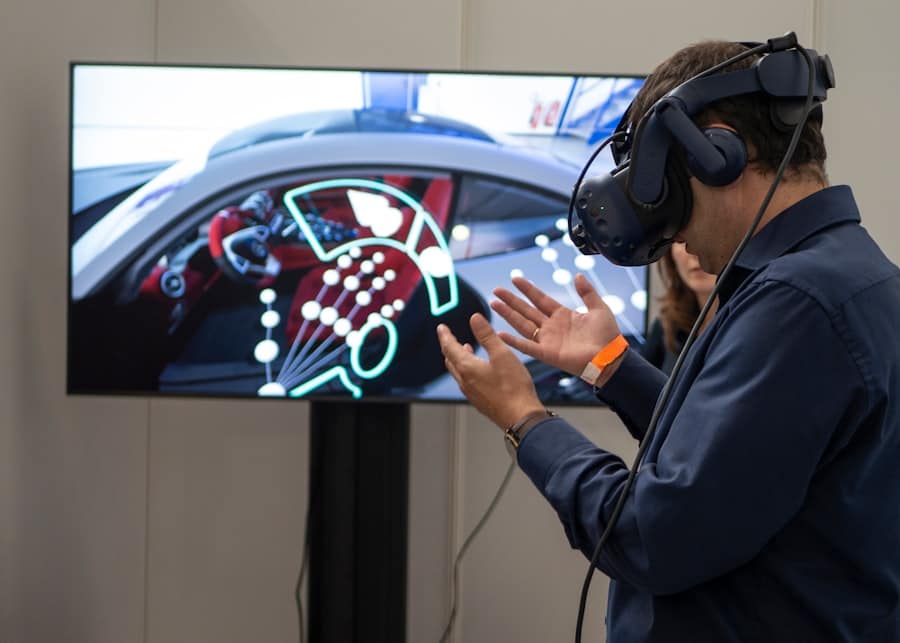
Looking ahead, the future of haptic gloves in immersive VR appears promising as researchers continue to innovate and refine existing technologies. One potential direction is the integration of advanced materials such as shape-memory alloys or electroactive polymers that can change shape or stiffness in response to electrical stimuli. These materials could enable more sophisticated feedback mechanisms that mimic real-world sensations more closely than current actuators allow.
Furthermore, as artificial intelligence (AI) becomes increasingly integrated into VR systems, haptic gloves may evolve to provide adaptive feedback based on user behavior and preferences. For example, AI algorithms could analyze how users interact with virtual objects and adjust the level of resistance or texture simulation accordingly. This personalized approach could enhance user satisfaction and engagement by creating tailored experiences that resonate with individual preferences.
Applications of Haptic Gloves in Various Industries
The applications of haptic gloves extend far beyond gaming and entertainment; they hold significant potential across various industries including healthcare, education, engineering, and design. In healthcare, for instance, haptic gloves can be utilized for surgical training simulations where aspiring surgeons practice delicate procedures without risk to real patients. The ability to feel resistance or simulate tissue textures can provide invaluable training experiences that enhance skill acquisition.
In education, haptic gloves can facilitate interactive learning experiences by allowing students to engage with complex concepts through tactile exploration. For example, students studying anatomy could use haptic gloves to manipulate virtual models of human organs, gaining a deeper understanding through hands-on interaction. Similarly, in engineering and design fields, professionals can use haptic gloves to prototype products or test designs in virtual environments before physical production begins.
The Impact of Haptic Gloves on the Future of VR
As we continue to explore the potential of virtual reality technology, haptic gloves stand out as a transformative tool that enhances user interaction and immersion. By bridging the gap between physical sensations and digital experiences, these devices are reshaping how we engage with virtual environments across various sectors. The ongoing advancements in materials science, sensor technology, and AI integration promise to further elevate the capabilities of haptic gloves.
The impact of haptic gloves on the future of VR is profound; they not only enrich entertainment experiences but also revolutionize training methodologies and educational practices. As barriers such as cost and technological limitations are addressed over time, we can expect haptic gloves to become an integral part of our everyday interactions with virtual reality—ushering in a new era where digital experiences feel as tangible as those in the real world.
For those interested in exploring how technology is shaping creative expression, a related article on unlocking creative potential can be found here: Unlock Your Creative Potential with the Samsung Galaxy Book Flex2 Alpha. This article delves into innovative tools that can complement the immersive experiences offered by advanced haptic devices.
FAQs
What are haptic gloves in the context of VR?
Haptic gloves are wearable devices designed to provide tactile feedback to the user’s hands, allowing them to feel virtual objects and textures in a virtual reality (VR) environment. They enhance immersion by simulating the sense of touch.
How do next-generation haptic gloves differ from earlier models?
Next-generation haptic gloves typically offer improved precision, lighter weight, better comfort, and more realistic tactile feedback. They often incorporate advanced sensors and actuators to simulate a wider range of sensations, such as pressure, texture, and temperature.
What technologies are used in the latest haptic gloves?
Modern haptic gloves use a combination of force feedback actuators, vibration motors, motion sensors, and sometimes electrostatic or ultrasonic feedback to create realistic touch sensations. Some also integrate wireless connectivity and advanced tracking systems.
What are the main benefits of using haptic gloves in VR?
Haptic gloves enhance user immersion by enabling natural hand interactions with virtual objects. They improve training simulations, gaming experiences, and remote collaboration by providing tactile feedback that mimics real-world touch.
Are next-generation haptic gloves compatible with existing VR systems?
Many next-generation haptic gloves are designed to be compatible with popular VR platforms and headsets, but compatibility can vary depending on the manufacturer and software support. Users should check specific product details for compatibility information.
What industries can benefit from the use of advanced haptic gloves?
Industries such as gaming, healthcare, education, engineering, and remote robotics can benefit from advanced haptic gloves. They are used for training, simulation, design, and enhancing user interaction in virtual environments.
What challenges remain in the development of haptic gloves?
Challenges include achieving realistic and varied tactile sensations, reducing device weight and bulk, improving battery life, ensuring affordability, and integrating seamless tracking and feedback systems.
How do haptic gloves improve VR training applications?
Haptic gloves allow trainees to practice tasks with realistic touch feedback, improving muscle memory and skill acquisition. This is particularly valuable in medical, military, and industrial training scenarios where hands-on experience is critical.
Are there any health or safety concerns with using haptic gloves?
Generally, haptic gloves are safe to use. However, prolonged use may cause hand fatigue or discomfort. Users should follow manufacturer guidelines and take breaks to avoid strain.
Where can consumers purchase next-generation haptic gloves?
Next-generation haptic gloves are available through specialized VR hardware manufacturers, online retailers, and sometimes directly from developers. Availability may vary based on region and product release schedules.