

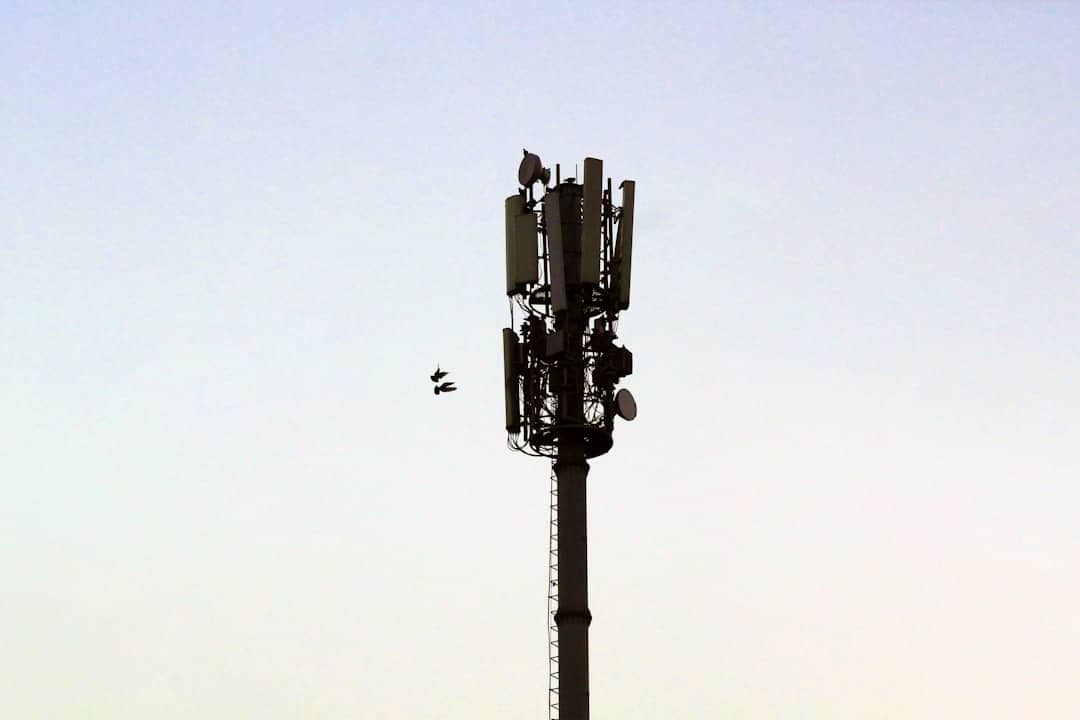
The advent of 5G technology represents a significant advancement in mobile telecommunications, offering unprecedented speed, reduced latency, and increased capacity compared to previous generations. This technological evolution is poised to impact multiple sectors including healthcare, entertainment, and education. Mobile augmented reality (AR) stands as one of the most promising applications for 5G networks.
AR technology integrates digital elements with the physical environment, creating interactive experiences that enhance user engagement with their surroundings. The combination of 5G capabilities and mobile AR presents opportunities for applications that were technically unfeasible under previous network standards. Mobile AR has already demonstrated its impact across various industries by merging virtual and physical worlds.
Examples include consumer gaming applications such as Pokémon GO and practical implementations in retail and educational environments. Despite this progress, existing mobile networks have imposed technical limitations on AR functionality. The enhanced bandwidth, reliability, and reduced latency of 5G networks address these constraints, enabling more sophisticated and responsive AR experiences on mobile devices.
This technological convergence represents more than an incremental improvement—it constitutes a fundamental shift in how users can interact with digital information in physical contexts.
Key Takeaways
- 5G technology significantly boosts mobile augmented reality (AR) with faster, more reliable connectivity.
- Enhanced AR content and multi-user experiences become possible through 5G’s low latency and high bandwidth.
- Integration of 5G with edge computing enables real-time processing and richer AR applications.
- New AR-based services and applications emerge, leveraging 5G’s capabilities for innovative user experiences.
- Despite opportunities, challenges like infrastructure, privacy, and device compatibility remain for 5G-powered mobile AR.
Faster and More Reliable Connectivity
One of the most significant advantages of 5G technology is its ability to provide faster and more reliable connectivity compared to its predecessors. With download speeds reaching up to 10 Gbps, 5G networks can transmit data at lightning speed, allowing users to access high-quality AR content without lag or interruptions. This rapid data transfer is crucial for AR applications that require real-time processing and rendering of complex graphics.
For instance, in a mobile AR game where players interact with virtual characters in real-time, any delay in data transmission could disrupt the experience and diminish user engagement. With 5G, such scenarios become less likely, as the network can handle vast amounts of data simultaneously. Moreover, 5G’s low latency—often as low as one millisecond—ensures that interactions within AR environments are instantaneous.
This is particularly important for applications that rely on precise tracking and synchronization between the real and virtual worlds. For example, in an AR navigation app that overlays directions onto a live camera feed, any delay could lead to confusion or misdirection. The reliability of 5G networks also means that users can expect consistent performance even in crowded areas or during peak usage times.
This stability is essential for businesses looking to implement AR solutions in retail environments or public spaces where many users may be accessing the network simultaneously.
Improved AR Content and Experiences

The integration of 5G technology into mobile augmented reality is set to enhance the quality and richness of AR content significantly.
High-definition graphics, intricate animations, and detailed 3D models can be streamed directly to users’ devices without compromising performance.
This capability opens up new avenues for creativity in AR content creation, allowing developers to push the boundaries of what is possible in immersive storytelling and interactive experiences. For instance, consider an educational application that uses AR to teach students about historical events. With 5G’s capabilities, developers can create highly detailed reconstructions of historical sites or events that users can explore in real-time.
Students could walk through a virtual representation of ancient Rome, interacting with lifelike avatars of historical figures while receiving contextual information about their surroundings. Such experiences not only enhance learning but also foster a deeper emotional connection to the material being studied. The ability to deliver rich content seamlessly will undoubtedly elevate user engagement and satisfaction across various sectors.
Enhanced Multi-user AR Experiences
Another transformative aspect of 5G technology is its potential to facilitate enhanced multi-user AR experiences. Traditional mobile networks often struggle to support multiple users interacting with the same AR environment simultaneously due to bandwidth limitations and latency issues. However, with 5G’s high capacity and low latency, it becomes feasible for numerous users to engage with shared AR experiences in real-time.
This capability is particularly valuable for applications in gaming, social interaction, and collaborative work environments. Imagine a scenario where friends gather in a park to play an AR game together. With 5G connectivity, each player can see and interact with the same virtual elements in real-time, regardless of their physical location within the park.
This shared experience fosters social interaction and collaboration, enhancing the overall enjoyment of the game. Similarly, in professional settings, teams can utilize multi-user AR applications for remote collaboration on projects. Architects could visualize a building design together in a shared AR space, making real-time adjustments based on input from team members located around the globe.
The ability to create immersive multi-user environments will undoubtedly change how we socialize and collaborate in both recreational and professional contexts.
Integration of 5G and Edge Computing
| Metric | Pre-5G (4G) | With 5G | Impact on Mobile AR Experience |
|---|---|---|---|
| Latency | 30-50 ms | 1-10 ms | Significantly reduced latency enables real-time AR interactions and smoother overlays. |
| Download Speed | 20-100 Mbps | 100 Mbps – 10 Gbps | Faster content downloads and streaming of high-quality AR assets improve user experience. |
| Upload Speed | 10-50 Mbps | 50 Mbps – 1 Gbps | Improved upload speeds facilitate real-time sharing and cloud processing for AR applications. |
| Network Reliability | Moderate | High | More stable connections reduce AR session interruptions and improve consistency. |
| Device Battery Life Impact | High (due to longer processing times) | Lower (due to efficient data transfer and edge computing) | Extended battery life allows longer AR sessions without frequent recharging. |
| Edge Computing Integration | Limited | Extensive | Enables complex AR computations off-device, enhancing performance and reducing latency. |
| Simultaneous User Support | Low to Moderate | High | Supports more concurrent AR users in crowded environments like events or malls. |
The integration of 5G technology with edge computing represents a significant advancement in mobile augmented reality applications. Edge computing involves processing data closer to the source rather than relying solely on centralized cloud servers. This approach reduces latency and enhances performance by allowing devices to access data more quickly.
When combined with 5G’s high-speed connectivity, edge computing enables AR applications to deliver real-time experiences that are both responsive and efficient. For example, consider an industrial application where technicians use AR glasses to receive real-time instructions while performing maintenance on complex machinery. By leveraging edge computing, data related to machine performance can be processed locally on-site rather than being sent back and forth to a distant server.
This localized processing minimizes delays and ensures that technicians receive timely updates as they work. Furthermore, edge computing can enhance security by reducing the amount of sensitive data transmitted over the network, making it less vulnerable to interception or breaches.
New Opportunities for AR-based Applications and Services

The convergence of 5G technology and mobile augmented reality is creating a wealth of new opportunities for innovative applications and services across various industries. Retailers are beginning to explore how AR can enhance the shopping experience by allowing customers to visualize products in their own homes before making a purchase. For instance, furniture retailers can offer AR apps that enable customers to see how a sofa would look in their living room by overlaying a digital image onto their camera feed.
With 5G’s capabilities, these applications can provide high-quality visualizations without lag or distortion. In healthcare, mobile AR powered by 5G can revolutionize patient care by providing doctors with real-time access to critical information during procedures. Surgeons could use AR glasses to overlay patient data directly onto their field of vision while performing complex operations, improving accuracy and efficiency.
Additionally, training programs for medical professionals could utilize immersive AR simulations that allow trainees to practice procedures in a risk-free environment while receiving immediate feedback based on their performance.
Challenges and Considerations for 5G-powered Mobile AR
Despite the promising potential of 5G-powered mobile augmented reality, several challenges and considerations must be addressed before widespread adoption can occur. One significant concern is the infrastructure required to support 5G networks effectively. While urban areas may see rapid deployment of 5G technology, rural regions may lag behind due to the high costs associated with building out necessary infrastructure such as small cell towers.
This disparity could lead to unequal access to advanced AR applications based on geographic location. Another challenge lies in ensuring user privacy and data security within AR environments powered by 5G networks. As more personal data is collected through AR applications—such as location information or biometric data—there is an increased risk of breaches or misuse of sensitive information.
Developers must prioritize robust security measures and transparent data handling practices to build trust with users while navigating regulatory frameworks surrounding data privacy.
The Future of 5G and Mobile Augmented Reality
The future of mobile augmented reality is intrinsically linked to the advancements brought about by 5G technology. As connectivity becomes faster and more reliable, the possibilities for immersive experiences will expand exponentially across various sectors—from entertainment and education to healthcare and retail. The integration of edge computing will further enhance these experiences by enabling real-time processing and reducing latency.
However, realizing this potential requires addressing challenges related to infrastructure development and data security. As stakeholders work collaboratively to overcome these hurdles, we can expect a new era of mobile augmented reality that not only enriches our daily lives but also transforms industries by providing innovative solutions tailored to meet evolving consumer needs. The convergence of 5G and mobile AR heralds an exciting future where our interactions with both digital content and the physical world will be more seamless than ever before.
The advent of 5G technology is set to revolutionize mobile augmented reality (AR) experiences, enabling faster data transmission and more immersive interactions. For those interested in how technology impacts user experiences, a related article that explores the latest advancements in mobile devices is available at How to Choose a Smartphone for Chief Executives. This article provides insights into selecting the right smartphone, which is crucial for maximizing the benefits of 5G and AR applications.
FAQs
What is 5G technology?
5G is the fifth generation of mobile network technology, offering significantly faster data speeds, lower latency, and greater connectivity compared to previous generations like 4G.
How does 5G improve mobile augmented reality (AR) experiences?
5G enhances mobile AR by providing faster data transmission, reduced latency, and more reliable connections, which enable smoother, more responsive, and higher-quality AR interactions on mobile devices.
Why is low latency important for mobile AR?
Low latency ensures that virtual objects in AR respond instantly to user movements and environmental changes, creating a seamless and immersive experience without noticeable delays.
Can 5G support more complex AR applications?
Yes, 5G’s increased bandwidth and speed allow mobile devices to handle more data-intensive AR applications, including those with high-resolution graphics, real-time multiplayer interactions, and cloud-based processing.
Will 5G make mobile AR more accessible?
By improving network performance and reducing the need for powerful local hardware, 5G can make advanced AR experiences more accessible to a wider range of users with standard mobile devices.
Are there any challenges associated with 5G and mobile AR?
Challenges include the need for widespread 5G coverage, potential higher energy consumption on devices, and ensuring privacy and security in AR applications that rely on constant data exchange.
How does 5G compare to 4G in supporting mobile AR?
Compared to 4G, 5G offers up to 10 times faster speeds and significantly lower latency, which greatly improves the responsiveness and quality of mobile AR experiences.
What industries benefit from 5G-enabled mobile AR?
Industries such as gaming, retail, education, healthcare, and manufacturing benefit from 5G-enabled mobile AR by enabling interactive training, enhanced shopping experiences, remote assistance, and immersive learning.
Is 5G necessary for all mobile AR applications?
Not all mobile AR applications require 5G; simpler AR experiences can function well on 4G or Wi-Fi. However, 5G is essential for more advanced, real-time, and data-heavy AR applications.
When can users expect widespread 5G-enabled mobile AR experiences?
As 5G networks continue to expand globally and device manufacturers integrate 5G capabilities, widespread adoption of 5G-enabled mobile AR experiences is expected to grow steadily over the next few years.