

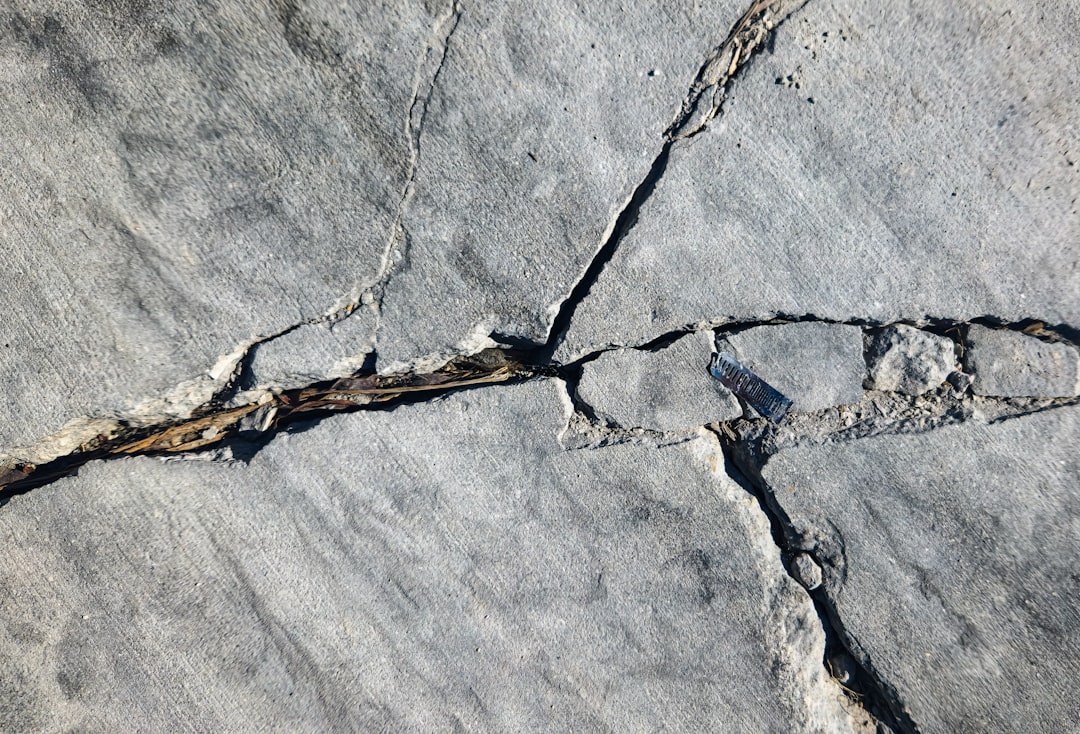
Self-healing concrete and other sustainable infrastructure materials are steadily moving from research labs into real-world applications. The core idea here is making infrastructure last longer, reducing the need for constant repairs, and cutting down on our environmental footprint. We’re talking about materials that can fix themselves, use less energy to produce, or are made from recycled waste – all aimed at building a more resilient and less resource-intensive future.
Our current infrastructure, from roads to bridges, takes a beating. The constant cycle of repair and replacement is costly, resource-intensive, and often disruptive. Furthermore, traditional materials like conventional concrete contribute significantly to carbon emissions during production. This is where the push for smarter, sustainable materials comes in. It’s not just about building new things; it’s about making what we already have, and what we will build, perform better and last longer with less damage to the planet.
The Repair Cycle’s Downside
Think about a typical road. It’s built, then cracks appear from traffic and weather, then crews come in to patch it up – often leading to more cracks nearby. This cycle drains public funds and generates a lot of waste. If the materials themselves could “heal” these minor issues before they become major problems, we’d be looking at a substantial shift.
Environmental Burden of Traditional Construction
Cement production alone is a massive contributor to global CO2 emissions. Finding alternatives or improving the longevity of what we already use can significantly lessen this impact. It’s not just CO2; mining raw materials and transporting them also have ecological consequences that we need to consider.
In exploring innovative materials for sustainable infrastructure, a related article titled “The Best Apps for Facebook 2023” provides insights into how technology can enhance communication and collaboration in the construction industry. While the focus of the article is primarily on social media applications, it highlights the importance of digital tools in promoting awareness and education about advancements like self-healing concrete. For more information, you can read the article here: The Best Apps for Facebook 2023.
Self-Healing Concrete: The Front-Runner
Self-healing concrete is arguably one of the most exciting developments in sustainable infrastructure. The concept is simple: when cracks appear, the concrete somehow fixes itself, extending its lifespan and reducing maintenance needs. There are several approaches to achieving this, each with its own benefits and challenges.
Bacterial Self-Healing Concrete
This method incorporates dormant bacteria and a calcium lactate nutrient into the concrete mix. When a crack forms and water seeps in, the bacteria “wake up,” consume the nutrient, and produce calcium carbonate (limestone). This limestone effectively fills the crack, sealing it and preventing further degradation.
How it Works at a Micro-Level
Imagine dormant spores inside tiny capsules or directly mixed into the concrete. Once water (and often oxygen) enters a growing crack, these spores get activated. They begin to metabolize the calcium lactate, excreting calcium carbonate crystals. These crystals then precipitate and fill the void, effectively mending the crack.
Current Hurdles and Progress
While promising, there are still challenges. The viability of the bacteria over long periods, their ability to “heal” larger cracks, and the cost of incorporating them on a large scale are all areas of ongoing research. However, pilot projects have shown impressive results in controlled environments, and efforts are underway to make it more robust for diverse real-world conditions. Researchers are studying different bacterial strains and encapsulation methods to maximize efficiency and longevity.
Encapsulated Agent Self-Healing Concrete
Another approach involves embedding microcapsules containing healing agents, such as polymers or epoxy resins, within the concrete matrix. When a crack propagates through the concrete, it ruptures these capsules, releasing the healing agent. This agent then flows into the crack and polymerizes or hardens, effectively sealing it.
The Chemistry of Repair
The most common agents are polymers that, when exposed to air or a catalyst, begin to cure. Think of it like a two-part epoxy glue. In some systems, both parts are in separate microcapsules and only mix and react when the crack breaks both. In others, a single capsule holds a monomer that reacts with a catalyst present in the concrete matrix itself, or with atmospheric moisture.
Design Considerations
The size and distribution of these capsules are crucial. They need to be small enough not to compromise the concrete’s strength, but large enough to hold a sufficient amount of healing agent. The capsule material also needs to be compatible with the concrete and strong enough to withstand mixing, but fragile enough to break when a crack reaches it. The type of healing agent also matters, as it needs to have good adhesion properties and be able to solidify effectively within the crack.
Vascular Network Self-Healing Concrete
This method mimics biological systems, like our own blood vessels. It involves creating a network of tiny tubes or channels within the concrete filled with a healing agent. When a crack intersects one of these channels, the healing agent is released and flows into the crack, sealing it. This approach offers the potential for repeated healing, as the network can potentially be refilled.
Mimicking Nature’s Design
The idea is to create a continuous or semi-continuous pathway for the healing agent. This can be done by embedding hollow fibers or creating microchannels during the concrete’s casting process. When a crack forms, capillary action and pressure could draw the healing agent from the network into the damaged area.
Potential for Multiple Repairs
One of the key advantages here is the possibility of “recharging” the system. If the network can be accessed, more healing agent could be pumped in after initial repairs, allowing for multiple healing events over the concrete’s lifespan. This could significantly enhance longevity, especially for critical infrastructure components. However, manufacturing these internal networks reliably and cost-effectively is a significant hurdle.
Other Game-Changing Sustainable Materials
While self-healing concrete is exciting, it’s not the only innovation making waves. A range of other materials is being developed to make our infrastructure more sustainable and resilient.
Geopolymer Concrete
This is a promising alternative to traditional Portland cement concrete. Instead of cement, geopolymers use industrial waste products like fly ash (from coal combustion) or slag (from steel production) reacted with an alkaline solution. The resulting material boasts comparable, and sometimes superior, strength and durability to traditional concrete, but with a significantly lower carbon footprint because it bypasses the high-temperature calcination process required for cement.
Lower Carbon Footprint
The reduction in CO2 emissions is paramount here. The production of traditional Ordinary Portland Cement (OPC) is energy-intensive and releases large amounts of CO2 through the decomposition of limestone. Geopolymer production, by utilizing industrial waste and lower processing temperatures, can reduce CO2 emissions by up to 80% or more.
Enhanced Durability and Properties
Beyond its environmental benefits, geopolymer concrete often exhibits superior resistance to fire, acid attack, and sulfate attack, making it ideal for harsh environments. It also tends to cure faster and have better mechanical properties in some applications. Researchers are exploring various feedstock materials and activators to optimize performance for different structural applications.
Recycled Aggregate Concrete
Using recycled concrete aggregate (RCA) from demolished structures instead of virgin aggregates (crushed stone, sand, and gravel) is gaining traction. This reduces the demand for new quarrying, minimizes landfill waste, and lowers transportation costs. While there can be some minor compromises in strength or durability depending on the quality of the RCA, careful processing and mix design can overcome these limitations for many applications.
Closing the Loop on Construction Waste
Demolition waste constitutes a massive portion of landfill content globally. Reusing concrete not only saves natural resources but also minimizes the environmental impact associated with waste disposal. It’s a prime example of a circular economy in action within construction.
Performance Considerations
The quality of RCA can vary, impacting the strength and workability of the new concrete. Careful crushing, screening, and impurity removal are essential. Research focuses on optimizing mix designs to ensure structural integrity when using higher percentages of RCA, making it suitable for a wider range of structural applications, beyond just sub-bases or non-structural elements. Additives and blending with virgin aggregates are also being explored.
Bio-Based and Mycelium Materials
Looking further ahead, bio-based materials are emerging as genuinely sustainable options. Mycelium, the root structure of fungi, can be grown into solid blocks that are durable, lightweight, and even fire-resistant. Applications range from insulation and acoustic panels to potentially structural elements. Other bio-based binders and fibers are also being explored to reduce reliance on petrochemicals and energy-intensive manufacturing processes.
Mycelium as a Building Block
Mycelium grows by consuming agricultural waste products like sawdust or straw. It acts as a natural binder, forming a strong, lightweight composite material. After growth, the material is dried to stop further growth. This process uses minimal energy and can actually sequester carbon.
Diverse Applications
Currently, mycelium is mostly used in non-load-bearing applications like acoustic panels, insulation, and packaging. However, researchers are actively exploring ways to enhance its strength and water resistance to consider it for more structural roles in the future, possibly as a composite with other materials. The potential for on-site “growing” of components is a particularly intriguing prospect.
The Path to Implementation

Bringing these advanced materials from the lab to widespread use isn’t a simple flip of a switch. There are practical, economic, and regulatory hurdles to navigate.
Cost and Scalability
Many of these materials are currently more expensive to produce than their traditional counterparts, especially at smaller scales. Increasing production volume and refining manufacturing processes are key to bringing costs down. The long-term economic benefits (reduced maintenance, longer lifespan) need to be clearly demonstrated to justify initial higher costs.
Standards and Regulations
Building codes and engineering standards are developed around established materials. Introducing new materials like self-healing concrete or geopolymers requires rigorous testing and validation to prove their performance and safety. This can be a lengthy process, but it’s essential for ensuring public safety and gaining industry acceptance.
Education and Training
Engineers, architects, and construction workers need to be trained on how to specify, design with, and handle these new materials. A shift in mindset and practices across the industry is necessary for widespread adoption. Demonstrating success through pilot projects and case studies will be crucial in building confidence and expertise.
In exploring innovative materials for sustainable infrastructure, the concept of self-healing concrete stands out as a groundbreaking advancement. This technology not only enhances the longevity of structures but also reduces maintenance costs and environmental impact. For those interested in the intersection of technology and architecture, a related article discusses essential tools for architects, including recommendations for the best laptops that can support design and engineering tasks. You can read more about it in this insightful piece on the best laptop for architects.
The Long-Term Vision
| Metrics | Data |
|---|---|
| Carbon footprint reduction | Up to 50% reduction compared to traditional concrete |
| Self-healing capability | Healing of cracks up to 0.5mm in width |
| Service life extension | Up to 100 years compared to 50 years for traditional concrete |
| Cost-effectiveness | Potential long-term cost savings due to reduced maintenance and repair |
| Material composition | Utilization of recycled materials and industrial by-products |
The vision for sustainable infrastructure materials is one where our built environment is not only robust and functional but also regenerative and in harmony with the planet. It’s about more than just incremental improvements; it’s about a fundamental shift in how we conceive, design, and construct our cities and essential services. Imagine roads that fix themselves, buildings that sequester carbon, and materials that are simply grown rather than intensively manufactured. While we’re not quite there yet, the developments in self-healing concrete and other sustainable alternatives point toward a future where our infrastructure works harder, lasts longer, and demands less from our precious natural resources. It’s a journey, but the direction is clear, and the potential benefits are significant.
FAQs
What is self-healing concrete?
Self-healing concrete is a type of concrete that has the ability to repair cracks that occur over time. This is achieved through the use of various materials such as shape memory polymers, bacteria, and mineral admixtures that react with water to seal cracks.
How does self-healing concrete work?
Self-healing concrete works through the incorporation of materials that react with water to seal cracks. For example, shape memory polymers can be embedded in the concrete and when a crack occurs, the polymers are activated by water to fill the crack and restore the concrete’s integrity.
What are the benefits of self-healing concrete?
The benefits of self-healing concrete include increased durability and longevity of infrastructure, reduced maintenance costs, and a decrease in the environmental impact of concrete production due to the need for less frequent repairs and replacements.
What are other sustainable infrastructure materials besides self-healing concrete?
Other sustainable infrastructure materials include recycled aggregates, high-performance concrete with reduced cement content, and bio-based materials such as bamboo and hemp. These materials offer environmentally friendly alternatives to traditional construction materials.
What is the future outlook for self-healing concrete and sustainable infrastructure materials?
The future outlook for self-healing concrete and sustainable infrastructure materials is promising, with ongoing research and development aimed at improving their performance, cost-effectiveness, and scalability. These materials are expected to play a crucial role in creating more resilient and sustainable infrastructure for the future.