

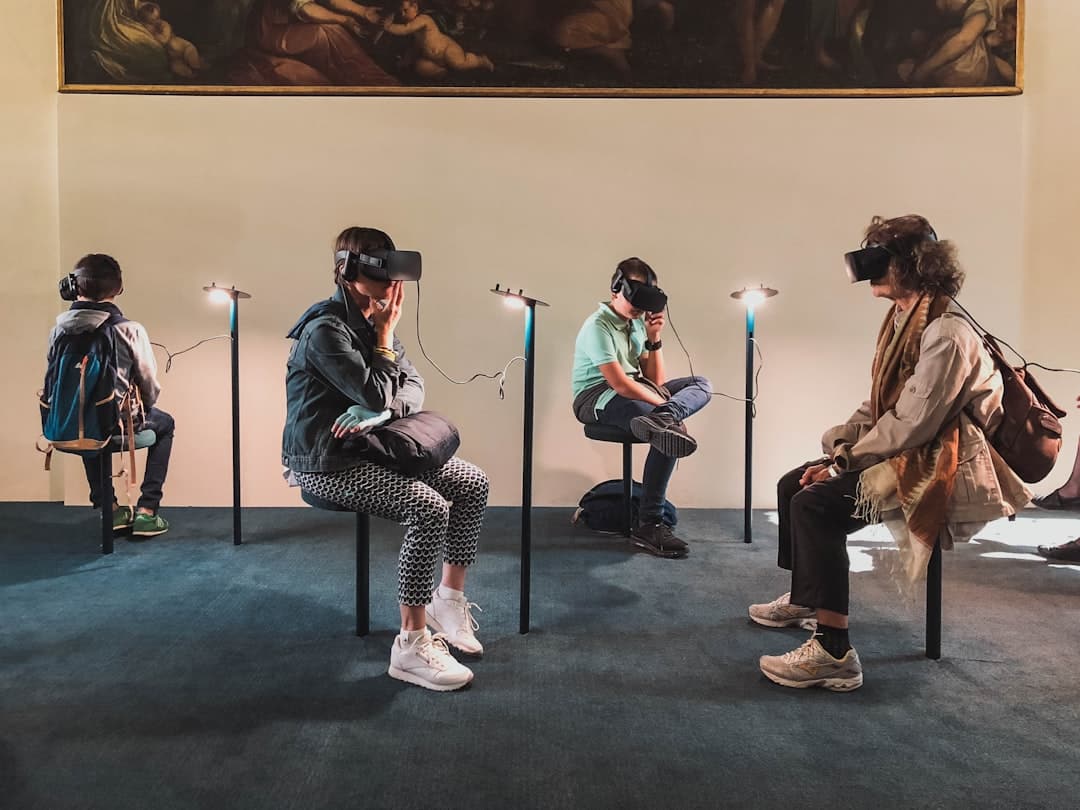
The convergence of artificial intelligence (AI) and virtual reality (VR) has ushered in a new era of immersive experiences that were once the realm of science fiction. AI-powered virtual reality combines the interactive and immersive qualities of VR with the adaptive and intelligent capabilities of AI, creating environments that can respond to user actions in real-time. This synergy not only enhances user engagement but also opens up a plethora of applications across various sectors, including entertainment, education, healthcare, and business.
As technology continues to evolve, the potential for AI-powered VR to transform how we interact with digital content becomes increasingly apparent. At its core, AI-powered virtual reality leverages machine learning algorithms and data analytics to create dynamic environments that can learn from user behavior. This means that rather than being static experiences, virtual worlds can adapt and evolve based on individual preferences and actions.
For instance, in a gaming context, an AI system can analyze a player’s style and adjust the difficulty level or narrative elements accordingly, providing a personalized experience that keeps users engaged. The implications of this technology extend far beyond gaming; they touch on how we learn, heal, and conduct business in an increasingly digital world.
Key Takeaways
- AI-powered virtual reality (VR) is transforming multiple sectors by combining immersive experiences with intelligent technology.
- Advances in AI and VR technologies are enhancing realism, interactivity, and personalization in virtual environments.
- AI-driven VR is revolutionizing entertainment, education, healthcare, and training by providing tailored and engaging experiences.
- Ethical concerns and privacy issues are critical considerations as AI-powered VR becomes more widespread.
- The future of AI-powered VR holds significant potential for business innovation but also presents challenges that need to be addressed.
Advancements in AI and Virtual Reality Technology
The technological advancements in both AI and VR have been remarkable over the past decade. In the realm of AI, breakthroughs in deep learning and neural networks have enabled machines to process vast amounts of data with unprecedented accuracy. These advancements allow AI systems to recognize patterns, make predictions, and even generate content autonomously.
For example, natural language processing has improved to the point where virtual assistants can understand and respond to human speech with remarkable fluency, enhancing user interaction within virtual environments. On the VR front, hardware improvements have made headsets more accessible and comfortable for extended use. High-resolution displays, improved field of view, and advanced motion tracking have all contributed to a more immersive experience.
Companies like Oculus, HTC, and Sony have invested heavily in refining their VR technologies, resulting in devices that can deliver stunning visuals and responsive interactions. The integration of haptic feedback systems further enhances immersion by allowing users to feel sensations that correspond with their actions in the virtual world. Together, these advancements create a fertile ground for the development of AI-powered VR applications that are not only engaging but also practical.
The Impact of AI-Powered Virtual Reality on Entertainment

In the entertainment industry, AI-powered virtual reality is revolutionizing how stories are told and experienced. Traditional media formats such as film and television are being augmented by immersive storytelling techniques that allow audiences to step into the narrative. For instance, interactive films enable viewers to make choices that influence the plot’s direction, creating a unique experience for each viewer.
This level of interactivity is made possible through AI algorithms that can track user decisions and adapt the storyline accordingly. Moreover, gaming has seen some of the most significant transformations due to AI-powered VR. Games like “Half-Life: Alyx” showcase how AI can create intelligent non-player characters (NPCs) that react realistically to player actions.
These NPCs can learn from player behavior, making them more challenging opponents or more helpful allies depending on the context. This dynamic interaction not only enhances gameplay but also fosters a deeper emotional connection between players and characters. As developers continue to explore the potential of AI in gaming, we can expect even more innovative experiences that blur the lines between reality and fiction.
The Role of AI-Powered Virtual Reality in Education and Training
The educational sector stands to benefit immensely from the integration of AI-powered virtual reality technologies. Traditional learning methods often struggle to engage students effectively, but immersive VR experiences can transform how knowledge is imparted. For example, medical students can practice surgical procedures in a risk-free virtual environment where they can make mistakes without real-world consequences.
AI can analyze their performance, providing instant feedback and personalized learning paths that cater to individual strengths and weaknesses. In corporate training, VR simulations powered by AI can replicate real-world scenarios that employees may face in their roles.
The AI component can assess their responses and suggest improvements based on best practices. This approach not only enhances skill acquisition but also boosts confidence among trainees as they prepare for real-life challenges.
AI-Powered Virtual Reality in Healthcare and Therapy
| Metric | Current Status (2024) | Projected Status (2030) | Notes |
|---|---|---|---|
| Global Market Size (in billions) | 15 | 120 | Driven by AI integration and VR adoption in gaming, education, and healthcare |
| Average Latency (milliseconds) | 20 | 5 | Improvements due to AI-optimized network protocols and edge computing |
| AI Model Complexity (parameters in billions) | 10 | 100 | More sophisticated AI models enabling realistic virtual interactions |
| User Engagement Time (hours per week) | 5 | 15 | Enhanced immersion and personalized experiences increase usage |
| Number of Active Users (millions) | 50 | 500 | Wider accessibility and affordability of VR devices |
| Resolution of VR Displays (pixels per eye) | 2160 x 2160 | 4320 x 4320 | Higher resolution for more lifelike visuals |
| AI-Driven Personalization Level | Basic | Advanced | From preset options to real-time adaptive environments |
| Energy Consumption per Session (kWh) | 0.1 | 0.05 | More efficient hardware and AI algorithms reduce power use |
The healthcare industry is increasingly recognizing the potential of AI-powered virtual reality as a tool for both treatment and training. In therapeutic settings, VR has been used to treat conditions such as post-traumatic stress disorder (PTSD), anxiety disorders, and phobias through exposure therapy. By immersing patients in controlled virtual environments where they can confront their fears gradually, therapists can help them develop coping mechanisms in a safe space.
The integration of AI allows for real-time monitoring of patient responses, enabling therapists to adjust the experience based on individual needs. Additionally, medical professionals are utilizing VR for surgical training and planning. Surgeons can rehearse complex procedures in a virtual environment before performing them on actual patients.
AI algorithms can analyze surgical techniques and provide feedback on areas for improvement, enhancing the overall quality of care. This combination of VR and AI not only improves surgical outcomes but also reduces the risk associated with training new surgeons.
The Ethical and Privacy Implications of AI-Powered Virtual Reality

As with any emerging technology, the rise of AI-powered virtual reality brings forth ethical considerations that must be addressed. One significant concern is privacy; as users engage with these immersive environments, vast amounts of personal data are generated. This data can include behavioral patterns, preferences, and even biometric information collected through sensors.
The potential for misuse or unauthorized access to this data raises questions about user consent and data protection. Moreover, there are ethical implications surrounding the creation of hyper-realistic virtual experiences that could manipulate emotions or behaviors. For instance, if an AI system is designed to elicit specific emotional responses from users—such as fear or joy—there is a risk that it could be used unethically for purposes like advertising or political propaganda.
Establishing guidelines for responsible use and ensuring transparency in how data is collected and utilized will be crucial as this technology continues to evolve.
The Future of AI-Powered Virtual Reality in Business and Industry
In the business realm, AI-powered virtual reality is poised to redefine how companies operate and engage with customers. Virtual showrooms allow consumers to explore products in an immersive environment before making a purchase decision. Retailers like IKEA have already implemented AR applications that let customers visualize furniture in their homes through their smartphones; however, combining this with VR could take customer engagement to new heights by allowing them to interact with products in a fully immersive setting.
Furthermore, businesses are leveraging VR for remote collaboration among teams spread across different geographical locations. Virtual meeting spaces enable employees to interact as if they were physically present together, fostering creativity and collaboration without the constraints of distance. AI can enhance these experiences by facilitating real-time language translation or providing contextual information based on participants’ interactions within the virtual space.
Challenges and Opportunities for the Future of AI-Powered Virtual Reality
Despite its vast potential, the future of AI-powered virtual reality is not without challenges. One significant hurdle is the need for robust infrastructure capable of supporting high-quality VR experiences. As these technologies demand substantial computational power and bandwidth, ensuring accessibility for all users remains a critical concern.
Additionally, developing standardized protocols for interoperability between different VR platforms will be essential for fostering widespread adoption.
As demand for immersive experiences grows across various sectors, there will be an increased need for skilled professionals who can design and implement these technologies effectively.
Educational institutions may respond by developing specialized programs focused on VR development and AI integration, thus preparing a new generation of talent equipped to navigate this evolving landscape. The intersection of artificial intelligence and virtual reality holds immense promise for transforming our interactions with digital content across multiple domains. As advancements continue to unfold, it will be crucial for stakeholders—developers, educators, healthcare professionals, and policymakers—to collaborate in shaping a future where these technologies enhance human experiences while addressing ethical considerations responsibly.
As we explore the transformative potential of AI-powered virtual reality experiences, it’s essential to consider the hardware that can support such advanced technology. For those looking to invest in a capable machine, a related article on choosing the right laptop can provide valuable insights. You can read more about this in our article on how to choose a laptop for video editing, which discusses the specifications and features that are crucial for handling demanding applications, including virtual reality.
FAQs
What is AI-powered virtual reality?
AI-powered virtual reality (VR) combines artificial intelligence technologies with VR environments to create more immersive, interactive, and personalized experiences. AI can enhance VR by enabling smarter NPCs, adaptive scenarios, and real-time content generation.
How does AI improve virtual reality experiences?
AI improves VR by enabling dynamic content creation, natural language processing for better user interaction, intelligent behavior of virtual characters, and personalized experiences based on user preferences and behavior. This leads to more engaging and realistic virtual environments.
What are some current applications of AI in virtual reality?
Current applications include AI-driven training simulations, virtual assistants within VR, adaptive gaming experiences, healthcare therapy sessions, and educational tools that adjust to the learner’s pace and style.
What advancements can we expect in the future of AI-powered VR?
Future advancements may include more sophisticated AI algorithms for real-time environment adaptation, enhanced sensory feedback, improved social interactions with AI avatars, and seamless integration with other emerging technologies like 5G and edge computing.
Are there any challenges associated with AI-powered VR?
Yes, challenges include ensuring user privacy and data security, managing the computational demands of AI and VR, addressing ethical concerns related to AI behavior, and creating universally accessible and inclusive VR experiences.
How will AI-powered VR impact industries?
AI-powered VR is expected to transform industries such as gaming, education, healthcare, real estate, and remote work by providing more effective training, immersive learning, virtual therapy, realistic property tours, and collaborative virtual environments.
Is AI-powered VR safe for users?
When developed and used responsibly, AI-powered VR is generally safe. However, users should be aware of potential issues like motion sickness, data privacy risks, and the psychological effects of highly immersive environments. Developers are working to mitigate these concerns.
What skills are needed to work with AI-powered VR technologies?
Skills include knowledge of AI and machine learning, VR development platforms (such as Unity or Unreal Engine), 3D modeling, programming languages like Python and C#, and an understanding of human-computer interaction principles.