


The pharmaceutical industry is experiencing significant transformation through the integration of artificial intelligence (AI) technologies in drug discovery and development processes. Traditional pharmaceutical development requires an average of 10-15 years from initial discovery to market approval, with development costs frequently exceeding $1 billion per approved drug. AI implementation addresses these challenges by utilizing large-scale datasets and sophisticated algorithms to identify potential drug candidates with greater speed and precision than conventional methodologies.
AI applications span multiple phases of the pharmaceutical development pipeline. These technologies are currently being deployed in target identification and validation, lead compound optimization, and clinical trial design. AI systems demonstrate capabilities in analyzing complex biological datasets, predicting molecular interactions, and modeling clinical outcomes.
Machine learning algorithms can process genomic data, protein structures, and chemical compound libraries to identify promising therapeutic targets and predict drug efficacy and safety profiles. The technology’s impact on pharmaceutical research includes accelerated screening of compound libraries, enhanced prediction of drug-target interactions, and improved identification of patient populations for clinical trials. AI-driven platforms can analyze millions of molecular compounds in silico, reducing the time and resources required for initial screening phases.
Additionally, these systems support pharmacovigilance efforts by identifying potential adverse effects and drug interactions through pattern recognition in clinical data. Current AI applications in pharmaceuticals include natural language processing for literature analysis, computer vision for medical imaging interpretation, and predictive modeling for clinical trial optimization. These tools enable researchers to extract insights from scientific publications, analyze medical images for biomarker identification, and design more efficient clinical studies with improved patient stratification strategies.
Key Takeaways
- AI is transforming drug discovery by addressing current challenges like high costs and long development times.
- Machine learning plays a crucial role in identifying drug candidates and predicting their effectiveness.
- Ethical and regulatory frameworks are essential to ensure safe and responsible AI use in drug development.
- AI has the potential to significantly reduce drug development costs and accelerate timelines.
- Successful case studies highlight AI’s promise, but future challenges remain in integration and validation.
Current Challenges in Drug Discovery and Development
Despite the promise of AI, the drug discovery and development process is riddled with challenges that have persisted for decades. One of the most significant hurdles is the high attrition rate of drug candidates during clinical trials. It is estimated that only about 10% of drugs that enter clinical trials ultimately receive regulatory approval.
This high failure rate can be attributed to various factors, including inadequate understanding of disease mechanisms, poor patient stratification, and unforeseen safety issues. As a result, pharmaceutical companies face immense pressure to optimize their research strategies and improve the likelihood of success. Another challenge lies in the sheer volume and complexity of biological data generated during research.
Researchers often struggle to extract meaningful insights from this deluge of information, leading to inefficiencies and missed opportunities. Furthermore, regulatory hurdles can complicate the development process, as companies must navigate a labyrinth of guidelines and requirements that vary by region and therapeutic area.
These challenges underscore the urgent need for innovative solutions that can enhance decision-making and streamline drug development.
How AI is Revolutionizing Drug Discovery and Development

AI is revolutionizing drug discovery by introducing novel methodologies that enhance data analysis and interpretation. Machine learning algorithms can sift through vast datasets to identify patterns and correlations that may not be immediately apparent to human researchers. For instance, AI can analyze genomic data to uncover genetic mutations associated with specific diseases, enabling researchers to target these mutations with precision therapies.
This capability not only accelerates the identification of viable drug candidates but also facilitates the development of personalized medicine approaches tailored to individual patients’ genetic profiles. Moreover, AI-driven simulations can model molecular interactions at an unprecedented scale, allowing researchers to predict how potential drug compounds will behave in biological systems. This predictive power significantly reduces the time spent on trial-and-error experimentation in the lab.
For example, AI platforms like Atomwise utilize deep learning algorithms to predict the binding affinity of small molecules to target proteins, enabling researchers to prioritize compounds for further testing. By streamlining the early stages of drug discovery, AI helps pharmaceutical companies allocate resources more effectively and focus on the most promising candidates.
The Role of Machine Learning in Drug Discovery
Machine learning (ML), a subset of AI, plays a pivotal role in enhancing various aspects of drug discovery. One of its primary applications is in predictive modeling, where ML algorithms are trained on historical data to forecast outcomes for new compounds. For instance, researchers can use ML models to predict the toxicity of new drug candidates based on chemical structure and biological activity data.
This capability allows for early identification of potentially harmful compounds, reducing the risk of late-stage failures in clinical trials. Additionally, ML algorithms can assist in optimizing drug formulations by analyzing data from previous experiments to identify optimal dosages and delivery methods. By employing techniques such as reinforcement learning, researchers can iteratively refine their approaches based on feedback from experimental results.
This adaptive learning process not only accelerates formulation development but also enhances the overall quality of the final product. Furthermore, ML can aid in patient recruitment for clinical trials by analyzing electronic health records and identifying suitable candidates based on specific inclusion criteria, thereby expediting trial timelines.
Ethical and Regulatory Considerations in AI-Powered Drug Development
| Metric | Current Status | Projected Future (5-10 years) | Impact on Drug Discovery |
|---|---|---|---|
| Average Drug Development Time | 10-15 years | 5-7 years | Significantly reduced time to market through AI-driven simulations and predictions |
| Success Rate of Drug Candidates | 10-15% | 30-50% | Improved candidate selection accuracy via AI-based screening and modeling |
| Cost of Drug Development | 2-3 billion | 1-1.5 billion | Lowered costs due to automation and predictive analytics |
| Data Volume Utilized | Terabytes | Petabytes | Enhanced data integration from genomics, proteomics, and clinical trials |
| AI Integration in R&D | 20-30% | 70-90% | Widespread adoption of AI tools in target identification, lead optimization, and clinical trial design |
| Personalized Medicine Development | Emerging | Mainstream | Tailored therapies based on AI analysis of patient-specific data |
| Regulatory Approval Time | 1-2 years | 6-12 months | Accelerated review processes supported by AI-generated evidence and simulations |
As AI technologies become increasingly integrated into drug development processes, ethical and regulatory considerations must be addressed to ensure responsible use.
The use of large datasets for training AI models raises questions about consent and data ownership.
Pharmaceutical companies must navigate complex regulations surrounding data protection while ensuring that their AI systems are transparent and accountable. Moreover, there is a growing need for regulatory frameworks that specifically address AI-driven methodologies in drug development. Traditional regulatory guidelines may not adequately account for the unique challenges posed by AI technologies, such as algorithmic bias or lack of interpretability.
Regulatory bodies like the U.S. Food and Drug Administration (FDA) are beginning to explore how best to evaluate AI algorithms used in drug discovery and clinical decision-making. Establishing clear guidelines will be essential for fostering innovation while safeguarding public health.
Potential Impact of AI on Drug Development Costs and Timelines
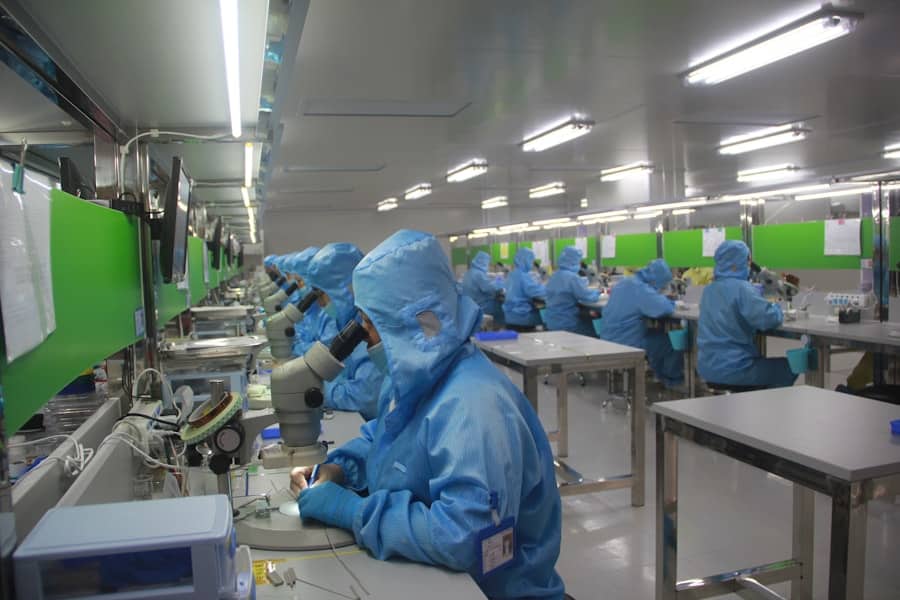
The implementation of AI in drug discovery has the potential to significantly reduce both costs and timelines associated with bringing new drugs to market. By streamlining processes such as target identification, lead optimization, and clinical trial design, AI can help pharmaceutical companies minimize resource expenditure while maximizing productivity. For instance, a study published in “Nature Reviews Drug Discovery” estimated that AI could reduce the time required for drug discovery by up to 50%, translating into substantial cost savings.
Furthermore, AI’s ability to enhance patient stratification can lead to more efficient clinical trials by ensuring that only those patients most likely to benefit from a particular treatment are enrolled. This targeted approach not only improves trial outcomes but also reduces the number of participants needed, further lowering costs. As pharmaceutical companies increasingly adopt AI technologies, they may find themselves better positioned to navigate the competitive landscape while delivering innovative therapies more rapidly.
Case Studies of Successful AI-Powered Drug Discoveries
Several notable case studies illustrate the successful application of AI in drug discovery, showcasing its transformative potential within the industry. One prominent example is Atomwise’s work on discovering potential treatments for Ebola virus disease. By utilizing its deep learning algorithms to screen millions of compounds against viral proteins, Atomwise identified several promising candidates within a matter of days—an achievement that would have taken traditional methods significantly longer.
This rapid identification process exemplifies how AI can expedite drug discovery during public health emergencies. Another compelling case is Insilico Medicine’s use of generative adversarial networks (GANs) to design novel molecules for treating fibrosis. In 2019, Insilico announced that it had successfully identified a new drug candidate within just 46 days using its AI platform—a process that typically takes years using conventional methods.
The candidate subsequently entered preclinical testing, demonstrating not only the speed at which AI can operate but also its ability to generate innovative solutions for complex medical challenges.
Future Opportunities and Challenges in AI-Powered Drug Discovery and Development
Looking ahead, the future of AI-powered drug discovery holds immense promise but also presents several challenges that must be addressed. One significant opportunity lies in the continued advancement of computational power and data availability. As more biological data becomes accessible through initiatives like genomic databases and biobanks, AI algorithms will have richer datasets from which to learn and make predictions.
This could lead to even more accurate models for predicting drug efficacy and safety. However, challenges remain regarding algorithmic bias and interpretability. Ensuring that AI systems are trained on diverse datasets is crucial for avoiding biases that could lead to inequitable healthcare outcomes.
Additionally, as AI models become more complex, understanding their decision-making processes becomes increasingly difficult—a phenomenon known as the “black box” problem. Addressing these challenges will require collaboration between technologists, ethicists, regulators, and healthcare professionals to create robust frameworks that promote transparency while harnessing the full potential of AI in drug discovery. In conclusion, while the integration of AI into drug discovery presents significant opportunities for innovation and efficiency gains, it also necessitates careful consideration of ethical implications and regulatory frameworks.
As stakeholders navigate this evolving landscape, ongoing dialogue will be essential for ensuring that AI technologies are developed responsibly and effectively contribute to advancing human health.
In exploring the advancements in AI-powered drug discovery and development, it’s interesting to consider how technology is reshaping various industries. For instance, the article on unlocking potential with the Samsung Galaxy Book2 Pro highlights the role of powerful computing devices in facilitating complex tasks, including those in the biomedical field. As AI continues to evolve, the integration of such technology into drug development processes could lead to more efficient and innovative solutions in healthcare.
FAQs
What is AI-powered drug discovery and development?
AI-powered drug discovery and development refers to the use of artificial intelligence technologies, such as machine learning and deep learning, to accelerate and improve the process of identifying new drug candidates, optimizing their properties, and predicting their efficacy and safety.
How does AI improve the drug discovery process?
AI improves drug discovery by analyzing large datasets quickly, identifying patterns and potential drug targets, predicting molecular interactions, optimizing chemical structures, and reducing the time and cost associated with traditional experimental methods.
What are the main benefits of using AI in drug development?
The main benefits include faster identification of promising drug candidates, improved accuracy in predicting drug behavior, reduced development costs, enhanced ability to personalize treatments, and increased chances of clinical success.
Are there any challenges associated with AI in drug discovery?
Yes, challenges include the need for high-quality and diverse data, integration of AI tools with existing workflows, regulatory acceptance, interpretability of AI models, and addressing ethical concerns related to data privacy and bias.
What types of AI technologies are commonly used in drug discovery?
Common AI technologies include machine learning algorithms, deep learning neural networks, natural language processing for analyzing scientific literature, and reinforcement learning for optimizing drug design.
How is AI expected to shape the future of drug development?
AI is expected to enable more efficient and precise drug discovery, facilitate personalized medicine, improve clinical trial design, accelerate regulatory approval processes, and ultimately lead to the development of safer and more effective therapies.
Can AI replace human researchers in drug discovery?
AI is a powerful tool that complements human expertise but does not replace researchers. Human judgment is essential for interpreting AI results, designing experiments, and making critical decisions throughout the drug development process.
Is AI currently used in any approved drugs or treatments?
Yes, AI has contributed to the discovery and development of several drugs that have reached clinical trials and market approval, demonstrating its practical impact in the pharmaceutical industry.
What industries benefit from AI-powered drug discovery?
Pharmaceutical companies, biotechnology firms, academic research institutions, and healthcare organizations all benefit from AI-powered drug discovery and development.
How can one stay updated on advancements in AI-driven drug discovery?
Staying updated can be achieved by following scientific journals, attending industry conferences, participating in webinars, and monitoring news from leading AI and pharmaceutical research organizations.