

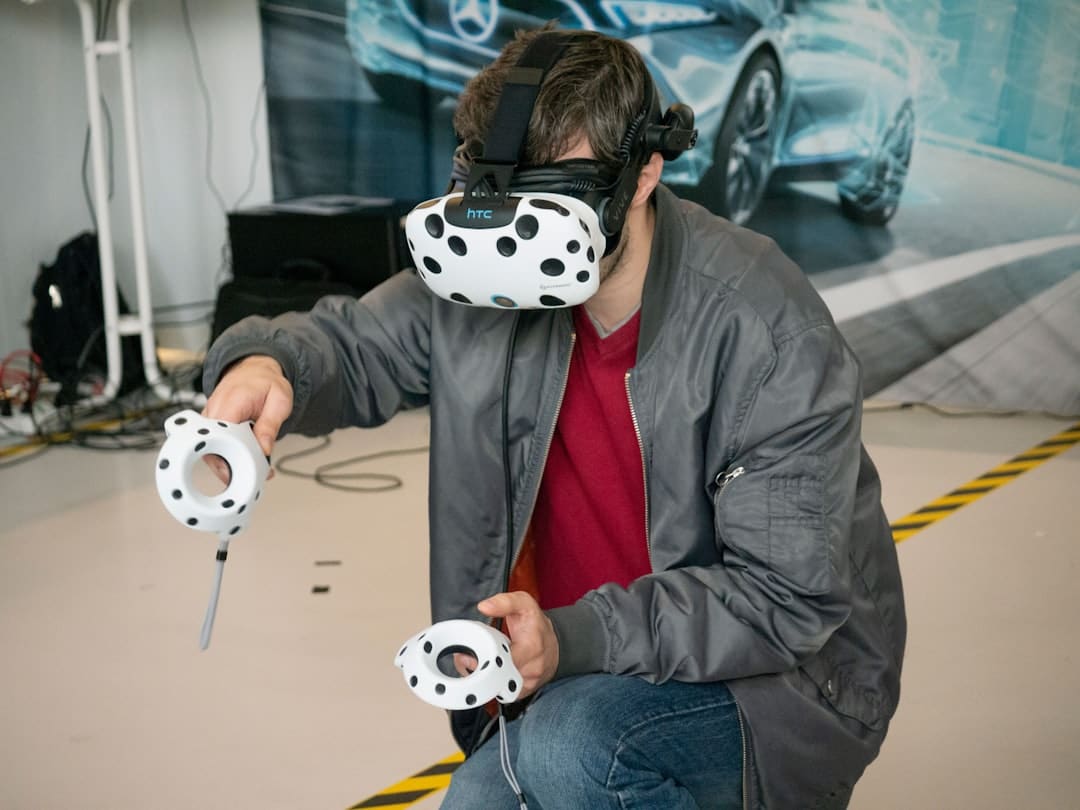
Head-mounted displays (HMDs) originated in the mid-20th century as technology advanced to enable virtual experiences. Morton Heilig developed the “Sensorama” in 1962, which, while not technically an HMD by contemporary standards, established foundational principles for immersive technology by integrating 3D visuals, audio, and olfactory elements to create multi-sensory experiences. The Sensorama demonstrated the feasibility of transporting users into simulated environments, despite its technological limitations.
Ivan Sutherland created the “Sword of Damocles” in 1968, marking a significant advancement as one of the first authentic HMDs capable of displaying computer-generated graphics. The system featured head tracking functionality that enabled users to navigate virtual environments by moving their heads, though it required connection to a computer and offered a restricted field of view.
These pioneering developments established fundamental concepts for HMD technology and demonstrated the potential for immersive virtual experiences through head-mounted systems.
Key Takeaways
- HMDs originated as basic visual devices and have evolved significantly over time.
- Technological advancements have improved HMD design, enhancing user experience and functionality.
- VR has been a major driver in advancing HMD capabilities and popularizing their use.
- HMDs play a crucial role in AR applications, blending digital content with the real world.
- Despite progress, HMDs face challenges like comfort, cost, and ethical concerns impacting widespread adoption.
Advancements in Technology and Design of HMDs
As technology progressed through the late 20th and early 21st centuries, HMDs underwent significant advancements in both design and functionality. The introduction of LCD and OLED screens revolutionized the visual quality of HMDs, allowing for higher resolutions and better color accuracy. The shift from bulky CRT displays to lightweight screens made HMDs more comfortable for extended use.
Companies like Sony and Oculus began to invest heavily in research and development, leading to more refined designs that catered to user comfort and experience. The integration of motion tracking technology marked another pivotal advancement in HMD design. Early models relied on external sensors to track head movements, which could be cumbersome and limited user mobility.
However, advancements in gyroscopic sensors and accelerometers allowed for more precise tracking without the need for external devices. This innovation enabled users to move freely within virtual environments, enhancing the sense of immersion. The Oculus Rift, released in 2016, exemplified these advancements with its combination of high-resolution displays, low latency tracking, and ergonomic design, setting a new standard for consumer-grade HMDs.
The Impact of Virtual Reality (VR) on the Development of HMDs
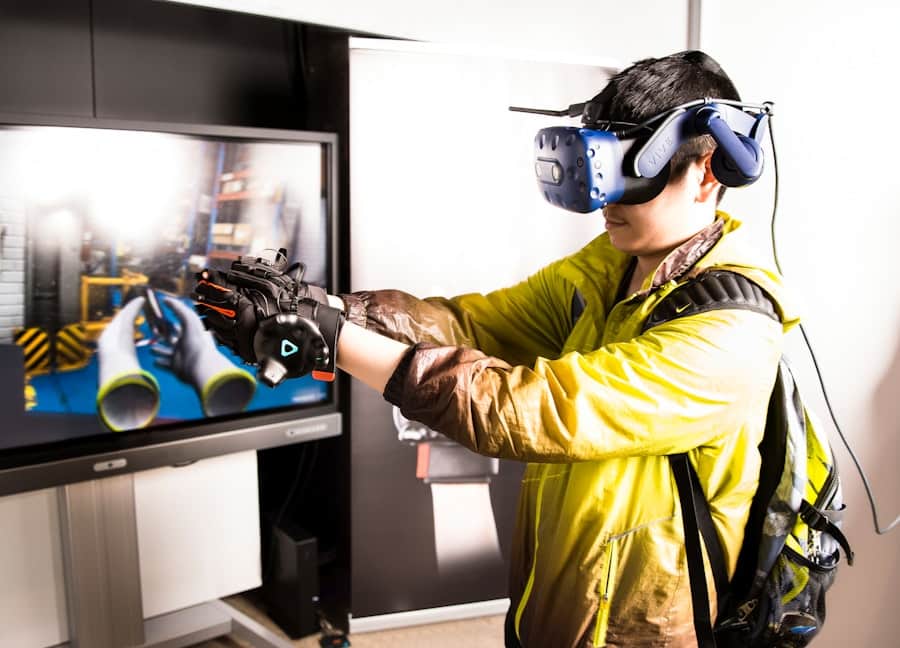
The rise of virtual reality (VR) has been a driving force behind the evolution of HMD technology. As VR gained popularity in gaming and entertainment, manufacturers recognized the need for more sophisticated HMDs that could deliver truly immersive experiences. The gaming industry played a crucial role in this development; titles like “Beat Saber” and “Half-Life: Alyx” showcased the potential of VR to create engaging narratives and interactive environments that could only be experienced through HMDs.
Moreover, VR’s influence extended beyond gaming into fields such as education, training, and therapy. For instance, medical professionals began using VR simulations for surgical training, allowing them to practice procedures in a risk-free environment. This shift necessitated HMDs that could provide high fidelity visuals and realistic interactions.
As a result, companies began to focus on creating HMDs that not only catered to gamers but also addressed the needs of various professional sectors. The development of specialized HMDs for training simulations or therapeutic applications highlighted the versatility of this technology and its potential to transform multiple industries.
The Role of HMDs in Augmented Reality (AR) Applications
While much attention has been given to VR, augmented reality (AR) has emerged as another significant application for HMD technology. Unlike VR, which immerses users in entirely virtual environments, AR overlays digital information onto the real world. This capability has led to innovative uses of HMDs across various sectors.
For example, Microsoft’s HoloLens has been instrumental in industries such as architecture and engineering, where professionals can visualize 3D models within their physical workspace. This integration allows for real-time collaboration and enhances decision-making processes. In retail, AR applications have transformed how consumers interact with products.
Brands have begun utilizing AR HMDs to create immersive shopping experiences where customers can visualize how furniture would look in their homes or try on clothing virtually. This not only enhances customer engagement but also reduces return rates by providing a more accurate representation of products before purchase. The versatility of AR applications demonstrates how HMDs can bridge the gap between digital content and physical reality, creating new opportunities for businesses and consumers alike.
Challenges and Limitations in the Evolution of HMDs
| Year | HMD Model | Display Type | Resolution | Field of View (FOV) | Weight (grams) | Notable Features |
|---|---|---|---|---|---|---|
| 1968 | Ivan Sutherland’s Sword of Damocles | Monochrome CRT | Low (approx. 50×50 pixels) | 20° | Over 2,000 | First HMD, tethered to computer, mechanical suspension |
| 1993 | Virtuality 1000CS | CRT | 640×480 | 60° | 1,200 | Commercial VR arcade system |
| 2010 | Oculus Rift DK1 | LCD | 640×800 per eye | 90° | 380 | Affordable consumer VR prototype |
| 2016 | HTC Vive | OLED | 1080×1200 per eye | 110° | 555 | Room-scale tracking, motion controllers |
| 2019 | Oculus Quest | OLED | 1440×1600 per eye | 95° | 571 | Standalone VR, inside-out tracking |
| 2022 | Meta Quest Pro | LCD | 1800×1920 per eye | 106° | 722 | Mixed reality, eye tracking, color passthrough |
Despite the rapid advancements in HMD technology, several challenges remain that hinder widespread adoption and usability. One significant issue is the problem of motion sickness experienced by some users during prolonged use. This phenomenon occurs when there is a disconnect between visual input and physical movement, leading to discomfort or nausea.
Developers have been working on solutions such as improving frame rates and reducing latency to mitigate these effects; however, finding a universal solution remains elusive. Another challenge is the cost associated with high-quality HMDs. While prices have decreased over time, premium models still represent a significant investment for consumers.
This financial barrier can limit access to advanced technologies for many potential users. Additionally, there are concerns regarding the social implications of HMD usage; as individuals become more immersed in virtual environments, there is a risk of social isolation or detachment from reality. Addressing these challenges is crucial for ensuring that HMD technology can be safely and effectively integrated into everyday life.
The Integration of HMDs in Various Industries and Fields

The versatility of HMD technology has led to its integration across numerous industries beyond gaming and entertainment. In healthcare, for instance, surgeons are increasingly using HMDs during operations to overlay critical information directly onto their field of view. This capability allows for enhanced precision and efficiency during complex procedures.
Training programs utilizing HMDs have also become commonplace in medical education, providing students with realistic simulations that prepare them for real-world scenarios. In manufacturing and logistics, companies are employing HMDs for training purposes and operational efficiency. Workers can receive real-time instructions or visual aids while performing tasks, reducing errors and improving productivity.
For example, Boeing has implemented AR glasses for assembly line workers, allowing them to visualize complex wiring diagrams directly on the aircraft they are building. This integration not only streamlines processes but also enhances safety by ensuring that workers have access to critical information at their fingertips.
Future Trends and Innovations in HMD Technology
Looking ahead, several trends are poised to shape the future of HMD technology significantly. One notable trend is the push towards standalone devices that do not require external computers or consoles. Companies like Meta (formerly Facebook) are developing all-in-one HMDs that offer high performance without the need for cumbersome setups.
This shift towards standalone devices will likely make VR and AR more accessible to a broader audience. Another area ripe for innovation is the incorporation of artificial intelligence (AI) into HMD applications. AI can enhance user experiences by personalizing content based on individual preferences or behaviors.
For instance, AI algorithms could analyze user interactions within virtual environments to adapt scenarios dynamically or provide tailored recommendations for training programs. As AI continues to evolve, its integration with HMD technology could lead to unprecedented levels of interactivity and immersion.
The Ethical and Social Implications of HMDs in Society
As HMD technology becomes increasingly prevalent, it raises important ethical and social questions that must be addressed. One major concern is privacy; as users engage with AR applications that overlay digital information onto their surroundings, there is potential for sensitive data collection without consent.
Additionally, there are implications regarding mental health and social interaction. Prolonged use of immersive technologies may lead individuals to prefer virtual interactions over real-life connections, potentially exacerbating feelings of loneliness or isolation. It is essential for developers and society as a whole to consider these implications as they promote the adoption of HMD technologies.
Balancing innovation with ethical considerations will be crucial in shaping a future where these technologies enhance rather than detract from human experiences.
In exploring the advancements in head-mounted displays (HMDs), it’s interesting to consider how technology has evolved across various fields. For instance, the article on
?</h3>
<p>A Head-Mounted Display (HMD) is a wearable device that has a small display optic in front of one or both eyes. It is used to present visual information directly to the user, often for virtual reality (VR), augmented reality (AR), or mixed reality (MR) applications.</p>
<h3>When were Head-Mounted Displays first developed?</h3>
<p>The concept of HMDs dates back to the 1960s, with early prototypes like the Sword of Damocles developed by Ivan Sutherland. These initial devices were bulky and primarily used for research purposes.</p>
<h3>How have HMDs evolved over time?</h3>
<p>HMDs have evolved from large, cumbersome devices to lightweight, high-resolution, and wireless systems. Advances in display technology, sensors, and computing power have enabled more immersive and user-friendly experiences.</p>
<h3>What are the main types of Head-Mounted Displays?</h3>
<p>The main types include Virtual Reality (VR) headsets, which fully immerse users in a digital environment; Augmented Reality (AR) glasses, which overlay digital content onto the real world; and Mixed Reality (MR) devices, which blend real and virtual elements interactively.</p>
<h3>What industries use Head-Mounted Displays?</h3>
<p>HMDs are used in various industries such as gaming, healthcare, military training, aviation, education, and manufacturing for simulation, training, design visualization, and remote assistance.</p>
<h3>What technological advancements have impacted HMD development?</h3>
<p>Key advancements include improvements in display resolution, field of view, motion tracking, wireless connectivity, battery life, and the integration of eye-tracking and hand-tracking sensors.</p>
<h3>What challenges have been faced in the development of HMDs?</h3>
<p>Challenges include reducing device weight and size, minimizing latency to prevent motion sickness, improving battery life, enhancing display quality, and making devices affordable and accessible.</p>
<h3>What is the future outlook for Head-Mounted Displays?</h3>
<p>The future of HMDs involves more seamless integration with daily life, improved comfort, higher resolution displays, better AI-driven interactions, and expanded applications in both consumer and enterprise markets.</p>
<div class="clear"></div> </div>
<footer class="entry-meta">
<div class="entry-tax"><span>Tags: No tags</span></div>
<div class="aux-single-post-share">
<div class="aux-tooltip-socials aux-tooltip-dark aux-socials aux-icon-left aux-medium aux-tooltip-social-no-text" >
<span class="aux-icon auxicon-share" ></span>
</div>
</div>
</footer>
</div>
<nav class="aux-next-prev-posts nav-skin-thumb-arrow">
<section class="np-prev-section has-nav-thumb" >
<a href="https://enicomp.com/the-role-of-stablecoins-in-bridging-fiat-and-digital-economies/">
<div class="np-arrow">
<div class="aux-hover-slide aux-arrow-nav aux-outline">
<span class="aux-svg-arrow aux-medium-left"></span>
<span class="aux-hover-arrow aux-svg-arrow aux-medium-left"></span>
</div>
<img width="80" height="80" src="https://enicomp.com/wp-content/uploads/2025/12/image-443-80x80.jpg" class="auxin-attachment auxin-featured-image attachment-80x80" alt="Photo Stablecoins" /> </div>
<p class="np-nav-text">Previous Post</p>
<h4 class="np-title">The Role of Stablecoins in Bridging Fiat and Digital Economies</h4>
</a>
</section>
<section class="np-next-section has-nav-thumb" >
<a href="https://enicomp.com/what-is-the-principle-of-least-privilege-and-why-is-it-important/">
<div class="np-arrow">
<div class="aux-arrow-nav aux-hover-slide aux-outline">
<span class="aux-svg-arrow aux-medium-right"></span>
<span class="aux-hover-arrow aux-svg-arrow aux-medium-right"></span>
</div>
<img width="80" height="80" src="https://enicomp.com/wp-content/uploads/2025/12/image-446-80x80.jpg" class="auxin-attachment auxin-featured-image attachment-80x80" alt="Photo Privilege" /> </div>
<p class="np-nav-text">Next Post</p>
<h4 class="np-title">What is the Principle of Least Privilege, and Why is it Important?</h4>
</a>
</section>
</nav>
</article>
</div><!-- end content -->
</div><!-- end primary -->
<aside class="aux-sidebar aux-sidebar-primary">
<div class="sidebar-inner">
<div class="sidebar-content">
<div class="aux-widget-area"><section id="block-4" class=" aux-open widget-container widget_block">
<h2 class="wp-block-heading">POPULAR</h2>
</section><section id="block-33" class=" aux-open widget-container widget_block">
<h2 class="wp-block-heading">CATEGORIES</h2>
</section><section id="categories-3" class=" aux-open widget-container widget_categories"><h3 class="widget-title">Categories</h3>
<ul>
<li class="cat-item cat-item-162"><a href="https://enicomp.com/category/5g-wireless-communication-technologies/">5G, Wireless & Communication Technologies</a> (178)
<ul class=)