


Spatial computing has become a significant development in technology, changing how people interact with digital information and their physical environment. This shift involves combining augmented reality (AR), virtual reality (VR), and mixed reality (MR) technologies, which allow users to engage with digital content in more immersive and intuitive ways. The growth of spatial computing results from improvements in hardware, software, and user interface design that have made these technologies more accessible and practical for daily applications.
Devices such as the iPhone and Android smartphones have enabled AR applications, letting users place digital information over their physical surroundings. Additionally, advances in graphics processing units (GPUs) and machine learning algorithms have improved the realism and responsiveness of virtual environments.
Consequently, industries including gaming and healthcare are now using spatial computing for practical applications, creating solutions that were previously only imagined in science fiction.
Key Takeaways
- Spatial computing is emerging as a transformative technology that integrates digital and physical environments.
- Virtual reality has evolved from immersive gaming to broader applications in various industries.
- Apple has shifted its terminology from “virtual reality” to “spatial computing” to better reflect technological advancements.
- Spatial computing differs from virtual reality by emphasizing interaction with real-world spaces enhanced by digital elements.
- This terminology change signals a future where spatial computing will significantly influence the tech industry’s development and innovation.
The Evolution of Virtual Reality
Virtual reality has undergone significant transformation since its inception in the 1960s. Initially, VR was a niche technology primarily used in research and military applications. The first VR systems were cumbersome and expensive, often requiring specialized equipment and environments.
However, as technology progressed, particularly in the 1990s and early 2000s, VR began to capture the imagination of the public, leading to a surge of interest in its potential for entertainment and education. The introduction of consumer-grade VR headsets, such as the Oculus Rift and HTC Vive, marked a turning point for the industry. These devices offered an unprecedented level of immersion, allowing users to experience fully realized 3D environments.
The gaming industry quickly embraced VR, with titles like “Beat Saber” and “Half-Life: Alyx” showcasing the medium’s capabilities. Beyond gaming, VR found applications in training simulations for pilots, surgeons, and military personnel, demonstrating its versatility as a tool for experiential learning.
Apple’s Decision to Change the Terminology
Apple’s recent decision to adopt the term “spatial computing” instead of “augmented reality” or “virtual reality” reflects a strategic shift in how the company envisions the future of immersive technology. This change is not merely semantic; it signifies a broader understanding of how digital experiences can be integrated into our physical environments. By coining this term, Apple aims to encapsulate a holistic approach that encompasses various forms of interaction with digital content.
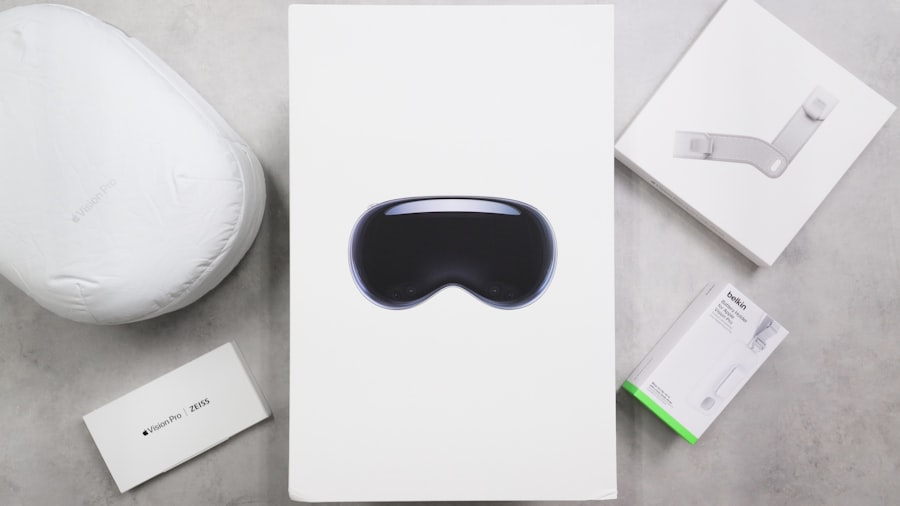
This rebranding aligns with Apple’s long-standing philosophy of creating seamless user experiences that blend hardware and software. The company’s foray into spatial computing is exemplified by its Vision Pro headset, which combines AR and VR capabilities to create a versatile platform for users. By positioning itself at the forefront of spatial computing, Apple seeks to redefine how consumers perceive and engage with technology, moving beyond traditional categorizations that may limit innovation.
Understanding Spatial Computing
Spatial computing refers to the use of digital technologies to interact with and manipulate data in three-dimensional space. This concept encompasses a wide range of applications, from AR overlays that enhance real-world experiences to fully immersive VR environments that transport users to entirely different worlds. At its core, spatial computing leverages advanced sensors, computer vision, and artificial intelligence to create interactive experiences that respond to user movements and gestures.
One of the key components of spatial computing is its ability to understand and interpret the physical environment. This involves mapping spaces in real-time, recognizing objects, and enabling users to interact with digital content as if it were part of their surroundings. For instance, applications like IKEA Place allow users to visualize furniture in their homes before making a purchase decision.
This capability not only enhances consumer confidence but also streamlines the shopping experience by bridging the gap between online and offline retail.
Exploring the Differences Between Spatial Computing and Virtual Reality
| Aspect | Spatial Computing | Virtual Reality (VR) | Apple’s Terminology Change Reason |
|---|---|---|---|
| Definition | Integration of digital content with the physical environment using sensors and AR | Fully immersive digital environment replacing the physical world | To emphasize blending digital and physical worlds rather than full immersion |
| User Experience | Augmented, interactive, and context-aware experiences | Isolated, immersive experiences within a virtual space | To highlight natural interaction and real-world context |
| Technology Focus | AR, sensors, spatial mapping, and real-time environment understanding | Headsets, motion tracking, and 3D rendering | To showcase advanced spatial awareness and computing capabilities |
| Applications | Navigation, design, gaming, education, and productivity in real-world settings | Gaming, simulations, training, and entertainment in virtual environments | To broaden appeal beyond gaming and entertainment |
| Market Perception | Innovative, practical, and integrated with daily life | Novel, entertainment-focused, and niche | To position Apple as a leader in practical spatial tech |
| Hardware Examples | Apple Vision Pro, ARKit-enabled devices | Oculus Rift, HTC Vive, PlayStation VR | To align product branding with spatial computing concept |
While spatial computing and virtual reality share common ground, they are distinct concepts that serve different purposes. Virtual reality immerses users in entirely synthetic environments, isolating them from their physical surroundings. This complete immersion is ideal for gaming and simulations where users can explore fantastical worlds or practice skills without real-world consequences.
However, this isolation can also lead to disorientation or discomfort for some users. In contrast, spatial computing emphasizes the integration of digital content with the real world. It allows users to interact with both physical objects and digital overlays simultaneously.
For example, in a spatial computing application, a user might see a digital model of a car projected onto their driveway while still being aware of their actual surroundings. This blending of realities opens up new possibilities for collaboration, design, and education by enabling users to visualize complex data in context.
The Implications of Apple’s Terminology Change
Apple’s shift towards spatial computing terminology carries significant implications for both consumers and developers. For consumers, it signals a new era where immersive technologies are not just novelties but integral parts of daily life. By framing these technologies within the context of spatial computing, Apple encourages users to think about how they can enhance their interactions with both digital content and their physical environments.
For developers, this terminology change presents opportunities for innovation across various sectors. As Apple promotes spatial computing through its products and platforms, developers are encouraged to create applications that leverage these capabilities. This could lead to an influx of new tools for education, healthcare, architecture, and entertainment that utilize spatial computing principles.
The emphasis on spatial computing may also inspire cross-disciplinary collaborations as professionals from different fields come together to explore its potential.
The Future of Spatial Computing
The future of spatial computing is poised for rapid growth as technology continues to advance. With ongoing improvements in hardware capabilities—such as lighter headsets with longer battery life and enhanced field-of-view—users can expect more comfortable and engaging experiences. Additionally, advancements in artificial intelligence will enable more sophisticated interactions within spatial environments, allowing for natural language processing and gesture recognition that enhance user engagement.
This connectivity will facilitate real-time data processing and sharing across devices, enabling collaborative experiences that transcend geographical boundaries. For instance, remote teams could work together on design projects using shared virtual spaces that allow them to manipulate 3D models in real-time.
How Spatial Computing Will Impact the Tech Industry
The impact of spatial computing on the tech industry will be profound and multifaceted. Companies across various sectors will need to adapt their strategies to incorporate these emerging technologies into their products and services. In retail, businesses may leverage spatial computing for virtual try-ons or interactive product displays that enhance customer engagement.
In education, institutions could utilize immersive learning environments that allow students to explore complex subjects through interactive simulations. Furthermore, industries such as real estate could benefit from spatial computing by offering virtual property tours that allow potential buyers to experience homes without physically visiting them. Healthcare professionals might use spatial computing for surgical training or patient education by visualizing complex anatomical structures in 3D space.
As these applications proliferate, companies will need to invest in research and development to stay competitive in an increasingly immersive digital landscape. In conclusion, spatial computing represents a significant evolution in how we interact with technology and our environment. As it continues to develop alongside advancements in hardware and software, its implications will resonate across various industries, fundamentally altering our relationship with digital content and reshaping our everyday experiences.
In the ongoing discussion about the evolution of technology, the distinction between Spatial Computing and Virtual Reality has become increasingly significant, especially with Apple’s recent shift in terminology. This change reflects a broader trend in the tech industry, which is also evident in the latest innovations in smartphones. For instance, you can explore how the Samsung Galaxy S21 is unlocking new possibilities in mobile technology in this article: Unlock the Power of the Galaxy with the Samsung Galaxy S21.
FAQs
What is spatial computing?
Spatial computing refers to the technology that enables interaction with digital content in a three-dimensional space, integrating the physical and virtual worlds. It involves the use of sensors, cameras, and advanced software to map and understand the environment, allowing users to interact naturally with digital objects.
How does virtual reality differ from spatial computing?
Virtual reality (VR) immerses users in a completely digital environment, blocking out the physical world. In contrast, spatial computing blends digital content with the real world, allowing users to see and interact with both simultaneously, often through augmented reality (AR) or mixed reality (MR) technologies.
Why did Apple change the terminology from virtual reality to spatial computing?
Apple shifted its terminology to “spatial computing” to emphasize the integration of digital content with the real world, highlighting a more immersive and interactive experience beyond traditional VR. This change reflects Apple’s focus on augmented reality and mixed reality technologies rather than fully immersive virtual environments.
What are the benefits of using the term spatial computing?
Using the term spatial computing broadens the scope beyond VR to include AR and MR, emphasizing natural user interactions and real-world integration. It also aligns with Apple’s vision of creating seamless, context-aware experiences that enhance everyday life rather than isolating users in virtual spaces.
Is spatial computing only used by Apple?
No, spatial computing is a broad concept used by many technology companies and industries. Apple’s adoption of the term highlights its strategic focus, but spatial computing technologies are developed and utilized by various firms in gaming, healthcare, education, and more.
What devices utilize spatial computing?
Devices that utilize spatial computing include augmented reality glasses, mixed reality headsets, smartphones with AR capabilities, and other sensors that map and interpret the physical environment to overlay digital content.
How does spatial computing impact user experience compared to virtual reality?
Spatial computing enhances user experience by allowing interaction with digital content while remaining aware of the physical environment, leading to more natural and practical applications. VR, while immersive, isolates users from their surroundings, which can limit usability in everyday contexts.
Will spatial computing replace virtual reality?
Spatial computing and virtual reality serve different purposes and can complement each other. While spatial computing is gaining prominence for its real-world integration, VR remains valuable for fully immersive experiences such as gaming and training simulations. Both technologies are expected to coexist and evolve.