


The proliferation of space debris has emerged as a significant concern for both governmental and private space agencies. As of 2023, it is estimated that there are over 36,000 pieces of debris larger than 10 centimeters orbiting Earth, with millions of smaller fragments also posing a threat to operational satellites and the International Space Station (ISS). This debris consists of defunct satellites, spent rocket stages, and fragments from previous collisions or disintegration events.
The increasing density of objects in low Earth orbit (LEO) raises the risk of collisions, which can create even more debris in a cascading effect known as the Kessler Syndrome. This phenomenon could render certain orbits unusable for generations, severely hampering future space exploration and satellite deployment. The implications of space debris extend beyond mere physical hazards; they also pose economic risks.
The potential for collisions necessitates costly maneuvers to avoid debris, which can lead to increased operational expenses for satellite operators. Moreover, the insurance costs for satellites in high-risk orbits have surged as the threat of collision becomes more pronounced. The growing problem of space debris is not just a technical challenge; it is a multifaceted issue that requires urgent attention from the global community.
As more countries and private entities enter the space race, the need for effective debris mitigation and removal strategies becomes increasingly critical.
Key Takeaways
- Space debris poses an increasing threat to satellites and space missions, necessitating effective cleanup solutions.
- Laser technology offers a promising method to remove debris by altering its trajectory but faces limitations like energy requirements and precision.
- Nets provide a physical means to capture debris, useful for larger objects, though they have challenges in deployment and control.
- Combining various technologies, including lasers and nets, is key to advancing current and future debris removal efforts.
- International collaboration is crucial to address legal, technical, and operational challenges in managing space debris globally.
The Role of Lasers in Space Debris Cleanup
Lasers have emerged as a promising technology for addressing the space debris crisis. The concept involves using high-powered lasers to either nudge debris out of its orbit or to vaporize smaller fragments that pose a collision risk. By targeting specific pieces of debris with focused laser beams, operators can impart enough energy to alter the trajectory of these objects, potentially guiding them toward re-entry into the Earth’s atmosphere where they would burn up upon descent.
This method offers a non-invasive approach to debris removal, minimizing the risk of creating additional fragments during the cleanup process. One notable example of laser technology in action is the European Space Agency’s (ESA) Active Debris Removal (ADR) program, which has explored various methods for utilizing lasers in space. The agency has conducted simulations and experiments to assess the feasibility of using ground-based or space-based lasers to manage debris.
These studies have shown that lasers can effectively target and manipulate debris, providing a viable option for future cleanup missions. However, the implementation of such technology requires significant advancements in precision targeting and energy management to ensure that lasers can operate effectively in the unpredictable environment of space.
Advantages and Limitations of Laser Technology
The advantages of using lasers for space debris cleanup are manifold. One of the primary benefits is their ability to operate from a distance, allowing for interventions without the need for physical contact with debris.
Additionally, lasers can be deployed from various platforms, including ground-based observatories or satellites equipped with laser systems, providing flexibility in operational strategy. However, there are notable limitations to laser technology as well. One significant challenge is the atmospheric interference that ground-based lasers may encounter, which can diminish their effectiveness.
The energy requirements for sustained laser operations also pose logistical challenges, particularly for space-based systems that must generate or store sufficient power to operate effectively over extended periods.
The Role of Nets in Space Debris Cleanup
Nets represent another innovative approach to tackling the issue of space debris. This method involves deploying large nets designed to capture and entangle pieces of debris, allowing for their controlled deorbiting or removal from orbit altogether. The concept has been tested in various experimental missions, including the European Space Agency’s RemoveDEBRIS project, which successfully demonstrated net capture techniques in low Earth orbit.
By ensnaring larger pieces of debris, nets can facilitate their safe removal without generating additional fragments. The use of nets also allows for a more hands-on approach to debris management. Once captured, debris can be maneuvered into a lower orbit where it will eventually re-enter the atmosphere and disintegrate.
This method is particularly effective for larger objects that pose significant collision risks but may be too massive or unwieldy for other removal techniques. The versatility of nets makes them an attractive option for future cleanup missions, especially when combined with other technologies such as robotic arms or propulsion systems.
Advantages and Limitations of Net Technology
| Technology | Method | Effectiveness | Range | Typical Debris Size Targeted | Current Development Status | Challenges |
|---|---|---|---|---|---|---|
| Laser Ablation | Ground or space-based lasers vaporize debris surface to alter orbit | Moderate to High (depends on laser power and debris size) | Up to several hundred kilometers | 1 cm to 10 cm | Experimental and prototype testing | High energy requirements, precision targeting, risk of fragmentation |
| Laser Pushing | Laser photon pressure gently nudges debris to lower orbit | Moderate | Several hundred kilometers | Small debris (1 cm to 5 cm) | Conceptual and early testing | Requires sustained laser focus, limited force applied |
| Net Capture Systems | Deployable nets capture debris for controlled deorbit | High for targeted debris | Close proximity (within meters) | 10 cm to 1 m | Demonstrated in space missions | Requires precise rendezvous, risk of net entanglement |
| Electrodynamic Tethers with Nets | Nets capture debris; tethers generate drag to deorbit | High | Close proximity | 10 cm to 1 m | Prototype development | Complex deployment, tether durability |
The advantages of net technology in space debris cleanup are significant. One key benefit is its ability to capture multiple pieces of debris simultaneously, increasing the efficiency of cleanup operations. Nets can be designed to accommodate various sizes and shapes of debris, making them adaptable to different scenarios encountered in orbit.
Additionally, this method minimizes the risk of creating further debris during capture since nets can envelop objects without causing fragmentation. However, net technology is not without its challenges. One major limitation is the difficulty in accurately deploying nets in the chaotic environment of space where objects are moving at high velocities.
The success of net capture relies heavily on precise targeting and timing, which can be complicated by factors such as orbital mechanics and relative velocities between the capturing spacecraft and the debris. Furthermore, once captured, managing the entangled debris presents its own set of challenges, including ensuring that it does not break free during deorbiting maneuvers.
Current and Future Applications of Space Debris Cleanup Technologies
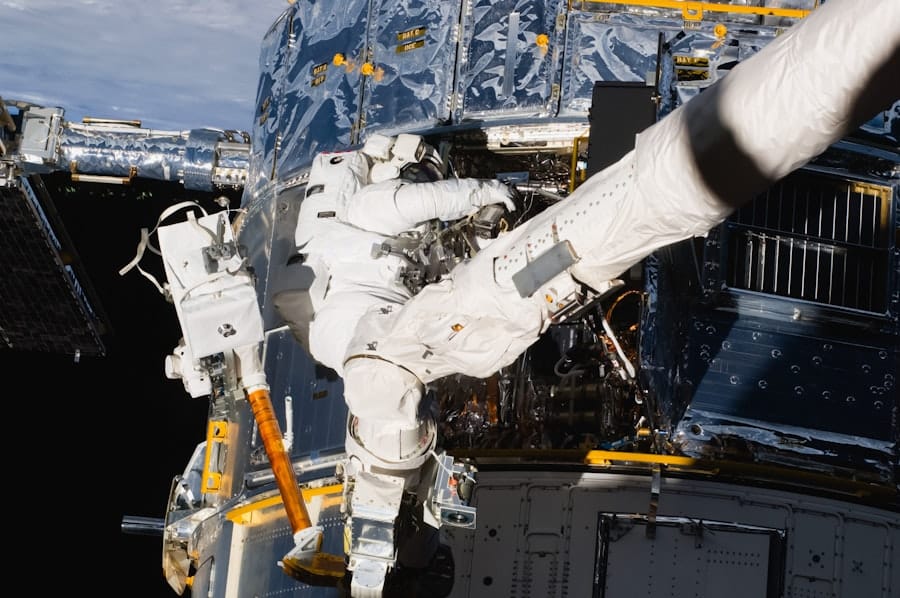
As awareness of the space debris problem grows, various organizations are actively exploring and developing technologies aimed at mitigating this issue. Current applications include experimental missions like RemoveDEBRIS and ESA’s ClearSpace-1 project, which aims to capture a defunct satellite using robotic arms and nets. These initiatives serve as proof-of-concept demonstrations that pave the way for more extensive cleanup operations in the future.
Looking ahead, advancements in artificial intelligence (AI) and machine learning could play a crucial role in enhancing debris tracking and removal efforts. By analyzing vast amounts of data from ground-based telescopes and satellite observations, AI algorithms can improve prediction models for debris trajectories and optimize cleanup strategies. Additionally, international collaborations may lead to shared resources and knowledge that accelerate the development and deployment of effective cleanup technologies.
Challenges and Considerations for Space Debris Cleanup
Despite the promising technologies being developed for space debris cleanup, several challenges remain that must be addressed before large-scale operations can commence. One significant hurdle is regulatory compliance; international treaties governing outer space activities must evolve to accommodate new cleanup technologies while ensuring that they do not infringe upon existing satellite operations or national sovereignty. Another challenge lies in funding and resource allocation for cleanup initiatives.
Many space agencies operate under tight budgets, making it difficult to prioritize debris removal projects over other pressing missions such as exploration or scientific research. Public-private partnerships may offer a solution by leveraging private investment in commercial space ventures to support cleanup efforts.
The Importance of International Collaboration in Space Debris Cleanup Efforts
The global nature of space activities necessitates international collaboration in addressing the issue of space debris. No single nation can tackle this problem alone; it requires a concerted effort from all stakeholders involved in space exploration and satellite operations. Collaborative initiatives can facilitate knowledge sharing, resource pooling, and joint missions aimed at cleaning up orbital environments.
Organizations such as the United Nations Office for Outer Space Affairs (UNOOSA) play a vital role in fostering international dialogue on space sustainability issues. By promoting frameworks for cooperation and establishing guidelines for responsible behavior in space, these organizations can help mitigate the risks associated with space debris while encouraging innovative solutions that benefit all nations involved in space activities.
In the ongoing discussion about innovative solutions for space debris cleanup, technologies such as lasers and nets are gaining attention for their potential effectiveness. For those interested in how technology is transforming various fields, a related article on the impact of smartwatches in the workplace can be found here. This article highlights the intersection of technology and efficiency, much like the advancements being made in space debris management.
FAQs
What is space debris?
Space debris, also known as space junk, consists of defunct human-made objects in orbit around Earth. This includes old satellites, spent rocket stages, and fragments from collisions or explosions.
Why is space debris a problem?
Space debris poses a significant risk to operational satellites, spacecraft, and the International Space Station. Collisions with debris can cause damage or destruction, leading to further debris generation and increased hazards in space.
What are lasers used for in space debris cleanup?
Lasers can be used to either nudge debris into lower orbits where they burn up in the atmosphere or to vaporize small debris particles. Ground-based or space-based laser systems aim to reduce the amount of debris by altering their trajectories safely.
How do nets help in cleaning up space debris?
Nets are deployed from spacecraft to capture larger pieces of debris. Once captured, the debris can be deorbited safely or moved to a less congested orbit. Nets provide a physical method to collect and remove debris from orbit.
Are laser and net technologies currently in use for debris cleanup?
Both laser and net technologies are in various stages of research, development, and testing. Some demonstration missions have been conducted, but large-scale operational deployment is still in progress.
What are the challenges of using lasers for debris removal?
Challenges include accurately targeting fast-moving debris, ensuring the laser’s power is sufficient without damaging operational satellites, and managing international regulations regarding the use of high-powered lasers in space.
What are the limitations of using nets for debris cleanup?
Nets are primarily effective for capturing larger debris and require close proximity to the target, which can be risky. Maneuvering spacecraft to intercept debris and safely deorbiting the captured objects are complex operations.
Are there other technologies for space debris cleanup besides lasers and nets?
Yes, other methods include robotic arms, harpoons, drag sails, and electrodynamic tethers. Each technology has its own advantages and challenges depending on the size and type of debris targeted.
Why is international cooperation important in space debris cleanup?
Space debris affects all space-faring nations, so international collaboration is essential to develop standards, share technology, and coordinate debris removal efforts to ensure the long-term sustainability of space activities.
How can individuals or organizations contribute to reducing space debris?
Organizations can design satellites with end-of-life disposal plans, avoid creating debris during launches, and support policies promoting responsible space operations. Public awareness and advocacy for sustainable space practices also play a role.