


Safety is a fundamental aspect of chemistry education, as it directly impacts the well-being of students and educators alike. The nature of chemical experiments often involves hazardous materials, reactions that can produce toxic gases, and the potential for physical injuries. Therefore, instilling a strong safety culture in educational settings is essential. This culture not only protects individuals but also fosters a responsible approach to scientific inquiry. By emphasizing safety protocols, educators can help students understand the importance of risk assessment and management in laboratory environments.
Moreover, safety education in chemistry extends beyond mere compliance with regulations. It encompasses the development of critical thinking skills that enable students to evaluate risks and make informed decisions during experiments. When students are trained to prioritize safety, they are more likely to engage in responsible practices throughout their scientific careers.
This foundational knowledge is crucial, as it prepares future chemists to navigate the complexities of real-world laboratory settings where safety is paramount.
In the pursuit of enhancing safety in educational environments, the innovative approach of simulating dangerous chemical reactions in virtual reality (VR) has garnered significant attention. This method not only allows students to engage with complex scientific concepts in a controlled setting but also minimizes the risks associated with real-life experiments. For those interested in the intersection of technology and education, a related article discussing the latest advancements in design tools can be found at The Ultimate Guide to the Best Lighting Design Software of 2023, which highlights how effective design can enhance learning experiences across various fields.
Key Takeaways
- Safety is a critical focus in chemistry education to prevent accidents and promote responsible practices.
- Virtual reality (VR) offers immersive, risk-free environments for simulating complex and hazardous chemical reactions.
- VR simulations can realistically replicate dangerous scenarios, enhancing students’ understanding of chemical safety protocols.
- Incorporating engaging and ethical VR scenarios supports effective learning and addresses moral considerations in education.
- Future advancements in VR technology promise to further transform chemical education with more interactive and realistic experiences.
Advantages of Using Virtual Reality for Chemical Simulations
Virtual reality (VR) has emerged as a transformative tool in various educational fields, including chemistry. One of the primary advantages of using VR for chemical simulations is the ability to create immersive environments that replicate real laboratory settings without the associated risks. Students can conduct experiments in a controlled virtual space, allowing them to explore complex chemical concepts and reactions without the fear of accidents or exposure to hazardous substances. This immersive experience can enhance understanding and retention of material, as students are more likely to engage with content that feels realistic and interactive.
Additionally, VR simulations can provide access to resources that may be limited in traditional educational settings. For instance, schools with restricted budgets may not have the necessary equipment or chemicals for certain experiments. Virtual reality can bridge this gap by offering a wide range of simulations that cover various topics in chemistry, from basic principles to advanced research techniques. This accessibility ensures that all students have the opportunity to learn and experiment, regardless of their school’s resources.
How Virtual Reality Simulations Can Mimic Dangerous Chemical Reactions
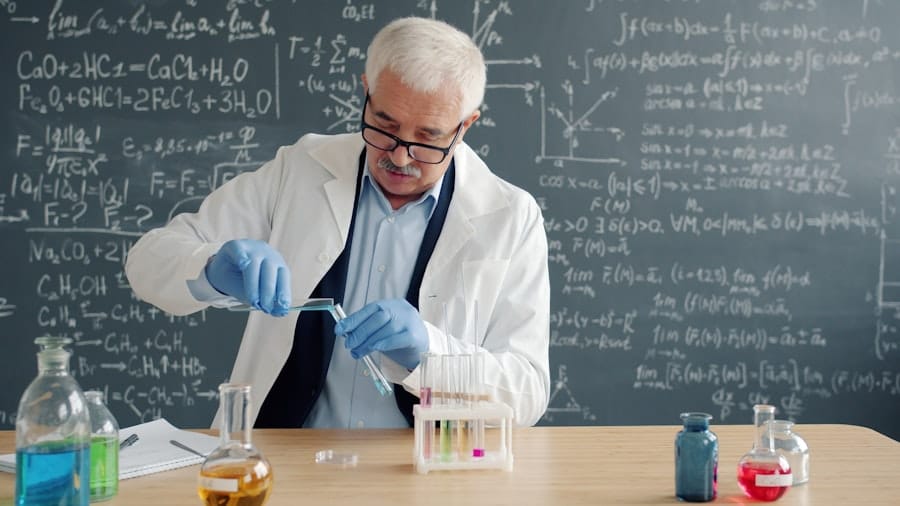
One of the most significant benefits of virtual reality in chemistry education is its ability to safely simulate dangerous chemical reactions. In a traditional laboratory setting, certain experiments may pose significant risks, such as explosions or toxic gas emissions. VR technology allows students to observe and interact with these reactions in a safe environment, providing a unique opportunity to learn about their mechanisms and outcomes without real-world consequences. This capability not only enhances understanding but also prepares students for situations they may encounter in professional laboratories.
Furthermore, VR simulations can illustrate the consequences of improper handling of chemicals or equipment. For example, students can witness the effects of mixing incompatible substances or failing to follow safety protocols. By experiencing these scenarios virtually, learners can better appreciate the importance of adhering to safety guidelines in real-life situations. This experiential learning approach reinforces theoretical knowledge and cultivates a deeper understanding of chemical safety.
The Role of Virtual Reality in Teaching Students about Chemical Safety
Virtual reality plays a crucial role in teaching students about chemical safety by providing interactive experiences that reinforce safety protocols and best practices.
Through VR simulations, students can practice essential skills such as proper handling of chemicals, use of personal protective equipment (PPE), and emergency response procedures.
These simulations allow learners to familiarize themselves with safety measures in a low-stakes environment, reducing anxiety and increasing confidence when they transition to real laboratory work.
Moreover, VR can facilitate scenario-based learning, where students are presented with various safety challenges that require critical thinking and problem-solving skills. For instance, a simulation might present a chemical spill scenario where students must assess the situation and determine the appropriate response. This hands-on approach not only reinforces theoretical knowledge but also encourages students to think critically about safety in dynamic situations. By integrating these experiences into the curriculum, educators can cultivate a generation of chemists who prioritize safety in their work.
In the realm of educational safety, the innovative approach of simulating dangerous chemical reactions in virtual reality is gaining traction, allowing students to engage with hazardous materials without the associated risks. This method not only enhances learning but also ensures that students can experiment freely in a controlled environment. For those interested in exploring how technology can transform various fields, a related article on conversational commerce provides insights into how interactive platforms are reshaping customer experiences. You can read more about it in this