


Neuromorphic computing is a computational approach designed to replicate the structure and function of the human brain. It differs from conventional computing, which processes information sequentially in a linear fashion. Neuromorphic systems instead mirror biological neural networks, processing information in parallel.
This method applies neurobiology principles to develop hardware and software capable of performing complex functions including pattern recognition, sensory processing, and decision-making with high efficiency. The term combines “neuro,” referring to the nervous system, and “morphic,” meaning form or structure. Neuromorphic computing systems are built to replicate the brain’s capacity to learn from experience and adapt to new information.
Specialized circuits within these systems simulate the behavior of neurons and synapses, enabling parallel data processing. This parallel processing capability allows for real-time analysis and response to external stimuli. Neuromorphic computing has potential applications in robotics, autonomous systems, and artificial intelligence.
By implementing the operational principles of the brain, neuromorphic computing offers a new approach to solving complex computational problems.
Key Takeaways
- Neuromorphic computing designs hardware that mimics the human brain’s neural structure for efficient processing.
- It has evolved from early theoretical models to advanced chips capable of parallel and adaptive learning.
- Applications include robotics, sensory processing, and real-time data analysis with low power consumption.
- While offering speed and energy efficiency, neuromorphic computing faces challenges like scalability and programming complexity.
- Its development raises ethical and privacy concerns, impacting AI and machine learning advancements significantly.
The History and Development of Neuromorphic Computing
The concept of neuromorphic computing can be traced back to the early 1980s when Carver Mead, a prominent electrical engineer and computer scientist, introduced the idea of building electronic systems that mimic neural architectures. Mead’s work laid the foundation for what would become a burgeoning field of research aimed at creating brain-inspired computing systems. His seminal paper, “Neuromorphic Electronic Systems,” published in 1989, outlined the potential for using analog circuits to simulate neural processes, paving the way for future developments in this area.
In the late 1990s and early 2000s, researchers began developing more sophisticated neuromorphic chips, such as the IBM TrueNorth chip, which was designed to emulate the brain’s architecture with a million programmable neurons and 256 million synapses. This chip demonstrated that it was possible to create hardware capable of performing tasks like image recognition and sensory processing with minimal power consumption.
As research continued, various institutions and companies began investing in neuromorphic computing, leading to a diverse array of projects aimed at exploring its potential.
How Neuromorphic Chips Mimic the Human Brain
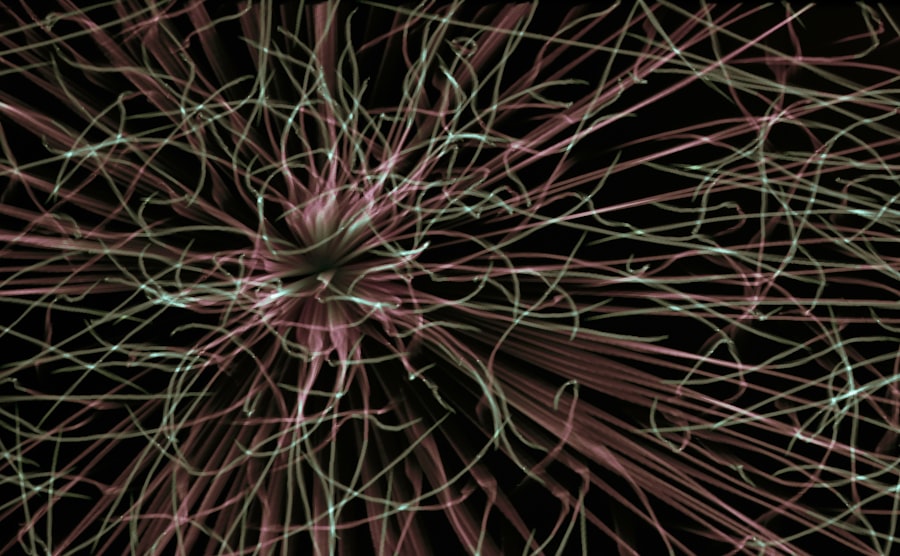
Neuromorphic chips are engineered to replicate the fundamental characteristics of biological neural networks. At the heart of these chips are artificial neurons that communicate through synaptic connections, much like their biological counterparts. These artificial neurons can fire signals in response to incoming stimuli, allowing them to process information dynamically.
The architecture of neuromorphic chips often includes layers of interconnected neurons that can adapt their connections based on learning algorithms, similar to how synaptic plasticity works in the human brain. One key feature of neuromorphic chips is their ability to operate using event-driven processing rather than clock-driven processing typical in conventional computers. This means that these chips only consume power when they are actively processing information, leading to significant energy efficiency.
For instance, while traditional processors may consume substantial power even when idle, neuromorphic systems can remain dormant until triggered by specific inputs. This event-driven approach not only enhances energy efficiency but also allows for real-time processing of sensory data, making them particularly suitable for applications in robotics and autonomous systems.
Applications of Neuromorphic Computing
The applications of neuromorphic computing are diverse and span various fields, including robotics, healthcare, and artificial intelligence. In robotics, neuromorphic chips can enable machines to process sensory information in real-time, allowing them to navigate complex environments more effectively. For example, robots equipped with neuromorphic vision systems can interpret visual data similarly to how humans perceive their surroundings, enabling them to make quick decisions based on visual cues.
In healthcare, neuromorphic computing holds promise for advancing medical diagnostics and personalized medicine. By analyzing vast amounts of patient data and identifying patterns that may not be immediately apparent to human clinicians, neuromorphic systems can assist in early disease detection and treatment planning. For instance, researchers are exploring how these systems can analyze medical imaging data to identify tumors or other anomalies with high accuracy.
Moreover, neuromorphic computing is making strides in enhancing artificial intelligence capabilities. By mimicking the brain’s learning processes, these systems can improve machine learning algorithms’ efficiency and effectiveness. This is particularly relevant in areas such as natural language processing and speech recognition, where understanding context and nuance is crucial for accurate interpretation.
Advantages and Limitations of Neuromorphic Computing
| Metric | Description | Example Value | Unit |
|---|---|---|---|
| Neuron Count | Number of artificial neurons on the chip | 1,000,000 | neurons |
| Synapse Count | Number of synaptic connections simulated | 256,000,000 | synapses |
| Power Consumption | Energy used during operation | 70 | mW |
| Processing Speed | Speed of neural signal processing | 20 | kHz |
| Fabrication Technology | Semiconductor process node used | 14 | nm |
| Latency | Time delay in signal transmission | 1 | ms |
| Chip Area | Physical size of the chip | 20 | mm² |
| Learning Capability | On-chip learning support | Yes | – |
One of the primary advantages of neuromorphic computing is its energy efficiency. Traditional computing systems often require significant power resources for processing tasks, especially when handling large datasets or complex algorithms. In contrast, neuromorphic chips consume far less energy due to their event-driven architecture.
This efficiency makes them particularly appealing for applications in mobile devices and edge computing environments where power resources may be limited. Another advantage lies in their ability to process information in parallel. Neuromorphic systems can handle multiple inputs simultaneously, allowing for rapid decision-making and real-time responses.
This capability is especially beneficial in applications such as autonomous vehicles or robotics, where quick reactions to changing environments are essential for safety and functionality. However, despite these advantages, there are limitations associated with neuromorphic computing. One significant challenge is the complexity of programming these systems.
Traditional programming paradigms may not be directly applicable to neuromorphic architectures, necessitating the development of new programming languages and frameworks tailored for this purpose. Additionally, while neuromorphic chips excel at specific tasks like pattern recognition or sensory processing, they may struggle with more generalized computational tasks that conventional processors handle efficiently.
The Future of Neuromorphic Computing

The future of neuromorphic computing appears promising as research continues to advance in this field. Ongoing developments aim to enhance the capabilities of neuromorphic chips by increasing their scalability and integration with existing technologies. Researchers are exploring ways to create hybrid systems that combine traditional computing architectures with neuromorphic elements, allowing for greater flexibility and performance across a broader range of applications.
Moreover, as our understanding of neuroscience deepens, there is potential for further refinement of neuromorphic designs based on insights gained from studying biological brains. This could lead to more sophisticated models that better replicate cognitive functions such as memory retention and learning adaptability. As industries increasingly recognize the value of energy-efficient computing solutions, investment in neuromorphic technologies is likely to grow, fostering innovation and collaboration among researchers and industry leaders.
Ethical and Privacy Concerns Surrounding Neuromorphic Computing
As with any emerging technology, neuromorphic computing raises ethical and privacy concerns that warrant careful consideration. One significant issue revolves around data privacy. Neuromorphic systems often rely on vast amounts of personal data for training and operation.
This raises questions about how this data is collected, stored, and used. Ensuring that individuals’ privacy is protected while still harnessing the benefits of these technologies will be a critical challenge moving forward. Additionally, there are concerns about the potential misuse of neuromorphic technologies in surveillance or autonomous weaponry.
The ability of these systems to process information rapidly could enable invasive monitoring practices or enhance military capabilities in ways that may not align with ethical standards or societal values. As such, it is essential for policymakers and technologists to engage in discussions about responsible development and deployment practices that prioritize ethical considerations alongside technological advancement.
The Impact of Neuromorphic Computing on Artificial Intelligence and Machine Learning
Neuromorphic computing has the potential to significantly impact artificial intelligence (AI) and machine learning (ML) by providing new frameworks for learning and adaptation that are more aligned with human cognitive processes. Traditional AI models often rely on large datasets for training through supervised learning methods; however, neuromorphic systems can learn from fewer examples by mimicking how humans learn through experience and interaction with their environment. This capability could lead to more robust AI systems capable of generalizing knowledge across different contexts rather than being limited to specific tasks or datasets.
For instance, a neuromorphic AI could learn to recognize objects not just from images but also from tactile feedback or auditory cues, creating a more holistic understanding of its surroundings. Furthermore, as neuromorphic computing continues to evolve, it may enable breakthroughs in areas such as unsupervised learning and reinforcement learning by providing more efficient ways for machines to explore their environments and learn from interactions without extensive pre-programming or labeled data sets. This could accelerate advancements in AI applications across various domains, including healthcare diagnostics, autonomous vehicles, and smart cities.
In summary, while still an emerging field with challenges ahead, neuromorphic computing holds transformative potential for reshaping our understanding of computation and its applications across numerous sectors. As researchers continue to explore its capabilities and address ethical considerations, we may witness a new era of intelligent systems that operate more like human brains than ever before.
Neuromorphic computing represents a groundbreaking approach to artificial intelligence, where chips are designed to mimic the human brain’s architecture and functioning. This innovative technology has the potential to revolutionize various fields, including robotics and machine learning. For those interested in exploring more about cutting-edge technology, you might find the article on the features of the Samsung Galaxy Book Odyssey particularly insightful, as it delves into advanced computing capabilities that could complement neuromorphic systems.
FAQs
What is neuromorphic computing?
Neuromorphic computing is a type of computing architecture designed to mimic the neural structure and functioning of the human brain. It uses specialized hardware, such as neuromorphic chips, to replicate the way neurons and synapses process information.
How do neuromorphic chips differ from traditional computer chips?
Neuromorphic chips differ from traditional chips by using networks of artificial neurons and synapses to process data in a parallel and event-driven manner, similar to the brain. Traditional chips typically use sequential processing and binary logic, whereas neuromorphic chips emphasize low power consumption and real-time learning.
What are the main components of a neuromorphic chip?
The main components of a neuromorphic chip include artificial neurons, synapses, and communication pathways that emulate the brain’s neural networks. These components work together to process and transmit information through spikes or pulses, enabling efficient computation.
What are the advantages of neuromorphic computing?
Neuromorphic computing offers advantages such as low power consumption, high efficiency in processing sensory data, real-time learning capabilities, and improved performance in tasks like pattern recognition, sensory processing, and autonomous decision-making.
What applications can benefit from neuromorphic computing?
Applications that can benefit include robotics, artificial intelligence, autonomous vehicles, sensory processing systems, brain-machine interfaces, and any technology requiring efficient, adaptive, and real-time data processing.
Is neuromorphic computing currently used in commercial products?
While neuromorphic computing is still largely in the research and development phase, some companies and research institutions have developed prototype chips and systems. Commercial adoption is expected to grow as the technology matures.
How does neuromorphic computing relate to artificial intelligence?
Neuromorphic computing provides hardware that can efficiently implement AI algorithms, especially those inspired by biological neural networks. It enables AI systems to learn and adapt in real-time with lower energy consumption compared to traditional computing platforms.
What challenges does neuromorphic computing face?
Challenges include designing scalable and reliable hardware, developing programming models and software tools, integrating with existing computing systems, and understanding how to best leverage neuromorphic architectures for various applications.
Can neuromorphic chips learn and adapt like the human brain?
Yes, neuromorphic chips are designed to support learning and adaptation through mechanisms similar to synaptic plasticity, allowing them to modify connections based on input data and improve performance over time.
Who are the leading organizations in neuromorphic computing research?
Leading organizations include research institutions like IBM, Intel, Stanford University, and various government-funded projects worldwide. These entities are actively developing neuromorphic hardware and software platforms.